
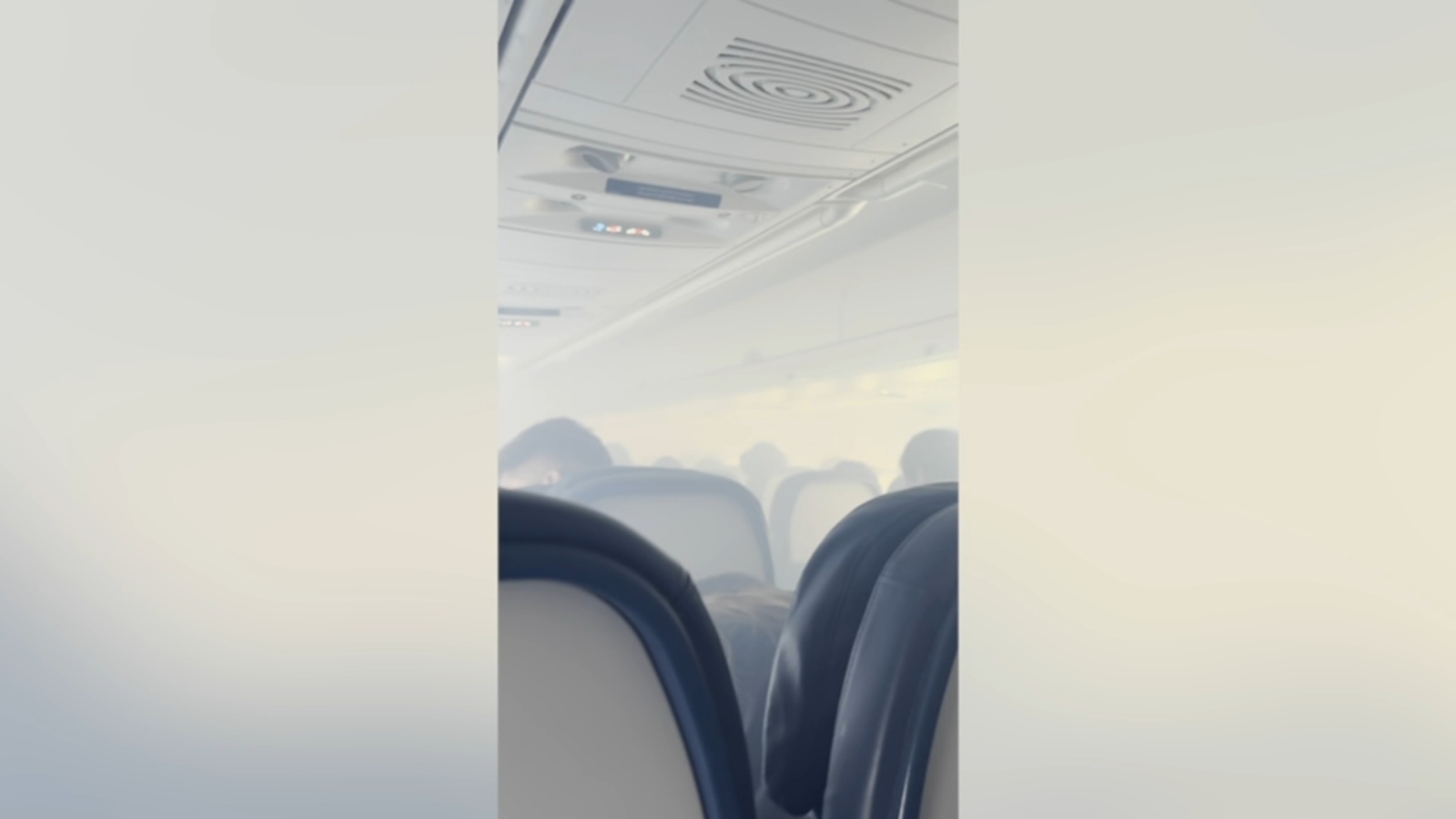
A Delta flight evacuation unfolded at Hartsfield-Jackson Atlanta International Airport on Monday morning when haze or smoke was detected inside a Boeing 717 aircraft, forcing 94 passengers to escape via emergency slides. The incident, which involved Delta Flight 876 bound for Columbia, South Carolina, highlights the critical importance of crew preparedness and emergency protocols when in-flight hazards arise.
The flight had barely begun its journey when the situation developed. Within moments of the haze being observed inside the cabin and the crew reporting possible smoke in the flightdeck, the pilots made the decisive choice to return to Atlanta rather than continue toward their destination. This rapid decision-making likely prevented what could have been a far more dangerous scenario had the aircraft been further from an airport when conditions escalated.
What Happened Aboard Delta Flight 876
Delta Flight 876 departed Atlanta with 94 passengers, two pilots, and three flight attendants aboard on what should have been a routine short hop to Columbia, South Carolina. However, shortly after takeoff, haze inside the aircraft was observed, prompting immediate concern among the crew. According to the Federal Aviation Administration, “the crew reported possible smoke in the flightdeck,” triggering a full emergency response.
The Boeing 717, a workhorse of Delta’s domestic fleet for shorter routes, executed a safe return to Atlanta. Upon landing, the situation escalated into a full Delta flight evacuation, with passengers utilizing the aircraft’s emergency slides to disembark quickly. Atlanta Fire Rescue personnel responded to assist with the deplaning process, ensuring everyone exited the aircraft safely and received appropriate medical screening if needed.
Timeline of the Emergency Response
- Departure: Delta Flight 876 leaves Atlanta headed for Columbia, South Carolina
- Detection: Haze is observed inside the cabin; crew reports possible smoke in the flightdeck
- Decision: Pilots immediately turn the aircraft back toward Atlanta
- Safe Landing: The Boeing 717 touches down without incident at Hartsfield-Jackson
- Evacuation: All 94 passengers deplane via emergency slides
- Investigation: The FAA announces it will investigate the cause of the haze or smoke
Why Smoke and Haze in Aircraft Are Taken So Seriously
Aviation safety experts consistently rank smoke or fire in the cockpit and cabin among the most dangerous in-flight emergencies. Unlike many other mechanical issues, smoke can indicate an electrical fire, a hydraulic fluid leak reaching hot components, or contamination in the environmental control system. When pilots detect smoke, they have only seconds to assess the situation and act.
The Delta flight evacuation at Atlanta demonstrates precisely why airlines drill their crews on these scenarios repeatedly. From the moment haze was noticed, every action,from the turnback decision to the slide deployment,follows procedures practiced countless times during recurrent training. This methodical approach saves lives.
Modern aircraft like the Boeing 717 are equipped with multiple detection systems designed to identify smoke or fumes early. Pilots are trained to treat any smoke indication as potentially serious, even when the source turns out to be relatively benign. In many cases, the haze or smoke can be traced to:
- Electrical component failure in the avionics bay
- Overheated equipment in the galley
- Contaminated air entering through the environmental system
- Battery malfunction from personal electronic devices
- Residue from cargo or de-icing fluids
The Role of Emergency Slide Evacuations
Emergency slides are one of the most recognizable safety features on commercial aircraft, but passengers rarely think about them until they’re needed. In a Delta flight evacuation scenario like the one at Atlanta, slides deploy within seconds and can fully inflate in approximately six seconds, creating a rapid escape route for everyone on board.
However, slide evacuations are not without risk. The Federal Aviation Administration has documented hundreds of injuries related to emergency slide deployments over the years, including sprains, fractures, and abrasions. Passengers are typically advised to leave carry-on items behind, remove high heels, and brace for impact when exiting. The Atlanta Fire Rescue team that responded to Delta Flight 876 would have been prepared to assist passengers who struggled with the descent, particularly elderly travelers or those with mobility limitations.
Why Atlanta Was the Right Call
The decision to return to Atlanta rather than continue to Columbia was tactically sound for several reasons. Hartsfield-Jackson Atlanta International Airport is one of the busiest airports in the world, with extensive fire and rescue resources on standby at all times. The airport’s ARFF (Aircraft Rescue and Fire Fighting) teams are equipped and trained specifically for scenarios exactly like the Delta flight evacuation that occurred on Monday.
By contrast, diverting to a smaller regional airport with fewer emergency resources could have complicated the response. Atlanta’s massive infrastructure meant that the plane could land on its intended runway, fire crews could respond within minutes, and passengers could be processed efficiently through the existing terminal facilities.
Operational Impact at Hartsfield-Jackson
The airport confirmed that “there is a moderate impact to operations” following the emergency. While the runway was cleared relatively quickly, even minor incidents at a hub the size of Atlanta create ripple effects throughout the day. Flights may have been delayed, gates reassigned, and connecting passengers rerouted as Delta worked to accommodate travelers displaced by the canceled flight.
For a hub airport that handles nearly 80 million passengers annually, even a “moderate impact” can affect thousands of travelers. Delta would have needed to rebook passengers on later flights to Columbia, provide meal vouchers, and arrange accommodations if any travelers faced overnight delays. The logistical aftermath of a Delta flight evacuation often extends well beyond the immediate emergency response.
Delta’s Safety Culture and Response
In its official statement, Delta emphasized that “nothing is more important than the safety of our customers and people, and we apologize to our customers for the experience.” This language reflects a broader commitment within Delta Airlines to transparent communication during incidents, even as the investigation into the cause remains ongoing.
Delta has invested heavily in safety protocols over the years, and the airline’s reputation for operational reliability is built partly on how it responds to rare but serious events. The fact that all 94 passengers and five crew members exited the aircraft safely is a testament to the training standards that Delta maintains across its fleet.
What the FAA Investigation Will Examine
The Federal Aviation Administration’s investigation into this Delta flight evacuation will likely focus on several key areas:
- Aircraft Maintenance Records: Reviewing recent work on the Boeing 717’s electrical, hydraulic, and environmental systems
- Crew Statements: Documenting exactly what pilots and flight attendants observed and when
- Physical Inspection: Examining the aircraft for any signs of damage, fluid leaks, or component failure
- Historical Data: Comparing this incident to similar events involving the same aircraft type or systems
- Recommendations: Issuing safety alerts or airworthiness directives if patterns emerge
The investigation could take weeks or months to complete, but preliminary findings are sometimes released sooner if the cause is quickly identified. Aviation incidents rarely result in dramatic revelations,most often, the culprit is a small component failure that, while serious in the moment, can be addressed through updated maintenance procedures.
What Passengers Should Know About Airline Emergency Procedures
For anyone who flies regularly, incidents like the Delta flight evacuation in Atlanta serve as a useful reminder to review personal safety habits. The FAA recommends that all passengers pay close attention to the pre-flight safety briefing, locate the nearest emergency exit, and mentally prepare for the possibility of needing to use the slide or raft.
Simple practices that can make a difference in an actual emergency include wearing shoes that can be easily removed, keeping the area under your seat free of obstructions, and counting the rows between your seat and the nearest exit. During a smoke event, passengers are typically instructed to stay low, cover their mouths with cloth, and follow crew directions precisely.
Conclusion
The Delta flight evacuation at Atlanta’s Hartsfield-Jackson Airport on Monday serves as a powerful example of how airline safety systems work exactly as designed when tested by real-world conditions. From the moment haze was observed inside the Boeing 717, every decision made by the flight crew,turning back to Atlanta, executing a safe landing, and initiating the slide evacuation,followed protocols refined over decades of aviation experience.
While the incident caused inconvenience for 94 passengers and their travel plans, the outcome reinforces what the aviation industry already knows: preparation saves lives. As the FAA continues its investigation into what caused the haze or smoke in the flightdeck, travelers can take comfort in the knowledge that the systems designed to protect them performed as intended. For Delta, the focus now shifts to supporting affected passengers, completing the aircraft inspection, and ensuring that whatever caused this incident is identified and addressed before the Boeing 717 returns to service.