
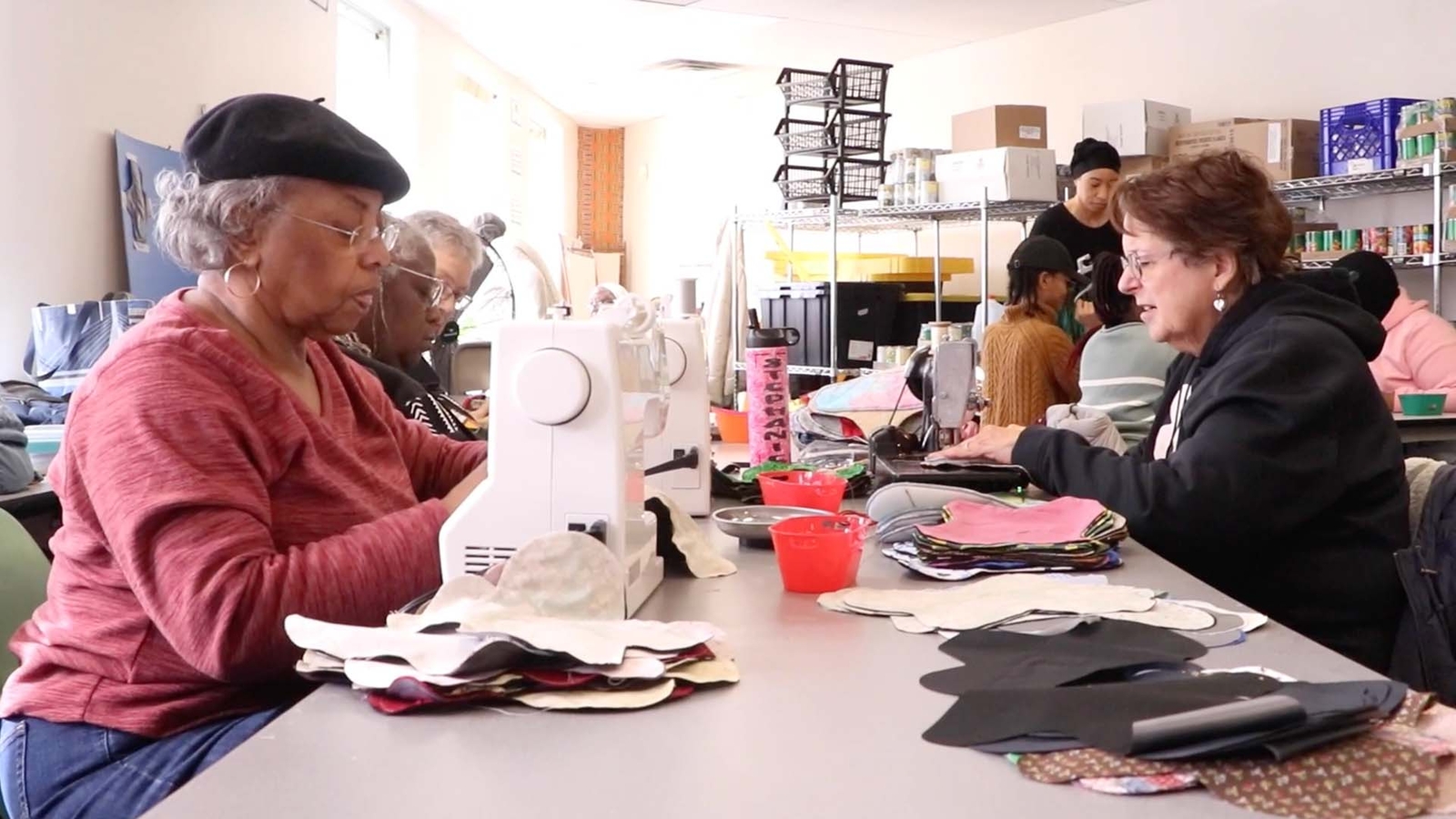
In a small but mighty workshop tucked away in Philadelphia, something remarkable is happening every single week. A dedicated group of volunteers gathers with one shared mission: to create menstruation pads for girls who otherwise would go without. What started as a heartfelt conversation between friends has blossomed into a movement that has now shipped over 50 batches of handcrafted feminine care products to women and girls across Africa, the Caribbean, and even within the United States itself.
This is the story of the Pan-African Sisterhood Health Initiative (PASHI), an organization that proves grassroots compassion can create waves of change across continents. Their work addresses a deeply overlooked crisis , period poverty , with simple tools, skilled hands, and an unwavering commitment to dignity for all.
The Birth of a Beautiful Movement
The Pan-African Sisterhood Health Initiative was founded in 2019, emerging from a deeply personal connection to global women’s health. The organization’s coordinator, Maisha Sullivan-Ongoza, first learned about the urgent need for menstruation pads when a close friend shared her experiences building a school in The Gambia, a small West African nation where access to feminine hygiene products remains critically limited for many young women.
The stories Sullivan-Ongoza heard were heartbreaking. Girls in rural communities were missing school during their periods , sometimes for days at a time , because they had no reliable access to sanitary products. Others were subjected to cruel teasing and social stigma when their situation became visible. In the most desperate cases, girls were improvising with random household items like old rags, leaves, or newspapers, which posed serious health risks alongside the daily humiliation they endured.
These stories ignited something powerful. Sullivan-Ongoza recognized that this wasn’t just a problem in one faraway village , it was a global issue affecting millions of girls who deserve the basic dignity of proper menstrual care. And she knew that something could be done about it, right from her own community in Philadelphia.
Why Menstruation Pads for Girls Matter: Understanding Period Poverty
Period poverty , the lack of access to menstrual hygiene products, education, and facilities , affects an estimated 500 million people worldwide, according to global health organizations. The consequences ripple through every aspect of a girl’s life:
- Educational setbacks: When girls cannot manage their periods safely, they miss school. In some regions, girls lose up to 20% of the academic year simply because they lack the supplies they need.
- Health risks: Improvised menstrual products can lead to infections, reproductive health complications, and toxic shock syndrome.
- Economic limitations: Without education, girls face diminished economic opportunities, perpetuating cycles of poverty across generations.
- Mental and emotional toll: Shame, isolation, and anxiety surrounding menstruation can damage self-esteem and mental health during already vulnerable adolescent years.
The work that PASHI does directly addresses these challenges. By providing handmade, reusable menstruation pads for girls, the organization offers a sustainable, eco-friendly solution that can be used repeatedly for years, fundamentally changing the trajectory of a young woman’s education and wellbeing.
The Ripple Effect of One Simple Product
It might seem like a small thing , a fabric pad sewn with care in a Philadelphia workshop. But when that pad reaches a girl in a Gambian village or a Haitian community, it represents something enormous. It represents days of school she’ll attend instead of miss. It represents the freedom to move through her daily life without fear of embarrassment. It represents the message that someone, thousands of miles away, believes she deserves dignity.
Inside the PASHI Workshop: Where Compassion Takes Shape
Every Wednesday, a group of passionate volunteers converges at the Ujima Friends Peace Center in Philadelphia to engage in the meticulous, meditative work of creating these life-changing products. Their process is hands-on, deliberate, and infused with care at every stage.
The Step-by-Step Craft of Reusable Pads
- Cutting the fabric: Volunteers begin by measuring and cutting layered materials , typically soft, absorbent cotton fabrics that are gentle on skin and effective at managing flow.
- Sewing the layers together: Each pad is constructed with multiple absorbent layers sewn securely between a soft top layer and a waterproof backing, ensuring both comfort and protection.
- Adding fasteners: Snaps or buttons are attached so the pad can be securely fastened to underwear, allowing for confident movement throughout the day.
- Ironing and quality checks: Before packaging, each pad is pressed and inspected to ensure it meets the group’s quality standards.
- Packaging for shipment: Completed pads are bundled carefully, often along with educational materials, and prepared for their journey abroad.
This isn’t mass production. It’s human production , each stitch representing an investment of time, talent, and love. The volunteers at Ujima Friends Peace Center aren’t just making products; they’re crafting hope.
The Community Behind the Cause
What makes the PASHI model so powerful is its emphasis on community-led solutions. The volunteers aren’t professional seamstresses by trade , they’re everyday people who have chosen to dedicate their Wednesdays to a cause greater than themselves. Some are retirees looking for meaningful ways to give back. Others are working professionals who carve out time from their busy weeks. Many have personal connections to the African diaspora and feel a deep cultural responsibility to support sisters across the ocean.
The Ujima Friends Peace Center provides more than just a physical space , it provides a gathering point for collective action. The word “Ujima” itself comes from the Swahili principle of collective work and responsibility, one of the seven principles of Kwanzaa. This shared value perfectly embodies what PASHI does every week: coming together as a community to solve problems that affect the global community.
A Global Footprint: Where the Pads Travel
Since its founding in 2019, PASHI has produced and shipped over 50 separate batches of menstruation pads for girls and women across multiple countries. Their reach extends to:
- The Gambia: The country that inspired the entire initiative continues to be a primary recipient, with pads going to schools and community organizations.
- Other parts of Africa: Additional shipments have made their way to communities across the continent where period poverty remains widespread.
- Cuba: Despite being just 90 miles from the United States, many Cuban women face significant shortages of basic hygiene products due to economic challenges.
- Haiti: Ongoing political and economic instability has made menstrual products nearly inaccessible for many Haitian women and girls.
- The United States: PASHI hasn’t forgotten the period poverty happening in their own backyard, distributing pads domestically to women and girls in need.
That last point is crucial. Period poverty is not just a “developing world” problem. Across the United States, studies have shown that nearly one in five girls have struggled to afford period products. PASHI’s decision to serve both international and domestic communities demonstrates a holistic understanding that need doesn’t recognize borders.
The Broader Movement: Philadelphia’s Culture of Giving
PASHI is part of a larger tapestry of community care organizations making Philadelphia a hub for grassroots humanitarian work. The city has long been home to individuals and groups dedicated to uplifting vulnerable populations, both locally and globally.
For example, organizations like “The Baby Bureau” in Bucks County have similarly stepped up to address critical needs , in their case, packaging diapers, clothing, blankets, and other essential supplies for new parents who could use extra support during the challenging early days of parenthood. Their recent milestone of delivering their 10,000th bundle of joy demonstrates the same spirit of persistent, volunteer-driven care that defines PASHI’s work.
These initiatives share common DNA: ordinary people recognizing extraordinary needs and refusing to wait for someone else to solve them.
How You Can Support the Mission
If the work of PASHI resonates with you, there are several meaningful ways to get involved:
- Donate materials: Cotton fabric, snaps, thread, and other sewing supplies are always in demand. Check their Facebook page for specific wish lists.
- Donate funds: Shipping costs alone are significant when sending 50-plus packages internationally. Financial contributions help cover logistics.
- Volunteer your time: Whether you can sew or not, there’s likely a role for you at the Wednesday workshops. Cutting, sorting, packaging, and organizing are all essential tasks.
- Spread awareness: Sharing stories about period poverty and organizations working to address it helps break the silence and stigma that surrounds menstruation in many cultures.
- Advocate for policy change: Supporting legislation that provides free menstrual products in schools, shelters, and prisons amplifies the impact of volunteer efforts.
For more information about donating or volunteering, interested individuals can visit the PASHI Facebook page to see their latest updates, upcoming events, and specific needs.
Conclusion: Small Stitches, Monumental Impact
In a world where complex global problems often feel overwhelming and unsolvable, the Pan-African Sisterhood Health Initiative offers a refreshing reminder: change doesn’t always require massive budgets or institutional power. Sometimes it just requires a group of committed people, a sewing machine, some fabric, and the belief that every girl deserves dignity during her period.
From a Philadelphia workshop to classrooms in The Gambia, from Cuban communities to Haitian villages, and to underserved neighborhoods across America, PASHI’s handmade menstruation pads for girls are doing more than managing menstrual flow , they’re opening doors to education, protecting health, and affirming the inherent worth of women and girls who might otherwise be forgotten by the global supply chain.
Over 50 shipments in just a few years. Countless volunteers. Thousands of girls reached. This is what happens when compassion meets action. And if the determination of Maisha Sullivan-Ongoza and her team is any indication, the next 50 shipments , and the next thousand pads , are already in the making.