
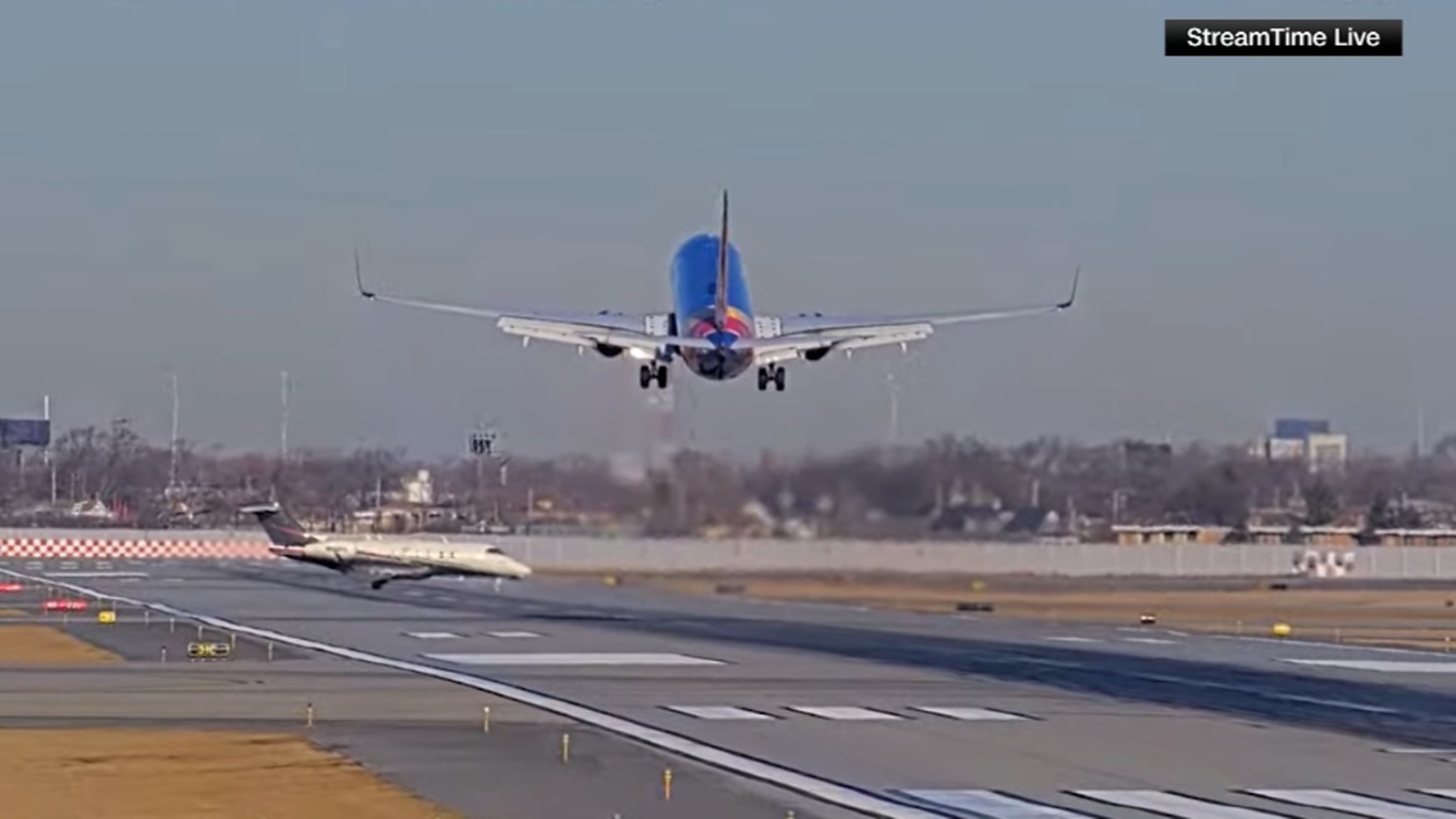
A routine Tuesday morning flight from Omaha to Chicago turned into a tense moment when a Southwest flight close call at Midway Airport required immediate evasive action. Southwest Airlines Flight 2504 was approaching the runway for landing when air traffic controllers spotted a business jet crossing the same runway without authorization. Thanks to quick coordination between the control tower and the flight crew, a potential catastrophe was avoided, and the aircraft eventually touched down safely with all passengers and crew unharmed.
What Happened During the Southwest Flight Close Call
On a seemingly ordinary Tuesday morning, Southwest Flight 2504 was completing its journey from Eppley Airfield in Omaha, Nebraska, to Chicago Midway International Airport. As the Boeing 737 descended toward the runway, the situation quickly became complicated when an unauthorized aircraft entered the active landing zone.
According to the Federal Aviation Administration (FAA), the Southwest pilots were forced to execute what aviation professionals call a “go-around” , an aborted landing maneuver designed to prevent a collision. This last-minute decision came after air traffic controllers issued repeated instructions to a business jet to hold short of the runway. The business jet failed to comply.
The FAA confirmed that the two aircraft came within approximately 0.49 miles of each other at their nearest point. While that distance may sound substantial on the ground, in aviation terms , especially at low altitudes near an active runway , it represents a dangerously narrow margin. At typical landing speeds, aircraft cover nearly that distance in mere seconds.
How the Incident Unfolded
Audio recordings from the air traffic control tower captured the urgent communications during the southwest flight close call. Controllers can be heard instructing the business jet crew to remain clear of the runway as the Southwest flight was on final approach. Despite these clear directives, the smaller aircraft proceeded across the runway, forcing immediate intervention.
An FAA spokesperson explained the sequence of events in a statement, noting that controllers repeatedly told the business jet to hold short and not cross the runway. The non-compliance with these instructions triggered the precautionary go-around by the Southwest crew.
The Role of Air Traffic Control in Preventing Disaster
The professional response by air traffic controllers during this southwest flight close call highlights the critical importance of ground control operations at busy airports like Chicago Midway. Controllers serve as the invisible safety net, monitoring dozens of aircraft movements simultaneously and ensuring safe separation at all times.
When a runway incursion occurs , meaning any unauthorized presence on an active runway , controllers must act within seconds to prevent accidents. In this case, their swift communication with both aircraft allowed the Southwest pilots to recognize the hazard and execute a go-around before a more serious situation developed.
Midway Airport is one of the busiest single-runway airports in the United States, with constant arrivals and departures throughout the day. The complexity of operations at such facilities means that any deviation from standard procedures, such as a business jet crossing without clearance, can rapidly escalate into a dangerous scenario.
Understanding Go-Around Procedures
For many passengers, a go-around is a startling and unfamiliar experience. The engines suddenly roar louder as the aircraft accelerates, the nose pitches upward, and the plane climbs away from the runway rather than touching down. While alarming for those aboard, go-arounds are a standard and well-practiced safety procedure in commercial aviation.
Pilots train extensively for these scenarios, and airlines encourage crews to perform precautionary go-arounds whenever any uncertainty exists. The decision to abort a landing is never taken lightly, but it reflects the aviation industry’s commitment to prioritizing safety over schedule adherence or operational efficiency.
Following the go-around during this southwest flight close call, the pilots circled the airport, awaited clearance from controllers, and completed a safe landing shortly thereafter. No injuries were reported among passengers or crew, and the aircraft landed without further incident.
Runway Incursions: A Growing Safety Concern
The southwest flight close call at Midway is not an isolated incident. Runway incursions remain one of the most persistent safety challenges in modern aviation. The FAA classifies runway incursions into different categories based on severity, with the most serious involving actual collision risk.
Common causes of runway incursions include:
- Pilot deviation: When a flight crew crosses a hold-short line or enters a runway without authorization
- Vehicle or pedestrian deviation: Ground vehicles or personnel entering an active runway
- Operational errors: Mistakes by air traffic controllers in issuing clearances
In this particular incident, the incursion appears to have been caused by the business jet’s crew failing to comply with hold-short instructions. The FAA continues to investigate the circumstances surrounding the southwest flight close call to determine whether enforcement action or additional safety recommendations are warranted.
Technology and Safety Improvements
The aviation industry has invested heavily in technologies designed to prevent runway incursions. Surface awareness systems, runway status lights, and improved cockpit alerts all help pilots and controllers maintain situational awareness on the ground. However, as this southwest flight close call demonstrates, technology alone cannot prevent incidents when human instructions are ignored.
Chicago’s Recent Aviation Safety Concerns
This southwest flight close call comes amid heightened scrutiny of aviation safety incidents in the Chicago area. The source material referenced another troubling day at Chicago O’Hare International Airport, where two separate close calls were reported within a single day. These incidents have raised questions among travelers and industry observers about whether additional safety measures might be needed at the region’s busy airports.
Chicago Midway and O’Hare together handle tens of millions of passengers annually, making them among the most trafficked airports in the world. With such high volumes of operations, even small errors can have significant consequences, underscoring why every member of the aviation ecosystem , from controllers to pilots to ground crews , must adhere strictly to established procedures.
Southwest Airlines’ Safety Commitment
In response to the southwest flight close call, a Southwest Airlines spokesperson reaffirmed the carrier’s dedication to passenger and employee safety. “Nothing is more important to Southwest than the Safety of our Customers and Employees,” the statement read.
This emphasis on safety aligns with industry-wide standards that prioritize risk avoidance over operational convenience. Commercial aviation remains one of the safest forms of transportation precisely because of this commitment , when a potential hazard is identified, crews are trained and empowered to take immediate corrective action, even if it means delaying a flight.
Southwest Flight 2504 continued its operations following the safe landing, and passengers reached their destination after what was undoubtedly a memorable but ultimately uneventful conclusion to a potentially serious situation.
Conclusion
The southwest flight close call at Chicago Midway Airport serves as a powerful reminder of the importance of rigorous adherence to safety protocols in commercial aviation. Thanks to the vigilance of air traffic controllers and the skilled response of the Southwest flight crew, what could have been a tragedy ended as a successful example of aviation safety systems working exactly as designed. As the FAA continues its investigation into the business jet’s failure to follow hold-short instructions, this incident reinforces the ongoing need for training, technology, and accountability at every point in the aviation system. Passengers can take comfort in knowing that the professionals managing their flights are prepared to act decisively when seconds matter most.