
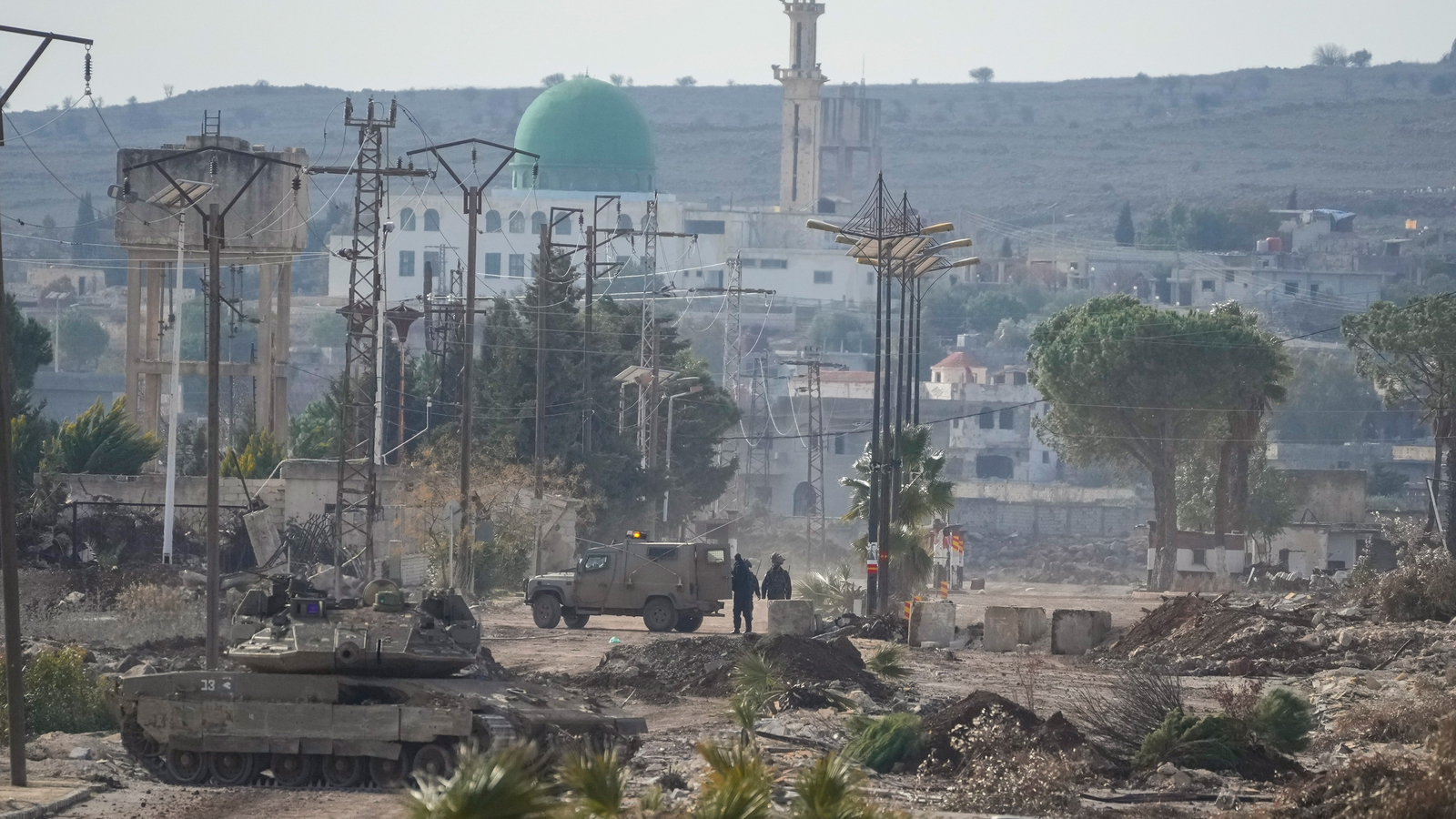
Recent Israeli strikes in southern Syria have intensified tensions across the Middle East, with Israel confirming active airstrikes near Damascus while the newly formed Syrian government demands the immediate withdrawal of Israeli forces from its territory. The developments mark a significant escalation in an already volatile region, drawing parallels to ongoing operations in southern Lebanon and signaling a broader Israeli strategy to maintain a defensive perimeter along its northern border.
Background: A Shifting Power Dynamic
The current military operations trace back to December 2024, when the collapse of former President Bashar al-Assad’s regime fundamentally altered Syria’s political landscape. Following this dramatic shift in power, Israeli forces moved into the demilitarized buffer zone along the Syrian border, an area that had previously separated the Israeli-occupied Golan Heights from Syrian territory.
This buffer zone, established decades ago under international agreements, has become a flashpoint in the evolving Israel-Syria tensions. Since entering the zone, Israeli forces have indicated their intention to maintain a presence there, creating friction with Syria’s transitional government.
The Demilitarized Buffer Zone Explained
The buffer zone represents one of the most sensitive geographical areas in the Middle East. Originally created to prevent military confrontation between Israel and Syria, the zone has been largely respected for decades. However, with the changing of power in Damascus and the rise of new armed groups, Israel has determined that maintaining direct control over this area serves its national security interests.
Israeli President Benjamin Netanyahu has been particularly vocal about his country’s position. In recent remarks at a military graduation ceremony, Netanyahu declared that Israel would not permit Syria’s new army or the rebel coalition that overthrew Assad to enter the area south of Damascus.
Israeli Defense Minister’s Firm Stance
Defense Minister Israel Katz has emerged as one of the most outspoken voices regarding Israeli military operations in southern Syria. His messaging has been remarkably direct, drawing explicit comparisons between the current Syrian situation and previous challenges in Lebanon.
“We will not allow southern Syria to become southern Lebanon,” Katz declared, invoking the memory of Hezbollah’s decades-long military buildup along Israel’s northern border. This statement reflects deep concerns within the Israeli defense establishment about armed groups establishing positions that could threaten Israeli civilians.
Katz further emphasized that the Israeli Air Force is conducting what he described as a strong campaign of strikes as part of a newly defined policy aimed at “pacifying southern Syria.” He made clear that any attempt by Syrian regime forces or terrorist organizations to establish a foothold in the security zone would be met with overwhelming force.
What “Pacification” Means in Practice
The policy of pacification involves more than occasional strikes. According to Israeli officials, it represents a sustained military strategy designed to:
- Prevent hostile forces from establishing positions near the Israeli border
- Deter terrorist organizations from operating in the buffer zone
- Maintain freedom of operation for Israeli surveillance and reconnaissance
- Create a defensive buffer that protects Israeli communities in the Golan Heights region
This approach mirrors security operations that Israel has conducted in other contested areas, including the West Bank and historically in southern Lebanon before the 2000 withdrawal.
Syria’s Response: Sovereignty and International Law
The new Syrian government has not remained silent in the face of Israeli operations. Officials in Damascus have issued strong condemnations, demanding what they describe as the “immediate and unconditional withdrawal” of Israeli forces from Syrian soil.
Syrian authorities characterize the Israeli military presence as a “flagrant violation of the sovereignty of the Syrian state.” Such statements reflect a broader principle that many nations in the region maintain regarding foreign military presence on their territory, regardless of the security justifications provided.
The Challenge of Transitional Governance
The new Syrian government faces a particularly difficult situation. Having only recently consolidated power after the fall of the Assad regime, it must simultaneously:
- Establish legitimacy and authority over all Syrian territory
- Rebuild military and security institutions
- Address humanitarian needs across the country
- Manage complex relationships with neighboring states
The presence of Israeli forces in the buffer zone complicates each of these objectives, particularly the assertion of national sovereignty.
The Damascus Strikes: Tactical and Strategic Implications
Syrian state media reported multiple airstrikes near the capital Damascus, confirming the Israeli campaign’s reach extends well beyond the immediate border region. The decision to strike targets near the capital carries significant tactical and strategic weight.
By demonstrating the ability and willingness to strike deep into Syrian territory, Israel sends a clear message about the extent of its operational capabilities. This approach aligns with what defense analysts call “escalation dominance,” the principle that establishing credibility to escalate gives a country leverage in negotiations.
The Golan Heights Factor
Understanding the current situation requires recognizing the strategic importance of the Golan Heights. Israel captured this territory from Syria during the 1967 Six-Day War and effectively annexed it in 1981, though most of the international community does not recognize this annexation. The buffer zone serves as a protective perimeter for Israeli communities living on the Heights, who have faced sporadic rocket and mortar attacks in previous decades.
Israeli policy-makers argue that the current operations are essential to prevent the situation from deteriorating into something resembling the threats Israel faced from Hezbollah positions in southern Lebanon before 2000.
Regional Context: The Lebanon Connection
Katz’s references to “southern Lebanon” are not casual comparisons. Israel continues to maintain forces in parts of southern Lebanon beyond the deadline established by its ceasefire agreement with Hezbollah. According to Katz, these forces will remain in certain areas to “ensure the protection of all Israeli communities and deterrence against threats from Lebanon.”
This dual northern front,with operations in both southern Syria and southern Lebanon,reflects Israeli concerns about the formation of what security planners call a “radical arc” or “axis of resistance” along its borders. Preventing this from becoming reality has emerged as a core component of Israeli defense policy.
Broader Middle Eastern Dynamics
The Israeli strikes in southern Syria occur against a backdrop of shifting alliances and power structures throughout the Middle East. Several regional and global powers have interests in the Syrian conflict’s resolution:
- Russia, historically a key Assad ally, has reduced its presence following the regime change
- Iran has lost significant influence with the fall of its close ally Assad
- Turkey has interests related to Kurdish groups and refugee populations
- The United States maintains a limited military presence in eastern Syria
These competing interests make any resolution to the Israeli presence in southern Syria particularly complex.
Looking Forward: Uncertainty and Deterrence
The trajectory of Israeli strikes in southern Syria remains uncertain. While Israel has signaled its intention to maintain forces in the buffer zone for an extended period, the new Syrian government continues to demand withdrawal. This standoff could continue for months or even years, depending on regional developments and internal Syrian politics.
Israeli officials have emphasized that the protection of Israeli citizens remains their paramount concern. The phrase “we will not endanger the security of our citizens” has become a recurring theme in official statements, reflecting the deep impact that cross-border attacks have had on Israeli public consciousness over decades.
The Path to Resolution
Several factors could influence how this situation eventually resolves:
- Diplomatic negotiations between Israel and the new Syrian government, possibly mediated by international actors
- Security arrangements that might allow Israel to withdraw while maintaining monitoring capabilities
- Regional stability and the broader evolution of threats in the Middle East
- International pressure regarding sovereignty and territorial integrity
Conclusion
The current Israeli military operations in southern Syria represent a significant moment in the region’s complex history. With Israel confirming active strikes near the capital and the new Syrian government demanding immediate withdrawal of all Israeli forces, the situation embodies the difficult balance between security concerns and national sovereignty that has long characterized Middle Eastern politics.
As Defense Minister Katz has made clear, Israel views the prevention of hostile military buildup in southern Syria as essential to its security architecture. The explicit parallels drawn to southern Lebanon suggest that Israeli planners see these operations as part of a comprehensive northern border defense strategy. How the new Syrian government navigates these challenges, and whether diplomatic channels can eventually produce a sustainable arrangement, will shape the security landscape of the region for years to come. Until then, the strikes continue, the buffer zone remains occupied, and the broader question of how two states with deeply different security perspectives can find common ground remains unanswered.