
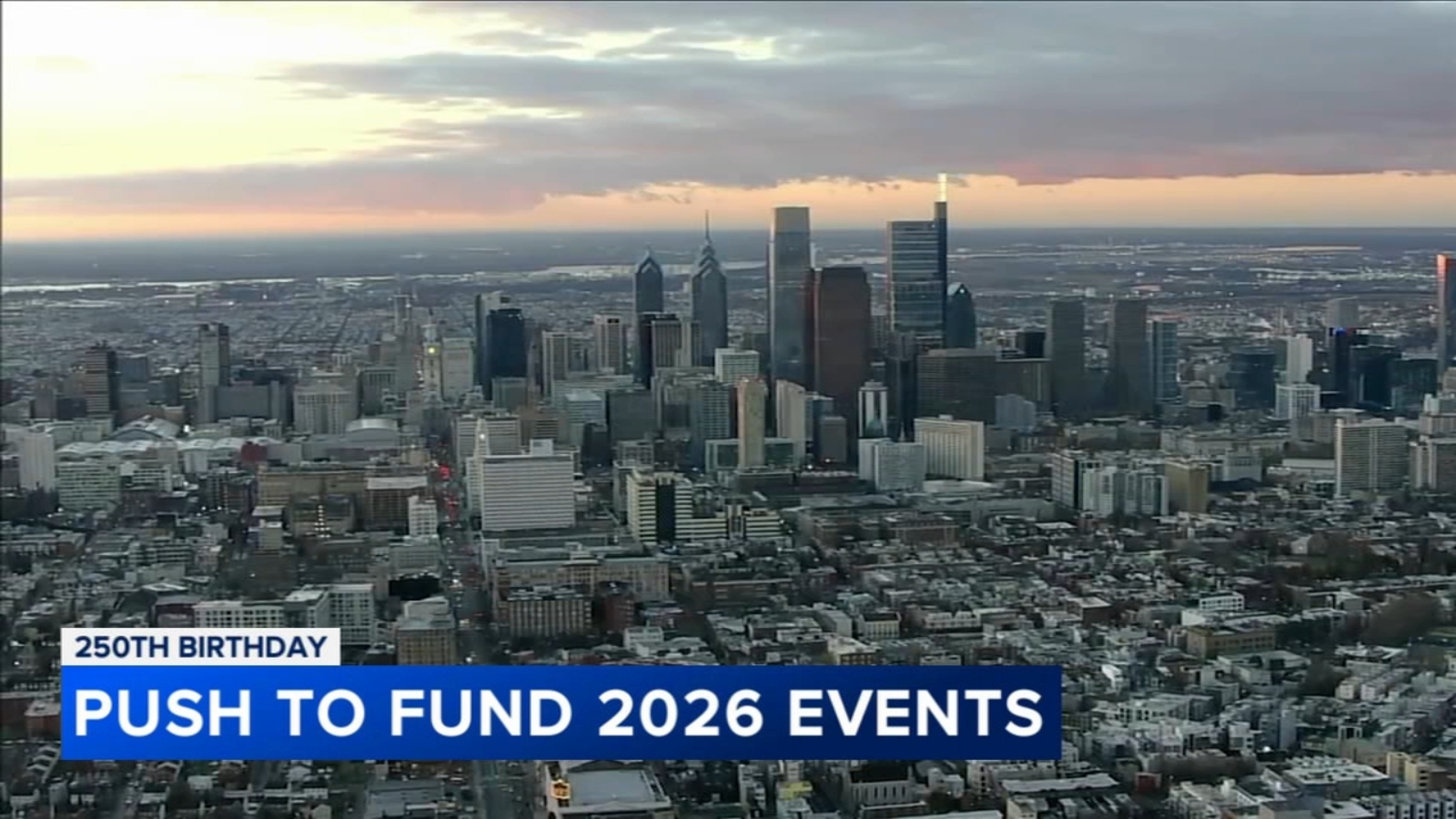
Philadelphia is racing against the calendar to prepare for the most significant birthday celebration in American history. The Philadelphia semiquincentennial 2026 will mark 250 years since the signing of the Declaration of Independence, and the city where it all began is working overtime to honor that legacy. With major sporting events, ambitious infrastructure plans, and a multi-layered funding strategy all converging, this once-in-a-generation moment is generating both excitement and urgency across the region.
The Countdown to America’s 250th Birthday
As 2026 draws closer, Philadelphia finds itself at the center of one of the most ambitious commemorations in modern American history. The semiquincentennial , the formal name for a 250th anniversary , represents far more than a single year of festivities. It is an opportunity to celebrate the founding ideals of the nation while showcasing the city that gave birth to those ideals.
“Time is running out, 2026 is approaching. But Philly works best when we’re under pressure,” explained Kathryn Ott Lovell, who heads the nonprofit organization Philadelphia250. Her words reflect a city accustomed to turning challenges into triumphs, and this moment may be the highest-stakes test of that resilience yet.
Why Philadelphia Matters in 2026
Few cities carry the historical weight that Philadelphia does. Independence Hall, the Liberty Bell, and the surrounding Independence Mall district bear witness to the founding moments of the United States. When millions of visitors descend on the region for the milestone year, these sites will serve as living classrooms and pilgrimage destinations. The Philadelphia 2026 celebrations are designed not only to honor the past but to inspire future generations of Americans.
The Funding Puzzle: City, State, and Private Investment
Putting on a celebration worthy of America’s quarter-millennium requires serious capital, and Philadelphia leaders are scrambling to secure it from multiple sources.
City-Level Investment
Mayor Cherelle Parker’s administration has proposed a $45 million mid-year transfer to support semiquincentennial preparations, which City Council has already approved. This infusion of municipal funding is intended to bridge immediate operational needs and signal local commitment to private partners considering their own investments.
Council Majority Whip Isaiah Thomas acknowledged the political reality: “After these next couple months, government will not be able to get another bite at the apple to prepare.” His comments underscore the narrow window remaining for legislators to allocate resources before the festivities begin.
State-Level Push from Governor Shapiro
Pennsylvania Governor Josh Shapiro has proposed approximately $65 million in state funding to support, secure, and promote the semiquincentennial events. However, that funding must be ratified by state lawmakers in Harrisburg, a process that Republican Representative Tim Briggs warned could face resistance.
“Unfortunately it’s not going to be like the bicentennial; big bold investments, capital funding. But if we can do our best to make the visitor’s time here special. It’s where we have to focus,” Briggs said, drawing a clear contrast between the ambitious federal funding of the 1976 bicentennial and today’s more constrained fiscal environment.
Briggs also pointed to the political dynamics at play: “There is always pushback in Harrisburg. We have to convince people who don’t live or come to Philadelphia why it’s important to invest in our historical sites.” That messaging challenge will be central to whether the Shapiro funding package survives the legislative process intact.
Private Sector and Nonprofit Contributions
Beyond government funding, Philadelphia250 is working to marshal private philanthropy and corporate sponsorship. The organization has emphasized that successful execution of the America 250th birthday vision requires a true public-private partnership, with nonprofits, museums, and businesses each playing crucial roles.
Setbacks and Adjustments Along the Way
No project of this scale proceeds without complications, and Philadelphia has already confronted significant disappointments on the road to 2026.
The Children’s Worlds Fair Cancellation
One of the most high-profile casualties has been the planned Children’s Worlds Fair, a collaboration between the Please Touch Museum, the Philadelphia Zoo, and the Mann Center. Conceived as a first-of-its-kind gathering to inspire young people to become changemakers, the event was ultimately scrapped due to the funding climate.
Organizers released a statement acknowledging the situation: “There is no doubt that there was great enthusiasm from both public and private partners in this exciting, first-of-its-kind concept. However, the highly competitive and challenging funding landscape surrounding 2026 and the remaining time available to execute on our original vision simply made moving forward impossible.”
The cancellation highlights a recurring theme: ambitious ideas are being scaled back because the financial scaffolding cannot support them in the available timeframe.
The I-95 Cap Project Delay
Another blow came with news that the nearly 12-acre Interstate 95 cap project will not be completed in time for the 2026 festivities. This ambitious plan to create waterfront green space had been envisioned as a centerpiece transformation along the Delaware River. While the project will continue beyond the milestone year, visitors arriving during the semiquincentennial will unfortunately not get to experience the finished version.
A Sports Spectacular: 2026 Will Still Be a Blockbuster
Even with some venue-based disappointments, Philadelphia is positioned to deliver one of the most exciting sports calendars in its history during the semiquincentennial events. The year 2026 brings multiple marquee competitions within the city limits.
- FIFA World Cup Matches: Philadelphia is among the host cities for next year’s World Cup, which means international soccer fans will descend on the city alongside history enthusiasts.
- PGA Tour Event: Golf’s biggest stars will compete in Philadelphia, drawing spectators from across the country.
- MLB All-Star Game: Baseball’s midsummer classic returns to Philadelphia, guaranteeing national attention and a massive economic boost.
Together, these events create a layered tourism opportunity. Visitors arriving for the historical commemorations will find themselves in a city buzzing with major-league athletics, turning the celebration into a multi-dimensional experience rather than a single-event affair.
Lessons from the Bicentennial
Philadelphia’s leaders have made no secret of their awareness that the current moment differs fundamentally from the heady days of the 1976 bicentennial. The bicentennial era saw massive federal investment, grand infrastructure projects, and a national consensus that the milestone deserved bold action. Today’s political and fiscal environment is far more fragmented.
That comparison is on the minds of state and city officials alike. Rather than attempting to replicate the bicentennial’s sweeping ambition, planners are focusing on visitor experience, security, and operational excellence. The strategy reflects a pragmatic acknowledgment that doing the basics extraordinarily well may matter more than unveiling marquee monuments during a compressed timeline.
What This Means for Visitors and Residents
For anyone planning to visit Philadelphia during 2026, expect a city in full celebration mode. Expect heightened security presence, particularly around Independence Mall and the historic district. Expect expanded programming at museums, historic sites, and cultural institutions. And expect crowds larger than usual, given the convergence of sports tournaments and patriotic tourism.
For residents, the Philadelphia tourism 2026 boom offers economic opportunity, particularly for small businesses, hospitality providers, and vendors. The influx of visitors from around the world has the potential to create lasting economic benefits well beyond the actual celebration year.
Philadelphia’s 2026 director Michael Newmuis captured the prevailing attitude among organizers: “We’re thrilled that council is on board, we’re thrilled that the governor is leaning in, we’re thrilled that people are coming together and we’re going to get this thing done.” That determined optimism, while not a substitute for secured funding, suggests the city’s leadership remains confident about delivering on the core vision.
Looking Ahead: The Final Push
The coming months will be critical. State lawmakers in Harrisburg will determine whether the proposed $65 million from Governor Shapiro becomes reality. City officials will need to oversee the deployment of the $45 million already approved. Philadelphia250 will continue coordinating private partners, historic sites, and civic organizations. And behind the scenes, countless workers will be transforming plans into tangible experiences for an expected flood of visitors.
The challenges are real. The funding landscape is competitive. The timeline is unforgiving. Yet the city that gave birth to American democracy has a chance in 2026 to demonstrate something deeply fitting: that commemorating a nation’s founding is not merely about looking backward, but about showing the world what it means to keep striving, keep building, and keep believing in those founding ideals for another 250 years.
America’s birthday belongs in Philadelphia, and Philadelphia intends to deliver a celebration worthy of the moment.