
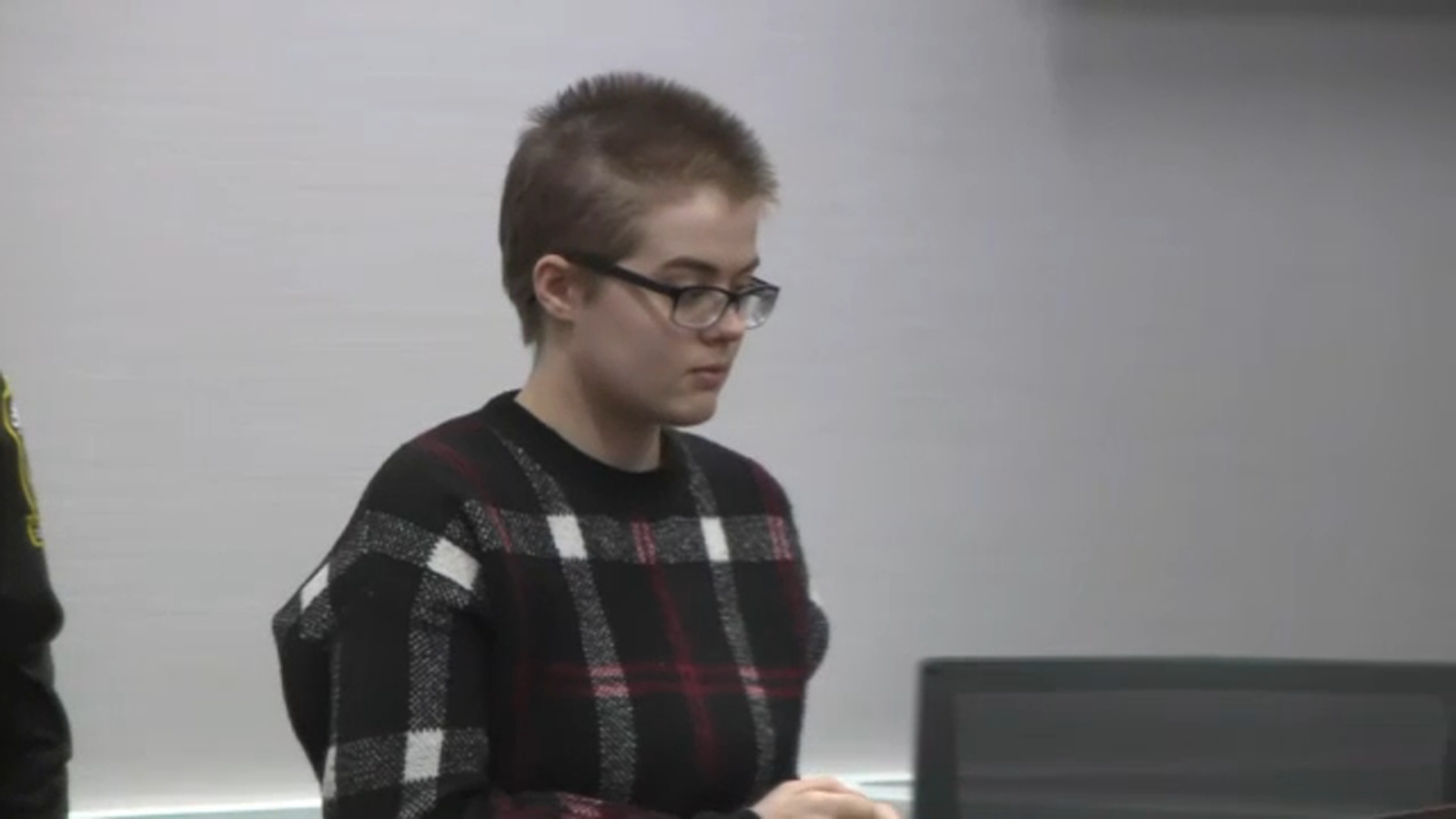
The Slender Man stabbing case has resurfaced in national headlines as Wisconsin prosecutors move to prevent Morgan Geyser from leaving a psychiatric facility, despite a judge’s recent order paving the way for her supervised release. The legal drama, which began over a decade ago when two young girls attacked their classmate to appease a fictional internet horror character, has taken yet another unexpected turn that is reigniting public debate about mental illness, juvenile culpability, and the justice system.
Geyser, now 22, was just 12 years old in May 2014 when she and a friend lured their classmate into the woods near Waukesha, Wisconsin, and stabbed her 19 times. The victim, Payton Leutner, suffered life-threatening injuries but remarkably survived the attack. The case became one of the most disturbing and widely reported juvenile crime stories in American history, drawing attention to the disturbing world of internet creepypasta and online horror fiction.
Background of the Tragic 2014 Slender Man Stabbing
To understand the current legal battle, it is essential to revisit the events that made the Slender Man case a touchstone for discussions about childhood violence, online influence, and mental health. In the spring of 2014, two middle school classmates in Waukesha, Wisconsin, allegedly became obsessed with the fictional character Slender Man, a tall, faceless figure born from online horror forums. According to authorities, the girls believed that by committing a violent act, they would earn the right to live with Slender Man in his fictional forest estate.
The Victims and the Assailants
Payton Leutner, the chosen victim, was invited to what she believed was a sleepover and was subsequently lured to a wooded area near her home. There, she was stabbed repeatedly and left for dead. First responders arrived in time to save her life, though she endured permanent scars and lasting psychological trauma. In subsequent years, Leutner has spoken publicly about her recovery and the long shadow cast by the attack.
Two assailants were charged in adult court with first-degree attempted intentional homicide:
- Morgan Geyser – Convicted of the charges but found not guilty by reason of mental disease or defect. She received a sentence of up to 40 years in a psychiatric institution.
- Anissa Weier – Pled guilty to a lesser charge and was also found not guilty by reason of mental disease or defect. She received up to 25 years in a psychiatric institution.
The Aftermath and Mental Health Treatment
Both girls were ordered into long-term psychiatric care, raising complex questions about how the legal system should handle juveniles who commit serious crimes while suffering from significant mental illness. The defense teams argued that their clients’ delusions about Slender Man represented genuine psychiatric conditions, not simply childhood fantasy or peer pressure.
The 2025 Supervised Release Controversy
More than ten years after the Slender Man stabbing, the legal system began revisiting whether either assailant could safely reenter society. In January, Waukesha County Circuit Judge Michael Bohren issued an order directing the state’s Department of Health Services to create a supervised release plan for Morgan Geyser within 60 days. The ruling came after three psychologists testified that Geyser was mentally ready to transition out of institutional care and into a supervised community setting.
The proposed release had been viewed as a significant milestone in the case, signaling that mental health professionals believed Geyser no longer posed a danger to herself or others. However, that progress is now in jeopardy.
New Allegations Threaten Release
A motion has been filed to halt the release process, citing new allegations from the mental health facility where Geyser is currently being treated. According to reports, staff members raised concerns about artwork of a violent nature that Geyser allegedly sent to a man. While the specific details of these claims remain limited, they were significant enough to prompt prosecutors and facility administrators to intervene.
Geyser’s defense attorney has firmly denied that his client engaged in any inappropriate behavior, asserting that the allegations are being mischaracterized or taken out of context. The legal team is reportedly preparing to contest the motion in court.
Hearing Postponed Amid Legal Battle
A previously scheduled hearing to discuss Geyser’s potential supervised release plan has been canceled. In its place, a new hearing has been set for the following week, this time focused specifically on whether the supervised release order should be revoked entirely.
The shift in the court’s focus,from planning a release to potentially overturning it,underscores the gravity of the new concerns raised by facility staff. Prosecutors and treatment providers will have the opportunity to present evidence, while Geyser’s defense team will push back against what they characterize as unfounded claims.
Comparing the Two Assailants: Different Paths Forward
One of the most striking aspects of the Slender Man stabbing case is the divergent trajectories of Geyser and Weier, despite both having been found not guilty by reason of mental disease or defect.
Anissa Weier’s Release in 2021
Anissa Weier was granted supervised release in 2021 at the age of 19, having spent approximately seven years in psychiatric care. Her release marked a turning point in the case and raised questions about why Geyser, who was involved in the actual stabbing, remained in custody while Weier had been released back into the community. Legal experts have noted that the differing outcomes reflect the individual circumstances of each defendant’s treatment progress, mental health evaluations, and the specific nature of their involvement in the attack.
Morgan Geyser’s Continued Detention
Geyser, by contrast, remained in institutional care for more than a decade. Her continued detention has been a point of contention, with mental health professionals repeatedly asserting that she is ready to reenter society under appropriate supervision. The January ruling appeared to finally align the legal system with those expert opinions,until the new allegations emerged.
Broader Implications of the Slender Man Case
Beyond the immediate legal drama surrounding Geyser’s potential release, the case continues to have far-reaching implications for several areas of public policy and social discourse.
Juvenile Justice and Mental Illness
The Slender Man stabbing remains one of the most cited examples in debates over how the juvenile justice system should handle young offenders with serious mental health conditions. Critics argue that trying children in adult courts and imposing decades-long sentences,regardless of whether those sentences are served in prisons or psychiatric institutions,raises serious ethical questions. Others counter that the severity of the crime and the potential danger posed by untreated mental illness justify extended institutional care.
Online Influence and Childhood Safety
The case also reignited concerns about the impact of internet culture on young and impressionable minds. Slender Man, born as a fictional creation on internet forums, became a cultural phenomenon that arguably blurred the lines between fantasy and reality for vulnerable young people. The Waukesha stabbing prompted renewed conversations about digital literacy, parental oversight of online content, and the responsibility of online communities to prevent the spread of harmful material.
Victim Advocacy and Recovery
For Payton Leutner and her family, the case has been a long and painful journey of physical and emotional recovery. Her willingness to speak publicly about her experience has helped shed light on the lasting impact of violent crime on survivors, and her courage has become an important part of the broader narrative surrounding the Slender Man stabbing.
What Happens Next in the Case
As the new hearing approaches, all eyes will be on the Waukesha County courtroom to see how Judge Bohren and the parties involved weigh the competing interests at stake. Prosecutors will likely present the new allegations as evidence that Geyser is not yet ready for supervised release, while the defense will argue that the concerns have been exaggerated or taken out of context.
Three key questions are likely to dominate the proceedings:
- What exactly did Geyser allegedly do, and how serious are the new allegations?
- Do the recent concerns outweigh the positive evaluations from the three psychologists who testified last month?
- Is supervised release still possible with additional safeguards, or should Geyser remain institutionalized?
The outcome of the hearing could have significant consequences, not only for Geyser and her family but also for the broader legal framework governing the release of juvenile offenders found not guilty by reason of mental disease or defect.
Conclusion
The ongoing legal battle over Morgan Geyser’s potential release from a Wisconsin psychiatric facility represents the latest chapter in one of the most haunting true crime stories of the 21st century. The Slender Man stabbing case, now more than a decade old, continues to challenge our understanding of mental illness, juvenile culpability, and the appropriate response to crimes committed by children acting under the influence of disturbing online content. As the new hearing unfolds, the nation will once again be forced to grapple with difficult questions about justice, rehabilitation, and the limits of the legal system in addressing the complex interplay between childhood, mental health, and violence. Regardless of the outcome, the case of Morgan Geyser will remain a touchstone in ongoing debates about how society should treat its youngest,and most vulnerable,offenders.