
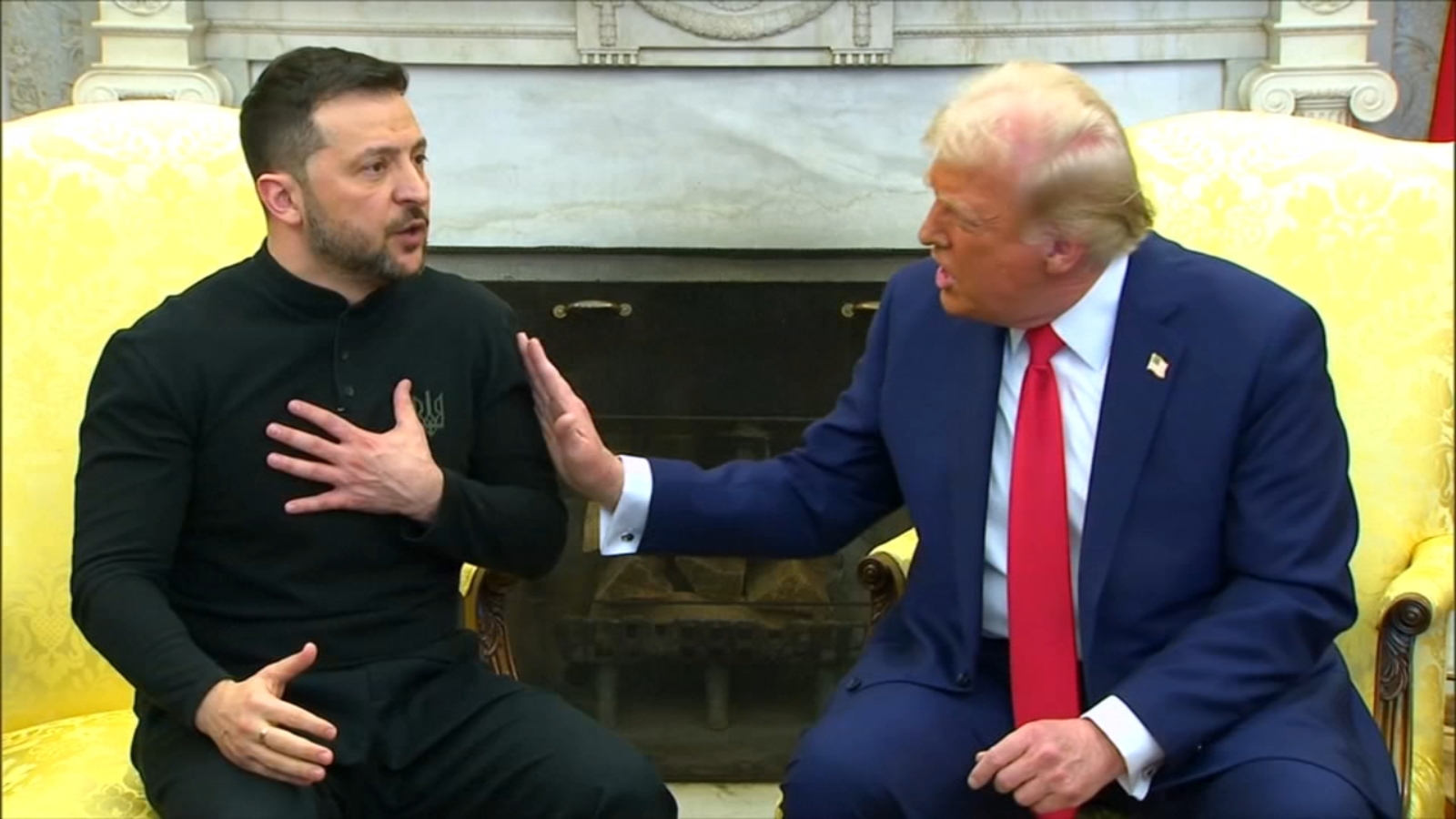
The widely covered Trump Zelenskyy Oval Office meeting on Friday captured global attention, but the explosive confrontation that unfolded between the two leaders didn’t begin with hostility. In fact, the opening minutes of what became an infamous Oval Office shouting match were marked by warmth, optimism, and a shared sense that a significant agreement on Ukrainian critical minerals was within reach. Only after the cameras started rolling and the conversation deepened did the tone shift dramatically.
This blog post reconstructs what happened before the blowup , the diplomatic groundwork, the early moments of accord, and the first cracks that would eventually widen into a public feud broadcast around the world.
Opening Minutes: An Unexpectedly Warm Tone
Just days after labeling Zelenskyy a “dictator,” President Donald Trump welcomed his Ukrainian counterpart to the White House with notably softer language. Standing at his desk in the Oval Office, Trump leaned on their years of working relationship to set a conciliatory tone before reporters.
“We’ve actually known each other for a long time. We’ve been dealing with each other for a long time and very well there. We had a little negotiation spat, but that worked out great, I think, for both countries.”
That opening stood in stark contrast to the heated exchanges that would follow. The Ukrainian president, for his part, mirrored the hopeful energy, expressing gratitude and anticipation about the minerals deal that sat at the center of the meeting agenda.
Hopeful Signs Around the Ukraine Minerals Deal
At the heart of the early conversation was a proposed agreement granting the United States access to Ukraine’s substantial reserves of critical minerals , resources essential for everything from electric vehicle batteries to advanced military technology. Zelenskyy framed the deal as more than an economic arrangement.
“I hope that this document will be the first step to real security guarantees for Ukraine,” he told reporters. “Our people, our children really count on it. And, of course, we count that America will not stop support.”
His words underscored how heavily Ukraine was leaning on this moment , and how urgently Kyiv wanted U.S. backing to extend beyond financial and military aid into long-term security commitments.
Zelenskyy’s Appeal for Continued American Support
Beyond the minerals deal, Zelenskyy used his opening remarks to make a direct appeal for sustained U.S. engagement. He painted a vivid picture of why American leadership still mattered, even as European allies signaled willingness to step up.
“I think that France and U.K. already spoke to you, and we know that Europe is ready, but without the United States, they will not be ready to be as strong as we need,” he said.
This framing , acknowledging European willingness while emphasizing American indispensability , was clearly intended as both flattery and strategy. Zelenskyy needed Trump to view continued support as essential to a broader geopolitical project, not merely a favor to Kyiv.
The Turning Point: Disagreements Begin to Surface
For roughly ten minutes, the Trump Zelenskyy Oval Office meeting maintained its optimistic veneer. But beneath the surface, substantive policy differences were already beginning to emerge. The first visible fissure concerned one of the most persistent points of tension in the war: how much credit Europe deserves for supporting Ukraine.
Battle Over Europe’s Contribution
When Zelenskyy asserted that European allies “really gave a lot,” Trump pushed back sharply. He disagreed with Zelenskyy’s framing but offered no specific figures to support his claim.
“They gave a lot , but they gave much less,” Trump replied.
Zelenskyy’s skeptical “No” drew a moment of levity, but the disagreement foreshadowed the deeper conflict about responsibility for Ukraine’s future. Each leader had a fundamentally different read on how the burden of supporting Kyiv should be distributed.
The Heart of the Dispute: Security Guarantees and Putin
The polite disagreements about European contributions were only the beginning. As the meeting progressed, both leaders revealed sharply different views about what any peace deal with Russia should actually look like , and whether Vladimir Putin could ever be trusted to honor one.
Zelenskyy’s Hard Line on Russia
Throughout the session, Zelenskyy urged the U.S. to take a firm stance against Putin, calling him a “killer” and “terrorist” and warning that a simple ceasefire would not be enough.
“I hope that together we can stop him. But for us, it’s very important to save our country, our values, our freedom and democracy,” he said. Zelenskyy repeatedly emphasized that without robust security guarantees, any temporary truce would simply allow Russia to regroup and reattack.
“It will not work without security guarantees,” he added bluntly.
Trump’s Counterpoint on Russian Trust
Trump, by contrast, expressed confidence that Russia would honor any agreement reached. He brushed aside Zelenskyy’s concerns about the need for security guarantees, signaling that his focus was on closing the deal itself rather than building safety mechanisms around it.
“We’ll make a deal. I have to make the deal first. I don’t worry about security right now,” Trump said.
This statement crystallized the philosophical divide between the two leaders: Zelenskyy saw peace as conditional on ironclad security architecture, while Trump viewed the deal itself as the primary objective.
Vance Enters the Fray
What had been a tense but controlled disagreement escalated when Vice President J.D. Vance weighed in on the conversation. Vance reinforced Trump’s argument by criticizing the Biden administration’s approach to deterrence, claiming the previous White House had failed to prevent the war from escalating.
It was at this moment that the carefully managed diplomacy began to unravel. Zelenskyy attempted to interject, drawing on the painful history of Ukrainian struggles over the past decade to push back against the criticism. His attempt to defend his country’s record triggered an angry response.
The Moment That Changed Everything
Both Trump and Vance began shouting at Zelenskyy, transforming the diplomatic meeting into an open confrontation. Whatever restraint had been keeping the discussion civil evaporated under the pressure of live cameras and clashing worldviews.
Observers around the world watched as the most consequential Oval Office confrontation in recent memory unfolded in real time.
Trump’s Defense of His Putin Engagement
Even before the shouting match reached its peak, Trump pushed back against suggestions that his ongoing dialogue with Putin reflected improper alignment with the Kremlin. His response offered a window into how he views his own diplomatic role.
“I’m not aligned with anybody. I’m aligned with the United States of America. And for the good of the world,” Trump said.
Trump framed his willingness to engage Putin , a position that has drawn criticism from both Republicans and Democrats , as pragmatic deal-making rather than ideological sympathy. To Trump, talking to adversaries was simply how peace was achieved.
What the Opening Reveals About Both Leaders
The first half of the Trump Zelenskyy Oval Office meeting demonstrated that both leaders entered the room wanting the same outcome: a signed minerals deal and at least the appearance of partnership. Zelenskyy’s calculated flattery of Trump, and Trump’s patient listening during the opening remarks, showed two politicians who understood the optics of the moment.
What derailed the meeting wasn’t bad faith at the start. It was the absence of genuine agreement on the underlying issues. The two leaders fundamentally disagreed about:
- European responsibility: How much credit and burden Europe should bear
- Putin’s trustworthiness: Whether Russia would honor a ceasefire
- Security guarantees: Whether the U.S. should commit to long-term protection of Ukraine
- The value of diplomatic engagement with Russia: Pragmatism versus appeasement
These were not minor disagreements that could be papered over with diplomatic language. They were core strategic questions, and the Oval Office shouting match was the natural outcome of leaders with incompatible answers trying to negotiate in public.
Conclusion: A Meeting That Started With Hope
The dramatic Oval Office shouting match will be the moment most people remember about Friday’s encounter. But the quieter opening , the warm handshake, the optimistic talk of minerals, the careful words of appreciation , reveals an equally important truth. Neither Trump nor Zelenskyy wanted a public confrontation. They wanted a deal.
The confrontation happened anyway, not because either leader was committed to causing it, but because the gap between their visions was simply too wide to bridge in a single meeting. The Trump Zelenskyy Oval Office meeting will likely be studied for years as a case study in how quickly diplomacy can collapse when core disagreements are not addressed before the cameras start rolling , and when both sides arrive with fundamentally incompatible definitions of what success looks like.
For Ukraine, the fallout from this confrontation continues to reshape international alliances and force difficult conversations about what security realistically looks like in the years ahead.