
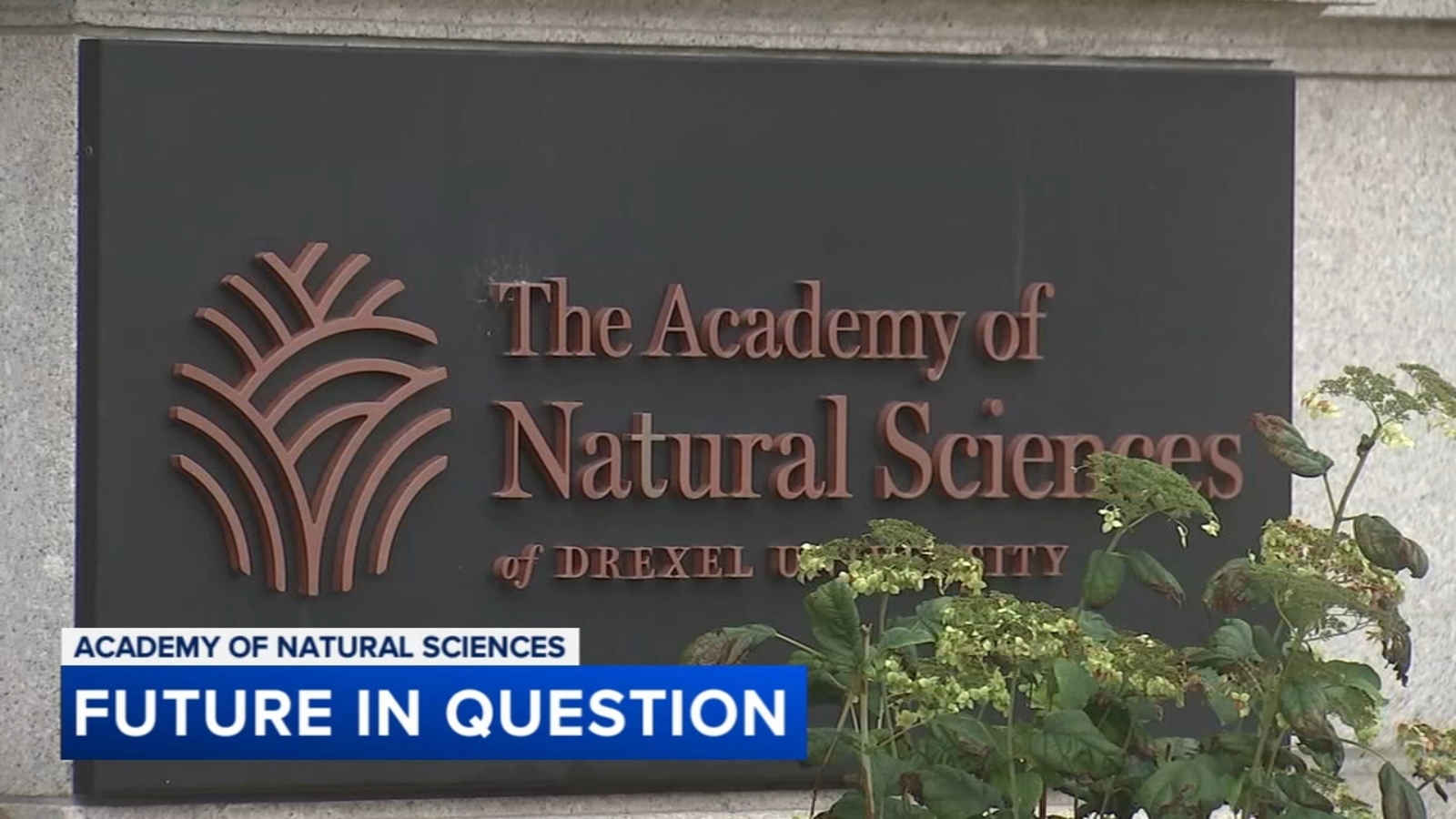
When one of America’s oldest institutions faces an uncertain future, the ripple effects extend far beyond the walls of a single building. The academy of natural sciences in Philadelphia stands at a pivotal crossroads, with city and state leaders mobilizing in a determined effort to preserve nearly two centuries of scientific legacy. As the museum prepares to close its doors at the end of the month, a coalition of influential figures is working behind the scenes to ensure that this treasured institution does not disappear from the cultural landscape of Philadelphia.
The Looming Closure of a Philadelphia Landmark
After operating as a destination for generations of curious minds for almost 200 years, the Academy of Natural Sciences is set to close its Parkway museum on September 30. The announcement sent shockwaves through the community, triggering an immediate response from political leaders who refused to let one of the nation’s most historic natural history museums fade quietly into memory.
The museum has struggled with declining attendance and years of financial strain, conditions that ultimately made the closure decision unavoidable in its current form. However, the closure of the physical building does not necessarily signal the end of the academy itself. Instead, it represents a transformation, one that leaders hope will preserve the institution’s core identity while adapting to modern realities.
A Three-Legged Stool: Research, Education, and Public Engagement
David Cohen, an attorney and former U.S. ambassador to Canada, has stepped into the fray at the request of Pennsylvania Governor Josh Shapiro. Cohen has framed the academy’s value around what he calls a “three-legged stool”: research, education, and public engagement.
- Research: The academy’s scientific investigations have contributed to global understanding of biodiversity, paleontology, and environmental science for generations.
- Education: From school field trips to public lectures, the institution has long served as a living classroom for learners of all ages.
- Public Engagement: Beyond its exhibits, the academy has connected ordinary citizens with the wonders of the natural world, fostering curiosity and scientific literacy.
According to Cohen, each of these legs may emerge a little shorter after the restructuring, but the essential mission will endure. “That long-run mission of the academy will continue,” he affirmed, suggesting that compromise on scope is preferable to total dissolution.
Key Players in the Preservation Effort
Governor Josh Shapiro
The governor personally enlisted Cohen to help broker a solution, signaling the state’s commitment to retaining this scientific treasure within Pennsylvania’s borders. His involvement demonstrates that the academy’s importance transcends local politics and has been recognized at the highest levels of state government.
Mayor Cherelle Parker
Philadelphia’s mayor has joined the collaborative effort, issuing a statement that reflects a unified front. “We are working collaboratively toward the outcome we all seek for the City of Philadelphia,” Parker told local media. Her participation ensures that municipal resources and attention remain focused on finding a viable path forward.
Deputy Mayor Patricia “Trish” Wellenbach
In a tangible demonstration of commitment, the city has announced that Deputy Mayor Wellenbach will be loaned to the academy to serve as a senior adviser. This move provides the institution with experienced governmental leadership during its transition period, helping guide strategic decisions about collections, operations, and future direction.
David Cohen
Cohen’s role as volunteer broker between the academy and potential partners places him at the center of negotiations. His diplomatic background and legal expertise make him uniquely suited to navigate the complex discussions required to restructure a major cultural institution.
The Drexel University Connection
One of the most promising developments involves ongoing discussions with Drexel University, a Philadelphia institution with strong academic and research credentials. Cohen has been actively working to facilitate an agreement that would integrate the academy’s research operations with Drexel’s broader academic mission.
Such a partnership could provide the financial stability and institutional infrastructure that the academy has lacked, while also enhancing Drexel’s research portfolio in natural sciences. The collaboration represents a pragmatic solution that honors the academy’s heritage while positioning it for future success.
What Happens to 19 Million Artifacts?
Perhaps the most logistically daunting aspect of the closure involves the academy’s extraordinary collection of 19 million artifacts. After September 30, the institution will begin the painstaking process of relocating these specimens, which represent centuries of accumulated scientific knowledge.
These collections include everything from dinosaur fossils and pressed botanical specimens to insects, minerals, and anthropological artifacts. Each item tells a story about Earth’s natural history and the countless researchers who have contributed to the collection over the decades. Finding appropriate homes for these specimens, whether in new facilities, partner institutions, or long-term storage, will be a massive undertaking requiring careful planning and substantial resources.
The Future of the Benjamin Franklin Parkway Building
While the academy may continue in a new form, its iconic home on the Benjamin Franklin Parkway will be vacated. Cohen has confirmed that the sale of the building is among the options being considered, with proceeds potentially funding the institution’s new operational model.
The Parkway location has been synonymous with the academy for generations of Philadelphians. Any change to that address carries significant emotional weight, but leaders have emphasized that the institution’s value lies not in its walls but in its mission, collections, and contributions to science.
Could the Museum Return?
Interestingly, Cohen has suggested that the academy could eventually return in a smaller form. While the grand museum experience may be temporarily suspended, the possibility of a reimagined exhibition space remains on the table. This hope, though uncertain, provides a measure of optimism for Philadelphians who have grown up visiting the institution on school trips and family outings.
Competition from Other Cities
The academy’s potential relocation attracted interest from destinations far beyond Philadelphia. Cleveland and even Abu Dhabi reportedly expressed interest in acquiring the institution. However, those offers were ultimately set aside in favor of keeping the academy rooted in its birthplace.
“It’s part of who we are,” Cohen emphasized, articulating a sentiment shared by many Philadelphians who view the academy as inseparable from the city’s identity. The decision to fight for local preservation reflects a recognition that cultural institutions carry deep civic meaning that transcends their economic or scientific value.
Why This Matters Beyond Philadelphia
The struggle to preserve the academy of natural sciences raises broader questions about the future of natural history museums across America. Many similar institutions face comparable challenges: aging facilities, changing audience expectations, and the perpetual challenge of funding scientific research in an era of tight budgets.
Philadelphia’s response, a coordinated effort combining state leadership, municipal support, and academic partnership, could serve as a template for other cities grappling with similar situations. The academy’s story is still being written, and the outcome may influence how communities across the nation approach the preservation of their own scientific and cultural heritage.
Looking Ahead
As the September 30 closure date approaches, uncertainty and determination coexist in equal measure. The academy of natural sciences faces an undeniably difficult transition, but the coordinated response from Philadelphia’s political and academic leadership offers genuine hope for a sustainable future.
The artifact relocation process will take time, negotiations with Drexel University will require careful navigation, and the eventual shape of a restructured academy remains to be determined. What is clear, however, is that this nearly 200-year-old institution has not been abandoned. Philadelphia is fighting for it, and that fight reflects a community’s deep understanding of what it would lose if one of America’s pioneering scientific institutions were allowed to disappear.
Conclusion
The academy of natural sciences represents far more than a museum; it embodies Philadelphia’s commitment to scientific discovery, education, and public enlightenment. As city and state leaders work to forge a new path forward, their efforts honor nearly two centuries of contributions to natural science while building a foundation for future generations. The coming months will be critical, but with determined advocates like Governor Shapiro, Mayor Parker, Deputy Mayor Wellenbach, and David Cohen leading the charge, the academy’s essential mission of research, education, and public engagement has a genuine chance to endure. For Philadelphia, and for the broader scientific community, the stakes could not be higher, and the resolve to preserve this historic institution could not be clearer.