
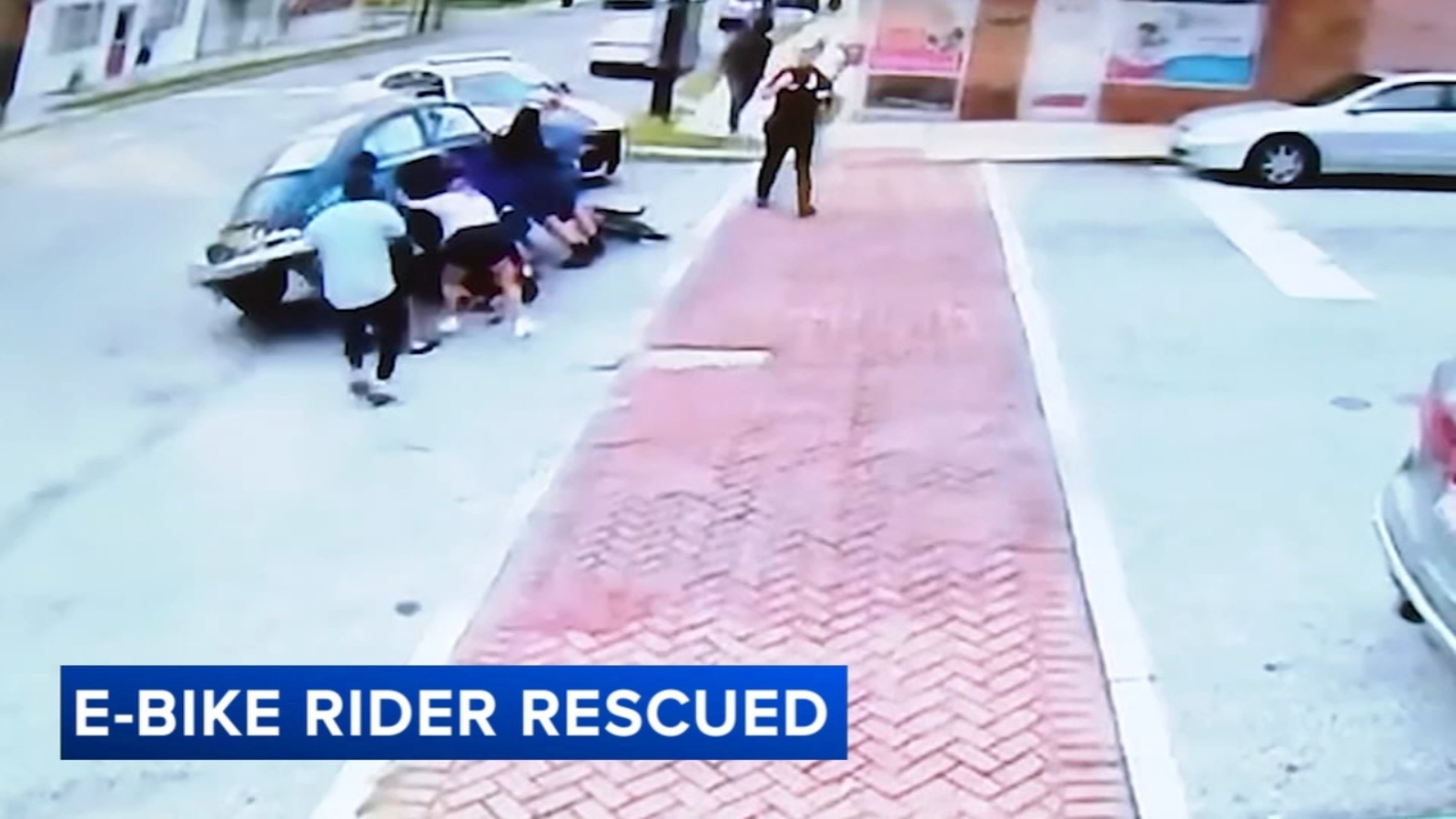
A dramatic ebike crash rescue
The collision occurred around 9:40 a.m. at 11th Street and Lincoln Avenue. According to police, the woman struck a classic Volkswagen Beetle and became pinned underneath the vehicle. Her cries for help prompted people from nearby homes and businesses to rush into action.
What followed was an extraordinary example of ordinary citizens becoming first responders in a life-threatening emergency. With no rescue equipment or specialized training, several people lifted the car far enough for others to pull the injured rider out.
Neighbors Lift a Volkswagen Beetle
Christine Vollmer, who works at CV Signs, saw the alarming scene from the business. She recalled seeing only the woman’s legs beneath the Volkswagen and immediately called 911.
At the same time, Amelia Cannon of Nolet Home Care Agency heard the rider scream for help and ran outside.
“I just tried to lift the car by myself, and then other neighbors came out,” Cannon said.
As more people gathered, Vollmer searched for anyone who could help manage the weight of the vehicle. She noticed a delivery driver and called him over. That worker was Karl Wise, a FedEx driver who had stopped near the scene.
Wise joined the group and helped raise the Volkswagen Beetle onto its side. The additional space allowed bystanders to pull the woman from beneath the car. Once she was free, he immediately warned her not to move, an important precaution when a victim may have sustained head, neck, back, or internal injuries.
The woman was transported to Lankenau Hospital with chest injuries. Police later reported that she was in stable condition.
Why the Rescue Was So Urgent
Vehicle pinning incidents can become fatal within minutes. The weight of a car can compress the chest, restrict breathing, reduce circulation, and cause severe internal trauma. Even when the pressure is relieved, hidden injuries may remain.
This type of emergency explains why the Prospect Park bystanders did not wait for professional equipment. Their immediate goal was to relieve the pressure and restore the rider’s ability to breathe.
The rescue also illustrates the importance of coordination during chaotic moments. One person called 911. Others raised the vehicle, while additional bystanders created enough space to free the woman. No single person completed the rescue alone; it took a group working together under extreme pressure.
What Bystanders Should Do After a Serious Crash
Witnesses to a severe collision should prioritize safety and follow the directions of emergency dispatchers. Depending on the situation, helpful actions may include:
- Calling 911 immediately and giving the exact location, number of victims, and clearest description of the danger.
- Checking whether the scene is safe before approaching. Oncoming traffic, fire, downed power lines, or leaking fuel may require people to stay back.
- Speaking calmly to the victim and confirming that help is on the way.
- Following the dispatcher’s instructions rather than improvising care that could worsen an injury.
- Keeping the person still unless there is an immediate threat, such as fire, unstable traffic, or continuing pressure on the body.
- Directing emergency vehicles to the correct entrance or side of the scene when needed.
For a pinned person, the correct action depends on the vehicle’s position, the victim’s condition, and the danger surrounding the crash. Multiple adults may sometimes be able to lift a vehicle, but attempting to move a car without enough help can cause the vehicle to shift and injure the victim or rescuers. Whenever possible, 911 dispatchers should guide the response while trained crews are traveling to the scene.
E-Bike Safety Comes Under Scrutiny
After the rescue, Prospect Park Police Chief Dave Madonna praised the bystanders for using “brute force” to free the trapped rider. He also used the incident to call attention to the risks associated with electric bicycles.
The crash demonstrates why e-bike safety needs to be taken seriously. Electric bicycles can travel faster than many casual riders expect, particularly when entering an intersection, climbing a hill, or riding near traffic. Their quiet motors may also make them less noticeable to drivers and pedestrians.
Police noted that Pennsylvania generally does not require e-bike operators to hold a driver’s license or wear a helmet, according to the department’s account of the law. That lack of universal protective requirements has prompted local officials to ask for additional attention and possible regulations.
Regardless of the legal minimum, a properly fitted helmet is one of the simplest and most effective ways a rider can reduce the risk of serious head injury. A helmet should sit level on the head, fit securely, and have its straps fastened. It should also be replaced after a significant impact or if it shows signs of damage.
Practical Safety Steps for E-Bike Riders
No one can eliminate every risk on public roads, but riders can make themselves more visible and improve their control. The Prospect Park crash offers several important reminders:
- Wear a helmet on every ride. Protection is especially important during short trips, when riders may be tempted to skip safety equipment.
- Obey traffic signals and stop signs. E-bike riders must follow the same fundamental rules as other road users.
- Reduce speed at intersections. Before crossing or turning, check both directions and watch for drivers who may fail to yield.
- Use lights and reflective clothing. Bright accessories and working front and rear lights help riders remain visible in low light.
- Stay alert near parked vehicles. A door may open, or a driver may pull away without noticing an approaching bicycle.
- Maintain the bicycle. Brakes, tires, chains, and battery systems should be inspected regularly.
- Match speed to road conditions. Wet pavement, gravel, potholes, and sharp turns can suddenly reduce traction.
Heroes Who Say They Simply Helped
Prospect Park police later returned to thank Cannon, Vollmer, Wise, and the others who participated in the rescue. Chief Madonna told the group that they stepped forward and did what had to be done.
The helpers accepted the praise modestly. Cannon rejected the label of hero, saying she had simply assisted someone in need.
That response reflects the nature of many bystander rescues. The participants may view their actions as instinctive, but emergency officials recognize how critical those first minutes can be. In a vehicle-pinning event, an ordinary decision to run toward danger rather than away can give an injured person a chance to survive.
Conclusion
The Prospect Park ebike crash rescue ended with the injured rider hospitalized in stable condition, thanks to neighbors, employees, and a delivery driver who acted without hesitation. Their coordinated effort lifted a Volkswagen Beetle, freed the woman, and allowed medical crews to take over.
While the rescue deserves recognition, the crash also serves as a broader warning about e-bike safety, road awareness, and the importance of protective equipment. The woman’s survival was made possible by quick thinking and collective action,proof that bystander preparedness, along with safe riding habits, can make a decisive difference in an emergency.