
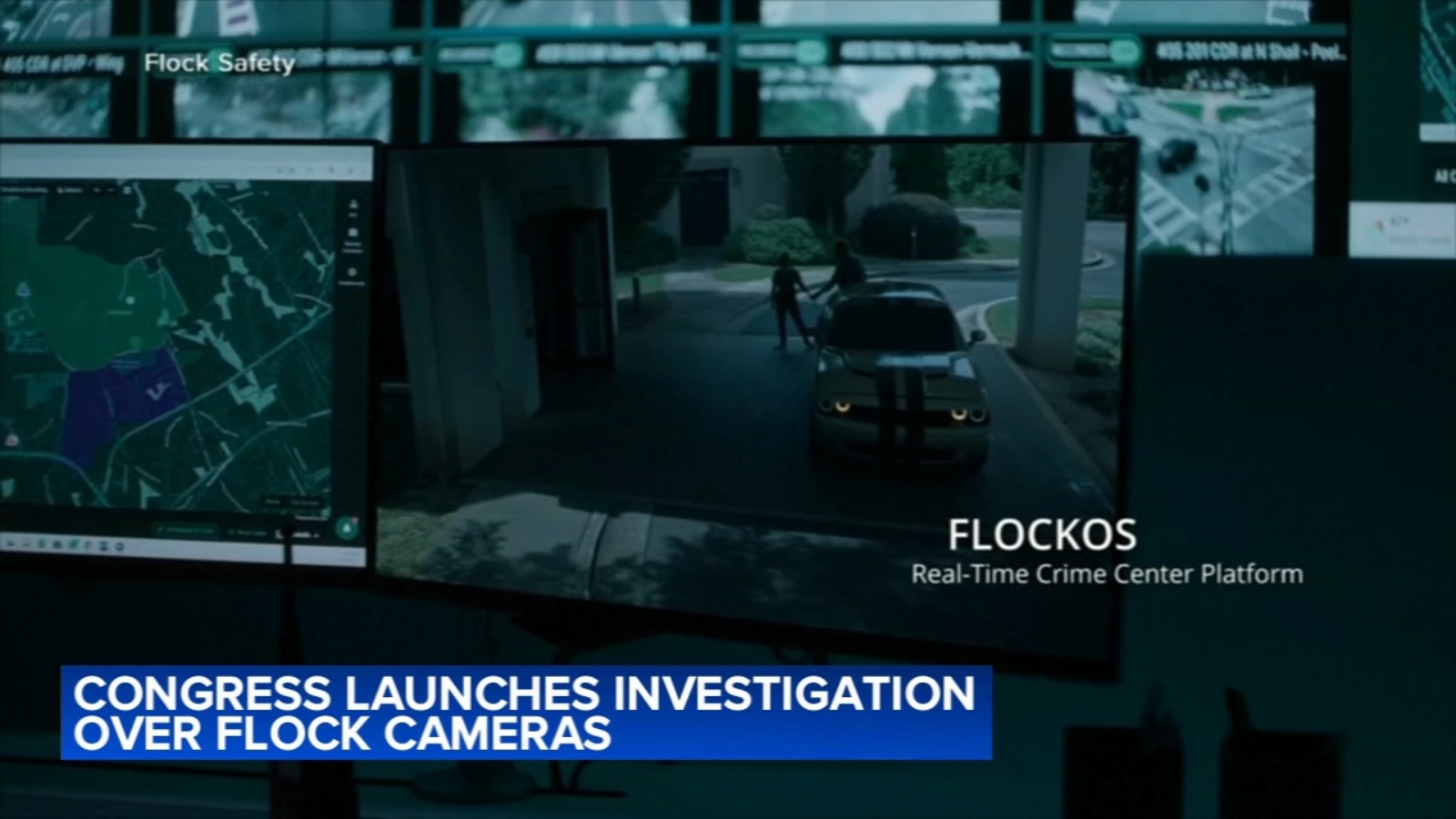
Residents of Abington Township, Pennsylvania are at the center of a growing national debate over Flock Safety cameras and the future of automated law enforcement surveillance. In a move that underscores mounting privacy concerns, the Abington Township Board of Commissioners voted Thursday night, August 28, 2026, to approve a contract that will replace the police department’s existing Flock Safety surveillance system with an alternative that promises stricter limits on data sharing.
This decision comes at a time when Flock Safety cameras,widely used automated license plate readers (ALPRs),face unprecedented scrutiny from lawmakers, civil liberties advocates, and ordinary citizens. With Congress actively investigating the company and reports of database misuse by law enforcement agencies surfacing across the country, Abington Township’s vote represents a meaningful shift in how communities are choosing to balance public safety with personal privacy.
Understanding Flock Safety Cameras and How They Work
Flock Safety cameras are a type of automated license plate reader designed to photograph every passing vehicle within their field of vision. Once captured, the license plate information, along with details such as the make, model, and color of the vehicle, is uploaded to a searchable database. Law enforcement officers can then query this database to track vehicles of interest, identify stolen cars, or investigate suspects in criminal cases.
On the surface, the technology sounds like a powerful tool for solving crimes. In practice, however, the scope of data collection is far broader. Flock Safety cameras do not discriminate between suspected criminals and ordinary drivers. They photograph every vehicle that passes by,regardless of whether there is any reasonable suspicion of wrongdoing,and store that information in a vast, searchable repository.
Perhaps most controversially, police departments can search this database without obtaining a warrant. This practice has drawn sharp criticism from privacy advocates who argue that it violates Fourth Amendment protections against unreasonable searches and seizures.
Why Abington Township Decided to Replace the System
The Abington Township Board of Commissioners, located in Montgomery County just outside Philadelphia, made the decision to replace the existing Flock Safety surveillance system following weeks of public pressure and internal deliberation. According to local reporting, the police department claims that the new system will impose more limits on data sharing,addressing one of the primary concerns raised by residents and civil liberties groups.
The vote reflects a broader trend of municipalities reconsidering their relationships with surveillance technology companies. In neighboring Wilmington, Delaware, officials have already announced plans to decommission Flock cameras entirely amid similar debates. These decisions signal that local governments are increasingly willing to challenge the unchecked expansion of license plate recognition networks, even when those networks are marketed as tools for enhancing community safety.
The Role of Congressional Investigation
Adding fuel to the fire, Flock Safety is currently under investigation by Congress. Lawmakers have raised questions about how the company’s database is managed, who has access to it, and whether law enforcement officers have been misusing the system. Multiple reports have surfaced alleging that police officers across various jurisdictions have used the Flock Safety database for purposes unrelated to legitimate criminal investigations,including tracking individuals for personal or political reasons.
These revelations have intensified calls for transparency and accountability. Critics argue that without clear guardrails, Flock Safety cameras function less as crime-fighting tools and more as instruments of mass surveillance that erode the constitutional rights of ordinary citizens.
Privacy Concerns Driving the Backlash
The privacy concerns surrounding Flock Safety cameras are not theoretical,they are rooted in the technology’s fundamental design. Because the cameras photograph every passing vehicle, they generate an enormous volume of data on the daily movements of law-abiding citizens. This information can reveal sensitive patterns about where people live, work, worship, and seek medical care.
When that data is stored in a centralized Flock Safety database and made searchable by police without a warrant, it creates what privacy advocates describe as a perpetual tracking system. Every trip to the doctor’s office, every visit to a political rally, and every commute through a monitored neighborhood becomes a permanent record accessible to law enforcement.
Compounding these concerns is the fact that Flock’s network is not siloed. Cameras deployed in one jurisdiction can share data with police departments in other states, creating a sprawling, interconnected surveillance infrastructure that operates with minimal oversight.
The Controversial Driver Lookup Website
One particularly contentious development in the debate over Flock Safety cameras is the emergence of a website that allows drivers to check whether their vehicle has been searched in the Flock database. While transparency advocates have praised the tool as a way for citizens to monitor how their data is being used, critics argue that it has also highlighted the sheer scope of surveillance taking place.
Many drivers who have used the lookup tool have been shocked to discover that their vehicles have been logged in the Flock system multiple times,often without their knowledge or consent. This has only amplified public outrage and put additional pressure on local governments to reconsider their contracts with the company.
Flock Safety’s Response to the Criticism
In response to the growing backlash, Flock Safety has announced changes to its policies and practices. The company has pledged to implement stricter controls on data sharing, enhance audit capabilities, and provide greater transparency about how its license plate reader network is being used by law enforcement agencies.
However, skeptics remain unconvinced. They argue that voluntary reforms are insufficient when the underlying technology is inherently invasive. True accountability, they say, requires legislative action,clear laws that define when and how automated license plate readers can be deployed, how long data can be retained, and who is authorized to access it.
A National Conversation About Surveillance
Abington Township’s decision to replace its Flock Safety cameras is part of a much larger national conversation about the boundaries of police surveillance in the digital age. Communities across the country are grappling with the same fundamental question: How do we harness the crime-fighting potential of new technologies without sacrificing the privacy rights that define a free society?
In Montgomery County and beyond, residents are demanding answers. They want to know who is watching them, what data is being collected, and how long that data is being stored. They want assurance that police surveillance tools are being used responsibly,and not as instruments of overreach.
What Comes Next for Abington Township
While the Board of Commissioners has voted to move forward with a replacement system, the transition will take time. During that interim period, the community can expect continued debate over the details of the new contract, including how data will be managed, who will have access to it, and what safeguards will be put in place to prevent abuse.
Local advocates have already signaled that they intend to remain engaged throughout the process, pushing for transparency and stronger privacy protections. Their efforts are likely to serve as a model for other communities considering similar decisions about their own surveillance cameras and data-sharing agreements.
Conclusion: A Turning Point for Automated License Plate Readers
The vote in Abington Township marks a significant moment in the ongoing debate over Flock Safety cameras and the broader use of automated license plate readers by law enforcement. As communities from Pennsylvania to Delaware and beyond reconsider their relationships with surveillance technology, the message is becoming clear: the public will no longer accept unchecked data collection and warrantless searches without a fight.
Whether other municipalities follow Abington Township’s lead remains to be seen. But one thing is certain,the conversation about privacy, accountability, and the appropriate role of police surveillance in democratic society is far from over. Residents who value their civil liberties will continue to demand that the tools used to protect them do not, in the process, undermine the very freedoms they are meant to safeguard.