
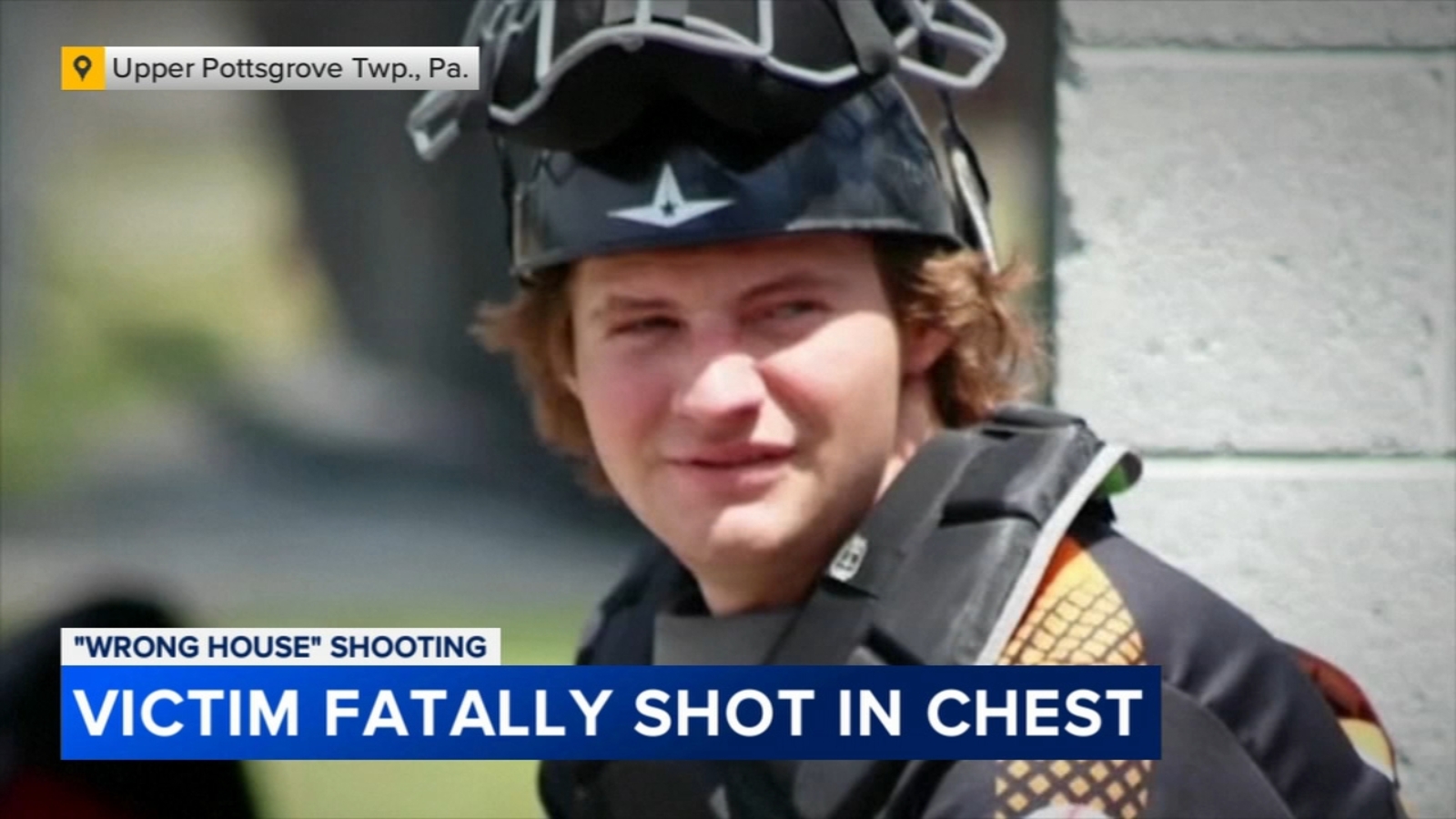
The Glenn Pysher police shooting in Upper Pottsgrove Township, Pennsylvania, has left a community searching for answers after a 22-year-old college baseball player was fatally shot by an officer responding to a burglary call that his family insists was nothing more than a tragic case of a young man arriving at the wrong address. The Montgomery County Coroner’s Office has now released new details about the cause and manner of death, shedding additional light on a case that has sparked grief, outrage, and a growing demand for transparency.
A Night That Ended in Tragedy
The events of August 23, 2026, began like many ordinary nights for Glenn Pysher, a young man whose family described as a free-spirited athlete with a bright future. He had been out celebrating a friend’s birthday at a local bar in Montgomery County, Pennsylvania. Rather than call for a ride, Pysher decided to walk to a friend’s home nearby , a decision that, according to his mother Erin Pysher, led him to the wrong house entirely.
Unaware of his mistake, Pysher reportedly knocked on the door of the unfamiliar residence, asking to be let in, believing it belonged to someone he knew. What happened in the minutes that followed has become the center of a deeply emotional and still-unfolding investigation into an officer-involved shooting that has shaken the Upper Pottsgrove Township community.
Montgomery County Coroner’s Findings
Several days after the fatal encounter, the Montgomery County Coroner’s Office publicly confirmed the cause and manner of Glenn Pysher’s death. According to officials, the young man died from gunshot wounds to the chest. An officer discharged his firearm twice during the encounter, with both rounds striking Pysher.
The coroner classified the manner of death as a homicide, though officials were careful to clarify the legal weight of that designation. In a written statement, the Coroner’s Office explained that, consistent with Pennsylvania law, the term “homicide” in this context is strictly a medical determination used for death certification purposes. It does not imply criminal intent on the part of the officer, nor does it assign legal responsibility for the death.
- Cause of death: Gunshot wounds to the chest
- Manner of death: Homicide (medical classification)
- Number of shots fired: Two
- Date of incident: August 23, 2026
- Location: Upper Pottsgrove Township, Montgomery County, Pennsylvania
A Timeline Shrouded in Uncertainty
One of the most haunting elements of this fatal police shooting is the speed with which it unfolded. According to the Montgomery County authorities, police received a 911 call reporting a burglary in progress at approximately 12:29 a.m. Just three minutes later, at 12:32 a.m., Erin Pysher says her son was on the phone with friends. By 12:35 a.m., she believes he had already been shot.
The compressed timeline , roughly six minutes from the initial 911 call to the fatal shooting , has intensified concerns about how quickly the situation escalated. Authorities have not yet publicly disclosed why the responding officer believed lethal force was necessary, and the footage from surveillance cameras positioned behind the home has not been released to the public, though investigators say it is being reviewed as part of the active probe.
What the Family Is Saying
Glenn Pysher’s mother has been vocal in her grief and her insistence that her son was the victim of a fatal misunderstanding. In an emotional interview, Erin Pysher told reporters that Glenn had consumed a few drinks during the birthday celebration and, in his inebriated state, mistakenly arrived at a residence he believed to be his friend’s home.
“He ended up at the wrong house after having a few drinks. He didn’t know that, so he was knocking on the door saying, ‘Hey, let me in,’ thinking it was his friend’s house, but it wasn’t,” Erin Pysher said.
She also emphasized that her son was unarmed at the time of the Upper Pottsgrove Township police shooting, carrying only a cellphone and a book bag. The family’s account has added fuel to a broader conversation about police use of force, particularly in situations involving individuals who may be confused, intoxicated, or in some form of mental distress.
Remembering Glenn Pysher
Beyond the headlines and the official investigation, those who knew Glenn Pysher remember a young man defined by warmth, humor, and athletic promise. A passionate baseball player, Pysher had recently transferred to Saint Elizabeth University in New Jersey, where he was preparing to continue his collegiate athletic career. His mother described him as someone who lit up every room he entered.
“He was just happy-go-lucky. Didn’t have a care in the world, and I’m going to miss that,” she recalled, her voice carrying both heartbreak and tenderness.
She also shared a small but telling detail about her son’s personality , the way he would walk through the back door and announce his arrival with his favorite phrase:
“He would walk in the back door and say his favorite thing, ‘Hey mom, your favorite kid is home.'”
It is these personal memories, more than any legal classification or official statement, that have come to define how Glenn Pysher is being mourned by family, friends, teammates, and a wider community grappling with the loss.
The Ongoing Investigation
The police shooting investigation into Glenn Pysher’s death remains active, with multiple agencies likely involved in reviewing the actions of the responding officer. Authorities have confirmed that surveillance footage exists, captured by cameras mounted behind the home where the incident occurred. However, that video has not been made public, and officials have not yet offered a detailed explanation for the officer’s decision to use deadly force.
Such investigations in Pennsylvania typically involve the District Attorney’s Office, the involved police department’s internal affairs division, and potentially the Pennsylvania State Police, depending on the jurisdiction and circumstances. The release of the coroner’s findings marks one of the first significant public updates in the case, but many questions remain unanswered , including what Pysher was doing in the moments immediately before the officer arrived, what instructions or commands were given, and what, if any, de-escalation tactics were attempted.
A Wider Conversation About Wrong-Address Shootings
The wrong house shooting involving Glenn Pysher is not an isolated phenomenon. Across the United States, there have been numerous high-profile incidents in which individuals , often under the influence of alcohol, suffering from a medical crisis, or simply confused , have approached homes they mistakenly believed to be their own or a friend’s. In some of those cases, homeowners or responding officers have used deadly force, leading to wrongful death lawsuits, criminal charges, and intense public scrutiny.
Advocates for police reform frequently cite these incidents as examples of why de-escalation training, clearer protocols for burglary-in-progress calls, and more nuanced threat assessment procedures are essential. The Pysher case is likely to be added to that national dialogue, particularly as more details emerge about the officer’s actions and the evidence captured on the home surveillance system.
What Happens Next
As the Glenn Pysher police shooting investigation continues, the family is calling for accountability and transparency. Their central demand , that the footage from the home’s surveillance cameras be released , echoes a broader public expectation that evidence in fatal officer-involved shootings should be made available in a timely manner, particularly when the deceased was unarmed.
For now, the Pysher family is left to grieve a young man whose life was cut short in a matter of minutes, on a night that was supposed to end with friends and celebration. The coroner’s findings have provided one layer of clarity, but the full picture of what transpired in those early-morning hours will only emerge through a thorough and transparent investigative process.
Conclusion
The Glenn Pysher police shooting represents a heartbreaking intersection of youth, misunderstanding, and the consequences of split-second decisions. A 22-year-old athlete with his whole future ahead of him is gone, and a family is searching for answers that, at this stage, only a complete investigation can provide. As the Montgomery County Coroner’s Office has now confirmed, Glenn died from gunshot wounds to the chest, and the manner of death has been classified as a homicide in the medical sense , a classification that does not assign blame but does acknowledge that another human being’s actions caused his death. Communities across Pennsylvania and beyond will be watching closely as investigators piece together the final minutes of a night that changed everything for the Pysher family. Until then, Glenn is remembered not as a headline, but as a son, an athlete, and a young man whose favorite greeting was always, “Hey mom, your favorite kid is home.”