
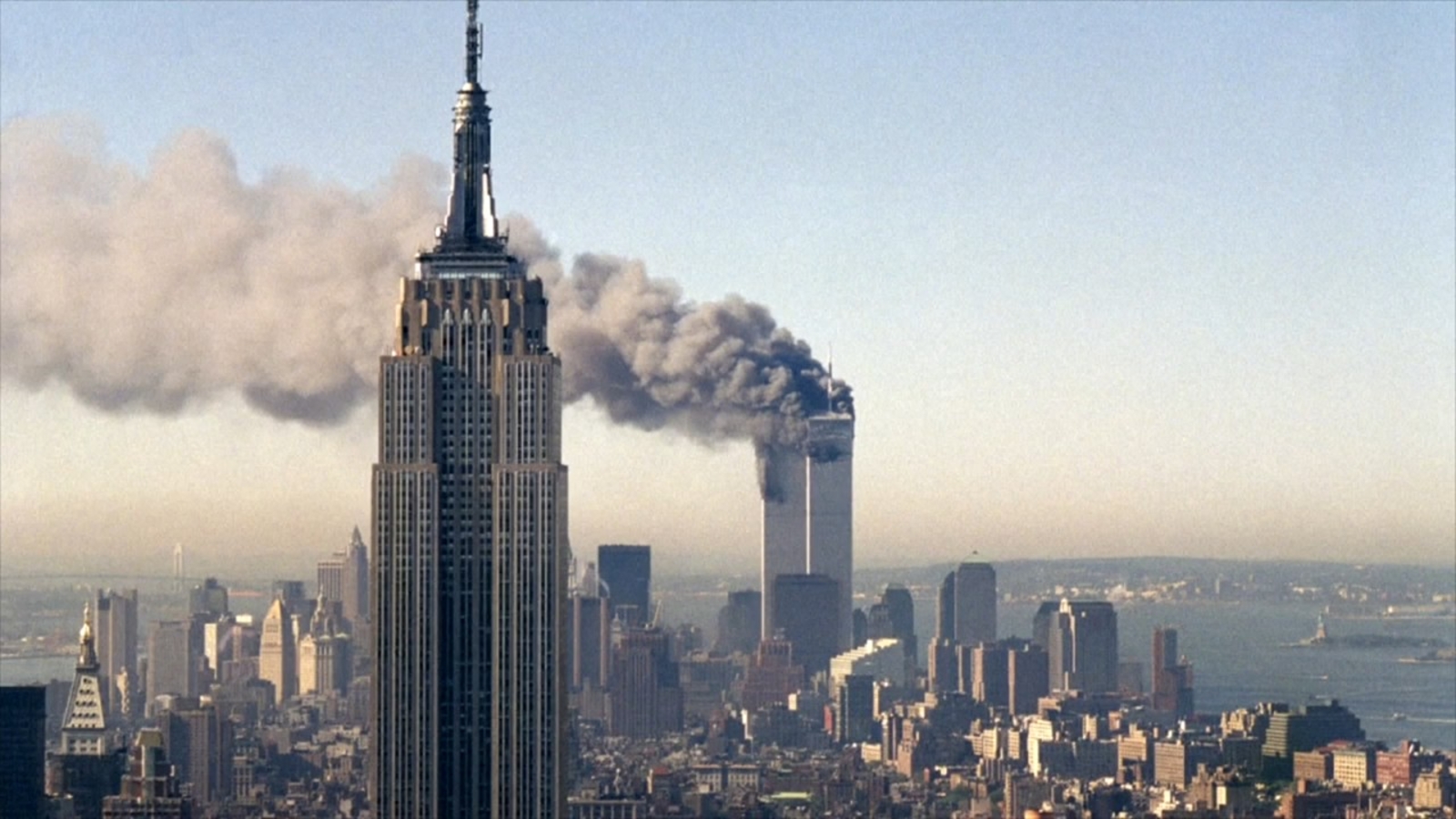
Twenty-five years after the devastating September 11 attacks, families of the victims are intensifying their push for the 9/11 Saudi records declassification, hoping newly surfaced evidence and political momentum will finally expose what they believe is the Kingdom of Saudi Arabia’s deep involvement in the worst terrorist attack on American soil. With the Trump administration championing government transparency through high-profile executive orders, survivors and their advocates are asking a pointed question: if presidential declassification worked for JFK files and UFO documents, why not for 9/11?
The Quest for Truth: Why Families Are Pushing Now
The families of 9/11 victims have spent more than two decades searching for answers about who truly orchestrated the attacks that killed nearly 3,000 people. Their decade-old civil lawsuit against Saudi Arabia is finally advancing toward trial, and they believe the 9/11 Saudi records declassification could be the final piece of the puzzle.
Brett Eagleson, who lost his father Bruce in the collapse of the World Trade Center’s South Tower, has become one of the most vocal advocates for transparency. Speaking with ABC News, Eagleson framed the moment as a once-in-a-generation opportunity for justice. “Now is the moment, 25 years later, to finally bring resolution,” he said. “And the man that sits in the Oval Office has a tremendous opportunity to do it.”
This effort has gained bipartisan traction. Representative Nicole Malliotakis, a Republican from New York and Trump ally, has joined Democratic colleagues Dan Goldman and Jerry Nadler in formally requesting the declassification of sensitive government materials. Their July letter to the Public Interest Declassification Board,a powerful advisory panel housed within the National Archives,outlined the “repeated obstacles” attorneys have faced while trying to obtain these records from U.S. law enforcement and intelligence agencies.
What the Newly Uncovered Evidence Reveals
The most striking recent developments revolve around records obtained from British authorities, who seized them during a raid on the U.K. home of Omar al-Bayoumi just ten days after the attacks. According to the families’ lawsuit, this material includes several items they describe as smoking gun evidence of Saudi complicity.
The Capitol “Casing” Video
Among the most disturbing discoveries is a 1999 video that the families allege shows al-Bayoumi surveilling the U.S. Capitol. In the footage, al-Bayoumi describes the security layout inside and outside the building, highlights the proximity of Reagan National Airport, and cryptically references a “plan.” The families argue the Capitol was the intended target of United Flight 93, which ultimately crashed in a Pennsylvania field after passengers fought back against the hijackers.
Saudi attorneys have dismissed the video as a “tourist video that includes footage of artwork, flowerbeds, and a squirrel on the White House lawn”,a characterization the families fiercely reject.
The Notebook Sketch and Math Equation
Another pivotal piece of evidence is a sketch and accompanying mathematical notation found in al-Bayoumi’s notebook. The families claim these documents represent a “line of sight calculation for navigating a plane to a target on the ground”,directly relevant to the hijackers’ planning. Saudi lawyers countered that the notation appears to be a high school math assignment belonging to one of al-Bayoumi’s children.
Phone Logs and Financial Support
Beyond the video and sketch, attorneys are seeking the declassification of phone records purportedly belonging to al-Bayoumi and two of the 9/11 hijackers. The lawsuit claims al-Bayoumi provided “essential support” to the hijackers when they arrived in California in early 2000, helping them secure an apartment in his complex and providing funds just below the suspicious activity reporting threshold to help them open bank accounts. He allegedly also hosted a welcoming party and allowed the hijackers to stay at his apartment before their own residence was ready.
The Legal Battle Heads Toward Trial
Last year marked a turning point in the litigation. The judge overseeing the case ruled that the evidence presented by the families was compelling enough to proceed to trial,a decision the families called “the most consequential step yet” in two decades of courtroom battles. The judge noted that Saudi Arabia’s exculpatory explanations were “either self-contradictory or [were] not strong enough to overcome the inference” that the kingdom had employed al-Bayoumi to assist the hijackers.
While the ruling stops short of implicating Saudi Arabia’s top leadership directly, it concluded that the evidence “creates a high probability” regarding al-Bayoumi’s role and “the related role of his employer, the Kingdom of Saudi Arabia.”
Saudi Arabia has consistently denied any involvement in the attacks, maintaining in court filings that it remains “an ally of the United States [and] a sworn enemy of Al Qaeda.” Al-Bayoumi himself, believed to now reside in Saudi Arabia, has denied any connection to Saudi intelligence. His attorneys have argued he “became entangled in the 9/11 investigation because he had helped two fellow Saudis he had no reason to suspect of wrongdoing.”
The 9/11 Commission and Missing Evidence
Perhaps the most troubling revelation is that much of the evidence now coming to light was apparently never shared with the 9/11 Commission, which released its final report in 2004 and absolved the Saudi government of “knowingly” supporting Al Qaeda. Critics argue this omission fundamentally shaped the post-9/11 geopolitical landscape.
Daniel Benjamin, a counterterrorism official during both the Clinton and Obama administrations and current president of the American Academy in Berlin, suggested the implications are staggering. The al-Bayoumi records and related materials “force us to think that our entire theory of what 9-11 was about,what the whole war on terrorism was about,was largely mistaken,” he said.
Benjamin pointed to a bitter irony: the Bush administration argued that no non-state actor could have orchestrated an attack as sophisticated as 9/11, which drove the focus toward Iraq and Saddam Hussein. “It is an extraordinary irony,” Benjamin noted, “that they may have been right about the need for state support,but they got the state completely wrong.”
The Push for Presidential Action
The decision to release classified documents rests squarely with President Trump, whose administration has made government transparency a signature issue. From JFK assassination files to records on purported UFO sightings, the president has personally authorized the release of sensitive materials throughout his political career. White House spokesperson Anna Kelly affirmed this commitment, stating that “President Trump is leading the most transparent administration in history, and his team is working diligently to identify records that are responsive to these families’ request.”
The Public Interest Declassification Board responded to the congressional letter by acknowledging it was “actively engaged in interagency consultations to determine what equities, if any, may remain in relation to these records.” However, it urged patience as those discussions continue,a frustrating pace for families who have already waited a quarter-century.
What Comes Next for 9/11 Justice
The Saudi lawsuit is just one thread in a broader tapestry of unresolved 9/11 questions. In a separate legal development, a military judge recently ruled that Khalid Sheikh Mohammed,the self-proclaimed “mastermind” of the attack,will finally face trial in June 2028, after spending more than two decades in detention at Guantanamo Bay.
As the 25th anniversary approaches, the White House confirmed that President Trump would attend a ceremony at the Pentagon, while Vice President JD Vance would travel to New York to participate in observances at Ground Zero. These commemorations underscore both the enduring national trauma and the persistent demand for accountability.
Conclusion: A Moment of Historic Opportunity
The call for 9/11 Saudi records declassification represents far more than a legal technicality,it is a moral reckoning more than two decades overdue. The newly surfaced evidence, from the Capitol surveillance video to the notebook calculations, has the potential to rewrite the historical narrative surrounding the attacks and reshape American understanding of state-sponsored terrorism. Whether the Trump administration seizes this moment will determine whether the families of nearly 3,000 victims finally receive the answers they have sought since that clear September morning in 2001. As Eagleson powerfully stated, “Everyone should be outraged” that such evidence remained hidden for 25 years. The question now is whether transparency will finally prevail,or whether the shadows surrounding 9/11 will persist for another generation.