
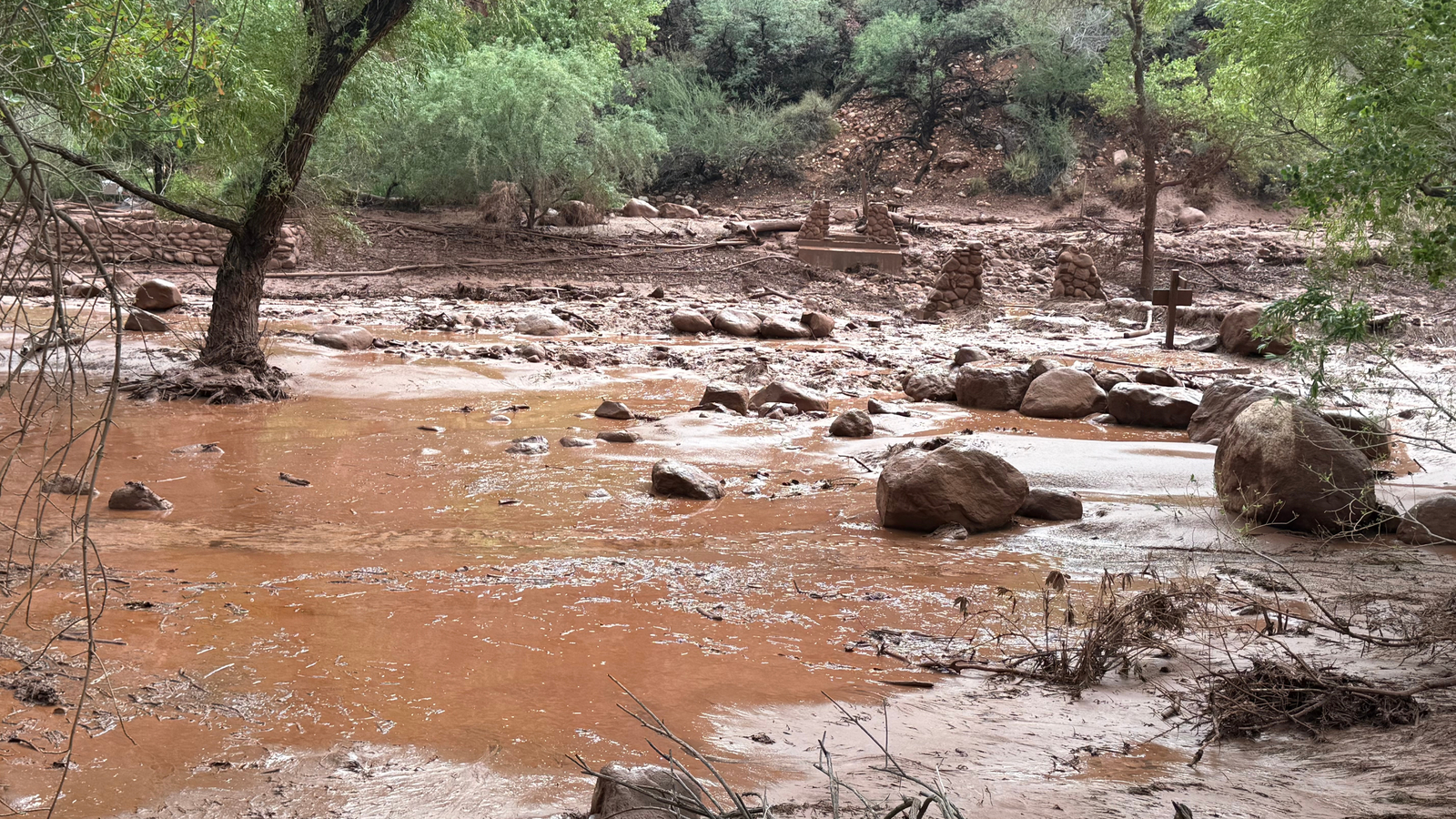
A devastating Grand Canyon flash flood swept through one of the nation’s most iconic national parks over the weekend, claiming at least one life and leaving more than a dozen people unaccounted for. The sudden deluge, which struck Saturday afternoon around 2:30 p.m. local time, transformed tranquil hiking trails and campgrounds into raging torrents, destroying nearly every footbridge in its path and forcing emergency air evacuations of more than 60 people.
The catastrophic event has prompted widespread closures across the park’s inner canyon corridor, triggered emergency water conservation measures, and raised serious concerns about additional flash flooding as more thunderstorms threaten the region through Monday.
What Happened at the Grand Canyon?
The flash flood unfolded in the Bright Angel Canyon and Phantom Ranch area, two of the most popular destinations for backpackers and day hikers exploring the depths of the Grand Canyon. According to the National Park Service (NPS), the flooding resulted from a sudden, intense storm system that dumped massive amounts of rainfall in a short period, overwhelming the natural drainage systems and transforming Bright Angel Creek into a destructive force.
Eyewitnesses described scenes of terror as campers and hikers scrambled to escape the rising waters. Erica Viola, who was camping at Bright Angel Campground with her husband Scott Svedin, captured video footage showing a roaring Colorado River as mudflows and debris from metal structures floated downstream.
An Eyewitness Account of Survival
Viola and Svedin recounted their harrowing escape to reporters, describing how park rangers urgently directed campers to run toward the nearest bridge. As the couple raced through deep, muddy water alongside approximately 40 other people, they heard cries of “Run, run, run!” echoing through the canyon.
“Once we got to the bridge, that’s when this 15-foot wall of water came through the campground in Phantom Ranch and just wiped out all the bridges in the creek,” Viola said. The couple witnessed shocking debris floating past them, including bunkhouses, barbecue grills, ice chests, and even a full-sized excavator carried away by the powerful current.
Viola reported losing most of her personal belongings in the flood, a devastating loss that reflects the broader destruction affecting visitors who were caught unaware by the rapidly escalating conditions.
Search and Rescue Operations Underway
The National Park Service launched an extensive search and rescue operation that continued throughout Sunday. Air evacuations were performed throughout the afternoon, with helicopters extracting 62 individuals from Phantom Ranch and the lower North Kaibab Trail. Evacuees were transported to the Maswik Lodge Cafeteria on the South Rim of the Grand Canyon, where the American Red Cross coordinated emergency assistance, shelter, and supplies.
Casualties and Missing Persons
Tragically, one person was recovered from the river and confirmed deceased. The identity of the victim has not been publicly released pending notification of family members.
As of Sunday afternoon, NPS officials reported that 15 individuals “may be missing or unaccounted for” following the Saturday flash flood. Earlier reports had suggested more than 20 people might be missing, but the number was refined as authorities made contact with additional visitors.
The NPS issued an urgent public appeal, requesting anyone with information about hikers or backpackers who were in the inner canyon along the Bright Angel Creek corridor on August 29, as well as anyone holding campground reservations in the affected area, to contact the National Park Service Investigative Services Branch.
Infrastructure Damage and Park Closures
The Grand Canyon flash flood caused catastrophic damage to critical infrastructure in the affected corridor. According to NPS officials, nearly all footbridges spanning Bright Angel Creek were destroyed, effectively eliminating hiker access across the creek and cutting off escape routes through the canyon.
Water Supply Emergency
Among the most pressing concerns is damage to the park’s water pipeline, which was knocked out during the flooding. This critical infrastructure failure prompted immediate “significant water conservation measures” across Grand Canyon National Park. The conservation measures include:
- No overnight hotel stays permitted beginning Monday
- Campground bathroom faucets remaining operational only
- Restrictive water usage across all park facilities
Trail and Campground Closures
The NPS announced that multiple campgrounds and trails would remain closed until further notice, with no estimated reopening date for the affected areas. Popular destinations including Phantom Ranch, Bright Angel Campground, and the lower North Kaibab Trail corridor are all impacted by these closures, disrupting travel plans for countless visitors.
Grand Canyon National Park staff, working in coordination with the Arizona Department of Public Safety, continued air evacuations throughout Sunday afternoon as part of ongoing emergency response efforts.
Why Flash Floods Are So Dangerous in the Grand Canyon
The Grand Canyon’s unique geography makes it particularly vulnerable to sudden, devastating flash floods. When heavy rainfall occurs anywhere in the vast watershed area, water channels rapidly through side canyons and tributaries, converging with explosive force into main waterways like Bright Angel Creek and the Colorado River.
The narrow canyon walls create a funnel effect that amplifies both the speed and the destructive power of floodwaters. What may begin as a distant storm can transform into a life-threatening wall of water within minutes, leaving hikers and campers with virtually no warning or escape route. The very terrain that makes the Grand Canyon so spectacular also makes it one of the most dangerous places to be caught in a flash flood event.
Weather Forecast Adds Urgency
Unfortunately, the danger is far from over. The Grand Canyon NPS warned that the area would likely face additional thunderstorms and heavy rainfall on Sunday and Monday, conditions that could trigger more flash flooding, dangerous debris flows, and rockfall. These compounding threats have complicated rescue and recovery operations, as emergency crews must balance the urgency of their missions against the very real risk of additional flooding.
Lessons for Future Visitors
This tragic event serves as a sobering reminder of the unpredictable and sometimes deadly power of nature, even in well-managed national parks. The Grand Canyon attracts millions of visitors each year, drawn by its breathtaking vistas and unparalleled hiking opportunities. However, the park’s desert environment, combined with its dramatic topography, creates conditions where weather can shift from clear skies to catastrophic flooding in a matter of minutes.
Outdoor enthusiasts planning trips to canyon country should always check weather forecasts thoroughly, monitor conditions during their visit, heed all park ranger warnings, and understand that designated campsites and trails can become deadly traps when flash floods occur. The destruction witnessed along Bright Angel Creek and at Phantom Ranch demonstrates that even experienced backcountry travelers can find themselves in life-threatening situations with virtually no warning.
Conclusion
The Grand Canyon flash flood represents a heartbreaking loss of life and a significant disruption to one of America’s most treasured national parks. As recovery efforts continue and the search for missing individuals proceeds, the full scope of the damage may take days or weeks to fully assess. The destruction of nearly all footbridges in Bright Angel Canyon, combined with the loss of the park’s water supply infrastructure, will require extensive repairs before normal operations can resume. For now, visitors are urged to stay away from the affected areas, monitor official NPS communications for updates, and keep the victims, their families, and the first responders working tirelessly in challenging conditions in their thoughts during this difficult time.