
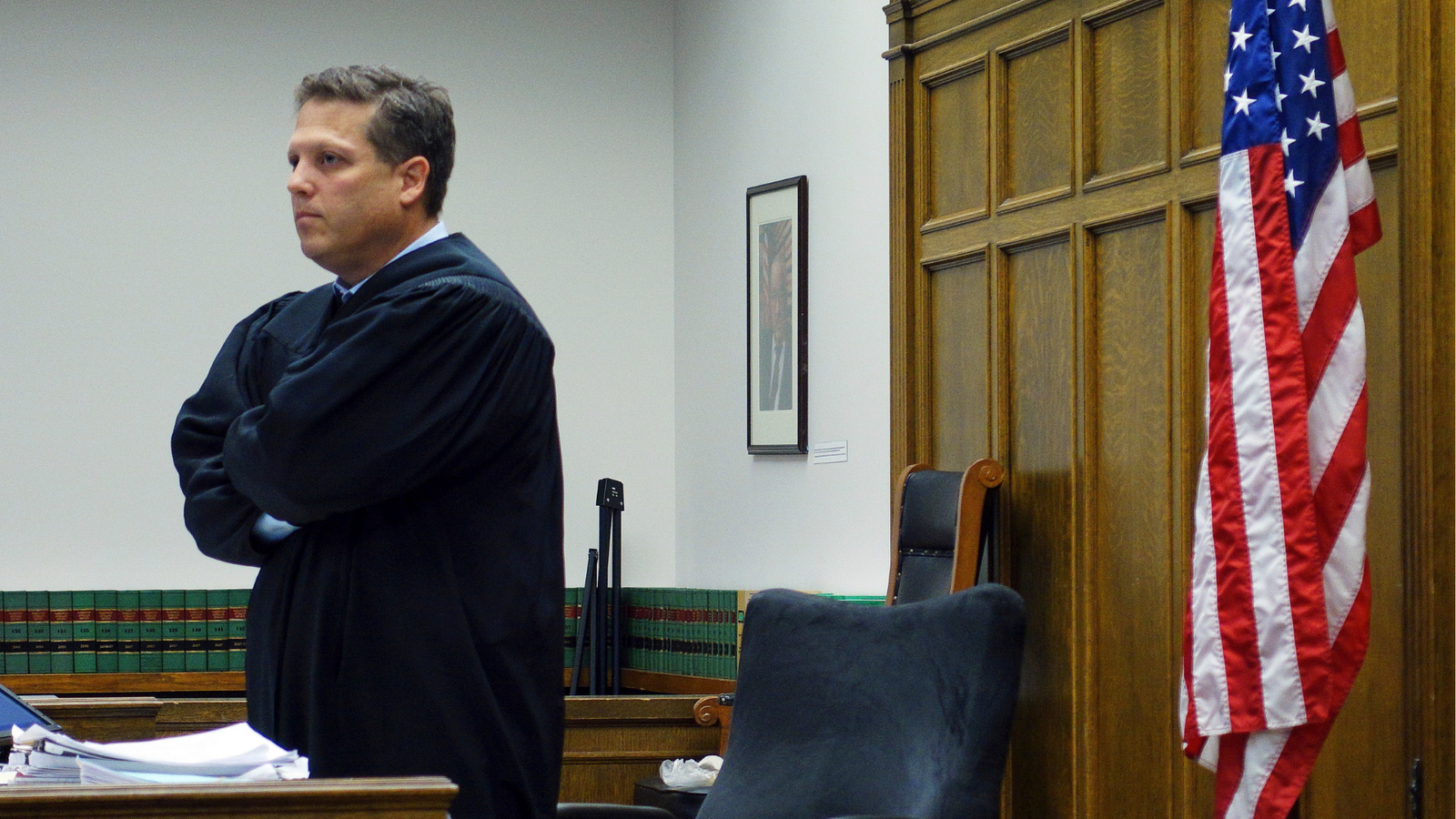
The firing of Seattle U.S. attorney Roger Rogoff less than an hour after he was sworn in has created a significant constitutional dispute over who should control a key federal prosecutorial position when a permanent nominee has not been confirmed. Rogoff’s appointment by federal judges in the Western District of Washington was unanimous, but the Trump administration moved immediately to remove him, underscoring growing tensions between the executive branch and the federal judiciary.
The episode also highlights a broader personnel strategy employed by the administration: keeping unconfirmed officials in acting roles rather than allowing district judges to fill vacancies through temporary appointments. The result was a clash over Senate confirmation, presidential removal authority and the traditional independence of U.S. attorneys.
A Swearing-In Followed by an Immediate Dismissal
Rogoff, a former judge and an experienced state and federal prosecutor, took the oath of office shortly before 8 a.m. at the federal courthouse in downtown Seattle. After the ceremony, he traveled to the U.S. Attorney’s Office for the Western District of Washington and requested a meeting with Charles Neil Floyd, the outgoing interim leader of the office.
While Rogoff waited in the lobby, he received an email from the Trump administration stating that he had been removed. The timing made the dismissal especially striking: Rogoff had been selected unanimously by the district’s judges only moments earlier and had barely begun serving.
Despite the abrupt end to his appointment, Rogoff said he was considering a legal challenge with other attorneys. His background made the decision particularly notable. He spent approximately two decades as a state prosecutor, six years as a federal prosecutor and additional time serving as a state judge.
Rogoff also acknowledged that an immediate firing was possible. Nevertheless, he said he had no reservations about accepting an appointment that could put him on a collision course with the administration. He described the U.S. attorney position as one of the most rewarding roles a prosecutor can hold.
Why the Federal Judges Appointed Rogoff
The court’s decision followed the expiration of Floyd’s 120-day term as interim U.S. attorney. Trump had originally named Floyd, a former immigration judge, to the interim position the previous October but did not send his nomination to the Senate.
After Floyd’s temporary term ended in February, the administration attempted to keep him involved by changing his title to first assistant U.S. attorney while leaving the top prosecutorial position vacant. Under the administration’s interpretation, that personnel move could allow Floyd to continue exercising authority without Senate confirmation.
A panel of the U.S. Court of Appeals had previously expressed doubts about whether that arrangement was lawful. Rather than allow the leadership dispute to continue without resolution, the district’s federal judges opened an application process and created a bipartisan panel to review candidates.
The full court ultimately issued a unanimous order naming Rogoff to the position. The court consisted of 17 active and senior judges appointed by five different presidents, a detail that gave the appointment a broad appearance of institutional consensus.
How a Temporary U.S. Attorney Is Selected
U.S. attorneys are normally nominated by the president and confirmed by the Senate. That process is designed to give senators a formal opportunity to evaluate a nominee’s qualifications, judgment and prosecutorial philosophy.
When a temporary appointment expires and the president has not submitted a confirmed nominee, federal law provides a fallback mechanism:
- The president may submit a nominee to the Senate for confirmation.
- If the temporary period expires first, the judges of the relevant federal district may appoint a qualified attorney to serve temporarily.
- The court-appointed attorney serves while the vacancy continues or until another legally authorized appointment is made.
Acting Attorney General Todd Blanche defended Rogoff’s removal on social media. He maintained that the president has authority to dismiss a court-appointed temporary U.S. attorney. He also accused the district judges of bypassing the administration’s customary consultation process, arguing that the White House and Justice Department should be consulted before a person is selected to carry out administration policies.
The constitutional question is more complicated than a simple claim of presidential control. Rogoff’s supporters emphasize that the judges followed the statutory process after Floyd’s temporary authority expired. The administration, meanwhile, argues that the president retains removal power even when a court has selected the temporary replacement.
The Floyd Appointment and the Vacant Top Post
Floyd’s status was central to the dispute. Although Trump had named him to lead the office on an interim basis, his nomination was never transmitted to the Senate. Once his temporary term concluded, the administration sought to preserve continuity by naming him first assistant U.S. attorney.
That arrangement left the official U.S. attorney position vacant while allowing Floyd to remain at the office. The strategy was viewed by some legal observers as an attempt to extend acting service beyond the period contemplated by Congress. It was not limited to Seattle, as similar personnel maneuvers were being used in other federal districts.
The administration’s critics argue that prolonged acting appointments weaken Senate oversight. If an official can retain substantial authority indefinitely without confirmation, senators lose their formal role in reviewing the person who directs major federal prosecutions.
Supporters of the administration’s approach, however, contend that consultations with executive officials are essential to ensuring that a U.S. attorney is compatible with the policies of the incumbent president. In its view, a district court should not be able to place an uncooperative prosecutor in a senior law-enforcement role.
Political Reaction to Rogoff’s Removal
Washington Sen. Patty Murray strongly criticized the decision. She had previously opposed Floyd’s candidacy for the permanent U.S. attorney position and described Rogoff as a dedicated public servant whose qualifications were beyond question.
Murray argued that Rogoff had been appointed legally by the Western District of Washington’s federal judges. She accused the administration of disregarding the Senate’s constitutional advice-and-consent role and attempting to install officials who would carry out a partisan political agenda.
Her response reflected the central political concern surrounding the case. The fight was not only about one prosecutor; it was about whether the Senate’s confirmation power has practical meaning when an administration can move an acting official into another title and continue avoiding formal review.
A Wider Pattern in Federal Prosecutorial Appointments
The Seattle dispute mirrors similar confrontations elsewhere in the country. In New Jersey, Alina Habba left the top federal prosecutor’s post after an appeals court determined that she had been serving unlawfully.
Virginia also became a battleground. Lindsey Halligan pursued cases against people viewed as adversaries of Trump, including former FBI Director James Comey. A judge later concluded that Halligan’s appointment lacked legal validity and that indictments she obtained against Comey and another individual had to be dismissed.
After judges in Virginia selected James Hundley, a lawyer with more than three decades of criminal and civil experience, the administration removed him as well. Court-appointed U.S. attorneys in northern New York were also reportedly dismissed.
Taken together, these incidents suggest that the firing of a court-appointed U.S. attorney is not an isolated event. They indicate a broader disagreement over acting appointments, judicial selection authority and the permissible duration of temporary service.
What Comes Next in the Seattle Dispute
Rogoff’s possible lawsuit could test the legal foundation for his dismissal. A court may be asked to decide whether the president may remove someone appointed by district judges under the temporary-vacancy statute, even though the administration disputes the manner in which Rogoff was selected.
Any challenge would also need to address practical issues such as who has authority to manage the office, how long the vacancy may remain and whether Floyd or another acting official can continue performing prosecutorial duties.
The Senate could reduce the uncertainty by considering a permanent nominee, but no nomination for the Western District of Washington was identified in the circumstances described. Until the appointment process is resolved, the leadership of the office is likely to remain politically and legally unsettled.
Why the Appointment Fight Matters
U.S. attorneys exercise substantial power. They supervise federal criminal investigations, decide which cases to bring, negotiate plea agreements and represent the United States in court. Their independence can influence everything from public corruption cases to civil-rights enforcement, organized-crime prosecutions and challenges to federal regulations.
The Seattle controversy therefore reaches beyond a personnel decision. At stake are three competing principles:
- Presidential authority: The executive branch argues that it must retain control over senior law-enforcement officials.
- Senate oversight: Lawmakers contend that indefinite acting service can undermine the confirmation process.
- Judicial administration: Federal courts say their temporary appointment authority matters when no confirmed nominee is available.
The administration’s position may preserve immediate White House control, but repeated dismissals of judicial selections could make the federal appointment process even more contentious. Conversely, limiting presidential removal authority could give court-selected prosecutors a measure of independence from the administration they may later investigate or prosecute.
Conclusion
The firing of the Seattle U.S. attorney after his ceremonial swearing-in transformed a routine vacancy into a major separation-of-powers dispute. Federal judges unanimously selected Roger Rogoff under the temporary-appointment process, while the Trump administration removed him almost immediately and defended the decision as an exercise of presidential power.
With Rogoff weighing a legal challenge and similar disputes occurring across the country, the Seattle case could become an important test of how temporary U.S. attorneys are appointed, how long acting service may continue and whether district-court selections can be dismissed without an effective confirmation process. For now, the episode leaves the leadership of the Western District of Washington unresolved and exposes deep disagreements over prosecutorial independence, Senate oversight and executive control.