
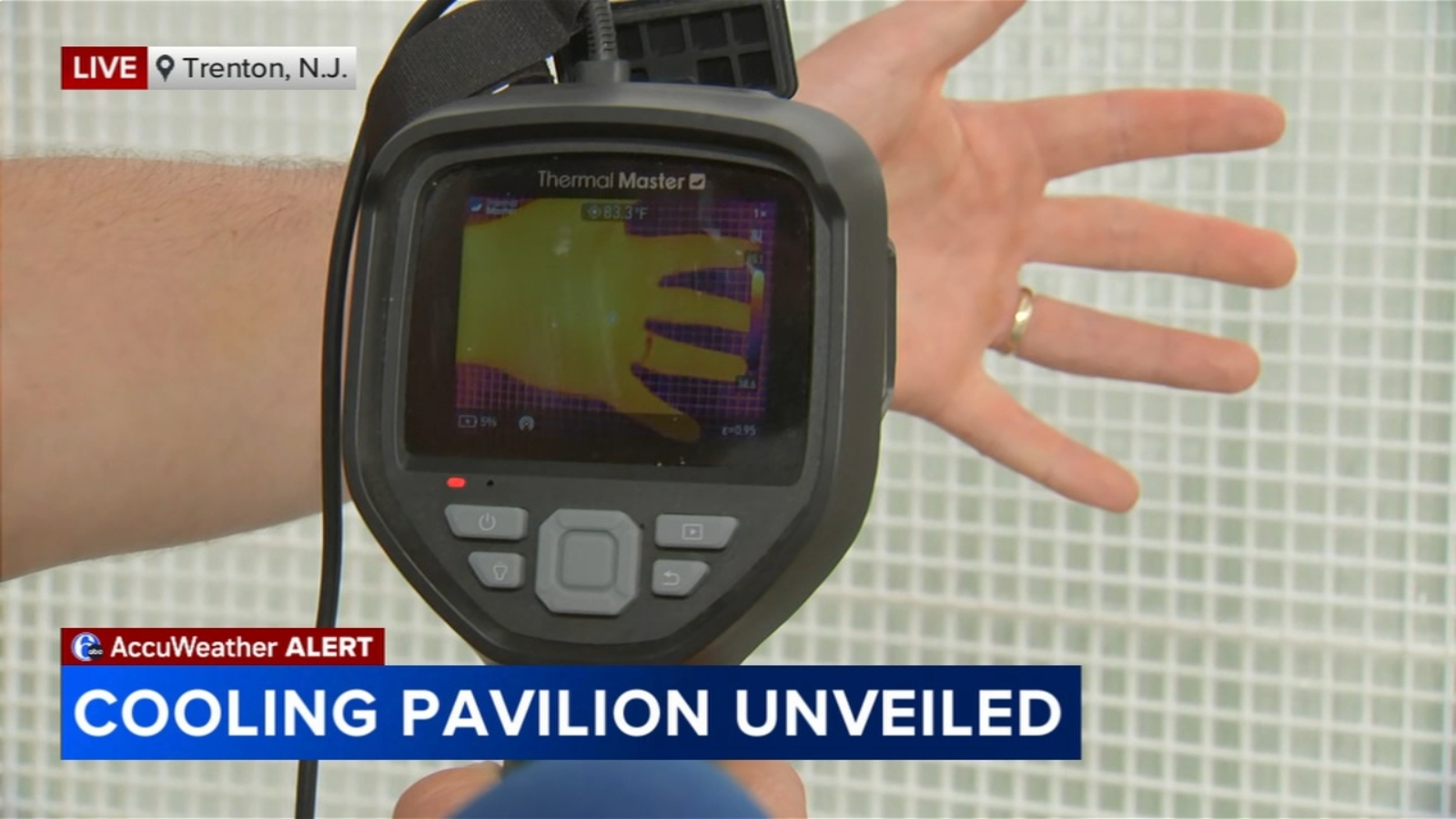
As summer temperatures soar and air quality plummets from wildfire smoke drifting across the Northeast, communities are searching for innovative ways to stay safe outdoors. A groundbreaking new radiant cooling pavilion in Trenton, New Jersey, is offering solar-powered relief from extreme heat , and the technology behind it might just reshape how cities respond to a warming climate.
Installed at the Isles Tucker Street Urban Demonstration Garden, this open-air shelter uses radiant cooling technology originally developed at Princeton University. Unlike traditional air conditioning, the pavilion doesn’t cool the surrounding air. Instead, it cools its surfaces so they can absorb the heat your body naturally radiates. The result? An outdoor space that feels up to 10 degrees cooler without consuming enormous amounts of energy.
Why a Radiant Cooling Pavilion Matters Now
The timing of this installation couldn’t be more critical. Across the Mid-Atlantic region, residents have been battling not just blistering heat and humidity, but also dangerously poor air quality caused by smoke from Canadian wildfires drifting southward. According to pulmonologist Dr. Eric Sztejman, Vice President of Critical Care Services at Virtua Health, emergency rooms and urgent care centers have seen a noticeable uptick in patients complaining of respiratory issues.
“The air quality continued to get worse overnight,” Dr. Sztejman explained. “You can see that orange glow as we walk outside this morning. It really gets deep into your lungs. As it gets deep into your lungs, it causes your lungs to be irritated, your throat to be irritated, your eyes to be watery.”
Perhaps most alarming is his warning that the health effects aren’t limited to vulnerable populations. “It’s not just those who have underlying issues. It’s anybody that’s outside,” he emphasized.
The Hidden Dangers of Combined Heat and Smoke
When extreme heat collides with wildfire smoke, the body faces a double assault. High temperatures stress the cardiovascular system, while fine particulate matter from smoke penetrates deep into the lungs, triggering inflammation and respiratory distress. For outdoor workers, the unhoused, and anyone without reliable access to air conditioning, this combination can be genuinely life-threatening.
Dr. Sztejman recommends staying indoors as much as possible during these conditions. For those who must drive, he suggests recirculating cabin air rather than pulling in outside air contaminated with smoke particles.
How Radiant Cooling Technology Works
So what makes this pavilion so different from a regular shaded structure? The answer lies in a concept called passive radiant cooling, and it’s a game-changer for outdoor comfort.
Andy Lowenstein of AIL Research and Clearly Cool, the organization behind the pavilion’s deployment, broke down the science in simple terms: “We don’t cool the air. We don’t try to dehumidify the air. All we do is allow cold surfaces to absorb the heat that their bodies radiate.”
Traditional air conditioning works by cooling and dehumidifying large volumes of air , a process that requires enormous amounts of energy, especially in open or semi-open spaces. The radiant cooling pavilion takes a fundamentally different approach by targeting the human body directly. The cooled walls act like a thermal sponge, drawing heat away from anyone standing nearby.
The Solar Energy Connection
What powers this innovative cooling system? Solar panels , installed right at the garden by students participating in the STEP UP Solar program. This makes the entire setup a closed-loop solar-powered cooling solution that operates independently from the grid.
The synergy between renewable energy generation and passive cooling represents a meaningful step forward in climate resilience. During the exact hours when cooling is most needed , bright, sunny afternoons , the solar panels are producing peak energy. That energy runs the cooling system that makes the pavilion bearable on the hottest days.
Why Outdoor Cooling Has Always Been So Hard
Lowenstein highlighted a crucial advantage of this approach. Trying to cool outdoor air is, in his words, “almost impossible.” Even in partially enclosed spaces, conventional HVAC systems struggle because they’re fighting against an essentially infinite volume of air.
“The big advantage with that is that we can protect people and actually keep them comfortable with much less energy,” Lowenstein said. “So we have an outdoor shelter pretty much open that can keep people safe even on extreme heat days.”
This energy efficiency is what makes the pavilion not just a novelty, but a potential model for future public cooling infrastructure.
A Community-Driven Installation at Isles Tucker Street
The pavilion’s home at the Isles Tucker Street Urban Demonstration Garden is no accident. Isles, a well-respected Trenton-based nonprofit focused on community self-determination, healthy environments, and urban revitalization, has long been a hub for sustainability education and grassroots innovation.
The garden serves as a living classroom where residents can learn about urban agriculture, green infrastructure, and now , cutting-edge climate adaptation technology. By hosting the radiant cooling pavilion, Isles is helping bridge the gap between academic research and real-world community benefit.
Student involvement through STEP UP Solar adds another layer of impact. Young people are gaining hands-on experience installing renewable energy systems while contributing to a project that will directly serve their neighbors during dangerous weather events.
What to Watch For: Heat and Smoke Illness Symptoms
Even with access to cooling refuges, outdoor exposure during heat waves and smoky conditions can still take a toll. Dr. Sztejman urged everyone to recognize the warning signs of heat-related illness, which can escalate quickly.
Seek medical attention or visit an urgent care center if you experience any of the following:
- Lightheadedness or dizziness , often an early sign of heat exhaustion or dehydration
- Chest tightness , a serious symptom that may indicate respiratory distress from smoke inhalation
- Heart palpitations , the heart working overtime to cool the body can trigger irregular rhythms
- Difficulty breathing or persistent coughing
- Confusion or disorientation , a potential sign of heat stroke, which requires emergency care
Those with pre-existing respiratory conditions like asthma, COPD, or cardiovascular disease should be especially vigilant and limit outdoor activity whenever air quality alerts are issued.
The Bigger Picture: Cooling as Climate Infrastructure
The Trenton pavilion is part of a growing recognition that cooling isn’t just a personal comfort issue , it’s essential public infrastructure. As climate change drives more frequent and intense heat waves, cities worldwide are investing in cooling centers, tree canopy expansion, cool roofs, and misting stations.
What sets the radiant cooling pavilion apart is its combination of energy efficiency, renewable power, and accessibility. Because the structure remains open and doesn’t require sealed doors or filtered air systems, it’s far more welcoming than traditional cooling centers. People can come and go freely, linger without feeling confined, and access relief without bureaucratic barriers.
This kind of passive cooling technology could prove especially valuable in urban heat islands , neighborhoods where concrete, asphalt, and limited greenery create temperatures significantly higher than surrounding areas. Often, these are the same communities that lack abundant tree cover, well-funded recreation centers, or widespread home air conditioning. A solar-powered pavilion placed in a community garden offers a low-cost, high-impact intervention.
Visit Before the End of July
For Trenton residents and curious visitors, the radiant cooling pavilion will remain at the Isles Tucker Street Urban Demonstration Garden through the end of July. It’s an opportunity to experience the future of outdoor comfort firsthand and to see how academic research, student labor, nonprofit leadership, and private-sector innovation can converge into something genuinely useful.
If you’re in the area during a heat advisory, consider stopping by. Step inside, feel the difference of those cooled walls, and imagine a future where every neighborhood has access to similar climate resilience tools.
Looking Ahead
The Trenton pilot demonstrates that solar-powered cooling isn’t a far-off fantasy , it’s working right now in a community garden in New Jersey’s capital city. As heat waves grow longer and wildfire smoke becomes a more regular summer visitor, solutions like this will move from experimental to essential.
The combination of clean energy, thoughtful design, and community partnership offers a hopeful blueprint. Whether this technology scales to bus stops, farmers markets, schoolyards, or hospital entrances remains to be seen, but the proof of concept is already here , quietly absorbing heat, one radiant body at a time.
Stay cool, stay informed, and watch this space. The future of staying safe in a hotter world might just look like an unassuming pavilion tucked into an urban garden.