
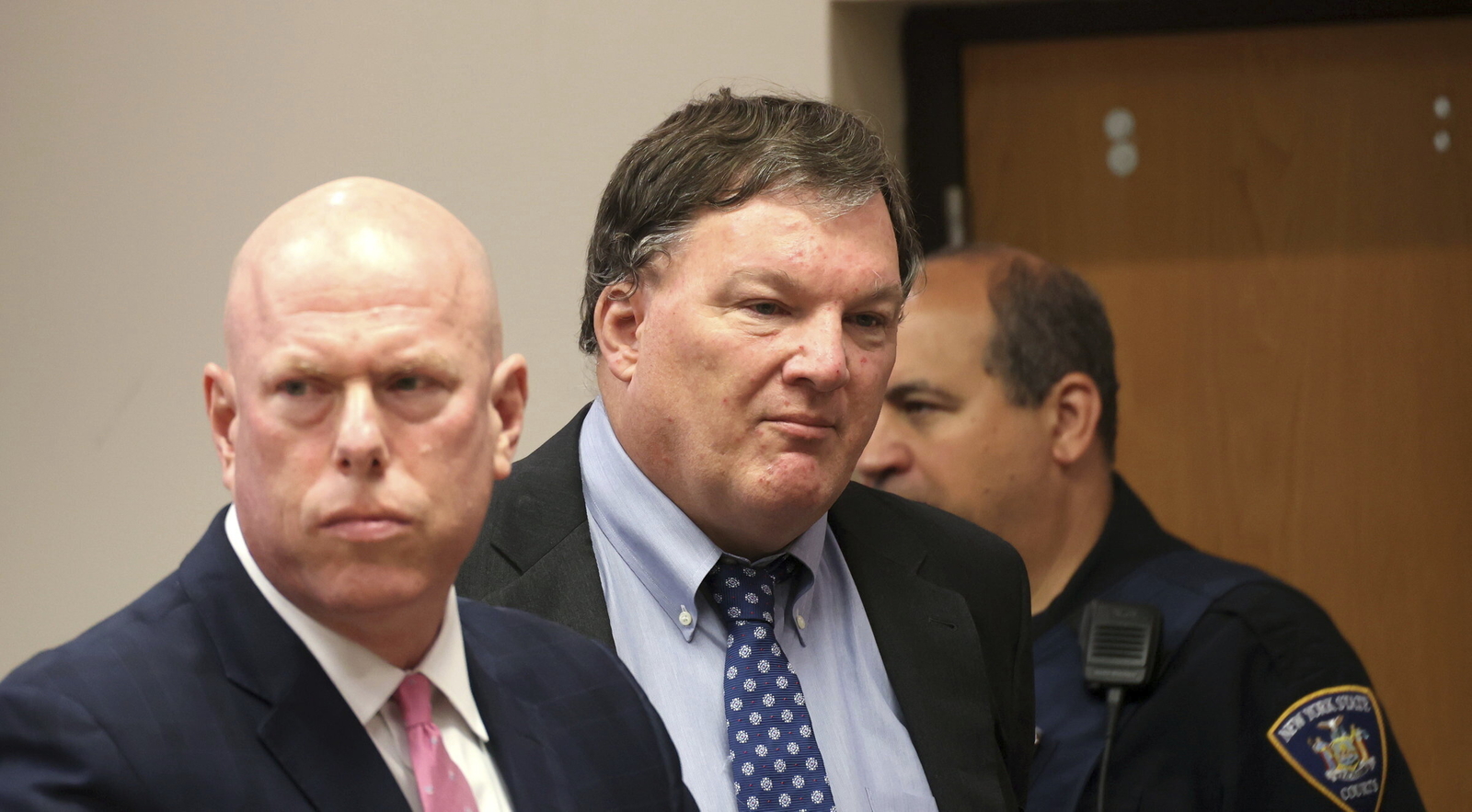
The Gilgo Beach sentencing of Rex Heuermann marked a somber yet cathartic moment in one of the most haunting serial murder cases in recent American history. On Wednesday, the 62-year-old New York City architect received consecutive life sentences for the murders of seven women whose remains were discovered along Long Island’s Gilgo Beach more than a decade ago. The courtroom in Suffolk County became an emotional stage where decades of grief, anger, and unanswered questions finally collided with a measure of justice.
Heuermann, who pleaded guilty in April, stood silent for most of the proceedings as victim after victim, through tearful relatives, confronted the man responsible for shattering their lives. The case, which went unsolved for years before his arrest in 2023, represents one of the most complex and disturbing criminal investigations New York has ever seen.
The Plea Agreement and Sentence Structure
Under the terms of his plea deal, Heuermann agreed to serve three consecutive life sentences followed by four additional consecutive terms of 25 years to life. Prosecutors confirmed that part of the agreement requires him to submit to interviews with the FBI’s behavioral analysis unit, meaning investigators will have the unusual opportunity to extract detailed insights into the mind of a man who evaded capture for nearly two decades.
Although Heuermann was formally charged with seven murders, he also admitted to killing an eighth woman, Karen Vergata, though she was not part of the formal indictment. Authorities described Heuermann as a predator who targeted sex workers, strangling them and disposing of their bodies near the remote coastal stretch of Gilgo Beach over a span of approximately 17 years.
Victims Whose Lives Were Stolen
The Seven Women Named in the Indictment
- Melissa Barthelemy – whose sister Amanda Funderberg delivered one of the most chilling victim impact statements of the day.
- Megan Waterman – whose young daughter Liliana was just nine years old when her mother was killed.
- Maureen Brainard-Barnes – remembered by her sister Missy Cann, who broke down while reading her statement.
- Amber Lynn Costello
- Jessica Taylor – whose birthday fell on the very day of the sentencing.
- Valerie Mack
- Sandra Costilla
The women ranged in age and background, but shared the tragedy of being targeted by the same predator. For their families, Wednesday’s hearing was less about punishment and more about finally being heard.
Raw Emotion in the Courtroom
The Gilgo Beach sentencing hearing was dominated by powerful victim impact statements that laid bare the depth of suffering endured by the victims’ loved ones. Each relative brought a unique perspective on the loss they had carried, and several turned their grief into direct confrontations with Heuermann.
Confronting the Killer Face-to-Face
Violet Swager, Jessica Taylor’s cousin, did not hold back her feelings. She was direct and unflinching, her voice trembling as she addressed Heuermann directly. Taylor would have turned 43 on the day of the hearing, a fact that made the proceedings even more painful for the family. Swager spoke of overwhelming hatred and described Heuermann with words of revulsion.
Another cousin, Jasmine Robinson, painted a vivid portrait of Taylor as a woman who embodied strength, kindness, and brilliance. She then turned that memory into a weapon, telling Heuermann that he chose vulnerable women because he was nothing more than a coward.
Amanda Funderberg, Barthelemy’s sister, recounted how Heuermann had tormented her even after her sister’s murder by calling her and describing how her body was being left to decay. Standing in the courtroom years later, Funderberg demanded that Heuermann look her in the eye as she spoke, turning the moment into a powerful reclaiming of voice.
Missy Cann, Brainard-Barnes’ sister, broke down in tears while accusing Heuermann of preying on innocent women. Her raw emotion underscored how the wounds of the Long Island serial killer case remain fresh, even after the passage of time.
The Parents and the Daughter Who Grew Up Without Her Mother
Ed and JoAnn Mack, parents of Valerie Mack, delivered a joint statement describing how Heuermann stole not only their daughter but the future she would have built. JoAnn Mack noted that while justice had finally arrived, no sentence could ever fill the void left by their loss.
Perhaps the most heartbreaking testimony came from Liliana Waterman, who was only nine years old when her mother was murdered. Now a young adult, Liliana described the moment she learned the truth about her mother’s death while scrolling on her phone. She spoke of the sixteen Mother’s Days she had endured without Megan Waterman, and how her entire world had shattered in an instant. Her testimony served as a reminder that the ripple effects of Heuermann’s crimes extended across generations.
Heuermann’s Brief Statement
When it was his turn to speak, Heuermann offered almost nothing. He stood and said softly that there were no words he could offer, and that any words he might say would carry no meaning. His statement was met with a shout from the gallery telling him to speak up, prompting Suffolk County Judge Timothy Mazzei to press him with a pointed question.
The judge asked Heuermann directly whether he was even slightly sorry for what he had done to the innocent women whose lives he had taken. After a pause, Heuermann quietly answered that he was. The brevity and apparent lack of genuine remorse struck many in the courtroom as insufficient.
The Judge’s Final Words
After imposing the consecutive life sentences, Judge Mazzei told court officers to remove Heuermann from the room. As Heuermann was led away in handcuffs, the gallery erupted. Family members shouted the word “ogre,” a phrase that had been used repeatedly throughout the day to describe the man who had devastated their families. Applause broke out in the courtroom, a rare and raw release of emotion for a justice system that often feels distant and impersonal.
The Long Road to Justice
The Gilgo Beach murders haunted Long Island for years. After the initial discovery of remains in 2010 and 2011, the case attracted intense media scrutiny and public fear. Multiple police agencies worked the investigation, and theories about the killer’s identity shifted repeatedly over more than a decade. It was not until July 2023 that authorities arrested Heuermann, a respected architect living on Manhattan’s Upper West Side, sending shockwaves through the city and beyond.
His arrest was the result of years of painstaking forensic work, digital evidence analysis, and determined law enforcement collaboration. The breakthrough offered some reassurance to a public that had grown uneasy about the unsolved nature of the crimes and the slow pace of justice.
Why This Case Resonates Beyond Long Island
The Gilgo Beach serial killer case struck a nerve nationally for several reasons. First, the victims were primarily marginalized women, many of them sex workers, whose disappearances initially failed to generate the kind of urgent response that might have saved their lives. Advocacy groups have long pointed to this disparity as evidence of systemic failures in how society responds to crimes against vulnerable populations.
Second, the length of time between the crimes and the arrest raised troubling questions about investigative practices, inter-agency cooperation, and the challenges of modern forensics in rural and coastal areas. Finally, the very nature of the killings, calculated, predatory, and prolonged over nearly two decades, made the case an enduring subject of true crime fascination and public horror.
What Comes Next
While Wednesday’s sentencing closed one chapter of the Gilgo Beach story, it opened another. Heuermann’s required interviews with the FBI’s behavioral analysis unit may eventually provide law enforcement and the public with deeper insight into his motivations, methods, and the possibility of additional victims. Civil lawsuits from the families are also likely to proceed, and discussions continue about how to better protect sex workers and other vulnerable individuals who too often fall through the cracks of public safety systems.
For the families who gathered in that Suffolk County courtroom, the day was neither a victory nor a closure, but something more complicated. They had finally been heard. They had finally faced the man who had taken so much from them. And they had watched as a judge made clear, with consecutive life sentences and an order to remove the defendant from the room, that society would not forget the eight women whose lives were cut short along the quiet shores of Long Island.
The Gilgo Beach sentencing will be remembered not only for the gravity of its outcome, but for the courage of the families who stood before a monster and refused to look away.