
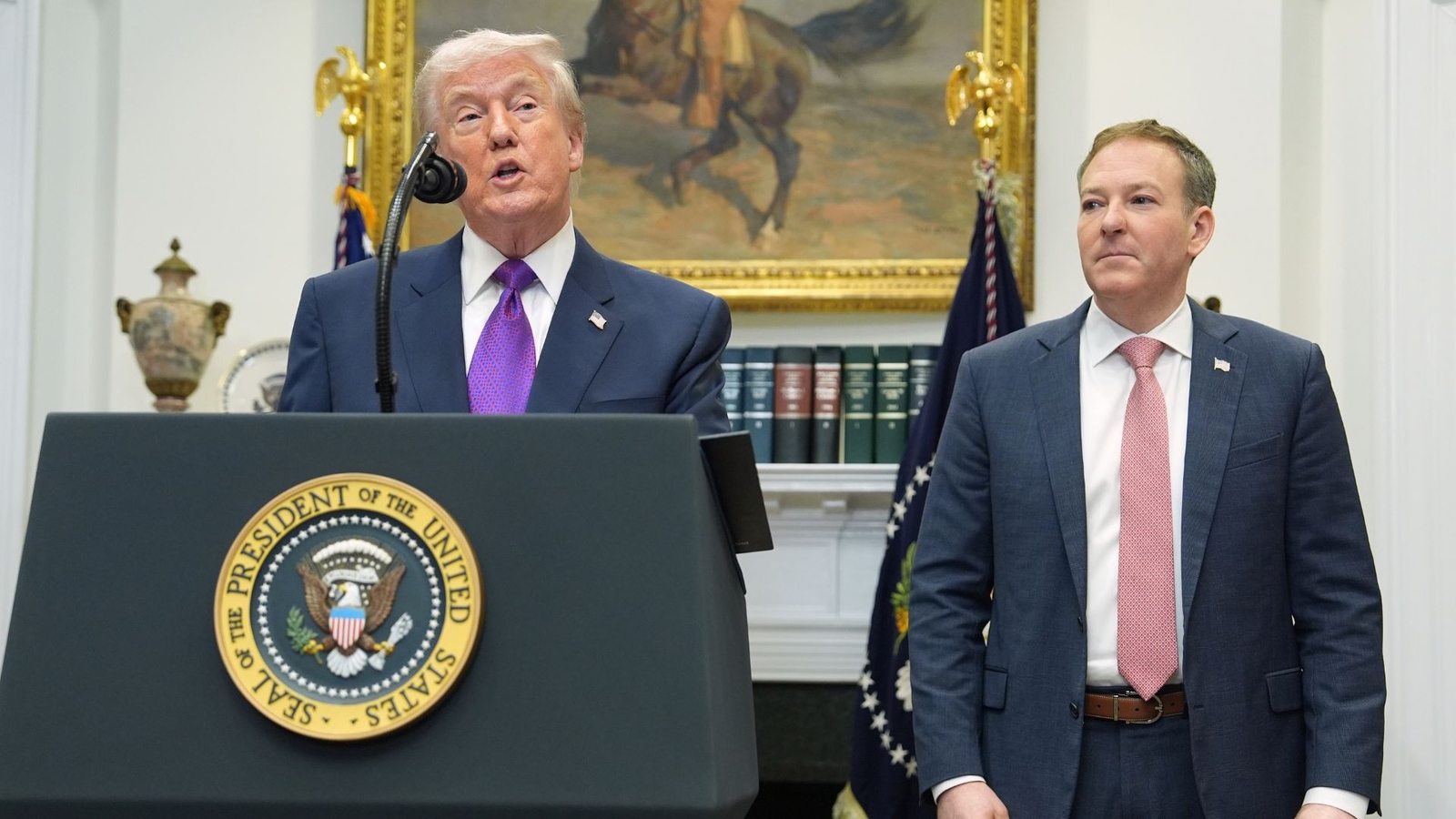
The Trump administration has officially announced the EPA endangerment finding repeal, dismantling a foundational climate policy that has shaped United States environmental regulation for over 16 years. On Thursday, the Environmental Protection Agency declared it would eliminate the 2009 Greenhouse Gas Endangerment Finding along with all subsequent federal greenhouse gas emission standards for vehicles and engines from model years 2012 through 2027 and beyond. President Donald Trump and EPA Administrator Lee Zeldin characterized the move as “the single largest deregulatory action in U.S. history,” a claim that underscores just how sweeping the consequences could be for climate policy, vehicle emissions standards, and public health protections nationwide.
Understanding the 2009 Endangerment Finding
To grasp the magnitude of this reversal, it helps to revisit how the original finding came into existence. The endangerment finding traces its legal roots to the 2007 Supreme Court case Massachusetts v. EPA, which held that greenhouse gases qualify as air pollutants under the Clean Air Act and therefore fall within the EPA’s regulatory authority. Two years later, in 2009, EPA Administrator Lisa Jackson determined that six greenhouse gases,including carbon dioxide, methane, and nitrous oxide,endanger both public health and public welfare. That nearly 200-page scientific analysis, supported by more than 380,000 public comments and two public hearings, formed the bedrock of federal climate regulation ever since.
The original determination gave the agency authority to address emissions from passenger vehicles, fossil-fuel power plants, oil and gas operations, and other significant sources of pollution. Without it, the legal framework supporting those regulations effectively collapses.
What the Repeal Eliminates
The EPA endangerment finding repeal does far more than roll back a single rule. According to Michael Gerrard, a Columbia Law School professor and faculty director of the Sabin Center for Climate Change Law, the finding served as the principal federal authority to regulate greenhouse gases.
“This is taking away the principal federal authority to regulate greenhouse gases. All of the federal regulations under the Clean Air Act to regulate greenhouse gases depend on the endangerment finding. If it’s wiped out, none of those regulations exist.”
While the Trump administration had previously revoked most greenhouse gas emission regulations,including limits on passenger vehicles, controls on power plants, and methane leakage restrictions on oil and gas wells,the repeal now attempts to permanently extinguish the legal foundation supporting all such rules for the duration of this administration.
Notably, the EPA emphasized that the repeal applies only to greenhouse gas emissions. Other pollutant regulations and air toxin controls remain unaffected.
The Administration’s Justification
EPA Administrator Lee Zeldin defended the decision by arguing that Congress never explicitly authorized regulation of the six greenhouse gases covered by the original finding. He pointed to recent Supreme Court rulings that limited executive agency power as legal backing for the move.
“We looked at the Clean Air Act, we looked at what the highest court in the land said and we used a very simple metric. If Congress didn’t authorize it, EPA shouldn’t be doing it. Congress never voted for these climate mandates.”
The administration also took aim at vehicle features implemented in response to fuel economy standards, with Trump specifically criticizing the start-stop technology that turns off engines at traffic lights. The repeal targets federal pressure on manufacturers to install such features, which Trump called “almost universally despised.”
Scientific Opposition and Climate Consensus
Critics argue that the science supporting the original finding has only grown stronger since 2009. The National Academies of Sciences, Engineering, and Medicine released a comprehensive independent assessment in September, concluding that the EPA’s original determination remains accurate and is now backed by more robust evidence. Their report stated that “the evidence for current and future harm to human health and welfare created by human-caused greenhouse gases is beyond scientific dispute.”
Major international bodies have echoed this conclusion. The United Nations has warned that “health and the climate are inextricably linked,” while a 2021 joint editorial from 200 leading medical journals declared the science “unequivocal.” The U.S. Fifth National Climate Assessment, published in 2023, found that climate change is already making it harder to maintain safe homes, healthy families, and reliable public services across America.
Environmental advocates have strongly condemned the repeal. Dan Becker, director of the Center for Biological Diversity’s Safe Climate Transport Campaign, accused the administration of “assault on science and our health.” World Resources Institute U.S. Director David Widawsky called it “a dangerous breach of responsibility to protect people, the environment, and our economy, benefitting polluters at the expense of all people.”
Economic Claims and Consumer Impact
The Trump administration projects that the repeal will save Americans approximately $1.3 trillion, primarily through reduced vehicle costs. The EPA estimates consumers will save more than $2,400 on the purchase of a new vehicle, arguing that rolling back vehicle emissions standards will restore consumer choice and lower the cost of trucks and cars.
However, Lou Leonard, dean of Clark University’s School of Climate, Environment, and Society, warned of unintended economic consequences. He suggested that removing federal greenhouse gas regulation could expose fossil fuel-intensive businesses to new legal liabilities, since they can no longer claim compliance with federal standards as a defense. The decision may also open the door for state and local governments to impose their own climate regulations, creating a patchwork of rules that businesses must navigate.
Legal Challenges Loom
A coalition of state attorneys general from California, New York, Connecticut, and Massachusetts, alongside environmental organizations like the Natural Resources Defense Council, has pledged to challenge the repeal in court. California Governor Gavin Newsom and Wisconsin Governor Tony Evers, co-chairs of the U.S. Climate Alliance, released a joint statement declaring the action “unlawful” and promising continued legal opposition.
Previous attempts to overturn the endangerment finding have failed. In 2012, the D.C. Circuit Court of Appeals upheld the finding, ruling that the EPA’s determinations were supported by substantial evidence. The Supreme Court declined to hear challenges the following year. However, the current legal landscape has shifted significantly following rulings that have curtailed agency authority, creating uncertainty about how courts will rule this time.
Legal experts note that courts could potentially overturn the repeal, but they might also rule that the EPA requires explicit congressional authorization before regulating greenhouse gases. Such a decision would severely restrict any future president’s ability to use the Clean Air Act as a tool for climate action.
What This Means for Climate Policy
The EPA greenhouse gas rules have shaped American energy and transportation policy for nearly two decades. With the endangerment finding eliminated, the United States loses its primary legal mechanism for federal-level greenhouse gas regulation. The transportation sector, which the EPA identifies as the largest direct contributor to U.S. greenhouse gas emissions,with cars and trucks responsible for more than 75% of those emissions,will face notably fewer federal constraints.
The repeal represents a dramatic departure from global climate trends, particularly striking given the timing. Pope Leo XIV recently called for urgent climate action, stating that “God’s creation is crying out.” Meanwhile, scientific evidence linking greenhouse gas emissions to climate change continues to accumulate, with extreme weather events, wildfires, and heat waves already affecting communities across the nation.
Conclusion
The EPA endangerment finding repeal marks a watershed moment in American environmental policy. By dismantling the legal foundation that has supported federal climate regulation since 2009, the Trump administration has fundamentally altered the landscape for greenhouse gas emissions control. While proponents celebrate reduced vehicle costs and restored consumer choice, critics warn of increased climate risks, legal vulnerability for businesses, and diminished public health protections. As court battles unfold and state governments consider their own responses, the full consequences of this historic rollback will only become clear over time. What remains certain is that the debate over America’s role in addressing climate change has entered an entirely new chapter,one that will shape environmental policy, economic decisions, and public health outcomes for generations to come.