
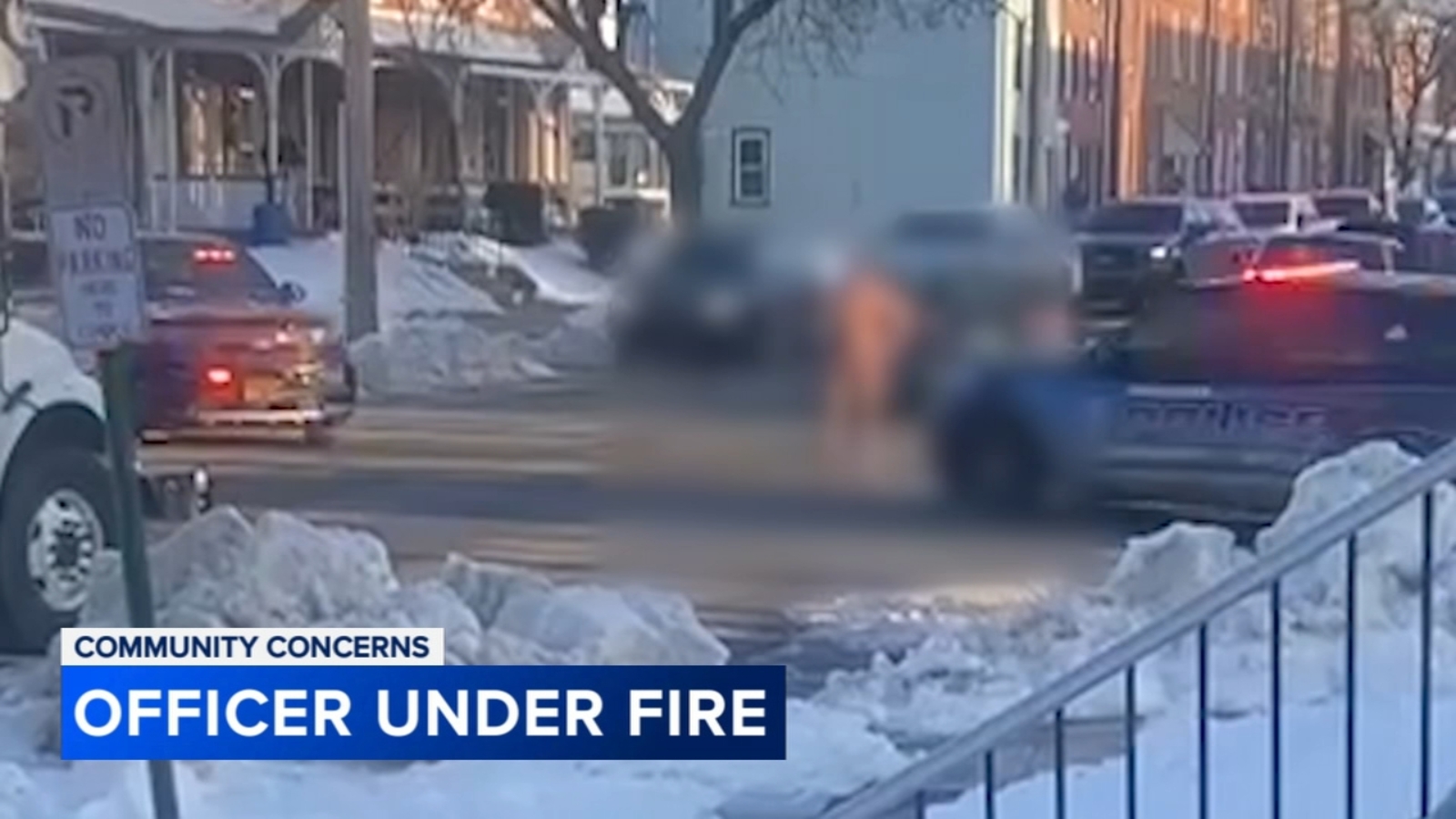
Norristown, Pennsylvania , A disturbing incident in which a police vehicle strikes man near Stanbridge and West Airy Streets has ignited outrage among local residents and raised serious questions about police accountability. The event, captured on cellphone video, shows officers standing nearby before a patrol car slammed into a naked man, after which the officer exited the vehicle to detain the individual and provide medical treatment. The shocking footage has since circulated widely, amplifying community calls for transparency and reform.
Just one day after the incident, dozens of residents packed a community meeting, demanding answers from local officials and law enforcement leadership. The atmosphere was tense, emotional, and reflective of deeper frustrations about policing practices, mental health response protocols, and the relationship between the Norristown Police Department and the citizens it serves.
What We Know About the Norristown Police Vehicle Incident
According to initial reports, the incident occurred in a residential area of Norristown. Police Chief Michael Trail confirmed that the man involved had been exhibiting erratic behavior prior to the collision , reportedly screaming, striking vehicles, and obstructing traffic. Despite these circumstances, many residents and witnesses feel the use of a patrol vehicle as a means of engagement was excessive and unjustifiable.
Tina, a witness who spoke at the community meeting, described the horrifying moment in vivid detail. “You could hear the kid get hit. Boom,” she said, her voice carrying the weight of someone still processing what they saw. The raw audio and visual evidence has sparked a wave of public concern about how police departments respond to individuals in crisis.
Following the incident, the officer involved was placed on paid administrative leave , a standard procedural step during internal investigations. Montgomery County detectives have since taken over the inquiry to ensure an independent review of the events.
Community Voices Demand Accountability
The community meeting drew a diverse cross-section of Norristown residents, faith leaders, and advocacy voices. The common thread uniting them was a demand for accountability , not only for the officer who drove the patrol vehicle, but for the broader department culture that allowed such an incident to occur.
Calls for Termination and Investigation
Some residents, like Tina, went further in their demands, calling for the officer’s immediate termination. “I feel like that cop needs to be fired. They shouldn’t have them like that running around. They’re here to serve and protect us,” she stated emphatically. Her sentiment echoes a growing national conversation about the consequences officers face when their actions result in harm.
Juanita Uribe raised another critical point , the need to investigate all officers who were present at the scene. “I want to see the other police officers involved in this investigated, and I want them to say it was absolutely despicable what happened,” Uribe urged. Her call for a broader investigation highlights the bystander responsibility of officers who witness misconduct but fail to intervene.
Faith Leaders Join the Conversation
Pastor Scott Dorsey of Macedonia Ministries offered a powerful moral perspective on the incident. “What happened in the streets of Norristown should have never happened,” he declared, framing the event as both a policy failure and a moral failing. Dorsey emphasized the need for systemic change, stating, “We need to look at what our current policy is and change whatever needs to be done so this doesn’t happen again.”
Faith leaders like Dorsey play a vital role in bridging the gap between law enforcement and the communities they serve. Their involvement signals that this incident is not just a legal matter but a community wound that requires healing through dialogue, policy reform, and sustained engagement.
The Mental Health Crisis Response Question
One of the most significant concerns raised during the meeting centered on how police departments handle mental health-related calls. The man struck by the police vehicle was reportedly naked and exhibiting signs of a mental health crisis , a scenario that advocates argue requires specialized training and response protocols beyond traditional law enforcement tactics.
Chief Trail acknowledged this gap and announced that the Norristown Police Department is in the process of hiring a co-responder , a mental health professional who would accompany officers on crisis calls. This approach, often referred to as the co-responder model, has gained traction in municipalities across the country as a way to provide more compassionate and effective responses to individuals experiencing mental health emergencies.
Why Co-Responder Programs Matter
Co-responder programs pair licensed mental health professionals with police officers, allowing trained clinicians to take the lead during encounters with individuals in psychological distress. Research has shown that these programs can:
- Reduce unnecessary arrests related to mental health crises
- Decrease use-of-force incidents by providing de-escalation expertise
- Improve outcomes for individuals in crisis by connecting them with appropriate services
- Build community trust by demonstrating a commitment to compassionate policing
The decision to implement such a program in Norristown represents a positive step forward, though residents at the meeting made it clear that hiring a co-responder alone is not enough. They want comprehensive training for all officers, clear accountability mechanisms, and transparent communication about how similar incidents will be prevented in the future.
Chief Trail’s Commitment to Transparency
During the heated community meeting, Chief Trail was forthright about the limitations of what he could share. The ongoing investigation prevented him from discussing specific details, but he emphasized his commitment to rebuilding trust between the department and the community.
“Several months ago, I said this is a partnership between police and community, and I said we will be held accountable when we make mistakes,” Trail stated. His remarks suggest an awareness that trust is earned through action, not words , and that the Norristown Police Department must demonstrate its commitment to accountability through tangible reforms.
Pastor Dorsey echoed this sentiment, warning that without follow-through, the already fragile relationship between police and residents will deteriorate further. “If those things aren’t done and those police officers are not made accountable, then the trust, the transparency, the truth is going to be even more separated than it is now,” he cautioned.
The Role of Video Evidence in Modern Policing
The cellphone video showing the moment the police vehicle strikes man has become a central piece of evidence in this case. Without that footage, the incident might have been characterized very differently by official reports. Instead, the video provides an unfiltered account that contradicts any attempts to minimize or reframe what happened.
This raises important questions about:
- Body camera policies , Were officers wearing body cameras? If so, will that footage be released?
- Transparency in investigations , How quickly will the public see the full evidence?
- Independent oversight , Will the Montgomery County investigation be conducted with full public scrutiny?
Video evidence has fundamentally changed the landscape of police accountability. In cases like this Norristown incident, civilian-recorded footage often serves as the most reliable witness, ensuring that the truth cannot be easily obscured.
Broader Implications for Policing and Community Relations
The Norristown incident is not an isolated event. It reflects a national pattern of police encounters with individuals in mental health crises that too often end in tragedy or excessive force. Communities across America are grappling with similar challenges, asking the same fundamental questions: How should police respond to people who are clearly in distress? What alternatives exist to traditional law enforcement responses? And how do we hold officers accountable when they fail to meet the standards expected of them?
For Norristown specifically, this incident presents an opportunity , albeit a painful one , to reassess policies, invest in training, and build the infrastructure necessary to respond to mental health emergencies with competence and compassion.
What Happens Next?
As the Montgomery County investigation continues, several key developments will shape the outcome of this case:
- Investigation findings , A complete review of the incident, including all available video evidence and witness testimony
- Departmental response , Whether the Norristown Police Department takes disciplinary action beyond administrative leave
- Policy changes , Implementation of new crisis intervention training and procedures
- Community follow-up , Continued public meetings and transparent communication about progress
As of the latest reports, the man struck by the police vehicle is alive and receiving medical care. His condition and the long-term impact of the incident remain a concern for the community.
Conclusion: A Community at a Crossroads
The incident in which a police vehicle strikes man in Norristown has become more than a single event , it has become a litmus test for the community’s relationship with its police department. The residents who packed that Thursday night meeting made their expectations clear: they demand accountability, transparency, and meaningful reform. Anything less will deepen the divide between law enforcement and the citizens they are sworn to protect.
Chief Trail’s words about partnership and accountability now carry significant weight. The coming weeks and months will reveal whether the Norristown Police Department is willing to back those words with action. The community, led by passionate voices like Pastor Dorsey, Tina, and Juanita Uribe, has made it clear that they will be watching , and they will not let this issue fade quietly into the background.
The path forward requires courage from all sides: courage from law enforcement to acknowledge mistakes and change, courage from community leaders to keep pushing for justice, and courage from elected officials to implement the reforms that will prevent the next tragedy. Norristown’s response to this incident will serve as a model , or a cautionary tale , for communities everywhere navigating the complex terrain of policing, mental health, and public trust.
