
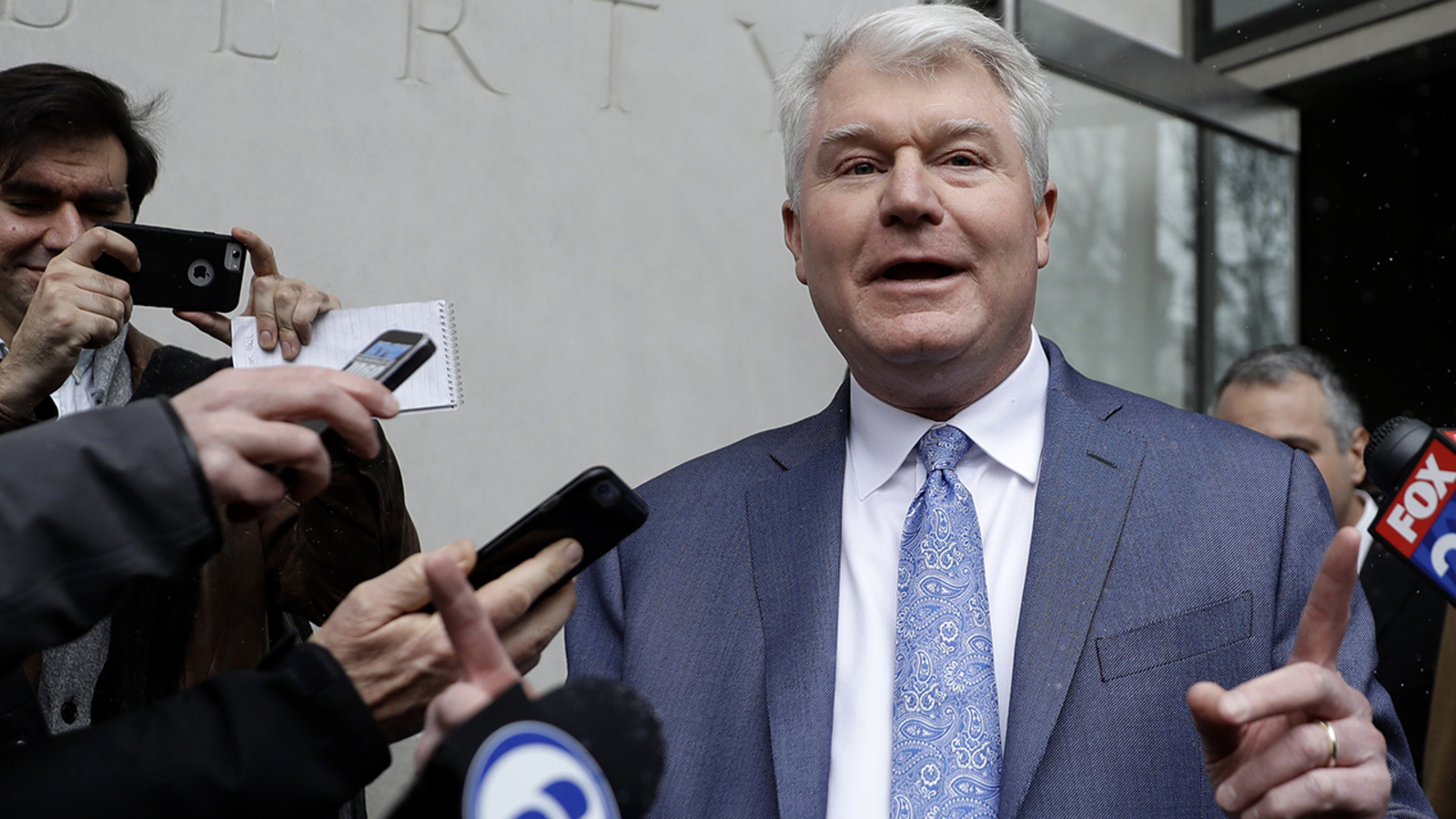
In a development that has sent shockwaves through Philadelphia’s political and labor landscape, President Donald Trump has reportedly signed a commutation reducing the sentence of John “Johnny Doc” Dougherty, the once-feared former boss of Local 98 of the International Brotherhood of Electrical Workers. According to his attorney, George Bochetto, the johnny doc commutation was finalized on Thursday, potentially setting the stage for his early release from federal prison after being sentenced to six years behind bars in 2024.
The news marks one of the most consequential moves in a long-running legal saga that has captivated the Delaware Valley for years. Dougherty, who wielded enormous influence over Philadelphia politics and the building trades for nearly three decades, saw his empire crumble under the weight of federal corruption charges. Now, after years of legal battles, his sentence could be cut short by presidential intervention.
Who Is John “Johnny Doc” Dougherty?
John Dougherty earned the nickname “Johnny Doc” through his long, iron-fisted reign over Local 98 of the International Brotherhood of Electrical Workers (IBEW). From 1993 until his federal indictment, Dougherty transformed what was already one of the most powerful trade unions in the Philadelphia region into a political force unlike anything the city had seen in modern memory.
Under his leadership, Local 98 became synonymous with massive political spending, aggressive organizing tactics, and a tight grip on the relationship between organized labor and the Democratic Party establishment in Philadelphia. Dougherty’s influence extended well beyond the union hall. He was a fixture at political fundraisers, a kingmaker in City Council elections, and a figure whose support could make or break candidates at the local level.
But Dougherty’s power was not merely political. Local 98 controlled the flow of skilled electrical workers into some of the region’s largest construction projects, giving Dougherty leverage over developers, contractors, and public officials alike. For nearly three decades, the Johnny Doc commutation discussion now unfolding would have seemed unthinkable , Dougherty appeared untouchable.
The First Federal Conviction: Bribery and Bobby Henon
In 2021, Dougherty faced his first major federal reckoning. He was convicted alongside former Philadelphia City Council member Bobby Henon on multiple counts related to a long-running bribery scheme. Prosecutors argued, and a jury agreed, that Dougherty had effectively purchased Henon’s loyalty on City Council by steering union resources toward the councilman’s political operations.
The Henon trial laid bare the inner workings of what prosecutors described as a corrupt pact. In exchange for favorable treatment on legislation affecting the union , including rules about minority contracting, project labor agreements, and other construction-related matters , Henon allegedly did Dougherty’s bidding inside City Hall. The arrangement was described by federal investigators as a quid pro quo that traded public office for private gain.
That conviction resulted in Dougherty’s first significant prison sentence and, more importantly, signaled the beginning of the end for his leadership of Local 98. Henon was also sentenced to prison, bringing down one of Philadelphia’s more recognizable political figures in the process.
The Embezzlement Conviction and 2024 Sentencing
The legal hammer came down again in 2024, when a federal jury convicted Dougherty on charges that he had embezzled hundreds of thousands of dollars from the very union he had led for so long. According to the prosecution, Dougherty had stolen nearly $600,000 from Local 98’s treasury, using union funds to pay for personal expenses ranging from home renovations to a family vacation.
The financial loss to the union was substantial, but the broader damage was arguably greater. Prosecutors portrayed Dougherty as a leader who had treated Local 98 as his personal piggybank while working tirelessly to project an image of working-class advocacy. Internal union members testified about being pressured to contribute to political causes they didn’t support, while Dougherty allegedly enjoyed extravagant personal perks funded by their dues.
Following the embezzlement conviction, U.S. District Judge John R. Padova imposed a sentence of six years in federal prison. The sentence reflected the seriousness of the financial crimes and served as a message that even powerful labor leaders would be held accountable for misappropriation of union funds. Dougherty reported to federal prison shortly thereafter.
The Reported Johnny Doc Commutation
The breaking news of the johnny doc commutation came directly from Bochetto, Dougherty’s longtime attorney, who confirmed that President Trump had signed the executive action on Thursday. A commutation does not erase a conviction; rather, it reduces or eliminates the remaining portion of a sentence, effectively shortening the time the individual must serve behind bars.
However, the U.S. Department of Justice Office of the Pardon Attorney had not yet updated its records to reflect any change in Dougherty’s status as of Thursday evening. This is not unusual, as the formal paperwork and Bureau of Prisons processing typically take additional time after a commutation is signed. It remained unclear on Thursday exactly when Dougherty would walk out of custody, but the commutation itself represents a green light for his eventual release.
The use of presidential commutation power is one of the most significant executive tools at the president’s disposal. While pardons forgive the conviction itself, commutations preserve the conviction while reducing the punishment. Presidents have historically used this power for a variety of purposes , to correct excessive sentences, address perceived injustices, or simply reward loyal allies, depending on the political climate.
Why This Commutation Stands Out
The political optics of this particular commutation are striking for several reasons. First, Dougherty is a longtime figure in Democratic labor politics, having backed candidates up and down the ballot in Philadelphia and beyond. The decision by a Republican president to commute his sentence has fueled immediate speculation about the political motivations behind the move.
Second, the size and visibility of Dougherty’s crimes , a six-year sentence for embezzlement, plus a separate sentence for bribery , made him a high-profile target for federal prosecutors. The Department of Labor, the FBI, and the U.S. Attorney’s Office in Philadelphia all invested significant resources in bringing both cases to verdict. Commuting his sentence effectively undercuts years of federal law enforcement work.
Third, the timing of the commutation, coming at a moment when the Trump administration has been actively reviewing clemency petitions for various political allies and high-profile convicts, suggests Dougherty’s case fits into a broader pattern of executive intervention in federal sentencing matters.
The Legacy of Johnny Doc and What Comes Next
Regardless of one’s view of the commutation, the johnny doc commutation marks the symbolic end of an era in Philadelphia labor and political history. Local 98 has already moved on with new leadership, and the candidates Dougherty once elevated or destroyed have largely faded from the political scene. Bobby Henon’s City Council seat has long since been filled by new voices.
For rank-and-file members of Local 98, the news may reopen old wounds. Many union members felt burned by Dougherty’s misconduct, particularly after the embezzlement conviction revealed how union dues had been siphoned away from worker benefits and into personal luxuries. A commutation, even one that doesn’t erase the conviction, may feel to those workers like a partial exoneration of the man who betrayed their trust.
Meanwhile, federal prosecutors who built the cases against Dougherty have issued no public statement about the commutation as of this writing. Whether the Department of Justice will pursue any additional actions , such as objecting to the commutation or seeking to have it reviewed , remains to be seen, though commutations are generally final once the president signs them.
Broader Implications for Federal Sentencing
Dougherty’s case joins a growing list of high-profile commutations and pardons that have raised questions about consistency in federal criminal justice. Critics argue that executive clemency should be reserved for cases where the legal system has produced unfair outcomes , excessively long sentences, unjust convictions, or harsh consequences for minor offenses , rather than for individuals convicted after extensive trials and overwhelming evidence.
Supporters of broader use of commutation powers counter that the president, as the nation’s chief law enforcement officer, has wide latitude to evaluate cases on their individual merits. They point out that presidential commutation authority exists precisely for situations where the regular appellate process has run its course but justice has not been fully served.
Conclusion
The reported johnny doc commutation represents a dramatic turn in one of Philadelphia’s most closely watched criminal cases of the past decade. From his perch atop Local 98 of the IBEW, John “Johnny Doc” Dougherty once commanded a kingdom of union dues, political influence, and intimidating leverage. Federal prosecutors dismantled that kingdom through two separate convictions, sending him to prison for six years on the embezzlement charge alone. Now, with President Trump’s reported signature on a commutation, the timeline of that prison sentence could be cut dramatically shorter.
As the formal paperwork catches up with the political announcement, the people of Philadelphia , and the members of Local 98 in particular , will be watching to see how this chapter finally closes. Whether the johnny doc commutation is viewed as a long-overdue mercy or a miscarriage of justice likely depends on which side of the labor-versus-establishment divide one stands. Either way, the story of Johnny Doc has now reached its most unexpected twist yet.