
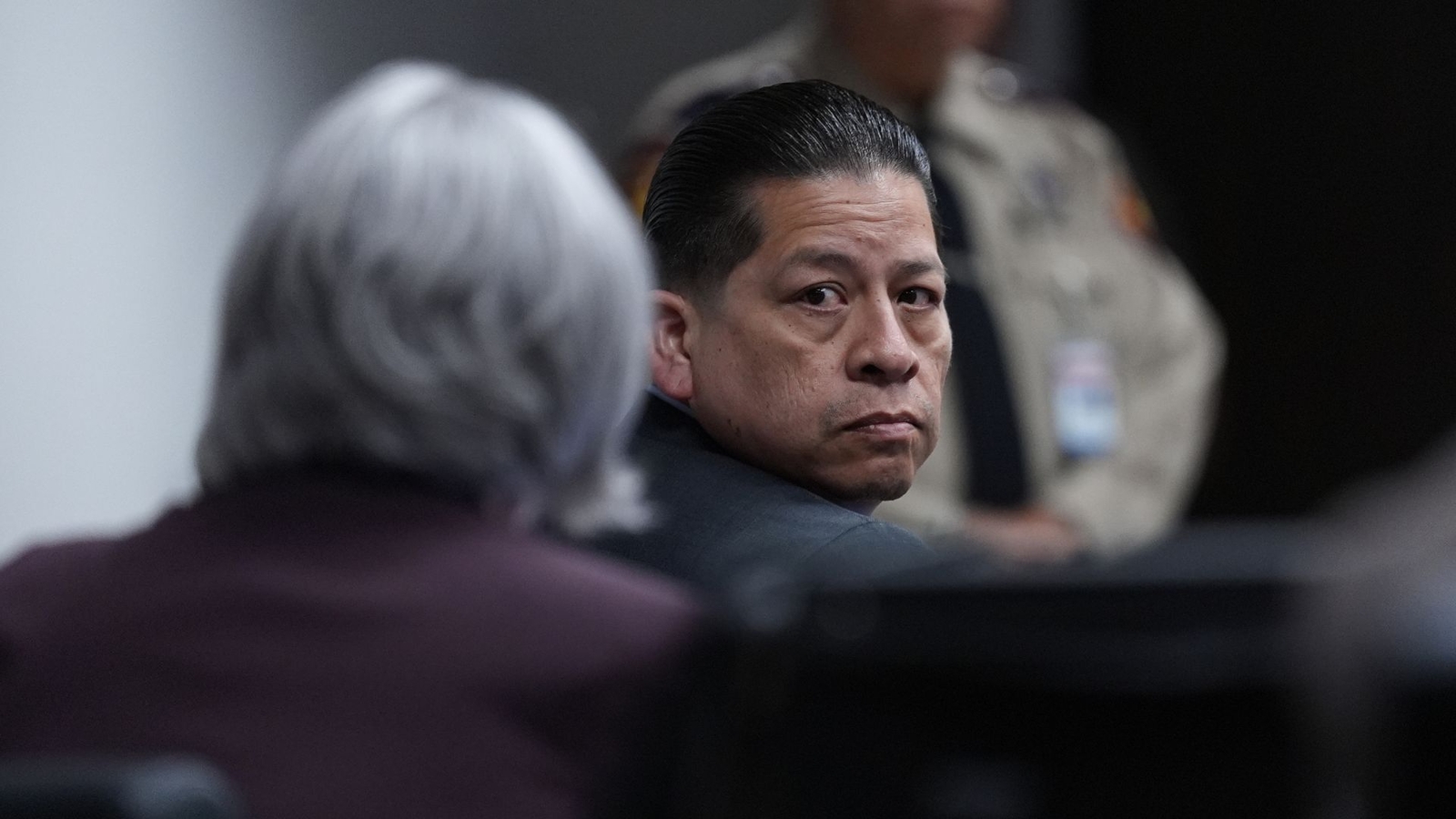
The Uvalde officer trial took a dramatic turn this week as Judge Sid Harle made the consequential decision to strike the entire testimony of a key prosecution witness from the official record. The ruling came during ongoing proceedings against former Uvalde Consolidated Independent School District police officer Adrian Gonzales, who faces 29 counts of child endangerment or abandonment in connection with the devastating Robb Elementary School shooting that claimed the lives of 19 children and two teachers in May 2022.
Gonzales stands as the first law enforcement officer to face trial over the widely criticized response to the massacre. While his former boss, former Chief Pete Arredondo, has pleaded not guilty to separate charges, Gonzales is currently the only defendant whose case has reached a jury, making every courtroom development closely scrutinized by families, advocates, and legal observers.
The Testimony That Was Thrown Out
The defense’s successful motion centered on witness Stephanie Hale, who had previously testified that she observed an armed individual on the Robb Elementary campus , specifically in the general area where Gonzales would later arrive. According to defense attorney Jason Goss, this critical observation was never disclosed during Hale’s initial interview with investigators just four days after the tragedy.
Hale acknowledged on the stand that she met with investigators because participation was mandatory, but maintained she did not believe she possessed significant information at the time. She explained that later interviews with the grand jury and trial prosecutors featured more targeted questions that helped her recall additional details.
Goss argued forcefully that the prosecution’s failure to disclose this specific piece of evidence compromised his client’s right to due process. He told the court that the omission had “put us to a disadvantage with this witness” and disrupted the defense strategy the legal team had carefully prepared. Uvalde County District Attorney Christina Mitchell’s office objected to the ruling, but Judge Harle ultimately sided with the defense, stating he would “reluctantly” instruct the jury to disregard all of Hale’s testimony. The judge also denied the defense’s separate motion for a mistrial.
Why the Ruling Matters
Striking testimony in a high-profile case like the Uvalde officer trial carries enormous implications. Once jurors are told to disregard evidence, the prosecution loses the ability to reference those statements during closing arguments or rely on them to establish patterns of behavior. Given that Hale’s account placed the shooter in proximity to where Gonzales was stationed, her testimony potentially supported the prosecution’s theory that the officer had ample opportunity to intervene but failed to do so.
Emotional Accounts From Inside the Classroom
While the legal battles over witness testimony unfolded, the jury also heard harrowing firsthand accounts from educators who survived the attack. Fourth-grade teacher Lynn Deming delivered some of the most emotionally charged testimony, describing the moment she realized bullets were piercing through her classroom window.
Deming recounted hurrying her students back from early recess and positioning them beneath a counter along an interior wall. As she closed the classroom blinds, gunfire shattered the window, sending shrapnel into her body. She lost her glasses and collapsed , or jumped, she said she could not remember which , and was immediately consumed by dread.
“I thought I’d put the kids in the worst place,” Deming told the jury, struggling through tears. “Because he was shooting through the window and the kids were directly across. I thought I made the worst mistake I had ever made.”
Bleeding but determined, Deming said she crawled across the room to place her own body between the line of fire and her students. She urged the children to pray and repeatedly told them she loved them.
“I wanted to tell them it would be OK, but I wasn’t sure. I just wanted the last thing they heard was that somebody loved them. I think I said it a million times.”
Defense attorney Goss used Deming’s testimony to advance a different narrative, pointing out that one of the officers who helped evacuate classrooms during the chaos was Gonzales himself. This account provides the defense with potential evidence that the former officer did take action during the response, rather than remaining passive as prosecutors allege.
The 911 Call Heard Around the Courtroom
Another powerful moment came when witness Amy Marin described the frantic 911 call she placed after witnessing a truck driver emerge with a weapon near the school. Marin had initially intended to report a vehicle crash but quickly found herself pleading with children to seek safety as the situation escalated.
When Uvalde County District Attorney Mitchell asked Marin what happened after the gunman entered the building, her voice shook as she recalled the relentless gunfire.
“The shots wouldn’t stop. They were just going round after round. I thought he’s going to kill me; I’m going to die.”
Marin had been planning an after-school party on the day of the massacre, a detail that underscored the normalcy that existed moments before unimaginable violence erupted. During cross-examination, defense attorney Nico LaHood pressed Marin on the specific policies governing door locks at Robb Elementary and other schools in the district , a line of questioning that hints at the defense’s broader strategy of shifting responsibility to institutional protocols rather than individual officers.
The Broader Context of the Uvalde Officer Trial
This trial represents the first accountability measure of its kind against law enforcement for the catastrophic response to the Robb Elementary shooting. For 77 minutes, hundreds of federal, state, and local law enforcement officers waited in a hallway while children and teachers were trapped with the gunman. That delay has been the subject of multiple investigations, including a critical report from the Texas House Committee that described the response as a failure at every level.
Gonzales faces 29 separate counts, with each count corresponding to an individual child whose safety he allegedly endangered or abandoned. The charges carry significant weight , both legally and symbolically , for the families of the victims who have spent years demanding accountability. The trial, which is being held in Corpus Christi rather than Uvalde, was moved to ensure an impartial jury pool.
What’s Next in the Proceedings
With Hale’s testimony now formally excluded, the prosecution must rely on remaining witnesses, forensic evidence, and the accounts of survivors like Deming and Marin to establish their case. The defense, meanwhile, continues to emphasize that Gonzales did take actions during the response , including helping evacuate classrooms , and that institutional policies and the broader chain of command bear responsibility for any shortcomings.
Meanwhile, the case against Pete Arredondo remains pending. He has pleaded not guilty to separate charges, though no trial date has been scheduled. Legal experts suggest that the Gonzales trial could serve as a preview of how similar evidence might be received in Arredondo’s eventual proceedings.
Conclusion
The decision to strike the testimony of a key prosecution witness marks a pivotal moment in the Uvalde officer trial, one that could significantly shape the jury’s deliberations in the case against Adrian Gonzales. As the courtroom absorbs emotional survivor accounts alongside complex legal maneuvering, the trial continues to serve as a profound examination of institutional responsibility, individual duty, and the pursuit of justice for the 21 lives lost at Robb Elementary School. For the families who have waited years for answers, every ruling, every witness, and every piece of evidence carries the weight of remembrance , and the hope that accountability, however delayed, might finally bring a measure of closure.