
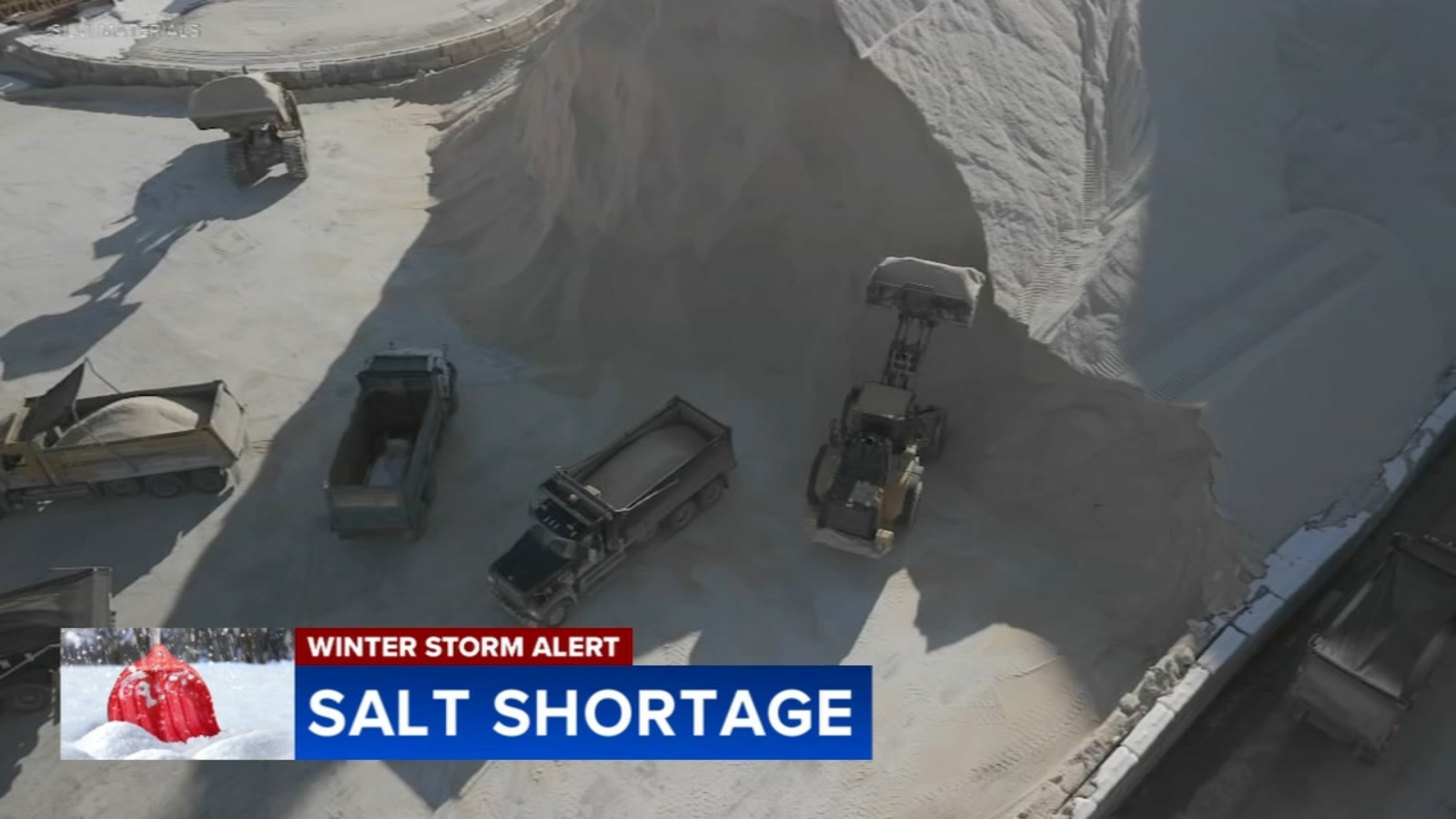
A mounting salt shortage is sending shockwaves through the Mid-Atlantic region as suppliers scramble to keep up with surging demand ahead of an approaching winter storm. What started as a slow trickle of worried buyers has turned into a flood of commercial customers, municipalities, and private contractors all racing to secure enough road salt before the next weather system hits. The ripple effects are now being felt far beyond store shelves , entire distribution networks are straining under the pressure, and the people who keep our roads, parking lots, and sidewalks safe are sounding the alarm.
The Ripple Effect of Early Winter Demand
Across Pennsylvania, New Jersey, Delaware, and beyond, the early-season salt shortage has caught nearly everyone off guard. December brought heavier-than-usual snowfall to many parts of the region, and municipalities burned through their stockpiles faster than anticipated. By the time January rolled around, inventories that typically last well into late winter had already been depleted.
That timing couldn’t be worse. With another winter storm barreling toward the East Coast, buyers who usually count on steady, predictable supplies are finding shelves , and silos , bare. Commercial customers are now driving hours to find a distributor with product still available, creating traffic jams at the few salt yards that still have inventory on the ground.
One local resident near a busy distribution hub in Bristol Township, Pennsylvania, described the scene in vivid terms. Laura Wolfram, who lives near the Riverside Industrial Complex, said trucks were lined up bumper-to-bumper from the facility all the way past the Randall Bridge , a stretch normally quiet during morning hours. By 7 a.m., the area had already become a logistical nightmare, with dump trucks clogging local roads as drivers waited their turn to load up.
Inside One Supplier’s Response
Among the few distributors still holding product, Silvi Materials has emerged as something of a beacon in the current salt shortage. The Bristol Township-based company began preparing for this exact scenario weeks before the panic set in, according to Larry Silvi, the company’s chief sales and marketing officer.
Stockpile Expansion and Overseas Shipments
“We were kind of preparing for this in advance. We made these decisions back after Christmas,” Silvi explained. That foresight has positioned the company as one of the last reliable sources of road salt for hundreds of miles in any direction.
To meet the unprecedented surge, Silvi Materials took aggressive action: ramping up its stockpile and boosting shipments from overseas suppliers. While the United States does have domestic salt mines, many of the shipments supplying the tri-state area originate abroad, meaning long lead times and complex logistics. Increasing those orders in the middle of a crisis is no small feat.
The result? Trucks have been arriving at the Riverside Industrial Complex from across Pennsylvania, New Jersey, Delaware, and as far away as Virginia and North Carolina. Buyers who normally rely on closer suppliers are willing to drive extraordinary distances because, quite simply, there is no other option.
Catch-Off-Guard Buyers and Empty Yards
Silvi noted that the early demand caught many buyers flat-footed. Most municipalities and commercial operations typically build up their winter salt inventory gradually, but the December onslaught drained reserves faster than procurement teams could replenish them. By mid-January, much of the region found itself in the same precarious position , empty-handed right when the next storm was brewing.
“With this early demand in January, I think people got caught off guard with their inventory, so we’re one of the few people that still had salt on the ground,” Silvi said.
Private Contractors Brace for Impact
It’s not just municipalities scrambling. Private snow and ice management companies , the firms responsible for clearing parking lots at shopping centers, hospitals, medical offices, and corporate campuses , are facing their own version of the salt shortage. These contractors often work on tight margins and seasonal contracts, leaving little room for supply chain disruptions.
Michael Piechota, owner of American Property Solutions in Allentown, found himself in the unenviable position of having to email his entire client list to explain the situation. His company services a wide range of properties, including grocery stores, malls, doctors’ offices, and hospitals , places where safe access is non-negotiable during winter weather.
“We put out a mass email to all our clients today to let them know that we have secured enough salt for this event, but after this event, going into February, we’re uncertain,” Piechota explained.
That uncertainty is the operative word. Contractors like Piechota have committed to delivering safe, ice-free surfaces, but without reliable de-icing materials, those promises become harder to keep with each passing storm.
Alternative De-Icing Materials Enter the Conversation
When traditional road salt becomes too expensive or simply unavailable, contractors often turn to alternative materials. Piechota mentioned that his team may soon need to rely on sand or cinders , a byproduct made from coal ash , to provide traction on icy surfaces.
While these alternatives can help in a pinch, they come with trade-offs. Sand doesn’t melt ice the way salt does, and cinders can leave residue on pavement and in storm drains. For property managers accustomed to clean, salt-treated lots, the shift may be noticeable. More importantly, alternative materials don’t deliver the same level of safety performance, raising concerns about slip-and-fall liability during the heart of winter.
Piechota was emphatic that contractors aren’t looking for excuses , they’re simply dealing with a supply problem they can’t control.
“The general public, I feel, should know it’s not the private contractor that doesn’t wanna do a good job. We just don’t have the product available to us,” Piechota said.
Prioritizing Public Safety Over Profit
As demand continued to mount at the Silvi Materials facility, the company made a difficult but telling decision: turning away walk-up and pickup customers to focus exclusively on contractual obligations with state agencies, municipalities, schools, and similar public-sector clients.
It’s a move that actually cost the company business in the short term. Walk-up customers willing to pay premium prices were waved away, and the traffic backup was so severe that normal operations became nearly impossible.
“The second we realized it was happening, we did everything we could to get rid of trucks and get rid of traffic, even at a cost to our business,” Silvi said. He acknowledged that turning away paying customers during a seller’s market is unusual, but the priority had to be the contracts that protect public infrastructure , the roads, bridges, schools, and government buildings that thousands of residents depend on.
The decision underscores a broader reality about the salt shortage: when supply tightens, tough choices have to be made about who gets product and who waits. For a distributor like Silvi Materials, that calculus tilted toward the public good, even at the expense of short-term revenue.
What Comes Next for the Salt Supply Chain
The week that Silvi described as “highly abnormal” is unlikely to resolve quickly. Until other regional suppliers receive new shipments , either from domestic mines or overseas , the salt supply chain will remain stretched thin. With February typically bringing more snow and ice to the Mid-Atlantic, the pressure on remaining stockpiles is only expected to intensify.
Several factors will shape how the rest of winter unfolds:
- Shipment timing: Overseas orders can take weeks to arrive, meaning any new supply headed to the region is still at sea or in port.
- Weather patterns: Another active storm cycle could deplete even the prepared suppliers faster than expected.
- Pricing volatility: Scarce supply typically drives prices higher, and municipalities operating on fixed budgets may face difficult procurement decisions.
- Contractor strategy: Private firms may shift toward alternative materials, accept reduced service levels, or pass increased costs along to clients.
For everyday residents, the practical takeaway is simple: be patient with the crews working to keep roads and lots clear. The people on the front lines of winter weather response are doing their best with limited resources, and the current salt shortage is a supply chain problem , not a performance problem.
Conclusion
The salt shortage gripping the Mid-Atlantic is a stark reminder of how vulnerable everyday infrastructure can be to sudden spikes in demand. From overburdened distributors like Silvi Materials to private contractors like American Property Solutions, the entire ecosystem that keeps our communities moving safely through winter is feeling the strain. Early preparation, smart prioritization, and transparent communication with the public have helped some providers weather the storm , but until new shipments land and inventories are rebuilt, the pressure will continue. As another winter system bears down on the region, the resilience of suppliers and the patience of the communities they serve will be tested once again.