
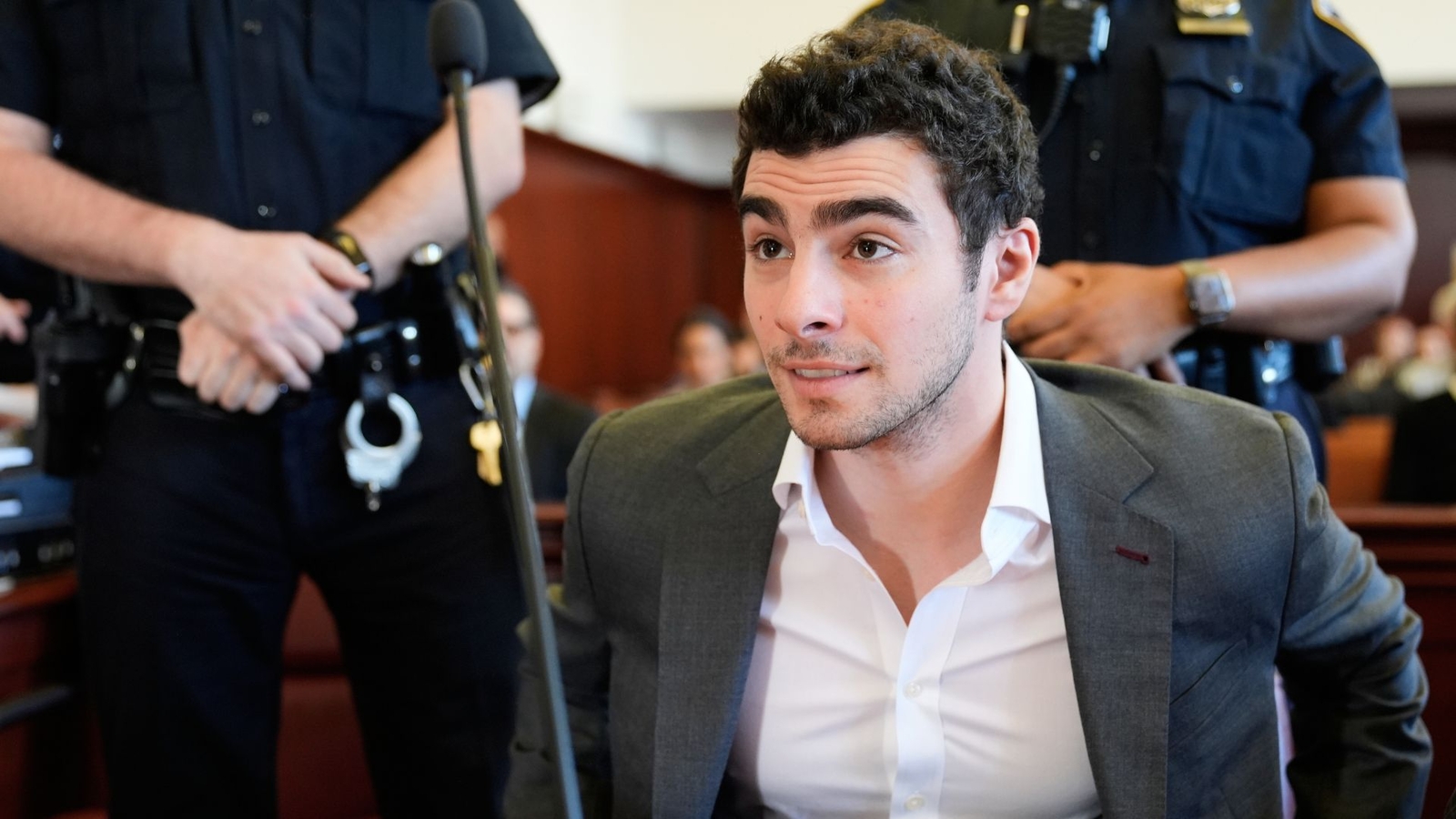
A shocking Luigi Mangione jailbreak attempt was reportedly foiled this week when a Minnesota man allegedly walked into a federal detention facility in Brooklyn claiming to be an FBI agent with the authority to release the man accused of murdering UnitedHealthcare CEO Brian Thompson. The bizarre incident has drawn national attention, adding yet another strange chapter to one of the most closely watched criminal cases in recent memory.
According to law enforcement sources, the suspect identified as Mark Anderson, age 36, was arrested and charged with impersonating a federal agent after he allegedly tried to use bogus credentials and improvised weapons to facilitate the escape of the high-profile inmate. The failed breakout attempt underscores the extraordinary security concerns surrounding Mangione’s detention and raises fresh questions about how determined outsiders are trying to intervene in the proceedings.
What Happened at MDC-Brooklyn?
The incident unfolded at the Metropolitan Detention Center in Brooklyn, commonly referred to as MDC-Brooklyn, where Mangione has been held since his arrest in connection with the December 2024 shooting death of UnitedHealthcare CEO Brian Thompson. According to a criminal complaint filed in federal court, Anderson allegedly approached the intake area and told Bureau of Prisons (BOP) personnel that he had paperwork “signed by a judge” authorizing the release of a specific inmate.
While the complaint does not explicitly name Mangione, multiple law enforcement sources confirmed to ABC News that Anderson was specifically seeking to extract the UnitedHealthcare murder suspect. When BOP officers asked to see Anderson’s credentials, federal prosecutors allege he produced a Minnesota driver’s license and threw several documents at the officers in an apparent attempt to overwhelm them with paperwork.
The situation escalated when Anderson reportedly informed officers that he had weapons in his bag. Upon inspection, authorities discovered a barbecue fork and a pizza cutter concealed inside. While neither item would typically be classified as a traditional firearm, the improvised nature of the “weapons” , along with the brazenness of the impersonation , suggested a level of planning that investigators are continuing to scrutinize.
The Charges Against Mark Anderson
Anderson faces a federal charge of impersonating a federal agent, a serious offense that carries significant penalties. During his court appearance on Thursday, Magistrate Judge Taryn Merkl ordered that Anderson remain detained pending further proceedings, citing concerns that he posed both a flight risk and a danger to the community.
Court records reviewed by ABC News reveal that Anderson has multiple open criminal cases in the Bronx, adding another layer of complexity to his legal situation. The combination of pending charges, the federal impersonation allegation, and his willingness to allegedly attempt an inmate extraction at a secure federal facility likely contributed heavily to the judge’s decision to deny bond.
Federal prosecutors have not yet publicly disclosed whether additional charges could be filed, though the discovery of improvised weapons inside a federal detention center could open the door to further offenses related to attempting to introduce contraband into a Bureau of Prisons facility.
Why Luigi Mangione Is Being Held at MDC-Brooklyn
Mangione has been detained at the Metropolitan Detention Center since his arrest in Altoona, Pennsylvania, shortly after the targeted killing of Brian Thompson outside a Midtown Manhattan hotel in December 2024. The shooting , captured in part on surveillance video , sent shockwaves through the corporate world and ignited a broader public debate about the U.S. healthcare system, insurance claim denials, and corporate accountability.
Mangione faces a dual-track prosecution. He is facing federal charges brought by the U.S. Attorney’s Office for the Southern District of New York, which could potentially carry the death penalty if convicted. He is also facing separate state charges in New York, including murder in the first degree, which carries its own sentencing implications.
The decision to house Mangione at MDC-Brooklyn , a high-security federal facility that has housed some of the nation’s most notorious defendants, including Sean “Diddy” Combs, Sam Bankman-Fried, and Jeffrey Epstein , reflects the gravity with which federal authorities are treating the case.
Friday’s Crucial Court Hearing for Mangione
Adding to the legal momentum already generated by this week’s jailbreak attempt, Mangione is scheduled to appear in federal court on Friday. According to sources familiar with the case, the judge overseeing his federal proceedings may rule on whether the death penalty will remain a sentencing option if he is ultimately convicted.
This hearing represents a pivotal moment in the UnitedHealthcare CEO murder case. Federal prosecutors previously indicated they would seek capital punishment, arguing that the killing demonstrated a level of premeditation, targeted intent, and potential terrorism-related motivation that justifies the most severe penalty available under federal law.
Defense attorneys have pushed back against the death penalty recommendation, contending that Mangione’s alleged actions , while criminal , should not be categorized as a terrorism offense. The Friday hearing could narrow or finalize the scope of potential punishments Mangione faces in the federal system.
The Strange Subculture Around the UnitedHealthcare CEO Murder Case
The attempted jailbreak is the latest in a string of unusual incidents connected to the UnitedHealthcare CEO murder case. Since Mangione’s arrest, online forums and social media platforms have been flooded with commentary ranging from sympathetic support to outright celebration of the alleged killing. Some segments of the public have even directed donations to his legal defense fund, while others have created merchandise, digital art, and even dating profiles connected to the case.
This bizarre cultural phenomenon has created challenges for law enforcement and corrections officials tasked with protecting the defendant. Security around Mangione’s court appearances, transport, and detention has been notably tightened, and corrections officers have reportedly been on high alert for any attempts by sympathizers to interfere with the legal process.
Anderson’s alleged actions fit uncomfortably within this broader pattern. While there is no public evidence linking him directly to any organized support network, the incident highlights how individual actors , emboldened by online discourse , may attempt to take matters into their own hands.
Security Failures and Successes at Federal Facilities
The fact that Anderson was able to enter MDC-Brooklyn’s intake area and make contact with Bureau of Prisons personnel before being stopped is likely to prompt an internal review of security protocols. Federal detention centers are designed with multiple layers of verification precisely to prevent unauthorized access, and impersonation attempts , while not unheard of , typically result in swift intervention by trained intake staff.
Security experts have long noted that the most vulnerable moments in any correctional facility are often at the intake and visitation stages, where unauthorized individuals can attempt to blend in or exploit procedural gaps. The Anderson incident is likely to be studied as a textbook example of both how such attempts can be detected and how vigilance among frontline staff remains essential.
For now, investigators are working to determine whether Anderson acted alone, whether he had any communication with individuals inside or outside the facility, and whether the documents he carried had any legitimacy or were entirely fabricated.
What Comes Next in the Case
In the short term, prosecutors will continue building their case against Anderson while Mangione’s legal team prepares for Friday’s critical hearing on the death penalty question. Separately, the state murder case in New York is progressing through its own procedural stages, with both prosecution and defense teams expected to engage in extensive pre-trial motions over the coming months.
Beyond the courtroom, the Mangione case continues to function as a Rorschach test for public sentiment about corporate America, the healthcare industry, and the limits of ideological protest in a society that values the rule of law. Each new development , including this week’s failed jailbreak , adds another data point to an ongoing national conversation that shows no signs of fading.
Final Thoughts
The foiled Luigi Mangione jailbreak attempt serves as a stark reminder of how high the stakes remain in the UnitedHealthcare CEO murder case. From the federal charges and potential death penalty exposure to the unusual cultural attention surrounding the defendant, every element of this story continues to defy expectations. Mark Anderson’s alleged actions , however poorly conceived , will likely be cited in future court filings as further evidence of the need for heightened security around Mangione’s detention and proceedings. As Friday’s hearing approaches, all eyes will be on the federal courthouse in lower Manhattan, where the next major chapter in this extraordinary case is set to unfold.