
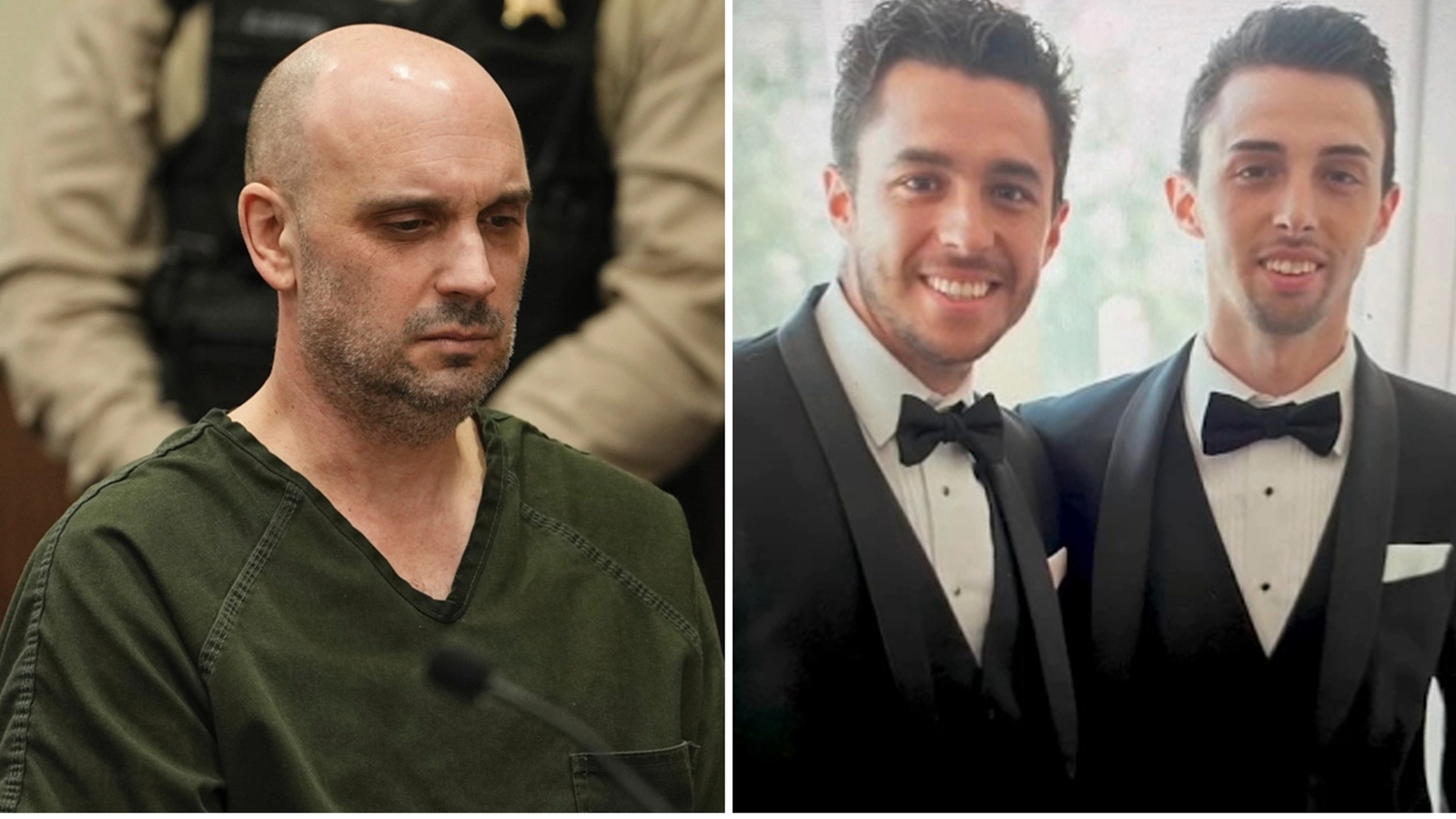
A New Jersey appellate judge has delivered another setback to the defense team representing Sean Higgins, the man charged with fatally striking NHL star Johnny Gaudreau and his brother Matthew during a cycling ride in Salem County. The ruling in the Gaudreau brothers crash case marks a significant turning point, effectively keeping Higgins’ incriminating statements to police admissible as the case moves toward trial.
Appellate Court Rejects Defense Appeal
On Thursday, Judge Morris G. Smith of the Superior Court’s Appellate Division denied a motion that would have allowed Higgins’ attorneys to challenge a lower court’s ruling on the admissibility of police statements. The defense had been working to argue that Higgins’ constitutional Miranda rights were violated during his initial interactions with law enforcement following the fatal incident.
In his decision, Judge Smith ruled that the defense failed to demonstrate “sufficient justification to overcome the strong policies disfavoring piecemeal review of litigation.” This legal standard makes it extraordinarily difficult for defendants to secure interlocutory appeals before a final verdict has been reached.
Attorney Matthew V. Portella, one of Higgins’ defense lawyers, expressed disappointment with the ruling. “Both Mr. Klineburger and I are disappointed with the Appellate Court’s decision not to accept and hear the interlocutory appeal on its merits and the arguments on such an important Constitutional issue in Mr. Higgins’ case,” Portella said in a statement to Action News.
Background of the Gaudreau Brothers Crash
The tragic Gaudreau brothers crash occurred on August 29, 2024, when Johnny Gaudreau, age 31, and his younger brother Matthew, age 29, were riding bicycles near their hometown in Salem County, New Jersey. Both men were well-known figures in the hockey world, with Johnny having played for the Columbus Blue Jackets and Matthew having played professionally at various levels, including a stint at Boston College.
According to police reports and witness accounts, the brothers were struck while cycling along a roadway. A driver who was traveling in front of Higgins at the time told investigators that Higgins had been driving aggressively in the moments leading up to the collision. When the vehicles ahead of her slowed down and moved left to safely pass the cyclists, Higgins reportedly sped up and veered right, directly into the path of the Gaudreau brothers.
After the crash, Higgins was found approximately a quarter mile from the scene beside his damaged vehicle. His location so far from the immediate crash site raised additional concerns about whether he had attempted to flee before being apprehended.
The Statements at the Heart of the Appeal
One of the most critical pieces of evidence in the case against Higgins consists of statements he made to police at the scene and during the subsequent investigation. These statements have become central to the legal battle because they include admissions about his drinking prior to the crash.
During his interactions with New Jersey State Police troopers, Higgins openly admitted to consuming alcohol. On body camera footage, he can be heard telling officers, “I’ve been drinking beers,” and later specifying that he had consumed approximately “five or six” beers beginning around noon on the day of the incident. He also noted that he had not had a drink in roughly two hours before being stopped.
These statements were captured alongside his performance on field sobriety tests, which he ultimately failed. A subsequent blood test revealed that Higgins had a blood-alcohol content of .087, slightly above New Jersey’s legal driving limit of .08.
In November, Superior Court Judge Michael Silvanio held a hearing to consider the defense’s motion to suppress these statements. After reviewing the arguments, Judge Silvanio ruled that the statements had been lawfully obtained and were admissible at trial. The defense then attempted to take this issue to the Appellate Division in hopes of having the decision overturned before trial proceedings began.
Defense Arguments and Their Limitations
Higgins’ legal team has consistently argued that their client’s Miranda rights were violated during the police encounter, which would typically render any statements inadmissible under established constitutional protections. The Fifth Amendment guarantees that individuals in police custody must be informed of their right to remain silent and their right to an attorney before being questioned.
Beyond the Miranda challenge, Higgins’ attorneys have also pointed to mitigating factors that they believe should be considered in their client’s defense. Notably, they emphasized during previous hearings that Higgins had recently undergone knee surgery, which they argued likely affected his performance on the field sobriety tests. This argument attempts to cast doubt on one of the key pieces of evidence used to establish his impairment at the time of the crash.
However, with the Appellate Division’s denial, the defense now faces an uphill battle in keeping these statements out of trial. The ruling suggests that the appellate court did not find the constitutional arguments compelling enough to warrant interrupting the standard trial process.
Charges and Potential Penalties
The severity of the charges against Higgins reflects the gravity of the Gaudreau brothers crash. He faces the following counts:
- Two counts of reckless vehicular homicide
- Two counts of aggravated manslaughter
- Two counts of evidence tampering
- Two counts of leaving the scene of a fatal accident
If convicted on all counts, Higgins could face a maximum sentence of up to 70 years in prison. His defense team has already rejected a plea deal that would have required him to serve 35 years, indicating that they intend to fight the charges at trial rather than accept a guaranteed lengthy sentence.
The rejection of the plea offer suggests that Higgins’ attorneys believe they have viable defenses, despite the mounting legal setbacks. However, with the appellate court now having declined to intervene on the Miranda issue, the path forward for the defense appears increasingly challenging.
Impact on the Hockey Community and Beyond
The Gaudreau brothers crash sent shockwaves through the hockey community and beyond. Johnny Gaudreau, affectionately known as “Johnny Hockey,” was one of the most popular players in the NHL, having previously starred with the Calgary Flames before signing with the Columbus Blue Jackets. Matthew Gaudreau had carved out his own path in the sport, including time playing professionally in the ECHL and at the collegiate level.
Both brothers were married, and Johnny was a father of two young children at the time of his death. The tragedy has prompted renewed conversations about impaired driving, road safety for cyclists, and the legal consequences faced by those who cause fatal crashes while under the influence.
What Comes Next in the Gaudreau Brothers Crash Case
Higgins is scheduled to return to court on February 24 for a discretionary conference. This pre-trial proceeding will likely address various logistical matters related to the upcoming trial, including scheduling, evidence sharing, and potential motions from both sides.
As the case progresses, the prosecution will continue to build its case using the statements Higgins made to police, the results of his blood-alcohol tests, and witness testimony from those who observed his driving behavior in the moments leading up to the fatal collision. The defense, meanwhile, will need to determine whether to focus on challenging other aspects of the prosecution’s case or to pursue strategies aimed at mitigating potential penalties.
For the families of Johnny and Matthew Gaudreau, the ongoing legal proceedings represent a painful but necessary step toward justice. The brothers’ widows have spoken publicly about their grief and their determination to see accountability for the loss of their husbands.
Conclusion
The latest ruling in the Gaudreau brothers crash case represents a significant victory for prosecutors and a substantial obstacle for Higgins’ defense team. With the Appellate Division declining to review the admissibility of Higgins’ statements, those admissions,including his acknowledgment of drinking before driving and his failed sobriety tests,will almost certainly be presented to a jury when the case goes to trial.
As the legal process continues to unfold, the community awaits further developments in a case that has already had profound implications for discussions around impaired driving, cyclist safety, and the pursuit of justice for victims of fatal crashes. The February 24 court date will mark another important chapter in this deeply consequential case, one that continues to resonate throughout the hockey world and the broader public consciousness.