
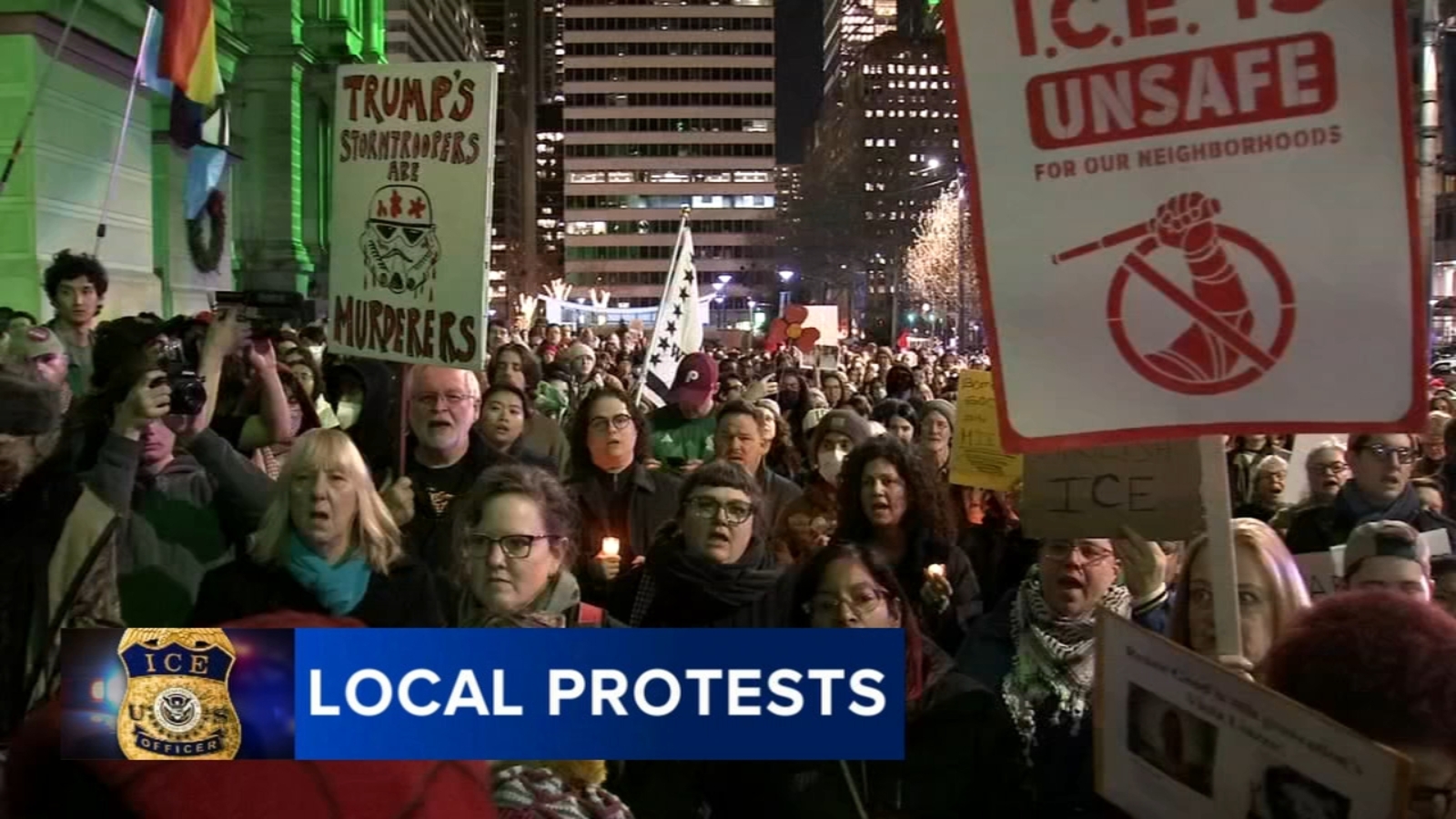
Hundreds of Philadelphians gathered in the heart of the city for a solemn ICE vigil Philadelphia demonstrators organized to honor the life of Renee Good, a 37-year-old woman fatally shot by an Immigration and Customs Enforcement agent in Minneapolis. What began as a candlelit memorial quickly transformed into a powerful march through city streets, drawing immigrant rights advocates, faith leaders, elected officials, and everyday residents united in grief, outrage, and a shared demand for accountability.
The Thursday evening gathering reflected a rapidly escalating national conversation around federal immigration enforcement, with Philadelphia positioning itself at the forefront of resistance. Organizers from roughly a dozen local immigrant rights groups, including No ICE Philly and the New Sanctuary Movement of Philadelphia, framed the event as both a moment of mourning and a launching point for sustained action.
A Community Grieves Together
From the moment the crowd assembled, the atmosphere carried the weight of collective sorrow. Many attendees held flickering candles alongside printed photographs of Renee Good, whose death at the hands of an ICE agent on Wednesday has sparked protests across the country. Hand-painted signs condemned not only the shooting itself but also the broader enforcement tactics employed by federal immigration officers.
Laura Torres, a resident of Northeast Philadelphia who joined the vigil, described the emotional impact of watching the viral video of the shooting. “I didn’t like what I saw, and it broke my heart,” Torres shared, her words echoing the sentiments of countless others who felt compelled to show up despite the cold evening air.
State Rep. Chris Rabb addressed the crowd with a message that captured the emotional complexity of the moment. “This is an extraordinary outpouring of love and grief and care and rage for a society that has gone haywire because of this level of extremism,” Rabb declared, drawing cheers from demonstrators who had traveled from across the Philadelphia region.
Voices From the Frontlines of Immigrant Advocacy
Peter Pedemonti, co-director of the New Sanctuary Movement of Philadelphia, stood among the speakers visibly shaken by the Minneapolis tragedy. Pedemonti’s organization has long educated residents about their legal protections during encounters with immigration authorities, and his presence underscored the deeply personal stakes for immigrant communities across the city.
“They do not have a right to enter your house unless they have a warrant signed by a judge,” Pedemonti reminded the crowd, emphasizing practical knowledge as a form of resistance. He described the current moment as “a catalyzing moment when people are coming together,” reflecting on how tragedy has historically galvanized movements for justice.
The energy shifted dramatically when Asantewaa Nkrumah-Ture took the microphone, delivering one of the most impassioned speeches of the evening. “We’re here because we know what ICE does. It hurts our communities. It kidnaps people. It kidnaps children under the age of 18 from their schools. It kidnaps people from their places of work and so on and so on,” Nkrumah-Ture declared. The crowd erupted into a rhythmic chant: “ICE will end now because we are going to melt that ice.”
Anita Raihan from No ICE Philly delivered a stark warning that resonated deeply with attendees. “If you do not act, it will happen here. And if you do not act, ICE will continue to kidnap and disappear members of our community every single day,” Raihan cautioned, framing Philadelphia’s response as a matter of urgent local consequence rather than distant political theater.
From Memorial to March
As the formal program concluded, the crowd organically began moving through Philadelphia’s streets in a peaceful march that wound its way through Center City. Chants against ICE and the Trump administration echoed off building facades, while a smaller contingent continued demonstrating after the main group dispersed.
Members of the New Black Panther Party were present at the demonstration, carrying firearms in a visible show of armed presence. They joined the group that continued marching after most attendees had departed, trailed closely by Philadelphia police officers on bicycles and in patrol cars. The march concluded peacefully around 8 p.m., with no reported incidents of violence between demonstrators and law enforcement.
At one point during the extended march, witnesses reported that something burned at the center of a circle of protesters. Multiple observers confirmed it was an American flag, an act that drew both support and criticism from onlookers. Tim Fleming, who had traveled from Delran, New Jersey, to attend the event while carrying his own American flag, expressed conflicted feelings about the symbolic gesture.
“I accept their right to do that, I just don’t like it,” Fleming explained. “I came here with the American flag because I believe that the American flag should be a symbol to protest against ICE and against Trump for democracy, so I don’t love to see it burned.” The moment crystallized a tension that has surfaced at similar demonstrations nationwide, where the symbolism of patriotism itself has become contested ground.
City Officials Draw a Hard Line
Long before the evening vigil began, Philadelphia’s top law enforcement leaders had already delivered an unmistakable message to federal immigration authorities. Earlier on Thursday, District Attorney Larry Krasner held a press conference that sent shockwaves through the local political landscape.
“Don’t even try this in Philly,” Krasner warned directly, his voice cutting through the noise of cameras and reporters. He followed with an even sharper statement: “Do you hear me ICE agents? You’re going to jail if you commit crimes in the city of Philadelphia.”
Krasner was flanked by Councilmember Kendra Brooks, Philadelphia Sheriff Rochelle Bilal, and a coalition of immigration advocates and faith leaders who collectively accused the Trump administration of weaponizing immigration enforcement against vulnerable communities.
Councilmember Brooks spoke with urgency about preventing similar tragedies from occurring within city limits. “We are doing everything in our power to prevent ICE from murdering anyone here in Philadelphia,” Brooks stated, signaling that local officials view the Minneapolis shooting as a clear warning sign requiring immediate preventive action.
Sheriff Bilal offered a professional law enforcement perspective on the Minneapolis incident that drew a sharp distinction between proper policing and what she characterized as reckless conduct. “Law enforcement professionals do not stand in front of moving vehicles evoking an action that is illegal. No, we don’t,” Bilal asserted, implicitly criticizing the ICE officer’s decision to fire upon Good.
Legal Guidance for Residents
Philadelphia Assistant District Attorney Caleb Arnold provided crucial legal clarification during the day’s events, addressing common misconceptions about what ICE agents are authorized to do during traffic stops. While acknowledging that laws regarding compliance with ICE demands while driving can vary by state, Arnold offered a clear principle that applies universally.
“They don’t have a right to ask a U.S. citizen to stop their car,” Arnold explained, emphasizing that citizenship alone provides substantial legal protection against arbitrary detention. This guidance formed part of a broader effort by advocates to equip Philadelphians with practical knowledge before potential encounters with federal officers.
Knowing Your Rights and Recording Interactions
One of the most actionable messages emerging from the ICE vigil Philadelphia residents organized centered on the power of documentation and community witness. Advocates repeatedly encouraged bystanders to record ICE interactions whenever they safely could, emphasizing that video evidence has become one of the most powerful tools for accountability in the modern era.
Pedemonti reinforced this theme during his remarks, connecting documentation to a broader philosophy of neighborhood protection. “I think it’s important not only to show up for our neighbors, but also that people keep showing up to say this is not OK,” he explained. His words carried the weight of an organizer who has spent years building infrastructure for exactly this kind of grassroots response.
The practical guidance offered throughout the vigil represented more than just legal technicalities. It embodied a philosophy of empowerment that immigration advocates hope will transform fear into agency for communities that have historically felt powerless against federal enforcement actions.
The Federal Government’s Defense
Despite the widespread condemnation emanating from Philadelphia and cities across the nation, the Trump administration has firmly defended the ICE officer involved in the Minneapolis shooting. Officials have characterized Good as having attempted to strike the agent with her vehicle, framing the use of lethal force as a justified act of self-defense.
Homeland Security Secretary Kristi Noem articulated the administration’s position, stating that the officer “acted appropriately to protect his life and the life of his colleagues and fellow law enforcement officers that were there and people that were surrounding.” This characterization stands in stark contrast to the accounts of witnesses and the conclusions drawn by many local law enforcement leaders, including Philadelphia’s sheriff.
The divergence between federal and local perspectives has created a constitutional fault line that Philadelphia officials appear determined to navigate through local policy and public messaging. Council members who appeared alongside Krasner indicated that discussions about local policies and plans related to ICE enforcement would continue in the coming days and weeks.
Sanctuary City Status Under Scrutiny
Immigration advocates have seized upon the Minneapolis tragedy to push Philadelphia leaders to reaffirm and strengthen the city’s sanctuary city designation. This status, which limits local cooperation with federal immigration enforcement, has become a flashpoint in the national debate over how municipalities should respond to federal immigration policy.
The renewed push for sanctuary city protections reflects concerns that current policies may not adequately protect residents from increasingly aggressive ICE tactics. With the Trump administration signaling its intent to expand enforcement operations, advocates argue that Philadelphia must take bold steps to insulate its most vulnerable residents from potential harm.
Looking Ahead: Sustained Resistance
Organizers made clear that Thursday night’s vigil was not an isolated event but rather the beginning of an escalated campaign. Demonstrations are planned for every Monday morning outside Philadelphia’s local ICE field office, ensuring that federal authorities operating in the city will encounter sustained community presence.
This commitment to ongoing action reflects lessons learned from successful social movements throughout American history. Pedemonti captured this strategic vision when he described the moment as more than a reaction to a single tragedy. It represents, in his words, “a catalyzing moment when people are coming together,” one that organizers hope will sustain momentum long after the initial shock of the Minneapolis shooting fades from headlines.
As Philadelphia navigates the complex terrain between federal immigration policy and local values of inclusion and sanctuary, the voices raised at this ICE vigil Philadelphia residents organized will likely continue resonating through courtrooms, council chambers, and city streets. The message from those who gathered on that cold Thursday evening was unmistakable: the time for action is now, and Philadelphia intends to be heard.