
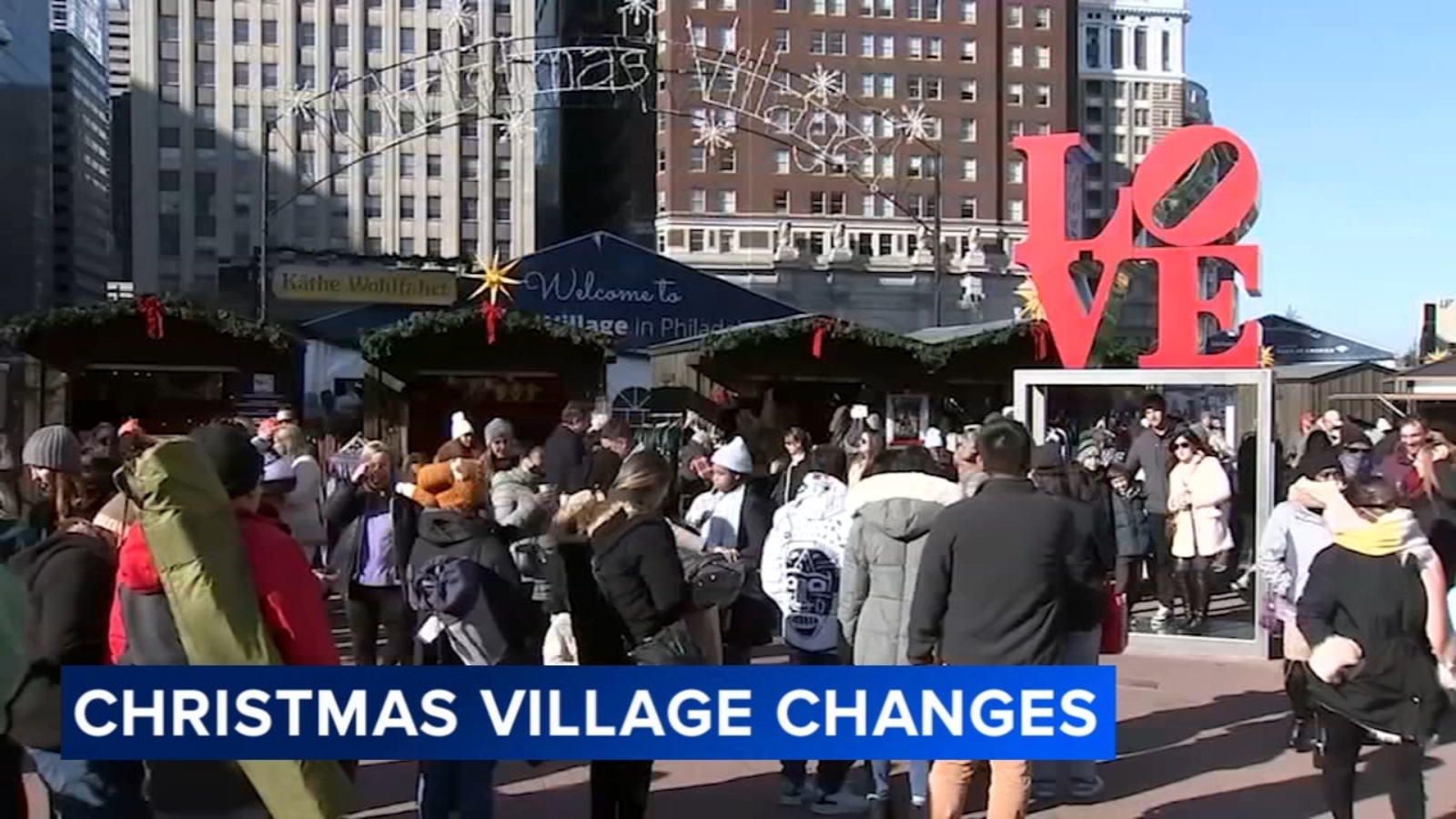
Every holiday season, Philadelphia transforms its LOVE Park and City Hall area into a magical European-inspired marketplace. But this year, significant Philadelphia Christmas Village changes are sending shockwaves through the vendor community. The beloved holiday tradition is undergoing major accessibility modifications to comply with the Americans with Disabilities Act (ADA), and not everyone is celebrating. Vendors who have spent years building their small businesses around the market are now questioning whether participating is worth the risk , both financially and creatively.
Here’s everything you need to know about the proposed changes, why they’re happening, and what they could mean for the future of one of the city’s most cherished seasonal attractions.
The Root of the Controversy: ADA Compliance
At the heart of the issue is accessibility. German American Marketing, Inc., the company that operates the Christmas Village and the Made in Philadelphia Holiday Market, sent a detailed letter to its vendors explaining the situation. According to the letter, last season’s efforts to make the event ADA-compliant fell short. The previous accommodations weren’t suitable for everyone, leaving the organization with two difficult choices for the upcoming season.
The first option involved installing permanent ramps at every vendor kiosk. However, as the letter outlined, these ramps would need to be eight feet long with handrails , a structural requirement that simply doesn’t fit within the existing walkways. Beyond the spatial challenges, the handrails would block foot traffic from reaching the front of vendor booths, creating serious crowd management and safety concerns.
“Blocking the entire fronts with handrails will keep foot traffic away from the front of vendor booths,” the letter to vendors explained. “Additional considerations of crowd management and overall event safety are clearly not making this a viable option.”
The City’s Stance on Accessibility
Thomas Bauer, President and CEO of German American Marketing, addressed the difficult position vendors now face. He acknowledged that the solution wasn’t ideal, but emphasized that it was the only legally sound path forward. The city has made it clear that full compliance with disability access laws is non-negotiable, and the company wanted to avoid the risk of costly litigation.
“This is the solution the City feels comfortable with from a legal perspective,” Bauer wrote. “We are not overly excited, but decided to offer an experience that is in 100% compliance without having to find out through litigation.”
The “Inaccessible Booth” Solution
So what does this mean in practical terms for shoppers? Instead of the traditional walk-in booths that have defined the market for years, every vendor stall will now feature an entrance barrier at the front. Shoppers won’t be able to step inside the booths to browse merchandise up close. Vendors will instead present their products from behind the barrier, fundamentally changing the interactive shopping experience that has drawn crowds for seasons.
This represents a dramatic departure from the open-air browsing experience that made the Philadelphia Christmas Village feel intimate and welcoming. The ability to touch a scarf, examine handcrafted jewelry, or sample a candle has been central to the appeal of these artisan markets.
German American Marketing did note that there would be a “select few locations” where permanent ramps could be installed, allowing certain businesses to remain open to walk-in traffic. However, the majority of vendors will face the barrier-only format.
Vendors Sound the Alarm
The response from the vendor community has been swift and concerned. Several longtime participants have already announced they won’t be returning this year, raising questions about whether the Philadelphia Christmas Village changes could fundamentally alter the event’s character.
A Children’s Clothing Maker Steps Away
Lindsay Gradel, the creative force behind Sew Much Cooler, a children’s clothing line, set up shop at the Christmas Village two seasons ago. She’s not coming back , and she’s not alone in her decision.
“There is a step when people come into the booth, so it’s not ADA-compliant,” Gradel explained. After receiving notification about the upcoming modifications, she reached out to fellow vendors and discovered widespread anxiety about the financial implications.
Booth fees at the Christmas Village aren’t cheap. Vendors pay somewhere between $8,000 and $9,000, depending on whether their location is at Dilworth Park or LOVE Park. For small business owners, that’s a significant investment , one that becomes even riskier when the shopping experience is fundamentally altered.
“We don’t know how our sales are going to be without people being able to walk in to smell our candles, to try on our jewelry, to try on a sweatshirt,” Gradel said. “Every customer at the holidays, they want to go into the store, and they want to shop. It’s part of it.”
A Bath and Body Business Bows Out
Drew Fisher, owner of Color & Flame Handmade, a bath and body products company, has participated in the Christmas Village for three years. He’s decided that this year’s changes are simply too disruptive to his business model.
“Just the way that we organically interact with the customer,” Fisher noted. “The way the customers find things. People just want to walk in and experience it on their own terms.”
Fisher expressed frustration about the timing of the announcement, too. He wished he had received the information earlier in the year so he could have pivoted to other craft shows and holiday markets. By the time vendors learned about the new format, it was too late to secure spots at alternative venues.
“There are other shows we could have done,” he said. “And if we found out earlier, we could have applied to them. It’s too late now.”
The Financial Stakes for Small Businesses
The Philadelphia Christmas Village has long been a critical revenue stream for local artisans, crafters, and small business owners. For many, the holiday season represents their biggest sales window of the year. Walking away from a booth , especially one they’ve invested in for multiple seasons , isn’t a decision made lightly.
Consider what an inaccessible booth means for different types of vendors:
- Apparel makers lose the ability for customers to try on clothing
- Jewelry designers can’t let shoppers examine pieces up close or test sizing
- Candle and fragrance sellers lose the sensory experience that drives impulse purchases
- Artisan food vendors struggle to offer samples that encourage buying
For businesses that rely on tactile, interactive selling, the barrier format could translate directly into reduced sales , and a lost investment on the booth fee.
The Tension Between Compliance and Commerce
This situation highlights a real tension that event organizers across the country face: balancing legal accessibility requirements with the practical realities of running a market in historic public spaces. LOVE Park and City Hall aren’t designed for the kind of infrastructure changes that full ADA compliance often requires.
On one side, advocates for disability rights would rightly argue that any public event should be accessible to everyone, regardless of mobility. The previous setup, which required visitors to step up into booths, effectively excluded wheelchair users and others with mobility challenges.
On the other side, vendors argue that the proposed solution creates a different kind of exclusion , one that hurts small businesses and may ultimately reduce the variety and quality of products available to all shoppers.
The challenge is finding a middle ground. Could modular ramp systems work in certain locations? Could booth designs be reimagined with built-in accessibility features rather than retrofit ramps? These are questions that the city and the marketing company will need to grapple with going forward.
What Comes Next?
As of now, German American Marketing has indicated that the barrier-based format will be the primary model for the upcoming season. The company has committed to offering some walk-in accessible locations where permanent ramps can be accommodated, but those spots will likely be limited.
Action News reached out to both German American Marketing and the city for further comment on the Philadelphia Christmas Village changes, but had not received a response at the time of reporting.
For shoppers planning to visit this year’s market, the experience may feel noticeably different. The intimate, browsable atmosphere that defined past seasons will be replaced by a more transactional setup. For vendors, the calculus of whether to participate has become significantly more complex.
Conclusion
The Philadelphia Christmas Village changes represent more than just a logistical adjustment , they signal a pivotal moment for one of the city’s most beloved holiday traditions. While ADA compliance is both legally required and morally important, the way those changes are being implemented has left many vendors questioning whether the market can remain viable for their businesses.
As the holiday season approaches, all eyes will be on how the new format performs , both for shoppers seeking a magical experience and for the small business owners who bring that magic to life. Whether this becomes a temporary adaptation or a permanent shift, it’s clear that the conversation around accessibility, commerce, and community is far from over. The hope is that future seasons will find creative solutions that welcome every visitor while supporting the artisans who make the Philadelphia Christmas Village such a special destination.