
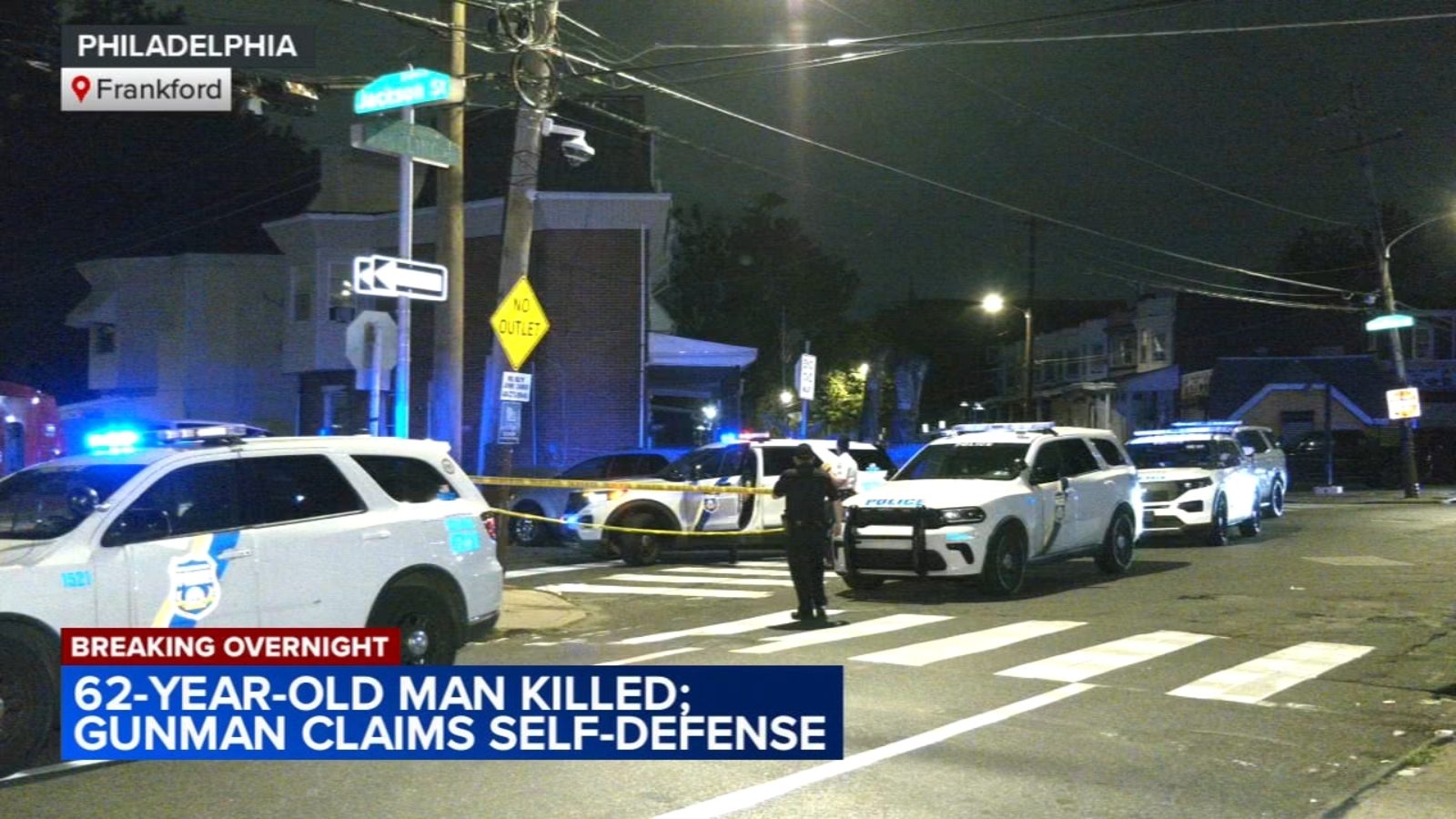
A tragic Frankford shooting on Saturday night has left one man dead and a community searching for answers. Philadelphia police are actively investigating the incident, which occurred in the 4800 block of Jackson Street around 11:35 p.m., after a 62-year-old man was fatally shot in what the alleged gunman describes as an act of self-defense. The case has sparked conversations about Pennsylvania’s self-defense laws, the responsibilities that come with carrying a firearm, and the challenges law enforcement faces when distinguishing between criminal violence and legally justified force.
As investigators work to piece together the moments leading up to the fatal encounter, neighbors in the Frankford neighborhood are grappling with yet another act of gun violence in a city that has seen far too many. Below is a comprehensive look at what is known so far, the broader context surrounding this incident, and what comes next in the legal proceedings.
What Happened in the Frankford Shooting
The events unfolded late Saturday night when Philadelphia police received a call reporting gunfire in the Frankford section of the city. Officers were dispatched to the 4800 block of Jackson Street, a residential corridor in this well-known Northeast Philadelphia neighborhood, where they arrived to find a chaotic and heartbreaking scene.
A 62-year-old man was discovered suffering from gunshot wounds to both his arm and his face. Despite the rapid response from law enforcement and emergency medical personnel, the victim succumbed to his injuries and was pronounced dead at the scene. The loss of life marks another somber chapter in a city that has struggled with gun violence for years.
At the same location where the victim was found, authorities also encountered a second man who was in possession of a firearm. Critically, this individual held a valid permit to carry the weapon, immediately shifting the complexion of the investigation. The man was detained at the scene and subsequently transported to police headquarters for formal questioning.
The Gunman’s Account
During initial interactions with law enforcement, the armed man provided a statement that would frame the entire investigation. He claimed that the victim had pointed a gun directly at him, creating what he described as an imminent threat to his life. Believing he had no other option, the man fired his weapon, striking the 62-year-old in the arm and face.
This claim of self-defense sits at the heart of the ongoing inquiry. Pennsylvania is known for having relatively permissive self-defense statutes, and the presence of a valid carry permit adds another layer of complexity to the case. Investigators now face the difficult task of corroborating the shooter’s account through physical evidence, witness testimony, surveillance footage, and forensic analysis.
Legal Landscape: Self-Defense Claims in Pennsylvania
When a shooting occurs and the alleged shooter claims self-defense, the burden often shifts to law enforcement and prosecutors to either disprove that claim or determine whether the use of force was reasonable under the circumstances. Pennsylvania law generally allows individuals to use deadly force when they reasonably believe it is necessary to defend themselves against death, serious bodily injury, kidnapping, or sexual intercourse by force.
However, the law also requires that the response be proportionate to the threat. Investigators will be looking closely at several key questions in the Frankford shooting case:
- Did the victim actually point a weapon at the shooter?
- If so, was the threat imminent, or had it passed by the time shots were fired?
- Was there a possibility of retreat or de-escalation?
- What does physical evidence reveal about the positioning of both men?
- Were there any witnesses who can corroborate or contradict the shooter’s account?
These questions are not merely academic; they will determine whether the man who fired the fatal shots walks free, faces criminal charges, or potentially faces civil liability for the death of the 62-year-old victim.
The Role of a Valid Carry Permit
The fact that the alleged gunman possessed a valid permit to carry a firearm does not automatically grant immunity from prosecution. While it indicates that he passed the necessary background checks and met the legal requirements to carry a weapon in Pennsylvania, the permit does not shield someone who uses that weapon unlawfully. Every permit holder accepts the legal and moral responsibility of ensuring that any discharge of their firearm is justified under the law.
In Philadelphia specifically, where tensions between gun rights and gun control advocacy often run high, cases like this one draw significant public attention. Community leaders, elected officials, and residents frequently weigh in on whether justice is being served, particularly when the deceased is an older resident and the alleged shooter is portrayed as a victim of aggression.
Community Impact and Concerns in Frankford
The Frankford neighborhood, located in the Lower Northeast section of Philadelphia, has experienced its share of violent crime over the years. The community is tight-knit, and incidents like this shooting reverberate through local residents who knew the victim or who witnessed the aftermath.
Late-night gunfire in a residential area creates fear and uncertainty, particularly when it results in a fatality. Neighbors who heard the shots or were awakened by the police response are left to wonder about their own safety. For elderly residents in particular, news of a 62-year-old man losing his life in such circumstances serves as a stark reminder of the vulnerabilities they face.
Local community organizations and anti-violence advocates often use moments like these to call for broader conversations about conflict resolution, mental health resources, and the availability of firearms to individuals who may be prone to violence. While those broader policy discussions may take weeks or months to materialize, the immediate aftermath is always personal for those directly affected.
What Investigators Are Examining
As the Frankford shooting investigation continues, detectives are likely pursuing multiple lines of inquiry. Beyond the shooter’s statement, they will be working to gather the following types of evidence:
- Surveillance footage from nearby homes, businesses, and any city-owned cameras in the area
- Ballistics analysis to determine the trajectory of the bullets and the positioning of the shooter relative to the victim
- Witness statements from neighbors or passersby who may have observed part of the altercation
- Cell phone records and any video captured by individuals at the scene
- The victim’s firearm, if one was recovered, and whether it was loaded or in a position consistent with the shooter’s account
- Background information on both men, including any prior interactions, criminal histories, or known disputes
Each piece of evidence will help build a clearer picture of the moments before the gunfire. Until that picture is complete, authorities have indicated that no charges have been filed against the shooter, though that decision could change as the investigation progresses.
What Comes Next in the Case
The shooter remains a person of significant interest in the investigation, and while he has been questioned by police, his status,free, detained, or formally charged,will depend largely on what investigators uncover. Prosecutors from the Philadelphia District Attorney’s Office will ultimately review the evidence and determine whether criminal charges, such as homicide or voluntary manslaughter, are warranted.
If the evidence supports the shooter’s claim that he acted in genuine self-defense, prosecutors may decline to bring charges altogether. Conversely, if investigators determine that the threat was not imminent, that the use of force was disproportionate, or that the shooter’s account is not credible, charges could be filed swiftly.
The family of the 62-year-old victim will also be grappling with grief and, potentially, the pursuit of justice through the criminal justice system or even civil litigation. Losing a loved one to gun violence is always devastating, and the complexities of a self-defense claim can make the grieving process even more difficult as families seek answers about why their loved one is no longer with them.
A Broader Conversation About Gun Violence in Philadelphia
This Frankford shooting is not an isolated incident. Philadelphia has consistently ranked among the most violent large cities in the United States, and gun-related fatalities remain a persistent and troubling reality for residents across many neighborhoods. Each shooting,regardless of the circumstances,contributes to a broader narrative about public safety, policing, and the role of firearms in urban communities.
Cases involving self-defense claims add an additional layer of complexity to this conversation. Advocates for gun rights often point to such incidents as examples of why responsible armed citizens are necessary for personal protection. Gun control advocates, on the other hand, frequently use the same incidents to argue that more firearms in circulation inevitably lead to more deaths, regardless of intent.
Finding common ground in these debates is notoriously difficult, but local leaders continue to push for solutions that prioritize community safety without infringing on lawful self-defense rights. Programs focused on de-escalation training, conflict mediation, and violence interruption have shown promise in some Philadelphia neighborhoods, though scaling those efforts citywide remains a challenge.
Final Thoughts on the Frankford Shooting
The fatal Frankford shooting on Saturday night is still very much under investigation, and the community is awaiting answers that only thorough police work can provide. A 62-year-old man has lost his life, and a family is mourning. At the same time, another man claims he acted to protect himself from imminent harm and is cooperating with authorities. The truth likely lies somewhere between these two perspectives, and it is the responsibility of investigators, prosecutors, and ultimately the courts to determine what justice looks like in this case.
As the story develops, residents of the Frankford neighborhood and Philadelphia at large will be watching closely. Whether this shooting is ultimately ruled a justified act of self-defense or a criminal homicide will have significant implications not only for the individuals involved but for ongoing conversations about guns, safety, and the limits of lawful force in one of America’s most historic cities.