
The countdown to the 2026 FIFA World Cup is reshaping how Philadelphia homeowners think about their properties. With major sporting events stacking up across the city , from the PGA Championship and MLB All-Star Game to nationwide celebrations marking America’s 250th anniversary , Philadelphia is bracing for one of the busiest tourism seasons in recent memory. At the center of this momentum sits Airbnb, where Airbnb World Cup bookings are climbing at remarkable rates, transforming ordinary homes into sought-after accommodations.
According to recent reports, Philadelphia has emerged as one of the standout markets for short-term rental growth as the tournament approaches. Homeowners across the Delaware Valley are paying close attention, weighing whether now is the right time to open their doors to the wave of incoming travelers.
Philadelphia Leads the Pack in Booking Growth
The numbers coming out of Philadelphia are striking. Year-over-year Airbnb booking data shows extraordinary surges in several neighborhoods, with North Philadelphia topping the list at a staggering 253 percent increase. West Philadelphia and University City have also posted substantial gains, reflecting a citywide pattern rather than a localized anomaly.
This growth is tied directly to Philadelphia’s role as a host city for the 2026 World Cup, which will bring matches to Lincoln Financial Field alongside other iconic venues across the United States, Canada, and Mexico. As fans begin mapping out their travel plans, neighborhoods with convenient access to stadiums, public transit, and cultural attractions are becoming prime destinations.
Bill Russo, an Airbnb spokesperson, noted that the company has witnessed booking acceleration across every World Cup host city. But Philadelphia’s combination of historical appeal, sports culture, and concentrated match venues has positioned it as a particularly dynamic market.
Why These Neighborhoods Are Winning
The neighborhoods experiencing the steepest growth share a few common characteristics:
- Proximity to venues: North Philadelphia, West Philadelphia, and University City all sit within reasonable distance of Lincoln Financial Field and the broader Sports Complex area.
- Transit accessibility: Each neighborhood offers SEPTA connections that allow visitors to navigate the city without a rental car.
- Cultural appeal: From the dining scene in University City to the historic character of West Philly, these areas offer experiences that go beyond game day.
- Diverse accommodation options: A mix of row homes, apartments, and larger houses provides flexibility for different traveler types.
The 2026 World Cup: A Tourism Earthquake
The FIFA World Cup is no ordinary sporting event. When it arrives in North America in 2026, it will be the largest edition in tournament history, featuring 48 teams and matches spread across 16 host cities. For Philadelphia, that means tens of thousands of international visitors converging on a city that already knows how to throw a party.
But the World Cup isn’t arriving alone. Philadelphia’s 2026 calendar includes:
- The PGA Championship at Aronimink
- The MLB All-Star Game
- Semiquincentennial celebrations marking 250 years of American independence
- Ongoing concerts, conferences, and cultural festivals
This convergence of events creates a tourism environment rarely seen in the region. Hotels will fill quickly and command premium rates, which is exactly why short-term rentals are becoming such an attractive alternative for travelers seeking space, comfort, and value.
Homeowners See Opportunity on the Horizon
For residents who have considered becoming Airbnb hosts, the timing feels almost tailor-made. Tamitra Tann, who operates a three-bedroom rental in nearby Atlantic City, is among the believers. She sees the summer’s event lineup as a once-in-a-generation opportunity for hosts throughout the Delaware Valley.
“You could get the best of both worlds,” Tann explained, referring to the ability of visitors to attend matches while also enjoying nearby attractions like beaches, casinos, and restaurants. Her perspective reflects a broader sentiment among short-term rental operators who recognize that World Cup visitors are often looking for more than just a place to sleep , they want a memorable experience.
The economic calculus for prospective hosts is compelling. Even a modest listing priced competitively for the summer can generate meaningful income, especially when demand spikes during event weekends. Many homeowners view short-term rentals as a low-barrier entry into entrepreneurship, a path that doesn’t require the capital investment of a traditional business.
Airbnb Sweetens the Deal for New Hosts
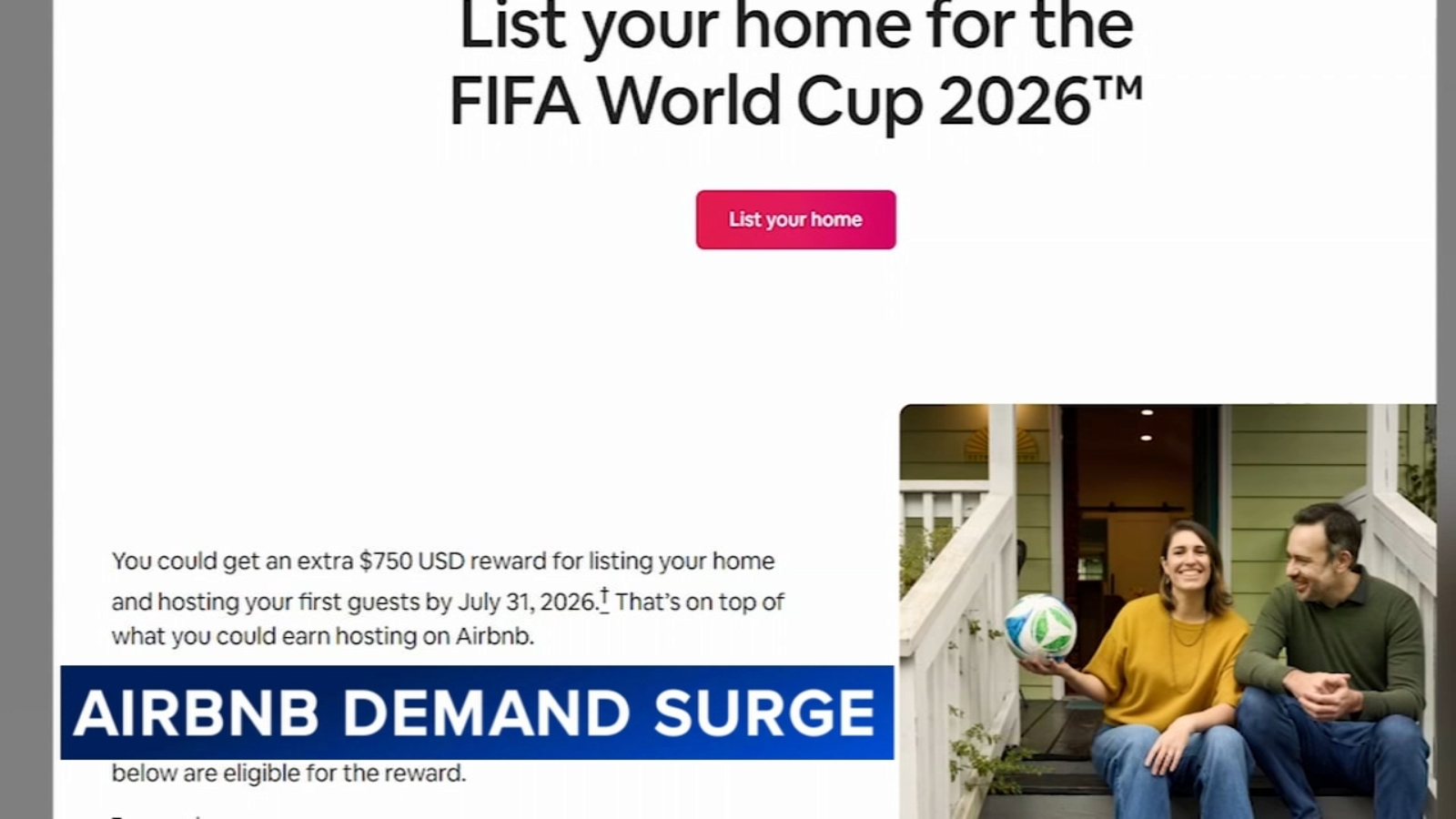
Recognizing the window of opportunity, Airbnb has rolled out specific incentives aimed at attracting first-time hosts ahead of the summer rush. The company is currently offering $750 to new hosts who welcome their first guest by July 31. It’s a direct acknowledgment that event-driven tourism creates unusual earning potential , and that Airbnb wants to capture as much of that demand as possible.
Beyond the cash incentive, Airbnb has also launched a host earnings calculator, a tool designed to help prospective operators estimate potential income based on location, property type, and seasonal demand. The calculator has become an important resource for homeowners trying to determine whether their property fits the short-term rental market.
Making Hosting Easier Than Ever
Airbnb has invested heavily in streamlining the onboarding process for new hosts. Features like AirCover for Hosts, simplified listing creation, and flexible cancellation policies are designed to lower the friction that often prevents interested homeowners from taking the first step. Combined with the $750 promotion and the earnings calculator, the company is creating what it calls the most accessible hosting environment in its history.
“People see the excitement, and they recognize the economic opportunity,” Russo noted. “We want to make it simpler than ever before.”
Understanding Philadelphia’s Short-Term Rental Rules
For all the enthusiasm, prospective hosts in Philadelphia must navigate a regulatory framework that varies from city to city. In Philadelphia specifically, short-term rental operators are required to obtain a commercial activity license and a zoning permit, among other approvals. These requirements exist to balance the benefits of tourism revenue with concerns about neighborhood impact, housing availability, and quality of life for permanent residents.
Before listing a property, homeowners should:
- Research local ordinances: Philadelphia’s rules differ significantly from those in suburban municipalities and neighboring states like New Jersey.
- Secure proper licensing: The commercial activity license and zoning permit are non-negotiable for legal operation.
- Check HOA or building restrictions: Condominium associations and cooperative boards often have their own rules about short-term rentals.
- Understand tax obligations: Philadelphia’s hotel tax applies to short-term rentals, and hosts are responsible for collecting and remitting it.
- Review insurance coverage: Standard homeowner policies typically don’t cover short-term rental activity.
The Philadelphia mayor’s office has indicated it is monitoring the situation closely as the busy summer approaches, suggesting that compliance enforcement may intensify during peak event periods.
The Broader Economic Ripple Effect
The short-term rental surge tied to Airbnb World Cup bookings extends well beyond individual hosts. Restaurants, bars, ride-share drivers, tour operators, and retail shops all stand to benefit from the increased foot traffic. Local economies thrive when visitors have places to stay, eat, and spend money , and Philadelphia’s hospitality ecosystem is positioning itself to capitalize on every angle.
Neighborhoods that may not traditionally appear on tourist maps could see genuine economic revitalization. When visitors book stays in North Philadelphia or West Philadelphia, they bring spending power directly to communities that have historically been underserved by tourism dollars. Local coffee shops, corner stores, and family-owned restaurants all gain from the same influx that drives Airbnb bookings.
What Travelers Should Know
For visitors planning to attend the 2026 World Cup in Philadelphia, booking early isn’t just a suggestion , it’s practically a necessity. The 253 percent growth in North Philadelphia bookings reflects real demand that will only intensify as match dates draw closer. Travelers should consider:
- Booking accommodations well in advance, ideally six to twelve months out
- Exploring neighborhoods outside the immediate stadium area for better value
- Looking for listings near SEPTA lines for easy transit access
- Reading reviews carefully and communicating with hosts about check-in logistics
- Understanding local rules about parties, events, and noise
A Defining Summer for Philadelphia
Few cities will experience a summer quite like Philadelphia’s 2026. Between the World Cup, America’s 250th birthday, and a stacked sporting calendar, the city is preparing to host visitors from every corner of the globe. The Airbnb World Cup bookings surge represents more than just a statistical curiosity , it’s a signal that the sharing economy is playing a central role in how modern cities accommodate mega-events.
For homeowners, the summer offers an unprecedented opportunity to generate meaningful income while showcasing Philadelphia hospitality to the world. For travelers, it offers a chance to experience the city like a local rather than a tourist trapped in a generic hotel room. And for the city itself, it’s a chance to demonstrate that Philadelphia can compete with any global destination when the spotlight shines brightest.
The ball hasn’t even kicked yet, but Philadelphia is already winning , one booking at a time.