
After months of heated debate and intense public scrutiny, the Philadelphia School Facilities Master Plan has officially passed. In a contentious 6-3 vote, the School Board approved a sweeping $3 billion overhaul of the city’s public school infrastructure, a decision that will close 17 schools, modernize 169 others, and merge six facilities. The vote followed a chaotic meeting that required two recessions and ultimately shifted to a virtual format to finalize the decision.
This landmark decision in the Philadelphia School District represents one of the most ambitious and controversial restructuring efforts in recent memory, reshaping how and where tens of thousands of students will be educated for years to come.
The Backdrop: Why the Philadelphia School Facilities Master Plan Was Needed
For years, the Philadelphia School District has grappled with aging buildings, declining enrollment, and chronic budget shortfalls. District leaders argued that the facilities master plan was not optional but essential. At the heart of the crisis lies a staggering $300 million structural deficit that officials say cannot be resolved without major consolidation and modernization efforts.
The plan’s architects emphasized that simply maintaining the status quo was no longer financially viable. With operational costs continuing to climb and capital improvement needs mounting, the district framed the $3 billion investment as both a necessity and an opportunity, one that would allow Philadelphia public schools to finally address decades of deferred maintenance while strategically aligning resources with current and future enrollment patterns.
A Long-Term Vision for Philadelphia Public Schools
Board of Education President Reginald Streater defended the decision, calling it a long-term commitment to improving conditions for students across the city. In a statement following the vote, Streater acknowledged the complexity of what lies ahead but insisted the plan keeps the district “grounded in facts, focused on sustainability and committed to being better for better outcomes for students across the city.”
The vision extends beyond simple closures. Of the nearly 200 school buildings affected, the vast majority will undergo modernization, receiving updated facilities, improved technology infrastructure, and renovations designed to meet contemporary educational standards.
The Contentious Board Meeting
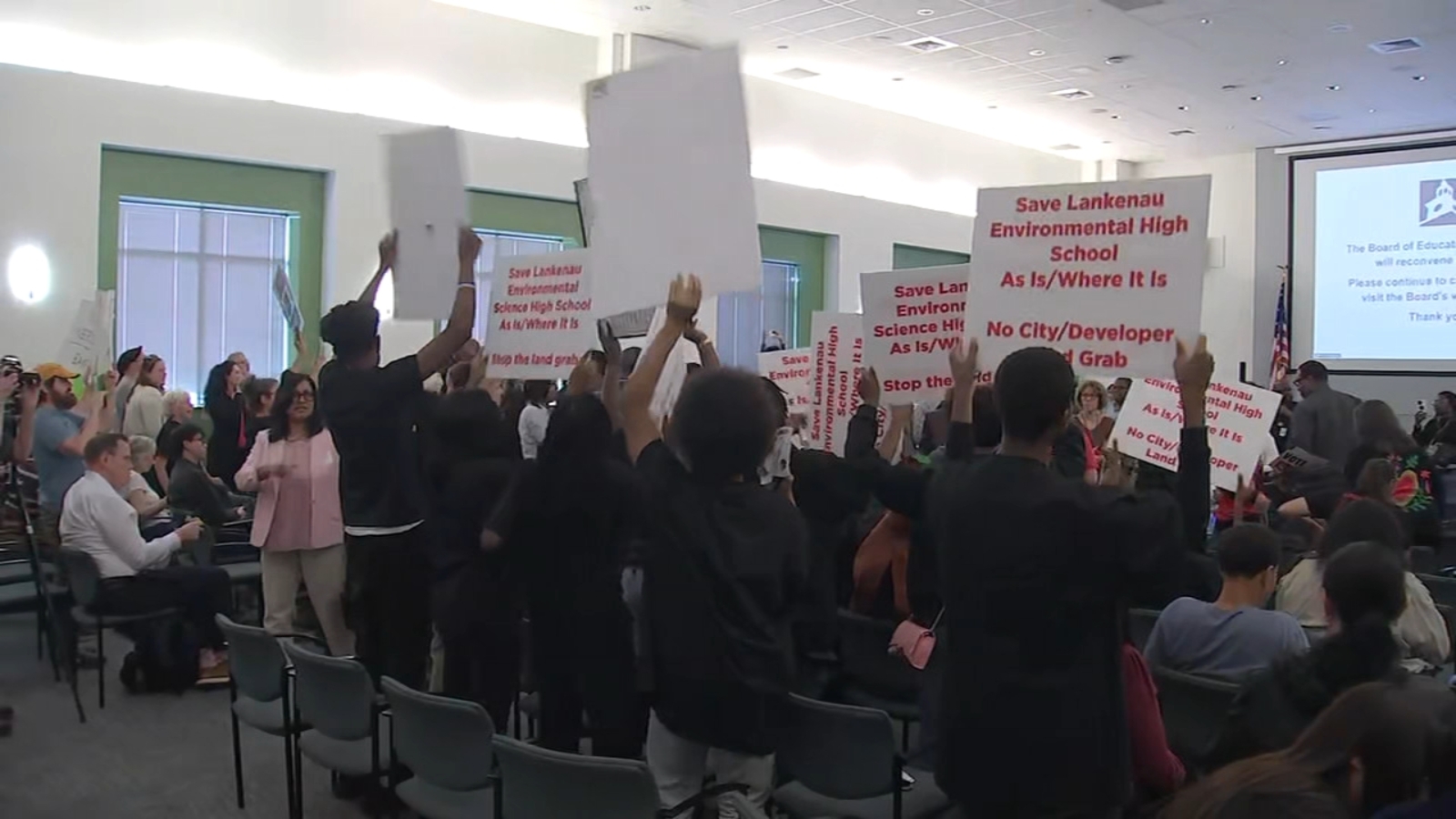
What was supposed to be a procedural vote quickly devolved into one of the most turbulent meetings in recent School Board history. The hours-long session grew so tense that it was paused twice before members reconvened virtually to cast their final votes. Parents, students, teachers, and city council members packed the chambers, many of them shouting in frustration as board members attempted to proceed with the agenda.
The raw emotion on display reflected just how high the stakes are for communities throughout Philadelphia. For families whose children attend schools slated for closure, the vote represented an immediate disruption to their educational lives. For educators, it signaled potential reassignments and the loss of institutional identities built over generations.
Voices of Frustration from the Community
One mother whose child attends Horatio Hackett School expressed disbelief at the district’s assurances. “I’m irate. I’m frustrated. I’m aghast that they’re asking us to trust them in the future,” she said, capturing the sentiment of countless parents who felt the board had made up its mind long before hearing community input.
Rasheda Simpson, whose child attends Paul Robeson High School, echoed that frustration while adding a generational perspective. “Pissed because they’re not taking into consideration any of the youth, their feelings,” she told reporters, highlighting concerns that student voices had been marginalized throughout the planning process.
Schools on the Chopping Block
Among the 17 schools marked for closure, two high schools have drawn particular attention and outrage. Lankenau Environmental Science Magnet High School, the only environmental science magnet school in Philadelphia, faces shutdown despite its specialized programming and reputation. Students like Makkah Peterson questioned the logic of eliminating such a unique educational offering.
“Closing Lankenau, the only environmental school in Philadelphia, is kinda crazy,” Peterson said. “I feel like we was being ignored.”
Paul Robeson High School is also slated for closure, a decision that has mobilized teachers, alumni, and neighborhood advocates. Andrew Saltz, a teacher at Robeson, didn’t mince words about the impact. “This is a bad plan. This is a bad plan not just for Robeson but for the whole city,” he declared.
Modernization and Mergers on the Horizon
While the closures have dominated headlines, the modernization component of the Philadelphia School Facilities Master Plan is equally significant. The 169 schools targeted for upgrades represent the backbone of the district’s long-term strategy. These improvements are expected to address issues ranging from outdated HVAC systems and lead paint concerns to inadequate classroom spaces and technology gaps.
Six additional schools will be merged under the plan, a process that district officials say will allow for more efficient use of resources while preserving educational access for affected students.
City Council Pushes Back Hard
Perhaps the most significant political fallout came not from parents or students, but from Philadelphia’s City Council. Multiple council members used the meeting to condemn the board’s decision and accuse district leaders of deliberately shutting them out of the process.
Councilmember Jamie Gauthier delivered one of the most pointed critiques of the evening, accusing the board of bypassing democratic input. “They have not provided an opportunity for the community to be at the table. They have not provided an opportunity for council to be at the table, and they’re just trying to ram this down everyone’s throats. We are not going to stand for it,” she said.
Threats of Legal Action and Oversight
The backlash didn’t stop at verbal criticism. Several council members threatened legal action, vowed to block board members’ re-election, and introduced a resolution to create an oversight committee tasked with auditing the district’s budget. Councilmember Curtis Jones Jr. captured the growing skepticism about the plan’s financial foundations.
“We were trying to get answers from a board where the math doesn’t add up,” Jones said, signaling that questions about the $3 billion figure and the projected savings would persist well beyond the vote.
Council President Kenyatta Johnson struck a somewhat more measured tone but made clear that council would remain engaged. “I’ll work with my members of council to see what’s the best path forward and best interest of our children,” he stated.
Implementation Timeline and What Comes Next
Despite the controversy, school board members indicated that implementation of the Philadelphia School Facilities Master Plan would begin immediately. However, students and staff at affected schools will not feel the direct impact until the 2027-28 school year, giving families and educators roughly two years to prepare for transitions.
The board also promised continued engagement with the community throughout the implementation process, though that promise has been met with deep skepticism from many stakeholders who feel the engagement window has already closed on the most consequential decisions.
Key Dates and Milestones to Watch
- Immediate: Planning and logistics for affected schools begin
- 2026-27 School Year: Final preparation and transition planning for closures and mergers
- 2027-28 School Year: Closures take effect and students begin transitions to new facilities
- Multi-Year Modernization: Renovations to 169 schools proceed on a rolling schedule
The Broader Implications for Urban Education
The Philadelphia School Facilities Master Plan represents more than a local infrastructure decision. It serves as a potential blueprint, or cautionary tale, for other urban districts facing similar demographic shifts, declining enrollment, and constrained budgets. How Philadelphia navigates the implementation will likely influence policy discussions in cities like Detroit, Cleveland, Baltimore, and St. Louis, where comparable challenges have prompted similar debates.
The fiscal argument is compelling on paper: closing underutilized buildings and consolidating operations can generate significant savings. But the human cost of disrupting established school communities, severing institutional ties, and forcing students to travel farther for education cannot be reduced to a line item in a budget spreadsheet.
Conclusion
The passage of the $3 billion Philadelphia School Facilities Master Plan marks a watershed moment for the city’s public education system. With 17 schools slated for closure, 169 facilities set for modernization, and six mergers on the horizon, the district is betting that bold restructuring will deliver both immediate fiscal relief and long-term educational improvements. Yet the path forward is anything but certain. The vocal opposition from parents, students, teachers, and city council members suggests that the legal, political, and community battles are far from over. As implementation begins and the 2027-28 school year approaches, all eyes will be on Philadelphia to see whether this ambitious plan delivers on its promises, or whether the costs will outweigh the benefits for the city’s most vulnerable students.