
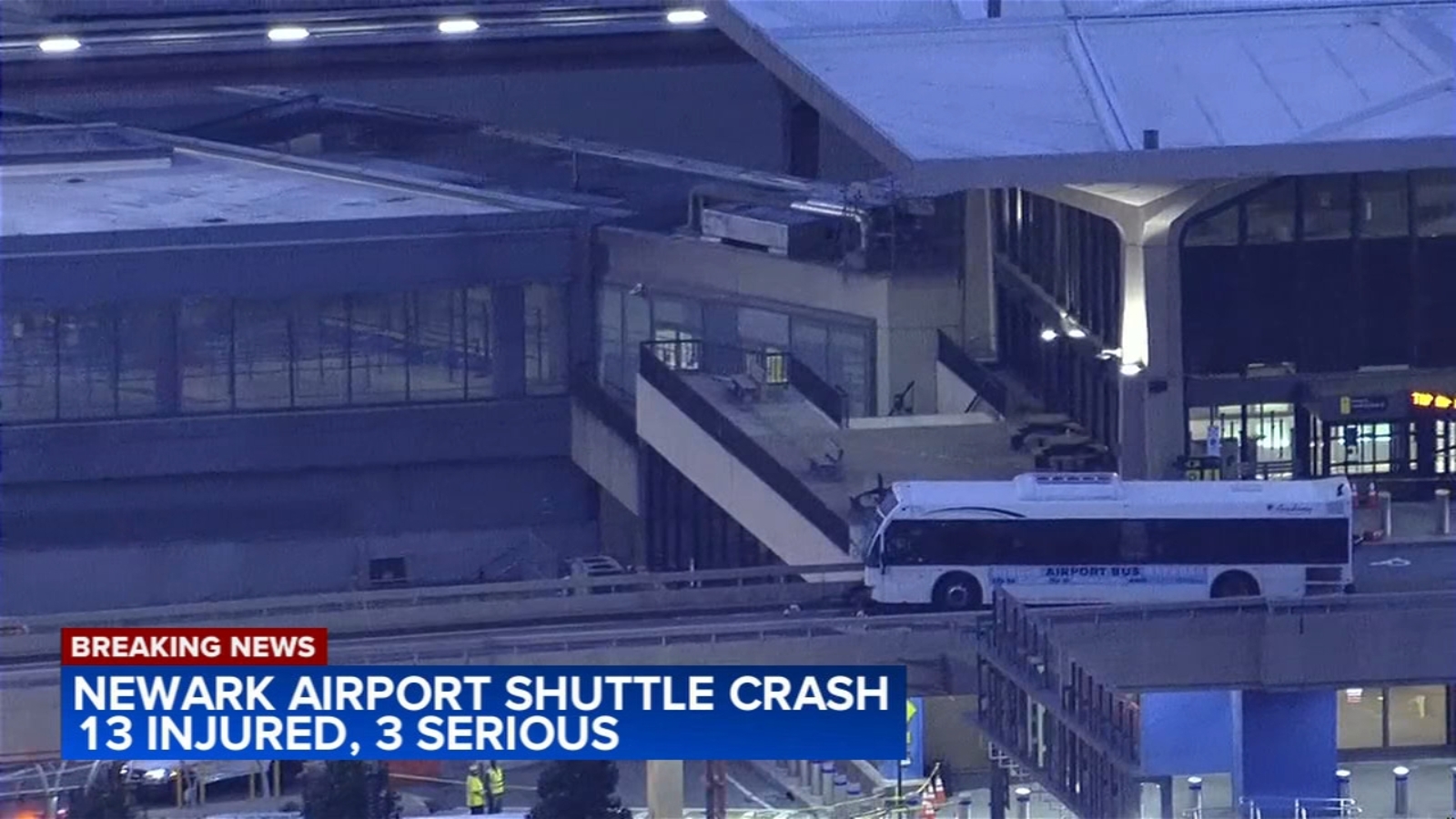
A Newark airport shuttle bus crash early Monday morning left thirteen people injured at one of the busiest transportation hubs in the Northeast. The incident occurred at Newark Liberty International Airport, raising immediate concerns about ground transportation safety and prompting quick action by airport authorities to redirect passengers and manage the scene. Three of those injured were reported to be in serious condition, while the remaining ten sustained minor injuries. None of the injuries were believed to be life-threatening as of the latest updates.
The early-morning accident temporarily disrupted operations at one of the airport’s main terminals, forcing travelers to adjust their routines during what is typically a high-traffic period. Authorities moved quickly to secure the area, reroute passengers, and launch an investigation into what caused the shuttle bus to leave the roadway and strike a concrete barrier.
What We Know About the Newark Airport Shuttle Bus Crash
According to initial reports from local authorities, the shuttle bus involved in the crash was operating on airport grounds when it suddenly jumped a curb and collided with a concrete wall. The incident unfolded in the predawn hours, just after 3:00 a.m., when flight traffic at the airport remains active but passenger volume is generally lighter than peak daytime hours. Despite the early hour, the shuttle bus was carrying enough passengers to result in thirteen injuries requiring medical attention.
Emergency medical services responded swiftly to the scene, triaging the injured and transporting those with more serious injuries to nearby hospitals for further evaluation and treatment. The remaining ten victims received on-site care for minor injuries before being released or transferred as needed. The coordinated response helped prevent the situation from escalating further and ensured that all injured individuals received prompt medical attention.
Location and Timing of the Incident
The Terminal B shuttle bus crash took place on the Departures Level 3 roadway, a critical access point for passengers being dropped off for outbound flights. Level 3 at Terminal B serves as one of the primary drop-off zones, handling a constant flow of vehicles, rideshare traffic, and shuttles throughout the day and night. The elevated roadway’s design means that a vehicle leaving its intended path can pose significant risks to pedestrians, infrastructure, and other vehicles in the vicinity.
Why the Timing Matters
The accident occurred during a transition period at the airport, when red-eye flights are concluding and early morning departures are beginning to board. This timing creates a unique mix of arriving passengers collecting baggage and departing travelers entering the terminal. Airport officials have noted that early-morning hours often see commercial activity from housekeeping crews, airline staff, and ground transportation providers, all of whom share the roadways with passengers.
Injuries Reported in the Shuttle Bus Accident
Of the thirteen people injured in the Newark Airport shuttle bus crash, three were classified as seriously injured. While these injuries were significant enough to warrant immediate medical evaluation, authorities confirmed that none appeared to be life-threatening. The remaining ten passengers suffered minor injuries, typically associated with the sudden impact of a vehicle collision, including bruises, sprains, and minor lacerations.
- Three seriously injured: Transported to local hospitals for further evaluation
- Ten with minor injuries: Treated at the scene or released after initial care
- No life-threatening injuries reported: Authorities confirmed the situation, while serious, did not involve critical casualties
The relatively limited severity of injuries, given the nature of the crash, is likely attributable to several factors, including the slow speeds typical of airport ground transportation operations and the structural design of shuttle buses, which are built to protect passengers during low-speed impacts.
Emergency Response and Traffic Rerouting
The Port Authority Police Department, which oversees security and operations at Newark Liberty International Airport, took immediate steps to manage the aftermath of the crash. Within hours of the incident, authorities issued guidance to passengers planning to use Terminal B, advising that all departing travelers should be dropped off on Level 2 instead of the usual Level 3 Departures area.
The closure of the Departures Level 3 roadway was a necessary precaution to allow emergency responders to work the scene, clear debris, and begin initial investigations into what caused the shuttle bus to leave its lane. Roadway closures of this nature, while disruptive, are standard procedure following significant incidents at transportation hubs.
Passenger Impact and Travel Adjustments
Travelers scheduled for early-morning departures from Terminal B faced immediate adjustments to their typical drop-off routines. Rideshare drivers, taxi operators, and personal vehicle drivers were all required to navigate to Level 2, creating temporary congestion as passengers adjusted to the new pattern. Airport staff worked to direct traffic and provide clear guidance to minimize confusion during the disruption.
For many travelers, the situation served as a reminder of the importance of building extra time into airport travel plans, particularly during periods of operational disruption. Even brief incidents can create cascading effects on schedules, especially at major airports like Newark Liberty.
Investigation Into the Cause of the Crash
While details remain limited in the immediate aftermath, investigators from the Port Authority Police Department and potentially other agencies are expected to examine multiple potential factors contributing to the Newark Airport shuttle bus accident. Common considerations in such incidents typically include:
- Driver condition: Fatigue, distraction, or impairment that may have affected the operator’s ability to maintain control of the vehicle
- Mechanical issues: Possible brake failure, steering malfunction, or other vehicle-related problems that could have caused the driver to lose control
- Roadway conditions: Weather, lighting, or surface conditions that may have contributed to the loss of vehicle control
- External factors: Other vehicles, pedestrians, or obstacles that may have forced the driver to take evasive action
Investigations of this nature often take weeks or months to complete, as forensic analysis, vehicle inspections, and witness interviews are all carefully conducted to determine the precise sequence of events leading to the crash.
Airport Ground Transportation Safety: A Broader Concern
The Newark Airport shuttle bus crash draws attention to the broader topic of airport ground transportation safety, an area that receives less public attention than aviation safety but remains critically important. Airports are essentially small cities, with thousands of vehicles, pedestrians, and passengers interacting on roads designed to handle intense daily traffic volumes.
Shuttle buses, in particular, play a vital role in airport operations, transporting passengers between terminals, parking facilities, rental car centers, and public transit connections. The drivers of these vehicles operate under demanding conditions, often navigating complex roadway systems while maintaining schedules that can be affected by air traffic, weather, and passenger volume.
Industry safety advocates continue to push for enhanced training standards, vehicle maintenance protocols, and infrastructure improvements to reduce the likelihood of incidents like the one at Newark. Continuous review of accident data, near-miss reports, and operational best practices helps identify areas where additional safeguards can be implemented.
What Travelers Should Know Moving Forward
For anyone with upcoming travel plans through Newark Liberty International Airport, several practical considerations can help minimize the impact of disruptions like the one caused by this recent incident:
- Check airport communications: Official airport channels and the Port Authority’s updates provide the most current information on roadway closures, terminal access, and operational changes
- Allow extra time: Building additional time into your airport arrival plans provides a buffer against unexpected disruptions
- Confirm drop-off instructions: If using Terminal B, verify whether Level 2 or Level 3 is the active drop-off location during your travel period
- Stay informed on flight status: While this incident did not directly affect flight operations, similar disruptions can sometimes have cascading effects
Looking Ahead
The Newark airport shuttle bus crash serves as a sobering reminder that even routine ground transportation at major travel hubs can present risks to passengers and operators alike. The relatively limited severity of injuries offers some reassurance, but the incident underscores the importance of ongoing vigilance, robust safety protocols, and thorough investigation into the cause of such events.
As investigators work to determine what led to the shuttle bus striking a concrete wall at Terminal B, both airport authorities and the broader transportation industry will likely examine the findings closely. Lessons learned from incidents like this one can inform future safety improvements, driver training programs, and infrastructure decisions that help protect the millions of passengers who pass through Newark Liberty International Airport each year.
For now, the airport continues to operate, with detours and adjusted traffic patterns in place as the investigation proceeds. Travelers are encouraged to stay alert to official updates and plan accordingly until normal operations are fully restored at the affected terminal area.