
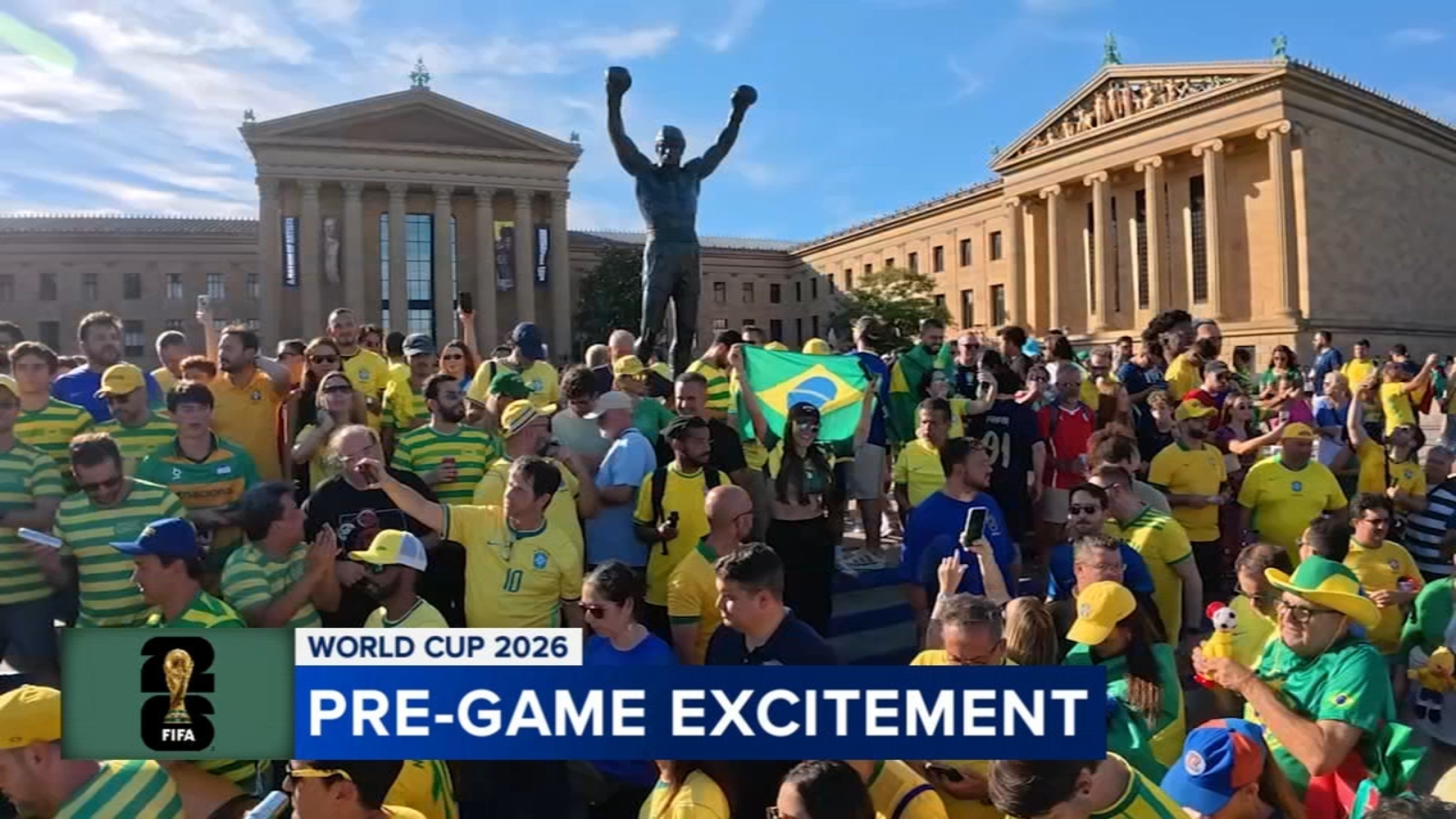
Philadelphia transformed into a vibrant international hub this week as enthusiastic supporters from two passionate soccer nations converged on the City of Brotherly Love. The highly anticipated Brazil Haiti World Cup match, scheduled for Friday night at 8:30 PM in South Philadelphia, has drawn fans from across the globe, creating an electric atmosphere that showcases why soccer remains the world’s most beloved sport.
From the bustling streets of Center City to the iconic steps of the Philadelphia Museum of Art, the energy surrounding this historic clash between Brazil and Haiti has been nothing short of extraordinary. With Brazil aiming to add another chapter to its storied soccer legacy and Haiti making a triumphant return to the global stage after a 52-year absence, this match represents far more than just 90 minutes of competition.
Brazilian Fans Take Over Center City
Long before kickoff, the Brazilian faithful made their presence known throughout Philadelphia. Hundreds of supporters decked out in the iconic yellow and green of the Seleção lined an entire city block along Sansom Street, eagerly awaiting the arrival of their team’s bus. The crowd’s enthusiasm was infectious, with chants and songs filling the air as fans proudly displayed their national colors.
“We are crazy Brazil fans,” exclaimed Helama Santos, capturing the spirit of the gathering. “It is a dream. I can’t believe it.” Her sentiment echoed throughout the crowd as Brazilian supporters of all ages came together to celebrate their beloved national team.
Brazil enters this World Cup match carrying the weight of history and expectation. As the most successful national team in tournament history with five championship titles, every appearance carries tremendous significance. Fans understand the responsibility that comes with wearing the famous yellow jersey, and their dedication showed in the hours they spent waiting for even a glimpse of their heroes.
An International Pilgrimage for Soccer
The global appeal of this match was evident in the diverse origins of attendees. Angelo Disprati traveled from Abu Dhabi specifically to witness the Brazil Haiti World Cup encounter in person, demonstrating the extraordinary lengths to which devoted supporters will go.
“It is really cool. I flew all the way from Abu Dhabi just to watch the game,” Disprati shared with obvious excitement. His journey from the Middle East to Philadelphia underscores how the beautiful game transcends borders, cultures, and continents.
Returning visitors also added their voices to the celebration. Roger Schmidt, a repeat attendee, praised the unique atmosphere that major soccer events create in American cities. “It’s a great party. Everyone is having a lot of fun. I think it’s an important moment for us as well because it’s bringing people together,” he observed.
The Rocky Steps Become a Soccer Shrine
Perhaps the most visually striking gathering occurred at one of Philadelphia’s most recognizable landmarks. After filling portions of Center City, the sea of Brazilian fans migrated to the Philadelphia Museum of Art, transforming the famous Rocky Steps into a temporary soccer sanctuary. The scene was reminiscent of a World Cup viewing party in Rio de Janeiro rather than a weekday afternoon in Pennsylvania.
Christopher Miranda, a Brazilian supporter who calls Philadelphia home, captured the magnitude of the moment. “It’s packed with Brazilians,” he noted, looking out at the overwhelming crowd that had claimed the iconic steps as their own gathering spot.
For Miranda’s mother, Danielly, the experience carried special significance. “This being basically in our backyard and everything, since we live here, it’s a dream come true,” she said, expressing gratitude that her family’s adopted city was hosting such a momentous occasion.
A Playful Nod to Soccer Superstition
In a moment that perfectly captured the intersection of Philadelphia culture and international soccer fandom, Brazilian supporters playfully engaged with the famous Rocky Balboa statue that sits atop the museum steps. Despite warnings against touching the beloved bronze landmark, one audacious fan briefly draped what appeared to be a Haiti jersey on the statue before quickly removing it, perhaps invoking the legendary “Rocky curse” that supposedly affects those who pose with the statue before sporting events.
This lighthearted moment illustrated how the World Cup brings out the playful side of even the most serious soccer enthusiasts. The blending of Philadelphia’s most famous fictional sports hero with a real-life international competition created a uniquely memorable scene that will likely be remembered by all who witnessed it.
Haitian Pride Takes Center Stage
While Brazilian fans dominated the outdoor spaces, Haitian supporters carved out their own celebration at the Graffiti Bar on Thursday night. The gathering served as both a cultural celebration and a moment of reflection on how remarkable their team’s World Cup appearance truly is.
Jeff Maglorie, one of the organizers of the Haitian fan event, articulated the emotional weight of the occasion beautifully. “It’s a celebration of being part of a moment you didn’t think would be possible, and you’re like I want to capture it,” he explained, acknowledging the surreal nature of Haiti’s return to the world’s biggest sporting stage.
Haiti’s appearance in this World Cup marks the end of a 52-year drought, making this tournament particularly meaningful for the Haitian diaspora and soccer fans worldwide who understand the significance of such a long-awaited return. The Caribbean nation has battled through qualifying rounds, financial challenges, and infrastructure obstacles to earn their place among the world’s elite footballing nations.
A Conversation Between Two Soccer-Loving Nations
At the base of the museum steps, Djeffson Athis, a devoted Haiti supporter, expressed the pride and determination fueling his team’s efforts. “It’s an opportunity for me to come here and show Brazil, ‘Hey, even if you guys love soccer, we love soccer too.’ Tomorrow we have an opportunity to show the world what we can do,” he declared with conviction.
His words captured the essence of what makes international soccer so compelling, the meeting of nations through the universal language of the beautiful game. While Brazil may boast more championships and global recognition, Haiti’s passion for football runs equally deep, rooted in the country’s own rich sporting traditions.
Willermine Taloute shared a particularly poignant perspective on the cultural significance of this match. Having grown up in a household where Brazilian soccer was celebrated, her personal journey came full circle with Haiti’s World Cup return. “Me, growing up, I was a Brazilian fan because my dad was a Brazilian fan. So now that Haiti is playing in the World Cup, I’m obviously going to support my country. But it’s a dream come true to see Haiti and see Brazil at the same time,” she reflected.
Philadelphia’s Growing Reputation as a Soccer Destination
This Brazil Haiti World Cup match represents the second contest Philadelphia has hosted during the tournament, cementing the city’s growing reputation as a premier destination for major international soccer events. The city’s passionate fan base, world-class facilities, and ability to create memorable atmospheres have made it a favorite among organizers and supporters alike.
The economic and cultural impact extends far beyond the 90 minutes of play. Hotels have filled with international visitors, restaurants have welcomed diverse crowds, and local businesses have benefited from the influx of soccer tourism. More importantly, the city has demonstrated its capacity to host events that bring together people from vastly different backgrounds in celebration of shared passion.
Looking Ahead to Kickoff
As Friday evening approaches, anticipation continues to build across Philadelphia. The match promises to deliver not just athletic competition, but a cultural exchange between two nations with deep soccer traditions and passionate fan bases. For Brazilian supporters, this represents another opportunity to witness their team’s pursuit of a sixth World Cup title. For Haitian fans, it marks a chance to celebrate their team’s remarkable journey back to the world’s biggest stage.
Conclusion: Soccer’s Power to Unite
The Brazil Haiti World Cup match in Philadelphia exemplifies everything that makes soccer the world’s most powerful sport. In the span of a few days, complete strangers from Abu Dhabi and Philadelphia, from Brazil and Haiti, from every corner of the globe, came together to share in something larger than themselves. The transformation of the Rocky Steps into a Brazilian carnival, the joyful gatherings at local bars, and the friendly competition between rival supporters all demonstrate that the beautiful game remains humanity’s great unifier.
Whether you’re cheering for the five-time world champions or the spirited underdogs returning after more than five decades, this match represents the best of what international soccer offers, drama, passion, culture, and community. Philadelphia has proven once again that it can rise to any sporting occasion, providing the perfect backdrop for what will undoubtedly be remembered as one of the tournament’s most culturally significant encounters.