
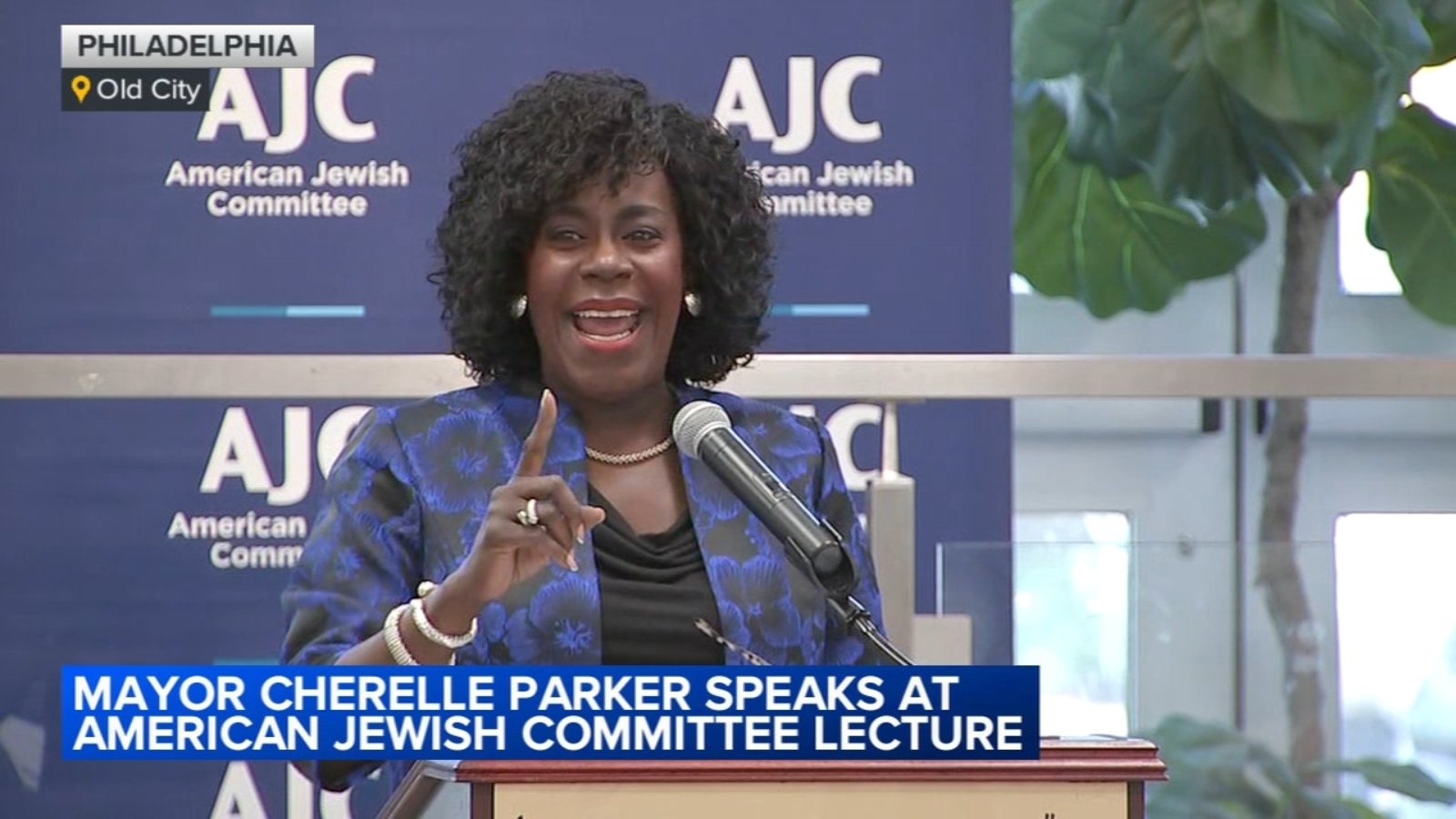
Philadelphia recently served as the backdrop for a powerful and timely gathering, as Mayor Cherelle Parker took center stage at the American Jewish Committee Lecture, delivering the keynote address at the annual Murray Friedman Memorial Lecture. Hosted by Congregation Mikveh Israel in the historic Old City district, the event drew community leaders, scholars, and citizens who came together to celebrate both the upcoming 250th anniversary of the United States and the enduring contributions of the Jewish population to American history.
The lecture, a cornerstone event in Philadelphia’s cultural and civic calendar, carried even greater weight this year as the nation prepares to commemorate its semiquincentennial in 2026. Mayor Parker’s remarks underscored the importance of unity, shared values, and the ongoing work of building bridges across diverse communities in one of America’s oldest and most historically significant cities.
A Mayor’s Vision for an Inclusive Philadelphia
Mayor Cherelle Parker used her platform at the American Jewish Committee Lecture to articulate a vision of Philadelphia as a city where people from all walks of life can find common ground. Her address emphasized the importance of dialogue, mutual respect, and civic engagement in strengthening the fabric of the community.
Throughout her speech, Parker highlighted the unique role Philadelphia plays in the national conversation about diversity and inclusion. As the birthplace of American democracy, the city carries a special responsibility to model the kind of pluralistic society that the founders envisioned. The mayor’s presence at this particular event signaled her administration’s commitment to engaging with the Jewish community and recognizing its deep historical ties to the region.
Celebrating Shared Heritage
The lecture served as a reminder that Philadelphia’s story is inseparable from the story of Jewish Americans who have called this region home since the earliest days of the republic. From revolutionary-era merchants and statesmen to modern-day leaders in medicine, law, education, and the arts, Jewish Philadelphians have helped shape the city’s identity and character in profound ways.
Parker’s remarks acknowledged these contributions while also looking forward to the work that remains. She stressed that celebrating heritage must be accompanied by active efforts to combat antisemitism, promote understanding, and ensure that all communities feel valued and protected.
The Legacy of Murray Friedman
The American Jewish Committee Murray Friedman Memorial Lecture honors the memory and legacy of Dr. Murray Friedman, a distinguished scholar, author, and civil rights advocate who dedicated his career to studying the Black-Jewish alliance in America. Friedman’s work illuminated the powerful partnerships that existed between these two communities, particularly during the civil rights movement, and explored the shared commitments to justice, equality, and human dignity.
Friedman’s research and writing remains essential reading for anyone seeking to understand the complex tapestry of American social history. His books, including “What Went Wrong? The Creation and Collapse of the Black-Jewish Alliance” and “Jewish Life in Philadelphia, 1830-1940,” continue to inform scholarly discussions and community conversations more than two decades after his passing in 1995.
A Tradition of Intellectual Engagement
The annual lecture series bearing Friedman’s name has become one of the most respected forums in the region for exploring topics at the intersection of Jewish life, American identity, and civil rights. Each year, the event brings together thought leaders, elected officials, and community members to engage in substantive dialogue about the issues that matter most.
By featuring Mayor Parker as this year’s keynote speaker, the organizers reinforced the lecture’s commitment to bridging communities and fostering conversations across racial, religious, and cultural lines. The choice reflected both the mayor’s personal commitment to these values and the broader importance of civic leaders engaging with the Jewish community during a period of rising antisemitism both domestically and globally.
Congregation Mikveh Israel: A Living Link to American History
The choice of venue for the American Jewish Committee Lecture added an additional layer of historical significance to the proceedings. Congregation Mikveh Israel, founded in 1740, holds the distinction of being the oldest continuous synagogue in the United States. Located in Old City Philadelphia, the congregation has been a witness to,and participant in,nearly every major event in American history.
During the American Revolution, Mikveh Israel’s congregants included merchants who helped finance the colonial cause and patriots who fought for independence. The synagogue’s early members welcomed George Washington, who reportedly praised the Jewish community’s contributions to the new nation. That legacy of civic engagement and patriotic service has continued through the centuries.
Preserving History for Future Generations
In recent years, Congregation Mikveh Israel has undergone significant preservation efforts to maintain its historic building and expand its educational programming. The congregation serves as both a place of worship and a living museum, offering visitors and congregants alike an opportunity to connect with over 280 years of continuous Jewish life in America.
The decision to host the lecture at this historic venue was deliberate and meaningful. It provided a tangible connection between the themes being discussed,American identity, Jewish contributions, and community unity,and the physical space where those values have been lived out for generations.
The Jewish Community’s Contributions to Philadelphia and America
The lecture program focused significantly on the multifaceted contributions of Jewish Americans to the development of Philadelphia and the broader nation. These contributions span virtually every domain of public life:
- Commerce and Industry: Jewish merchants and entrepreneurs were among the earliest and most successful business leaders in colonial and early American Philadelphia, helping establish the city as a major commercial center.
- Politics and Government: Jewish Americans have served in elected and appointed positions at every level of government, advocating for policies that promote equality, justice, and opportunity.
- Education and Scholarship: Philadelphia’s Jewish community has been instrumental in founding and supporting some of the region’s most prestigious educational institutions, contributing to a legacy of academic excellence.
- Medicine and Science: Jewish physicians and researchers have made groundbreaking contributions to medical practice and scientific discovery, both in Philadelphia and nationwide.
- Arts and Culture: From literature and theater to music and visual arts, Jewish Americans have enriched American cultural life in immeasurable ways.
- Civil Rights and Social Justice: Building on the legacy of figures like Murray Friedman, Jewish Americans have stood alongside other communities in the fight for equal rights and human dignity.
Mayor Parker’s address highlighted these contributions while emphasizing that the story of Jewish Americans is fundamentally an American story,one of immigration, adaptation, achievement, and unwavering commitment to the ideals of the republic.
Looking Ahead to America’s 250th Anniversary
With the United States approaching its 250th birthday in 2026, the themes explored during the American Jewish Committee Lecture carry heightened relevance. The semiquincentennial offers an opportunity not only to celebrate the nation’s achievements but also to engage in honest reflection about its shortcomings and ongoing struggles.
Mayor Parker positioned Philadelphia as a city ready to lead this national conversation. Drawing on the city’s revolutionary heritage and its diverse contemporary population, she articulated a vision of American identity that is expansive, inclusive, and forward-looking. Her remarks suggested that the work of perfecting the union is ongoing and requires the active participation of every community.
Combating Antisemitism and Promoting Understanding
A significant undercurrent of the lecture was the importance of addressing the concerning rise in antisemitic incidents across the country. Parker and other speakers stressed the need for collective action to combat hate in all its forms, whether directed at Jewish communities or any other group.
The American Jewish Committee Lecture served as both a celebration and a call to action, reminding attendees that the values of tolerance, mutual respect, and civic engagement require constant nurturing and defense. Education, dialogue, and visible solidarity emerged as key themes throughout the evening.
A Model for Community Dialogue
Events like the Murray Friedman Memorial Lecture represent something increasingly valuable in today’s polarized landscape: spaces for genuine, respectful dialogue across lines of difference. By bringing together political leaders, religious communities, and engaged citizens, these gatherings model the kind of conversation that strengthens democratic society.
Mayor Parker’s participation demonstrated the importance of civic leaders showing up for communities beyond their core constituencies. Her willingness to engage deeply with Jewish community concerns and celebrate Jewish contributions sent a powerful message about the kind of inclusive leadership Philadelphia aspires to embody.
The Role of Historic Institutions in Modern Discourse
Congregation Mikveh Israel, the American Jewish Committee, and similar historic institutions play an irreplaceable role in contemporary civic life. They provide venues for dialogue that transcend the superficial and create opportunities for meaningful engagement with complex historical and social issues.
As Philadelphia and the nation prepare to mark 250 years of American independence, these institutions stand ready to help guide the necessary conversations about identity, belonging, and shared values. Their continued relevance is a testament to the enduring importance of community, tradition, and the pursuit of common ground.
Conclusion
The American Jewish Committee Lecture featuring Mayor Cherelle Parker represented far more than a routine political appearance. It was a powerful affirmation of the values that have defined Philadelphia since its founding: inclusivity, dialogue, mutual respect, and the recognition that diversity is a source of strength rather than division. Held at Congregation Mikveh Israel,the nation’s oldest continuous synagogue,the event connected contemporary civic life to centuries of history and tradition.
As the United States approaches its 250th anniversary, gatherings like this one remind us that the American experiment is a living, evolving project. It requires the active participation of every community and the ongoing commitment to building a society where people of all backgrounds can find common ground. Mayor Parker’s keynote, delivered in the spirit of Murray Friedman’s enduring legacy, pointed the way toward that more perfect union,one conversation, one partnership, and one celebration at a time.