
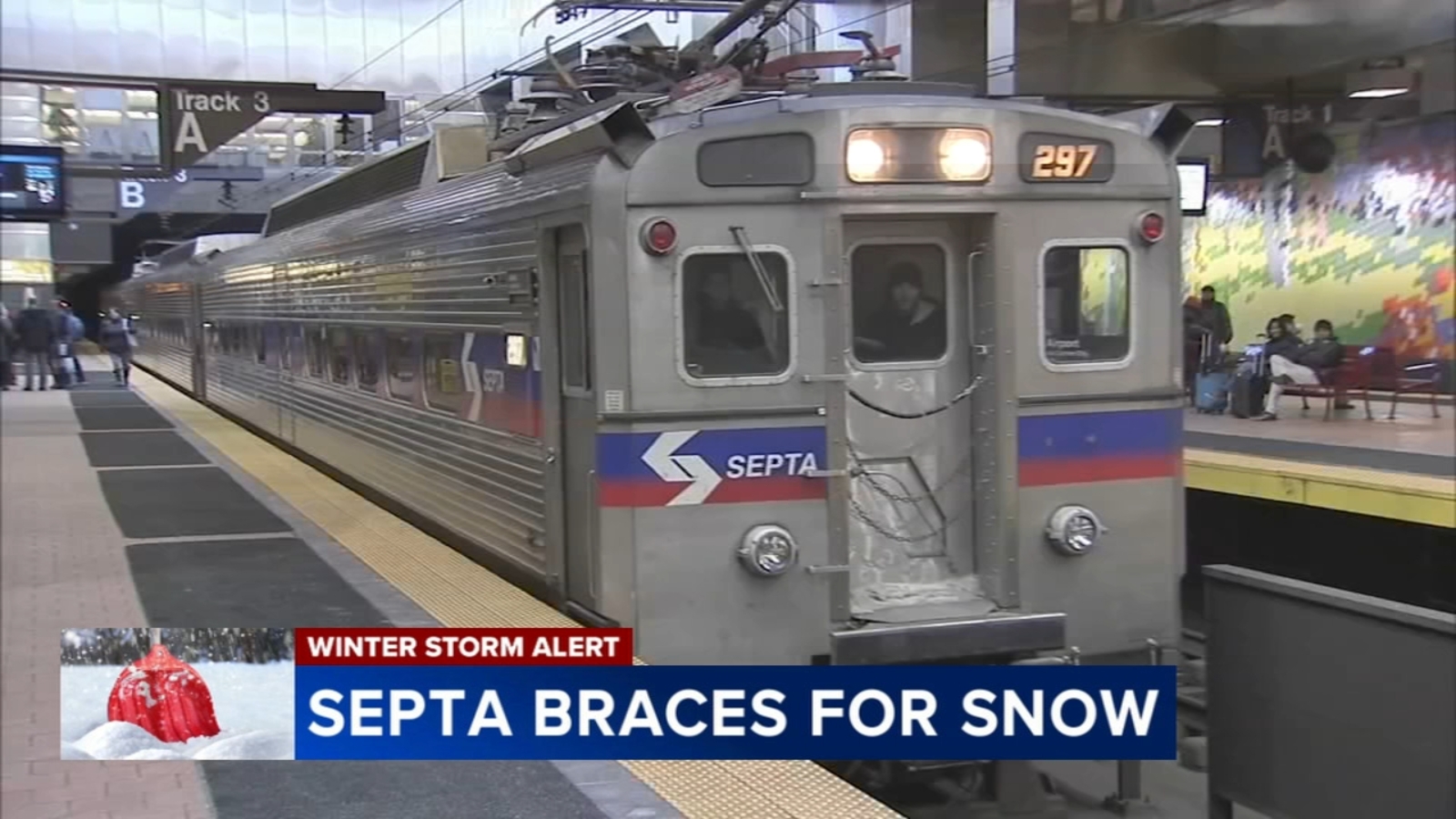
Southeastern Pennsylvania Transportation Authority (SEPTA) is bracing for widespread service disruptions as a powerful winter storm barrels toward the Philadelphia region, with officials warning of major SEPTA winter storm delays, mounting cancellations, and the very real possibility of full system shutdowns on Sunday. The warning has rippled through the city’s workforce, particularly among essential employees who depend on public transit to reach their jobs in hospitals, nursing facilities, and other critical services.
As the storm approaches, SEPTA spokesperson Andrew Busch delivered a sobering message to riders: expect the unexpected. Whether you rely on buses, trolleys, or Regional Rail, your Sunday travel plans are likely to change , possibly multiple times , before the day is over. Here’s a complete breakdown of what riders need to know, why the disruptions are happening, and how to plan ahead.
What SEPTA Officials Are Telling Riders
In statements leading up to the storm, SEPTA made it clear that this would not be a typical weather day. Busch’s remarks were unusually direct, leaving little room for ambiguity about the scale of what commuters should prepare for.
“You’re almost certainly going to encounter cancelations, significant delays, and at some point during the day, we’re probably going to have to start shutting services down,” Busch said.
This kind of explicit language from a major transit agency signals just how seriously SEPTA is treating the incoming weather system. The warning wasn’t framed as a worst-case scenario but rather as a probable outcome. For a region accustomed to unpredictable winter weather, that’s a notable shift in tone.
The Domino Effect of Storm Disruptions
SEPTA’s transit network operates like a complex ecosystem where one weak link can cascade into system-wide problems. When bus routes slow down because of snow-covered roads, that ripple effect spreads quickly to connecting routes, paratransit services, and trolley lines. Add in icy platform conditions and reduced visibility, and the entire network can become unsafe within hours.
That’s why the agency’s leadership is urging riders to think defensively about their Sunday plans rather than waiting for real-time alerts before reacting.
Why Bus Service Is Likely to Be Hit First
Among all the modes SEPTA operates, buses are the most vulnerable during a major snow event, and for obvious reasons. Roads accumulate snow and ice faster than elevated tracks, and bus routes share space with abandoned vehicles, delivery trucks, and emergency response equipment.
- Snow-covered lanes force buses to slow dramatically or reroute entirely.
- Reduced traction makes hill climbs nearly impossible for standard transit buses.
- Blocked intersections from stuck vehicles can strand buses mid-route.
- Driver safety becomes a serious concern as visibility drops and stop times increase.
Bus riders in Philadelphia should expect to see service scaled back first, with route suspensions becoming more likely as the storm intensifies throughout the day. Paratransit customers, in particular, are encouraged to confirm appointments and explore backup arrangements with care providers.
Regional Rail Faces Its Own Set of Challenges
If you thought trains would be a safe bet, think again. Regional Rail , often considered the more weather-resilient option , is also under serious threat during this storm. SEPTA officials explained that the exposed nature of regional rail tracks makes snow removal nearly impossible during rapid accumulation.
“Regional Rail, you know, those tracks all being out and exposed, there really isn’t an effective way to clear that if we’re getting rapid accumulation. So at some point, we’ll have to make a call, likely to pull those services back as well,” Busch said.
That means even commuters who board at suburban stations like Wynnewood, Ardmore, or Fox Chase could find their trains canceled mid-route, leaving them stranded far from home. The agency’s decision to suspend Regional Rail service is driven less by the equipment’s inability to handle snow and more by the practical impossibility of keeping tracks clear during heavy, sustained snowfall.
The Human Cost: Workers Caught in the Middle
Beyond schedules and service maps, the real story of these SEPTA winter storm delays is the impact on everyday Philadelphians who have no flexibility to stay home. For many service industry workers, cashiers, restaurant staff, and home health aides, a missed shift means missed wages. For others, missing work isn’t even an option.
Financial Strain on Working Families
Bajotta Richardson of Wynnefield captured the anxiety many riders are feeling. With limited alternatives to public transit, she faces a difficult calculation: brave unsafe conditions or absorb the cost of alternative transportation.
“It would mess me up. I’d have a hard time getting to work. It would be more Ubers. I gotta spend more money,” Richardson said. Her experience reflects a broader reality for working-class Philadelphians who live paycheck to paycheck and have little margin for unexpected expenses.
Rideshare services surge in price during winter storms, often doubling or tripling their normal rates. For someone already stretched thin financially, even a single storm day can mean choosing between groceries and getting to work.
Healthcare Workers Face Impossible Choices
Perhaps no group feels the strain more acutely than healthcare workers. Ashley Marcus, also of Wynnefield, works in a healthcare setting where patient care cannot wait for clear skies.
“Since I am a healthcare worker, some of us, it’s not an option to come into work every day. So the fact that we have to make it through, some of us without public transportation, is gonna be extremely rough on all of us,” Marcus said.
Hospitals and nursing facilities operate around the clock, and staffing them during a winter storm is a perennial challenge. Marcus noted that her colleagues have already begun joking about extreme measures to get to their shifts , a coping mechanism that underscores just how serious the situation has become.
“A lot of my coworkers were talking about they might be skiing into work on Monday, so hopefully that’s not the case,” she said.
The Bright Spots: Subway Lines That May Hold Up
Not all of SEPTA’s network is equally vulnerable. The agency has identified two subway lines that are expected to remain operational through most of the storm, providing a potential lifeline for riders who absolutely must travel.
Broad Street Line
The Broad Street Line runs primarily underground through Center City and North Philadelphia, with above-ground stretches in the outer neighborhoods. Because much of the route is sheltered from accumulation, it’s likely to remain one of the most reliable ways to move through the city during the storm.
Market-Frankford Line
Similarly, the Market-Frankford Line (often called the “Blue Line” or simply “the El”) combines elevated and underground segments. While elevated portions can be affected by ice and wind, the line’s overall infrastructure tends to perform better than surface-level options during major weather events.
Riders who must travel on Sunday are strongly encouraged to plan their trips around these two lines whenever possible.
Safety Comes First , And So Does Equipment Protection
SEPTA officials were clear about the reasoning behind potential service shutdowns: it’s not just about rider safety, it’s about protecting the equipment that will be needed once the storm passes.
Running buses, trolleys, and trains through dangerous conditions can cause mechanical damage that takes days or even weeks to repair. A single bus stuck in deep snow, for example, can take hours to extract, blocking other vehicles and creating cascading delays across multiple routes.
By proactively suspending service, SEPTA aims to:
- Prevent rider injuries from slips, falls, and vehicle accidents.
- Protect employees from dangerous working conditions.
- Preserve fleet integrity so service can resume quickly after the storm.
- Reduce long-term repair costs that come from operating in extreme conditions.
This is the same approach that transit agencies in Boston, New York, and Chicago have adopted in recent years, recognizing that aggressive shutdowns during major storms lead to faster recovery times afterward.
What’s Next: Storm Preparation Briefing
SEPTA’s general manager is scheduled to join Philadelphia’s mayor and other city officials on Friday for a comprehensive storm preparation update. That briefing is expected to clarify several outstanding questions, including:
- The exact timing of potential service suspensions.
- Whether any routes will be preemptively canceled before the storm arrives.
- Coordination with the city’s snow emergency routes.
- Plans for restoring service once conditions improve.
Riders are encouraged to monitor SEPTA’s official website, social media channels, and the SEPTA app for real-time updates as the situation develops.
Tips for Riders Planning Ahead
If you need to travel on Sunday, here are some practical steps to minimize disruption:
- Check service status before leaving home. Conditions can change hourly during a winter storm.
- Build in extra time. Even when service is running, delays of 30 to 60 minutes are common.
- Have a backup plan. Identify nearby subway stations or alternative routes in case your primary line is suspended.
- Sign up for SEPTA alerts via text or email to receive immediate notifications.
- Consider whether your trip can wait. If at all possible, postpone nonessential travel until after the storm clears.
Conclusion
The looming SEPTA winter storm delays and possible shutdowns represent more than just an inconvenience , they highlight the critical role public transit plays in the lives of working Philadelphians and the vulnerability of even the most robust transit systems when extreme weather strikes. As the city prepares for what’s expected to be a significant snow event, cooperation between riders, transit workers, and city officials will be essential to keeping the community safe while ensuring service can resume quickly once the clouds clear. Stay informed, plan ahead, and prioritize safety over schedules this weekend.