
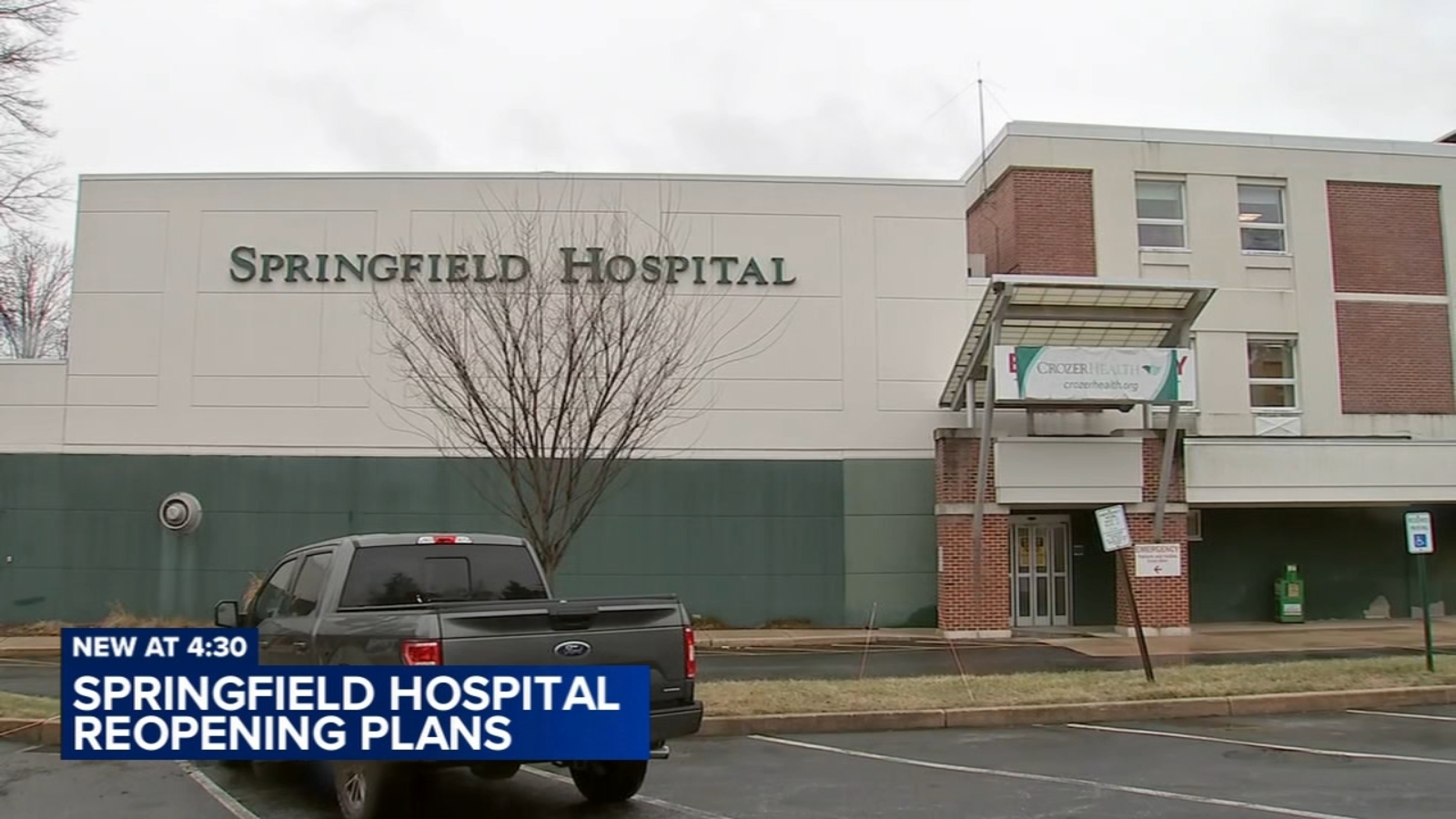
After sitting dormant for years, Springfield Hospital reopening plans are finally taking shape. KQT Aikens Partners recently closed on the shuttered property for $1 million, signaling what could be a transformative moment for healthcare access in Springfield Township, Pennsylvania. The new ownership group has made it clear that revitalization efforts are imminent, not years away, offering hope to a community that has long awaited the return of essential medical services.
Owner Todd Strine shared his ambitious vision with Action News, revealing that the goal is to have healthcare services operational at both Springfield Hospital and Taylor Hospital by the end of this year. The news comes as a welcome relief to residents who have watched the facility remain closed since its previous operator, Crozer Health’s parent company Prospect Medical Holdings, filed for bankruptcy.
The Road to Springfield Hospital Reopening
The journey toward Springfield Hospital reopening has been anything but straightforward. For months, community members, local officials, and healthcare advocates have wondered whether the iconic facility would ever serve patients again. The bankruptcy of Prospect Medical Holdings cast uncertainty over the future of multiple healthcare properties in the Delaware County region, leaving Springfield Hospital and Taylor Hospital in limbo.
That uncertainty began to dissolve when KQT Aikens Partners emerged as a serious buyer. The group’s $1 million acquisition of the Springfield property represents a significant investment and a clear commitment to restoring medical care in the area. Their earlier successful bid for Taylor Hospital in Ridley Park last year showed a pattern of intent, suggesting the new owners view these facilities as critical community assets worth preserving and modernizing.
Why the Closure Mattered
The shuttering of Springfield Hospital left a noticeable gap in regional healthcare infrastructure. Patients who once relied on the facility for routine care, emergency services, and specialty treatments found themselves traveling farther for medical attention. The closure also affected local employment, removing hundreds of healthcare jobs from the community and rippling through related businesses that depended on hospital traffic.
Beyond the practical inconveniences, the closed hospital represented something more symbolic, a once-bustling institution of healing sitting silent, a reminder of the broader challenges facing community healthcare across America. Its potential reopening signals not just a return of services but a restoration of community confidence.
Todd Strine’s Vision for Both Facilities
Todd Strine, the owner representing KQT Aikens Partners, has outlined a strategic plan that distinguishes between the two properties. While both facilities will benefit from renewed investment and operational planning, each will serve a different role in the regional healthcare ecosystem.
Taylor Hospital: A Multi-Tenant Model
According to Strine, Taylor Hospital will operate under a multi-tenant arrangement. This approach allows various healthcare providers and specialists to share the facility, maximizing its utility while spreading operational costs. Multi-tenant models have gained popularity in adaptive healthcare real estate because they offer flexibility and can bring multiple service lines under one roof without requiring a single entity to shoulder the full burden of operations.
This model could mean that Taylor Hospital hosts a combination of primary care practices, diagnostic services, outpatient surgery centers, and specialty clinics. By attracting diverse tenants, the facility could quickly rebuild its patient base and re-establish itself as a healthcare destination in Ridley Park.
Springfield Hospital: A Specialty Health Center
For Springfield Hospital, Strine envisions a different but equally impactful role. Rather than attempting to replicate the comprehensive services the facility may have offered in its prime, the plan calls for a focused specialty health center. This specialization approach allows the new operators to concentrate resources, build expertise, and deliver high-quality care in specific medical areas.
A specialty health center could focus on areas with significant community need, such as:
- Cardiology services for an aging population with heart disease risks
- Orthopedic care including joint replacement and sports injury treatment
- Women’s health services and reproductive medicine
- Behavioral health programs addressing growing mental health needs
- Rehabilitation services for post-surgical and injury patients
The specialty approach has practical advantages. By concentrating on specific medical disciplines, the facility can attract top specialists, invest in targeted equipment, and build a reputation for excellence in chosen areas. This focused strategy often leads to better patient outcomes and stronger financial sustainability compared to attempting to be everything to everyone.
Timeline and Expectations for the Springfield Hospital Reopening
One of the most encouraging aspects of the announcement is the timeline. Strine was emphatic that restoration efforts would not stretch into years but rather months. His stated objective of having healthcare services operational at both facilities by late this year provides a concrete benchmark for the community to track progress.
This accelerated timeline suggests several things about the planning already underway:
- Pre-development work has been happening quietly behind the scenes
- Regulatory pathways have likely been identified and prepared
- Staffing recruitment may already be in motion
- Tenant negotiations for Taylor Hospital could be approaching final stages
- Capital investment plans for renovations and equipment are being finalized
Of course, healthcare facility reopenings are complex undertakings involving regulatory approvals, licensing requirements, staffing challenges, and substantial renovation work. The “months, not years” timeline is ambitious, and residents will be watching closely to see how the new owners navigate these complexities.
Broader Implications for Delaware County Healthcare
The Springfield Hospital reopening represents more than just one facility coming back online. It signals a potential turning point for healthcare access across Delaware County, which experienced multiple healthcare disruptions in recent years. The collapse of Prospect Medical Holdings created uncertainty across the region, affecting thousands of patients and healthcare workers.
KQT Aikens Partners’ dual acquisition strategy could serve as a model for other communities facing similar healthcare access challenges. By approaching shuttered facilities with realistic, phased reopening plans rather than attempting to restore everything at once, the new owners demonstrate a pragmatic path forward.
Economic and Community Impact
The reopening of Springfield Hospital will have ripple effects throughout the local economy. Healthcare facilities are significant employers, and bringing the hospital back into operation means restoring jobs for doctors, nurses, technicians, administrative staff, and support personnel. These employment opportunities strengthen the local tax base and stimulate spending in surrounding businesses.
Additionally, an operational hospital attracts related businesses, including pharmacies, medical supply companies, restaurants serving hospital visitors, and transportation services. The economic revitalization that accompanies healthcare facility reopenings can be substantial, particularly in communities that have struggled since the original closures.
What Residents Should Know Moving Forward
For community members eager to track the Springfield Hospital reopening process, several factors will be worth monitoring in the coming months:
- Service line announcements as the specialty center concept takes more concrete shape
- Hiring announcements indicating the facility is preparing for operations
- Renovation progress visible to the community
- Partnership announcements with healthcare providers and insurance networks
- Opening dates for specific departments or service lines
Local residents who relied on Springfield Hospital before its closure should stay informed about which services will return and what new offerings might become available. The shift to a specialty health center model may mean some familiar services won’t be restored while new capabilities could emerge.
A Hopeful Chapter for Springfield Township
The Springfield Hospital reopening announcement marks the beginning of what promises to be a hopeful new chapter for Springfield Township and surrounding communities. After years of uncertainty, the $1 million acquisition by KQT Aikens Partners represents tangible progress toward restoring essential healthcare services.
Todd Strine’s vision, a specialty health center focused on delivering excellence in specific medical disciplines, offers a realistic and potentially sustainable path forward. Combined with the multi-tenant approach planned for Taylor Hospital, the new ownership group appears committed to rebuilding healthcare infrastructure in the region with thoughtful, strategic planning.
While challenges certainly remain, including regulatory hurdles, renovation requirements, and the complex logistics of launching healthcare operations, the commitment to action within months rather than years provides genuine reason for optimism. For residents who have waited patiently for healthcare options to return to their community, that timeline cannot come soon enough.
As 2025 progresses, all eyes will be on KQT Aikens Partners to deliver on their ambitious promises. If successful, the Springfield Hospital reopening could become a case study in how dedicated investors, clear vision, and community-focused planning can breathe new life into shuttered healthcare facilities, ensuring they serve patients and families for years to come.