
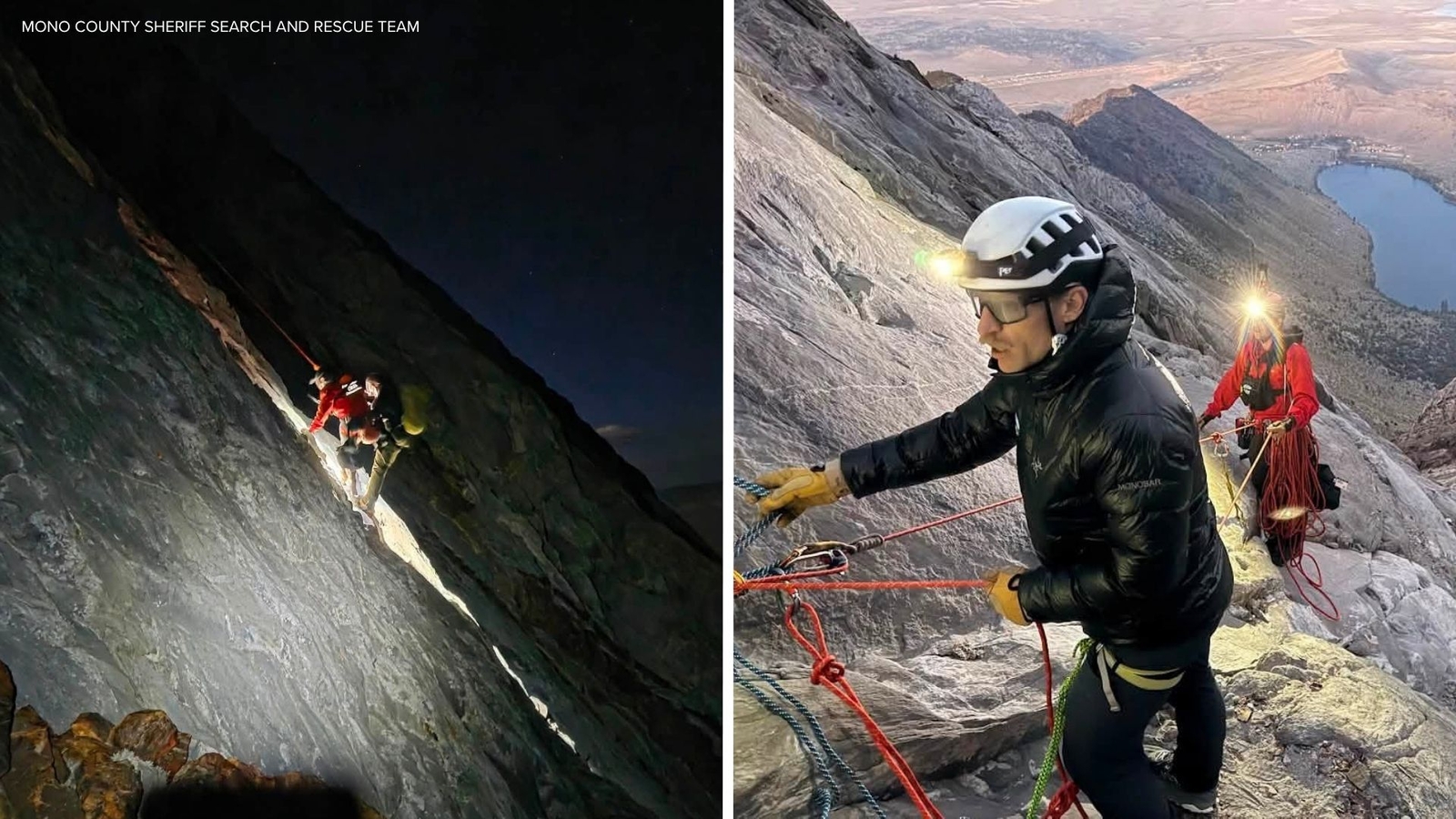
When a climber gets stranded on a tiny ledge with thousands of feet of vertical exposure below, every minute matters. That’s exactly the scenario that unfolded during a dramatic climber rescue in the Sierra Nevada near Mammoth Lakes, California, where a volunteer team spent more than 15 hours bringing a stranded mountaineer back to safety on August 22. The operation tested the limits of human endurance, technical skill, and the unbreakable will to survive.
The story of Rob Martin’s rescue is one that highlights both the inherent dangers of mountaineering and the extraordinary dedication of volunteer search and rescue teams who put their own lives on the line to save others. Below, we take a comprehensive look at what happened, how the rescue unfolded, and the lessons every outdoor enthusiast can take away from this remarkable event.
The Perilous Situation: Stranded on a Six-Inch Ledge
According to the Mono County Sheriff Search and Rescue Team, Martin found himself in an almost unimaginable predicament. After veering off his intended route in a precarious gully near Mammoth Lakes, he ended up stuck on a ledge so narrow that only one of his feet could fit on it at a time. With no room to stand, sit, or rest properly, the stranded climber was forced into an exhausting routine: shaking out one leg to relieve the cramping muscles, then switching to the other, over and over again.
Team spokesperson Mitchell Quiring, who was among the four rescuers who carried out the mission, painted a stark picture of just how dire Martin’s situation had become. The climber was essentially balancing on a six-inch sliver of rock, with thousands of feet of open air below him. One misstep, one slip, one moment of lost concentration, and the outcome would have been catastrophic.
“Any fall would almost certainly be fatal,” the rescue team later wrote on its official Facebook page. That single sentence captures the gravity of what volunteer rescuers were facing as they approached the scene.
Inside the Rescue Operation
Rescuing someone in such an exposed position requires more than just courage. It demands meticulous planning, specialized equipment, and the kind of technical expertise that can only be built through years of rigorous training. In Martin’s case, a four-person technical rescue team took on the challenge of reaching him, securing him, and bringing him safely back down.
The Team Behind the Rescue
The Mono County Sheriff Search and Rescue Team is a volunteer-based organization dispatched by the Mono County Sheriff’s Office. Despite being volunteers, these individuals train extensively to handle complex, high-stakes scenarios in some of the most rugged terrain in the Sierra Nevada. Mountains in this region are notorious for unpredictable weather, loose rock, and steep, exposed faces that leave no margin for mistake.
Quiring noted that the team’s confidence came from leaning into their preparation. “There’s a lot of trust in leaning back on that training,” he said. This kind of trust isn’t something that develops overnight. It’s the product of countless hours spent practicing rope work, anchor systems, patient packaging, and evacuation procedures on cliffs, in all weather conditions, at all hours of the day and night.
Why the Operation Took Over 15 Hours
For those unfamiliar with mountain rescue, 15 hours may sound like a long time for a single operation. But the reality is that technical rescues in vertical terrain often require slow, methodical progress. Rescuers cannot simply rush in. Every move must be calculated, every anchor tested, every system double-checked.
Several factors contributed to the lengthy duration of this particular climber rescue:
- Vertical exposure: The terrain demanded careful, deliberate movement to avoid creating additional hazards for both the rescuers and the patient.
- Limited ledge space: Because Martin had almost no room to maneuver, the team had to devise a way to safely reach and stabilize him before initiating the extraction.
- Nightfall and fatigue: Mountain rescues that extend into the night require additional lighting, slower movement, and more frequent rest breaks.
- Extraction logistics: Once secured, the patient had to be lowered, raised, or hauled out of the gully using rope systems, a process that demands patience and precision.
A Survivor’s Will to Live
While the technical expertise of the team was essential, Quiring made a point of emphasizing something often overlooked in stories like this: the survivor’s own will to live. According to Quiring, Martin demonstrated extraordinary mental and physical toughness throughout the ordeal.
“He was not going to give up. He was going to push until there was a solution,” Quiring said. That kind of determination is often what separates a rescue from a recovery. In the mountains, a strong survival mindset can buy rescuers the time they need to reach someone, while hopelessness and panic can accelerate tragedy even when help is close by.
Martin’s story is a powerful reminder that in a backcountry emergency, mental resilience is just as important as physical fitness. The shaking-out of one leg, then the other, hour after hour, requires a level of discipline that most people never have to call upon.
Lessons in Climbing Safety and Preparedness
While the outcome of this particular incident was a positive one, it underscores several important principles that every climber, hiker, and outdoor enthusiast should keep in mind before heading into the mountains.
- Study your route thoroughly. Getting off route is one of the most common causes of mountaineering accidents. Familiarize yourself with topo maps, GPS tracks, beta reports, and current conditions before you go.
- Carry the ten essentials. Navigation tools, extra food and water, insulation, a first-aid kit, fire-starting materials, a headlamp, and an emergency shelter can mean the difference between a manageable situation and a life-threatening one.
- Know when to turn around. Ego and summit fever are responsible for a disproportionate number of climbing accidents. If conditions change or you feel off-route, retreating is always a valid option.
- Communicate your plans. Always leave a detailed trip plan with someone responsible, including your intended route and expected return time. This dramatically speeds up response time if you do need help.
- Trust your training. Whether you’re the climber or the rescuer, preparation is everything. Practice your skills regularly so that under stress, your body knows what to do.
The Unsung Heroes: Volunteer Search and Rescue Teams
One of the most powerful takeaways from this incident is the role that volunteer search and rescue teams play in keeping outdoor recreation safe. These individuals are not paid professionals hanging out at base camp waiting for the next call. They are typically highly skilled climbers, mountaineers, and outdoor professionals who donate their time, equipment, and sometimes their own safety to help strangers in need.
Organizations like the Mono County Sheriff Search and Rescue Team operate in some of the most demanding environments in the country, often without the funding, recognition, or resources that would make their jobs easier. Yet they continue to show up, training year-round so that when the pager goes off in the middle of the night, they can launch a complex technical rescue with confidence.
If you spend time in the backcountry, consider supporting your local search and rescue team through donations, volunteer time, or simply by being a responsible user of the wilderness. Their work saves lives, and they rarely ask for the credit.
Final Thoughts
The dramatic climber rescue near Mammoth Lakes is more than just a news story. It’s a testament to the power of preparation, perseverance, and the human spirit. A man found himself clinging to a tiny piece of rock with no room to spare, and a team of volunteers spent more than 15 hours bringing him home to safety. Both the climber and his rescuers played a role in that outcome, and both deserve recognition for what they accomplished.
For anyone who ventures into the mountains, this story is a humbling reminder of just how quickly things can go wrong, and just how much courage, skill, and heart it takes to set them right. The Sierra Nevada is a place of breathtaking beauty, but it demands respect, preparation, and humility from everyone who enters it. When you do venture out, go prepared, stay focused, and remember that behind every successful mountain rescue is a network of dedicated volunteers who train tirelessly so that others might live to climb another day.