
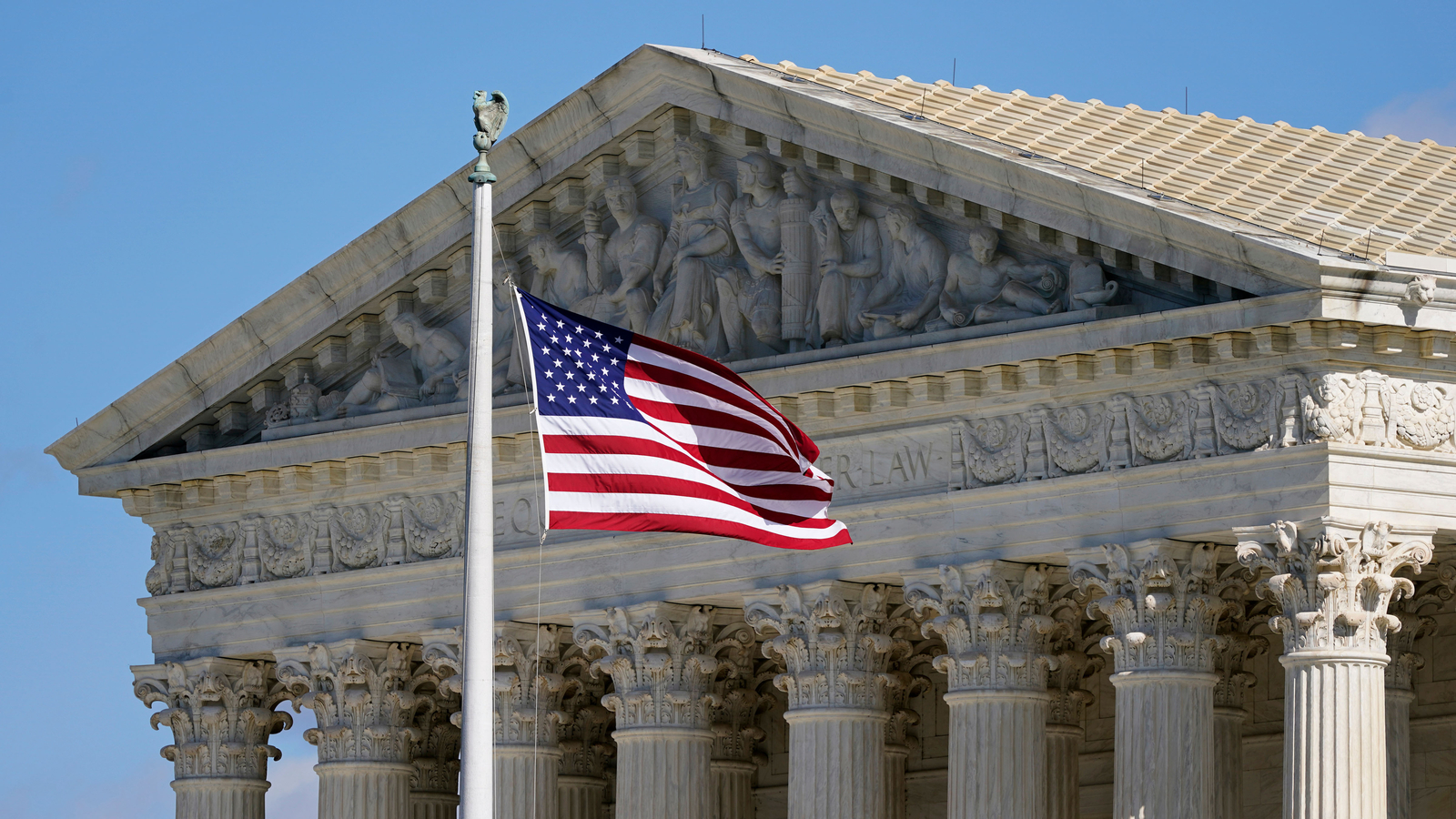
In a landmark decision that has sent shockwaves through American politics, the U.S. Supreme Court has significantly weakened the Voting Rights Act, striking down a majority-Black congressional district in Louisiana. The 6-3 ruling, authored by Justice Samuel Alito and joined by the court’s six conservative justices, represents one of the most consequential blows to civil rights protections in decades and could reshape congressional representation for years to come.
The Background: A Cornerstone of Civil Rights Legislation
Signed into law by President Lyndon B. Johnson in 1965, the Voting Rights Act stands as one of the most important pieces of civil rights legislation in American history. At the heart of the law lies Section 2, which serves as the primary mechanism for challenging racially discriminatory election practices. President Johnson himself described the legislation as “a triumph for freedom as huge as any victory on any battlefield.”
For nearly seven decades, the Voting Rights Act has been instrumental in dismantling barriers to Black political participation. According to election law expert Nicholas Stephanopoulos, approximately 70 of the 435 congressional seats in the House of Representatives are currently protected under Section 2 provisions. These protections have enabled minority communities to elect candidates of their choice in districts where they constitute a meaningful portion of the electorate.
The Louisiana Case: A 200-Mile “Snake”
At the center of the Supreme Court decision was Louisiana’s 6th Congressional District, represented by Democratic Congressman Cleo Fields. Chief Justice John Roberts memorably described the district’s unusual shape as a “snake” stretching more than 200 miles to connect parts of Shreveport, Alexandria, Lafayette, and Baton Rouge.
The district was drawn following a 2023 Supreme Court ruling in an Alabama case, which prompted Louisiana lawmakers to create a second majority-Black congressional district. With approximately one-third of Louisiana’s population identifying as Black, two of the state’s six congressional districts currently have Black majorities. Justice Alito concluded that this map represented “an unconstitutional gerrymander,” finding that race had played too significant a role in its creation.
The Court’s Reasoning: A Narrow Interpretation of Section 2
In his majority opinion, Justice Alito articulated a fundamentally different understanding of how the Voting Rights Act should function. He argued that “allowing race to play any part in government decisionmaking represents a departure from the constitutional rule that applies in almost every other context.” Most significantly, Alito narrowed Section 2 to apply primarily to cases of intentional discrimination,a far more demanding legal standard than the previous framework.
This interpretation fundamentally alters how courts will evaluate minority representation challenges going forward. Under the new framework, proving that a voting map dilutes minority political power becomes considerably more difficult, requiring plaintiffs to demonstrate that discrimination was deliberate rather than simply the result of structural factors.
The court’s about-face is particularly striking given its 2023 Alabama decision. In that case, Roberts and Justice Brett Kavanaugh joined the three liberal justices to require Alabama to draw a second majority-Black district. Less than three years later, both justices joined the conservative majority in essentially dismantling the legal foundation that made that ruling possible.
Dissenting Voices: Warnings of Democratic Erosion
Justice Elena Kagan, writing for the three liberal justices in dissent, delivered a stark warning about the ruling’s consequences. She characterized the decision as a “gutting of Section 2” that “puts that achievement in peril.” Kagan argued that the practical effect would allow states “to systematically dilute minority citizens’ voting power” without facing legal consequences.
Former President Barack Obama echoed Kagan’s concerns, stating that the decision revealed “how a majority of the current Court seems intent on abandoning its vital role in ensuring equal participation in our democracy.” Congressman Fields himself noted that the ruling’s “practical effect is to make it far harder for minority communities to challenge redistricting maps that dilute their political voice.”
Political Ramifications and the 2026 Midterm Elections
The political implications of this decision cannot be overstated. While most filing deadlines for the current election cycle have already passed, the ruling’s effects will likely be felt most acutely in the 2028 elections and beyond. Several Democratic-held House districts that were previously protected under the Voting Rights Act could now be redrawn, potentially giving Republicans additional opportunities to expand their House majority.
President Donald Trump welcomed the decision, calling it “the kind of ruling I like.” The timing proved particularly significant, as the ruling came down while Florida legislators were debating a Republican-proposed congressional redistricting plan submitted by Governor Ron DeSantis. Although Democrats urged their Republican colleagues to delay debate long enough to analyze the decision’s implications, those requests were denied.
Rep. Suzan DelBene, chair of the Democratic Congressional Campaign Committee, characterized the ruling as “appalling” and the latest in a series of attacks by Trump and the conservative court “against the fundamental right of every American citizen to vote.” Despite her criticism, she expressed confidence that Democrats remained positioned to regain the House majority in the upcoming elections.
A Pattern of Decisions: The Court’s Long Assault on Voting Protections
The Louisiana ruling represents the culmination of a years-long effort to reshape how the Voting Rights Act is interpreted. Chief Justice Roberts has been central to this project, dating back to his time as a young lawyer in the Reagan-era Justice Department. In a 2006 dissenting opinion,one of his first major voting rights cases as chief justice,Roberts wrote that “it is a sordid business, this divvying us up by race.”
In 2013, Roberts authored the majority opinion in Shelby County v. Holder, which gutted a critical provision of the Voting Rights Act requiring states with histories of discrimination to obtain federal approval before changing election procedures. At the time, Roberts argued that “our country has changed” and that Congress must ensure legislation “speaks to current conditions.”
These decisions reflect a broader jurisprudential philosophy that views race-conscious remedies with skepticism, even when those remedies address documented historical patterns of discrimination. Political scientist Jonathan Cervas of Carnegie Mellon University, who has served as an outside legal expert in multiple voting rights cases, offered a sobering assessment: “The Voting Rights Act as a means to protect minority voters from vote dilution is essentially dead.”
What Comes Next for Voting Rights Protections
The full implications of this decision remain uncertain. Louisiana will almost certainly need to revise its redistricting plan to comply with the ruling, and similar challenges to majority-minority districts across the country are now more likely to succeed. Alabama has a separate appeal pending at the Supreme Court that could further clarify,or complicate,the new legal landscape.
One thing is clear: the coalition of civil rights organizations, voting rights advocates, and affected communities that have relied on Section 2 for decades now face an uphill battle. The legal tools previously available to combat vote dilution and protect minority political representation have been substantially diminished, leaving Congress as the most likely vehicle for restoring protections,but political realities make such legislative action improbable in the near term.
The ruling also raises profound questions about the relationship between racial equality and democratic participation in America. By narrowing the scope of permissible considerations of race in redistricting, the court has placed itself in tension with a long tradition of jurisprudence that recognized how historical discrimination can shape present-day electoral outcomes, even without explicit discriminatory intent.
Conclusion: A Transformative Moment for American Democracy
The Supreme Court’s decision to strike down Louisiana’s 6th Congressional District represents far more than a single redistricting case,it signals a fundamental transformation in how the Voting Rights Act will function in American politics. By elevating concerns about racial gerrymandering over the practical realities of vote dilution, the conservative majority has reshaped the legal landscape in ways that will influence elections for years to come.
As the nation approaches future election cycles, the consequences of this ruling will continue to unfold. Whether the decision ultimately empowers more competitive elections or enables the further erosion of minority political representation remains a question that only time, and subsequent legal challenges, will answer. What is undeniable, however, is that the legal architecture protecting voting rights in America has been fundamentally altered,and the effects will be felt far beyond the borders of Louisiana.