
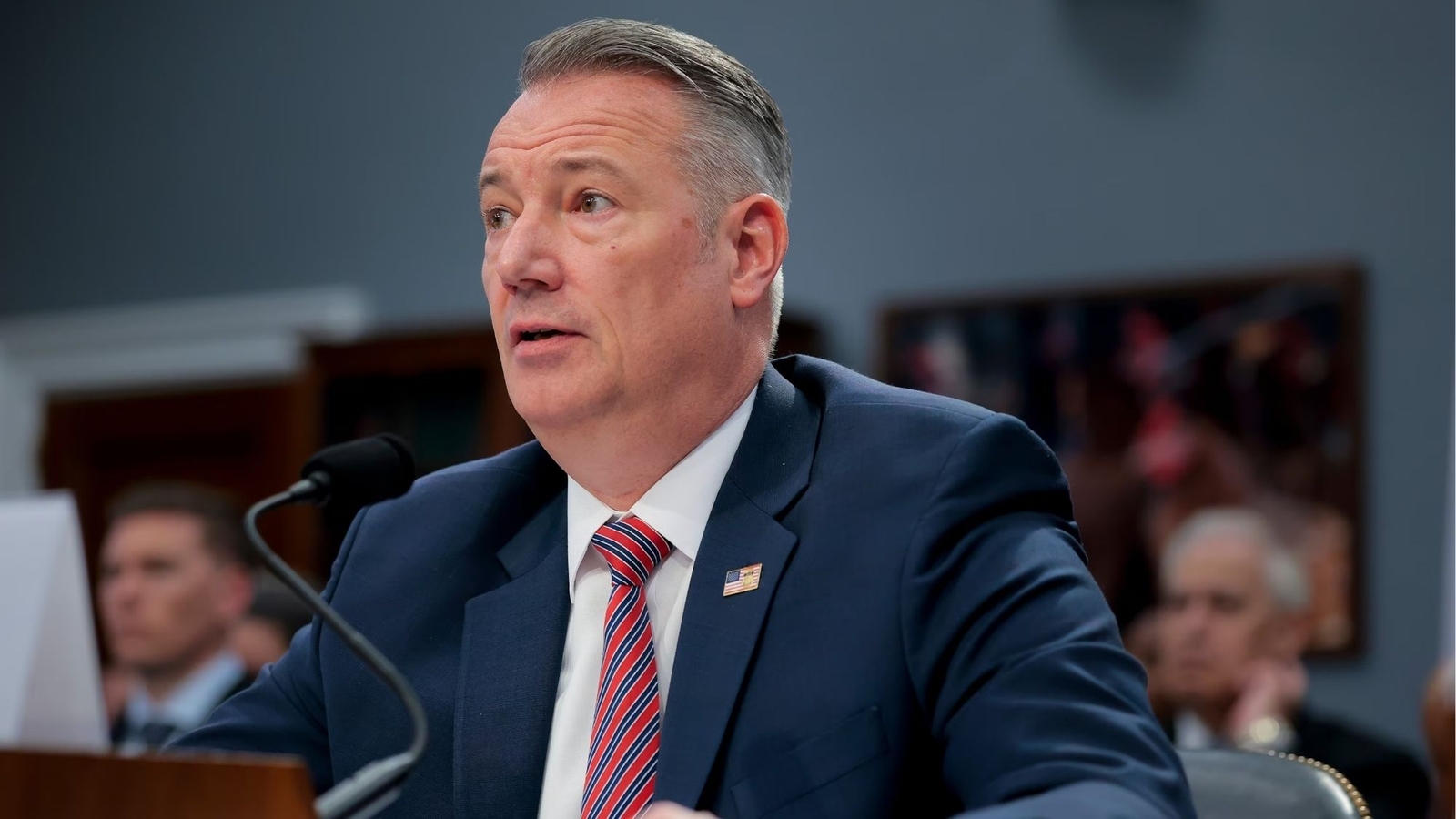
The news of an ice director resignation has sent ripples through Washington and beyond. Acting U.S. Immigration and Customs Enforcement Director Todd Lyons, a central figure in the Trump administration’s aggressive immigration enforcement strategy, is set to depart the agency at the end of May. Federal officials confirmed the announcement on Thursday, marking a significant leadership transition for one of the most scrutinized federal agencies in the country.
Lyons’ final day with ICE will be May 31, according to Homeland Security Secretary Markwayne Mullin, who praised the outgoing director in a formal statement. While the reasons behind the resignation were not immediately disclosed, the announcement raises important questions about the future direction of U.S. immigration policy and the operational philosophy that has defined ICE in recent years.
Who Is Todd Lyons?
Todd Lyons began his career with ICE in 2007 as an immigration enforcement agent stationed in Texas. Over the years, he climbed through the ranks of the agency, eventually reaching the top position on an acting basis. His tenure coincided with one of the most consequential periods in modern American immigration policy, particularly under President Donald Trump’s renewed focus on mass deportations and border security.
Lyons became a key architect of enforcement operations, working closely with the White House to expand the agency’s reach and capabilities. He was widely regarded as a steady hand at the helm of an agency operating under intense political and public pressure.
Career Highlights and Milestones
- Joined ICE in 2007 as a frontline immigration enforcement agent in Texas.
- Earned promotions through various leadership roles within the agency’s enforcement division.
- Appointed acting director, overseeing a dramatic expansion of ICE’s operational scope and budget.
- Signed a controversial memo granting federal immigration officers sweeping authority to enter homes and conduct arrests without judicial warrants.
- Coordinated high-profile operations in major American cities, including Chicago and Minneapolis.
Reactions from Administration Officials
The response from administration officials was overwhelmingly complimentary, with several high-ranking figures offering public praise for Lyons’ service.
Homeland Security Secretary Markwayne Mullin called Lyons a “great leader of ICE who helped to make American communities safer.” In his statement, Mullin added, “We wish him luck on his next opportunity in the private sector,” hinting at Lyons’ likely transition to a corporate role following his departure from government.
White House spokesperson Abigail Jackson took to X (formerly Twitter) to describe Lyons as “an American patriot who made our country safer.” Her post reflected the administration’s appreciation for his contributions, even amid growing public criticism of ICE’s tactics.
Trump’s border czar, Tom Homan, also weighed in with glowing remarks. Homan described Lyons as someone who served selflessly and labeled him “a highly respected and effective acting Director of ICE.”
Major Policy Decisions Under Lyons’ Leadership
Expanded Budget and Hiring
During Lyons’ tenure, ICE received a massive financial infusion from Congress. The agency used these funds to dramatically expand its hiring efforts, bringing on thousands of new officers and support staff. Detention capabilities were also significantly scaled up, enabling ICE to hold far more individuals in custody at any given time than in previous years.
Ramped-Up Arrest Operations
Lyons oversaw a sharp increase in arrests as the administration demanded higher enforcement numbers to meet its immigration goals. This included operations targeting individuals with final orders of removal, as well as broader workplace enforcement actions and collaborative efforts with local law enforcement agencies.
Sweeping Warrantless Entry Authority
One of the most controversial decisions during Lyons’ time as acting director was his approval of a memo that expanded federal immigration officers’ power to forcibly enter homes and conduct arrests without a judicial warrant. The memo, first obtained by The Associated Press, generated significant legal debate and criticism from immigration advocates who argued it represented a troubling expansion of executive authority.
High-Profile City Operations
ICE was central to a series of highly publicized immigration enforcement operations in American cities throughout Lyons’ tenure. Operations in Chicago and Minneapolis drew particular attention, partly due to the heavy deployment of federal agents and the confrontations that followed. The Minneapolis deployment ended after backlash erupted over the deaths of two American protesters, casting a spotlight on the agency’s methods and raising serious concerns about accountability.
Public Perception and Controversy
Public opinion of ICE under Lyons’ leadership was notably low. A February AP-NORC poll revealed that most U.S. adults, including political independents, held an unfavorable view of the agency. This widespread disapproval reflected growing concerns about enforcement tactics, detention conditions, and the broader implications of the administration’s immigration agenda.
The unfavorable ratings were not limited to one political demographic. Even among voters who traditionally supported stricter immigration enforcement, questions arose about the methods used to achieve those goals. The deaths of protesters during operations, alongside numerous reports of aggressive tactics in residential neighborhoods, contributed to a perception that ICE had drifted far from its original mission of targeting serious criminal offenders.
What’s Next for ICE Leadership?
At the time of the announcement, federal officials did not specify who would replace Lyons as acting director of ICE. The leadership vacuum created by his departure introduces a period of uncertainty for the agency’s approximately 20,000 employees and the broader immigration enforcement infrastructure.
Potential candidates for the position are likely to come from within the agency’s senior ranks, though the administration may also consider outside figures who align closely with its immigration priorities. Whoever takes the helm will inherit an organization that has undergone massive expansion but also faces deep public skepticism and ongoing legal challenges.
Implications for Immigration Policy
The ice director resignation comes at a critical juncture for U.S. immigration policy. With the administration continuing to push for record deportation numbers and expanded enforcement, the new leader will be tasked with maintaining operational momentum while potentially addressing some of the controversies that have dogged the agency.
Key priorities for the incoming director may include:
- Rebuilding public trust through greater transparency and accountability measures.
- Continuing the expansion of detention and removal capacity.
- Navigating ongoing legal challenges to recent policy memos.
- Coordinating with state and local law enforcement on enforcement priorities.
- Managing the agency’s workforce expansion and training programs.
Broader Political Context
Lyons’ departure occurs against the backdrop of an intense political battle over immigration policy. The Trump administration has made immigration enforcement a cornerstone of its agenda, and ICE has been the primary vehicle for implementing those priorities. The agency’s actions have been celebrated by supporters who view strict enforcement as essential to national security and criticized by opponents who see the tactics as excessive and inhumane.
Immigration advocates have long called for reforms within ICE, including the possibility of restructuring or even abolishing the agency entirely. While those calls have gained traction in some political circles, the administration’s commitment to robust enforcement suggests that the agency’s overall mission will remain intact regardless of who occupies the director’s office.
Conclusion
The ice director resignation of Todd Lyons marks the end of a turbulent chapter for one of America’s most visible federal agencies. As Lyons prepares to exit government service and pursue opportunities in the private sector, ICE faces the dual challenge of maintaining its expanded operational capacity while grappling with deep public distrust and ongoing legal scrutiny. The identity of his successor, and the direction they choose to take the agency, will shape the national immigration debate for months and years to come. For now, the announcement provides a moment of reflection on the policies, controversies, and human consequences that have defined ICE under Lyons’ leadership.