
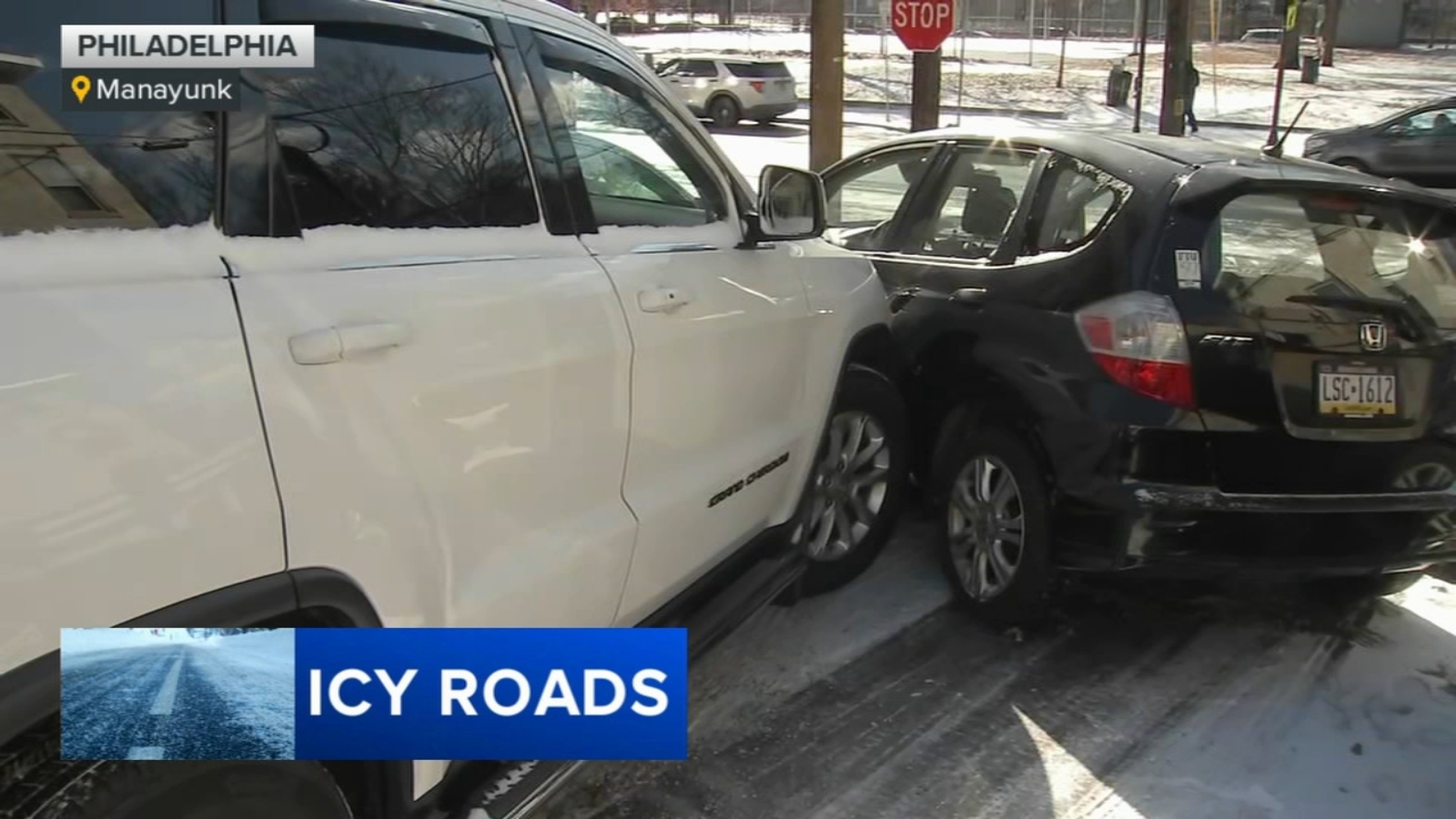
A fast-moving band of snow squalls swept through Philadelphia on Thursday, leaving behind a dangerous layer of black ice that triggered multiple icy road crashes across the city. While the snowfall itself was brief, the freezing conditions it created on untreated streets caught many drivers off guard, resulting in collisions, near-misses, and at least three injuries,two of them critical.
From the hilly streets of Manayunk to the residential blocks of East Falls and the intersection at G Street and East Wyoming Avenue in Feltonville, the same pattern repeated: sudden loss of traction, sliding vehicles, and impact with whatever happened to be in the path. Eyewitnesses described moments of panic, confusion, and a shared frustration that the roads hadn’t been treated in time.
How a Quick Snow Squall Created Hours of Hazards
Snow squalls are among the most deceptive winter weather events. They arrive with little warning, drop a sudden burst of snow, and often disappear within minutes. But what they leave behind can be far more dangerous than the snowfall itself.
When snow hits pavement that’s been warmed by traffic or sunlight, the temperature drop that follows a squall can cause that snow to melt briefly and then refreeze almost instantly. The result is black ice,a thin, nearly transparent layer of ice that blends with the road surface and is virtually invisible to drivers until their tires lose grip.
Philadelphia’s Streets Department confirmed that crews were dispatched to treat roads as conditions evolved, but the timing of the squalls,during a holiday period when staffing and response times may have been stretched thin,left many neighborhoods vulnerable for too long.
Manayunk: A Hilly Street Becomes a Crash Zone
Few neighborhoods felt the impact more than Manayunk, where the 200 block of Leverington Avenue became the site of back-to-back icy road crashes within minutes of each other.
Raven Brown’s Close Call
Raven Brown of Roxborough was riding in the passenger seat when her cousin lost control of their vehicle on the icy street. The car slammed into a parked vehicle, coming to a sudden stop just feet from a house at the bottom of the hill.
“We couldn’t stop,” Brown said. “This could have been so much worse. We could have kept going down the street and hit that house.”
Brown noted that the danger wasn’t obvious at first glance. The road looked deceptively clear, but the black ice lurking beneath made it nearly impossible to maintain traction. “You would think that it’s not that icy when you look at it, but it’s just black ice. It’s very hard to even tell if it’s safe to come down these streets,” she explained.
A Second Crash Minutes Later
Just a few hundred feet up the same road, another driver lost control. Tanya Breslow of East Falls narrowly avoided becoming part of the pileup, but described the terrifying moment when her own car began to slide.
“I thought there was something wrong with my brakes. I just slid,” Breslow said. After pulling over to regain her composure, she watched as another vehicle lost traction and slammed into a parked truck. “It’s awful,” she added.
Emma Field, a visitor from Pittsburgh who happened to be walking in the area, summed up the local anxiety: “I was a little nervous walking around. I mean, if I slip, I’m going down that hill.”
East Falls: Neighbors Step In After a Two-Car Pileup
Across the city in East Falls, similar winter driving conditions led to a two-car pileup on Stanton Street. The crash drew neighbors outside, who quickly jumped in to help the stranded drivers and even spread their own ice-melting products to make the road safer.
Allen Carson, a longtime East Falls resident, said the area’s icy reputation is well-earned,but that doesn’t stop people from being caught off guard.
“It gets icy on this street. People don’t realize how icy it is, start going sideways, and take out a few cars,” Carson said. “I heard people sliding down and the crunching of cars, so I came out to put a little ice down, and hopefully we can get them out of here.”
Carson speculated that the timing may have contributed to the untreated conditions. “Maybe no one was expecting this. I’m sure being a holiday doesn’t help,” he noted, referring to the reduced municipal staffing that often accompanies holiday observances.
Feltonville: A Critical Reminder of How Fast Things Go Wrong
While the crashes in Manayunk and East Falls resulted in no serious injuries, the situation in Feltonville earlier in the day was far more severe. Three people were injured,two critically,when a driver lost control on snow and ice and struck a utility pole at the intersection of G Street and East Wyoming Avenue.
The crash served as a sobering reminder that icy road crashes aren’t just inconvenient fender-benders. At higher speeds or on untreated surfaces, a single moment of lost traction can mean the difference between a close call and a life-altering tragedy.
Why Black Ice Is One of Winter’s Deadliest Hazards
Black ice earns its name because it forms a nearly transparent sheet that blends with the asphalt beneath. Unlike freshly fallen snow, which gives drivers a visual cue to slow down, black ice offers no such warning.
Several factors make black ice particularly treacherous:
- Invisibility: Drivers often don’t see it until their vehicle begins to slide.
- Sudden formation: It can develop within minutes as temperatures drop or meltwater refreezes.
- Spotty coverage: It often forms in patches,on bridges, shaded sections, and curves,making it unpredictable.
- Loss of control: Steering, braking, and acceleration all behave differently on ice, and overcorrecting can make a slide worse.
For pedestrians, the danger is just as real. Icy sidewalks and sloped streets sent many Philadelphia residents shuffling along cautiously,or staying indoors altogether.
The City’s Response: Salt Trucks and Crews on the Move
By Thursday afternoon, Philadelphia’s Streets Department acknowledged the conditions and confirmed that trucks were actively treating roads across the city. Additional crews were deployed throughout the day as the weather situation evolved.
Still, the gap between the squall’s arrival and the response left many residents frustrated. Brown captured the sentiment shared by many in Manayunk: “I feel like they should salt the roads, especially over here, because it’s so hilly. So, like, stuff like this don’t happen.”
Holiday scheduling, unpredictable weather patterns, and the sheer number of city streets that need treatment all contribute to the challenge. In dense urban areas like Philadelphia, even a well-coordinated response can take time to reach every neighborhood.
Winter Driving Safety Tips for Icy Conditions
Thursday’s events offer a clear lesson: when snow squalls are in the forecast, drivers and pedestrians need to adjust their expectations immediately. Here are some practical winter driving safety tips that can help reduce the risk of icy road crashes:
- Slow down before you reach icy patches. If you can see a shine on the road surface or notice temperatures near or below freezing, reduce your speed well in advance.
- Avoid sudden movements. Gentle steering, gradual braking, and smooth acceleration all help maintain traction. Slamming on the brakes on ice almost always makes a slide worse.
- Increase following distance. On icy roads, stopping distances can multiply by ten or more. Leave plenty of room between your vehicle and the one ahead.
- Watch for trouble spots. Bridges, overpasses, shaded curves, and intersections where cars frequently stop and start are prime locations for black ice.
- Know how to handle a skid. If your car begins to slide, look and steer in the direction you want to go. Avoid slamming the brakes.
- Consider staying home. If conditions are dangerous and you don’t absolutely need to drive, waiting it out is often the smartest choice.
- For pedestrians: Wear shoes with good traction, take shorter steps, keep your hands free for balance, and avoid walking on roadways whenever possible.
Conclusion: Lessons from a City Caught Off Guard
Thursday’s icy road crashes across Philadelphia weren’t the result of a major blizzard or a prolonged storm. They were caused by a brief snow squall that left behind just enough black ice to turn ordinary commutes into dangerous encounters. In Manayunk, East Falls, and Feltonville, drivers and passengers walked away with everything from shaken nerves to critical injuries,all because of a thin, invisible layer of ice.
The events highlight two important truths about winter weather in urban environments. First, even short-lived weather events can create lasting hazards on untreated roads. Second, preparation,both at the municipal level and among individual drivers and pedestrians,makes the difference between a manageable inconvenience and a series of preventable tragedies.
As Philadelphia continues to navigate another winter season, the lessons from this week’s crashes are worth carrying forward: respect the forecast, respect the ice, and never underestimate how quickly conditions can change beneath your tires.