
If you’ve been paying attention to the global auto industry, you’ve likely heard the term Chinese EV market disruption thrown around with increasing urgency. While Tesla dominates headlines in the United States, the real electric vehicle revolution is being written in Mandarin. Companies like BYD, Li Auto, Geely, and a fleet of emerging Chinese automakers are not merely competing in the EV space,they’re rewriting the rules of global automotive commerce and forcing legacy manufacturers to rethink century-old business models.
The numbers tell a story that should make every American, European, and Japanese automaker nervous. China is not just participating in the EV transition; it’s leading it, with the strategic patience of a nation that has spent more than a decade and hundreds of billions of dollars building an automotive empire designed to conquer the world.
The Rise of Chinese EV Giants
When most consumers think about electric vehicles, names like Tesla, Rivian, and Lucid come to mind. But the company that actually sold the most electric vehicles globally last year wasn’t Elon Musk’s brainchild,it was BYD, a Chinese manufacturer whose name stands for “Build Your Dreams.”
BYD’s ascent from a rechargeable battery startup in the 1990s to the world’s largest electric automaker is one of the most remarkable corporate transformations of the 21st century. The company produces hundreds of thousands of vehicles monthly, ranging from affordable compacts to luxury sedans and even electric trucks. Its growth has been so dramatic that Ford CEO Jim Farley recently described China’s EV industry as “the 700-pound gorilla globally,” warning that Chinese automakers could potentially drive every American carmaker out of business if given unfettered access to U.S. markets.
BYD’s Meteoric Ascent
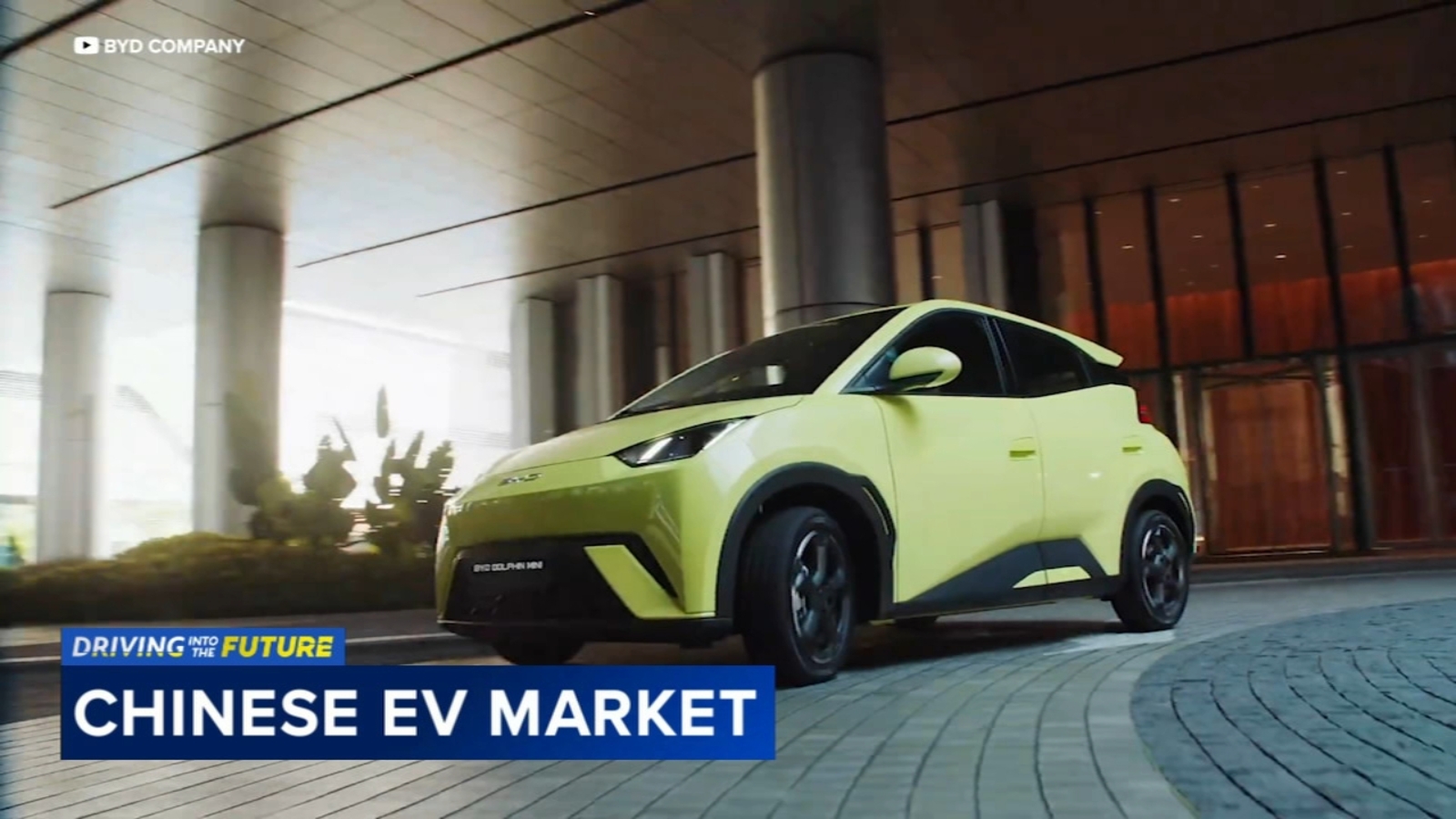
BYD’s strategy differs fundamentally from Western EV makers. Rather than starting with luxury vehicles and working downward, BYD built its empire from the ground up, targeting mass-market consumers with affordable, feature-rich vehicles. The company’s compact Dolphin model, for example, sells in Europe for approximately $23,000,roughly half the price of a comparable Tesla Model 3. Yet the Dolphin arrives loaded with infotainment systems, advanced driver assistance features, and build quality that rivals vehicles costing twice as much.
Other Key Players: Li Auto, Geely, and More
BYD isn’t alone in this charge. Li Auto has carved out a profitable niche with extended-range electric vehicles, particularly popular among Chinese families who want EV benefits without range anxiety. Geely, the conglomerate that owns Volvo and Polestar, has been quietly leveraging its Western brands’ engineering expertise while manufacturing cost-competitive vehicles in Chinese facilities. Other rising stars include NIO, XPeng, and Great Wall Motors, each pursuing different segments of the rapidly expanding EV ecosystem.
Why Chinese EVs Are Different
The Chinese EV market disruption isn’t just about producing more cars,it’s about producing better, cheaper, more technologically advanced cars at scale. Several factors give Chinese manufacturers an almost insurmountable advantage in the current global landscape.
Government Backing and Subsidies
One think tank estimated that China invested approximately $230 billion into its EV industry between 2009 and 2023. This isn’t merely subsidy money thrown at struggling companies,it’s strategic industrial policy at its most ambitious. The Chinese government identified EVs as a critical industry for national economic competitiveness and provided tax incentives, charging infrastructure development, direct manufacturer subsidies, and preferential land deals to nurture domestic champions.
The result is an entire ecosystem designed around electric vehicle production. Battery suppliers, software developers, parts manufacturers, and assembly plants exist in dense geographic clusters, dramatically reducing logistics costs and accelerating innovation cycles.
Cost Advantages and Vertical Integration
Beyond government support, Chinese automakers benefit from significantly lower labor costs and, perhaps more importantly, aggressive vertical integration. BYD produces its own batteries, electric motors, and many critical electronic components in-house. This eliminates dependency on suppliers, reduces costs, and allows for faster iteration on vehicle designs.
The pricing implications are staggering. A Chinese EV arriving in Europe with luxury-level features at half the price of Western competitors isn’t cutting corners,it’s leveraging structural advantages that took more than a decade to build.
The Global Expansion Strategy
With domestic Chinese EV demand already saturated,more than 50% of all vehicles sold in China are now electric,Chinese automakers have set their sights on international markets. This expansion represents one of the most aggressive export pushes in modern automotive history.
Conquering Latin America and Europe
Justin Fisher of CarEdge.com explains the dynamic clearly: an oversupply in the Chinese domestic market led manufacturers to send entire cargo ships loaded with electric vehicles to Latin America. Mexico, Brazil, and other emerging markets have become testing grounds for Chinese EV brands looking to establish footholds outside their borders.
Europe has proven particularly receptive. Chinese brands have made significant inroads in Norway, Germany, the United Kingdom, and France. European consumers, accustomed to higher vehicle prices and eager to embrace electric mobility, have welcomed the value proposition offered by Chinese manufacturers. BYD, MG (owned by China’s SAIC), and several other brands now regularly appear in European best-seller lists.
Why U.S. Roads Are Off Limits
Despite this aggressive global expansion, American consumers won’t find Chinese EVs in local showrooms anytime soon. The U.S. government has imposed tariffs exceeding 100% on Chinese electric vehicles, effectively blocking market entry to protect domestic automakers. These tariffs were designed as a defensive measure, acknowledging that Chinese manufacturers could otherwise undercut American production on price while matching or exceeding quality.
The Biden administration and subsequent policymakers have shown no appetite for lowering these barriers, viewing the Chinese EV industry as both an economic threat and a national security concern. Critics argue this protectionism ultimately harms American consumers, who miss out on more affordable electric vehicles. Supporters counter that allowing Chinese dominance would devastate American manufacturing and leave the country dependent on a geopolitical rival for critical transportation infrastructure.
What This Means for Global Automakers
The pressure on legacy automakers is mounting rapidly. Tesla, once the undisputed EV leader, now faces genuine competition in markets where Chinese brands operate freely. European manufacturers like Volkswagen, BMW, and Mercedes-Benz have watched their market share erode as Chinese alternatives offer comparable technology at lower prices.
The Pressure on Tesla and Legacy Automakers
Tesla’s response has been aggressive price cuts and accelerated development of more affordable models. Meanwhile, traditional automakers have invested billions in their own EV programs, though many have struggled to match the cost efficiency and software sophistication of their Chinese competitors. The result is an industry in turmoil, with billions of dollars being redirected toward electrification strategies, battery production facilities, and software development.
American automakers face a particularly difficult position. Protected by tariffs from direct Chinese competition, they lack the competitive pressure that would force rapid innovation. This protection could ultimately prove counterproductive, leaving them unprepared when the barriers eventually fall or when Chinese manufacturers establish production facilities in friendly markets like Mexico.
The Road Ahead
The Chinese EV market disruption shows no signs of slowing. Chinese manufacturers continue to invest in next-generation battery technology, autonomous driving capabilities, and software features that will define the next decade of automotive innovation. They’re also building production facilities in Thailand, Brazil, Hungary, and other locations to circumvent tariffs and trade barriers.
For American consumers, the immediate future likely means continued protection from the flood of affordable Chinese EVs, but at the cost of slower EV adoption and higher prices than would otherwise prevail. For global automakers, the message is clear: adapt quickly or risk becoming irrelevant in the industry’s most important transformation since the invention of the assembly line.
The Chinese EV revolution isn’t coming,it’s already here. The only question now is how the rest of the world responds to an automotive landscape being reshaped faster than anyone anticipated.