
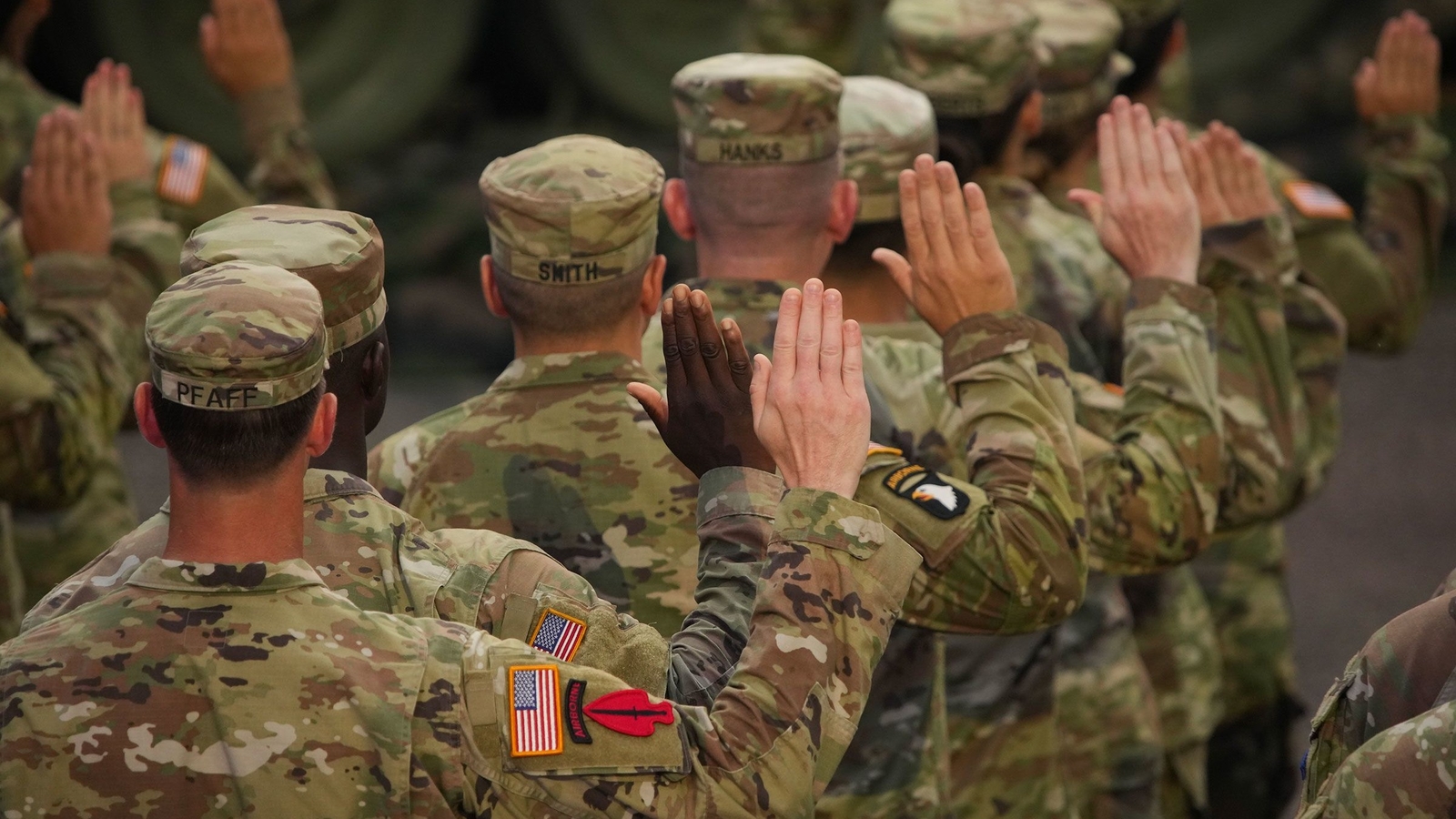
Beginning in December, automatic military draft registration will become a nationwide reality for young men across the United States. Tucked inside the annual defense policy bill that Congress passed late last year, this sweeping change fundamentally reshapes how America prepares for potential military mobilization. For decades, eligible young men were required to actively sign up with the Selective Service System. Now, that responsibility will happen automatically through existing state and federal databases , meaning many young men will be added to the registration rolls without ever filling out a form.
This shift has generated significant public interest, particularly against the backdrop of ongoing global tensions. However, it’s important to understand that the new law predates current conflicts and enjoys bipartisan support. Below is a comprehensive breakdown of how the system will work, who it affects, and what could happen if a draft were ever reinstated.
From Manual to Automatic: A Major Policy Shift
For most of the modern era, young men turning 18 have been responsible for registering with the Selective Service System on their own. Failure to do so within a 30-day window after turning 18 could result in serious consequences, including felony charges and the loss of federal benefits.
Under the new framework, however, this burden is largely lifted from individuals and placed on government systems. According to the National Defense Authorization Act (NDAA), which President Donald Trump signed into law in December, automatic military draft registration will apply to male U.S. citizens and other male individuals living in the country between the ages of 18 and 26. The data will be pulled automatically from state and federal databases, eliminating the need for young men to take any proactive steps.
Representative Chrissy Houlahan, a Democrat who championed the automatic registration provision, explained that the change “saves taxpayer dollars by eliminating the need to advertise” registration campaigns and ensures that eligible young men are not “unknowingly penalized” for missing a bureaucratic step.
Who Exactly Will Be Registered?
The scope of the new law is broad. The mandatory registration covers:
- U.S. citizen males between the ages of 18 and 26
- Green card holders residing in the United States
- Refugees and asylum seekers within the eligible age range
- Undocumented men living in the country
The one major exemption applies to men holding nonimmigrant visas. These individuals are not subject to the registration requirement. Late registrations will still be accepted by the Selective Service System up until a man’s 26th birthday, providing some flexibility for those who fall through the cracks of the automated process.
How Automatic Registration Will Actually Work
The mechanics behind automatic military draft registration aren’t entirely new , they’re already working in most of the country. According to the Selective Service System’s 2024 report, 46 states and territories have already implemented some form of automatic registration. The new federal rule simply extends this practice nationwide.
Most of these systems rely on state motor vehicle departments. When an eligible young man applies for a driver’s license or state identification card, his information is automatically transmitted to the Selective Service System. According to the agency’s 2023 report, more than 60% of all draft registrations come through this channel.
Different states have adopted slightly different approaches:
- Arizona, Delaware, and Washington, D.C. automatically register eligible men when they apply for a driver’s license or state ID.
- New York includes a checkbox on its driver’s license application that allows eligible men to opt into registration voluntarily.
By standardizing these practices at the federal level, the government aims to create a single, uniform system that catches every eligible individual regardless of where they live.
The Consequences of Failing to Register
Even with automation, the legal penalties for failing to register remain severe. Under the Military Selective Service Act, not registering is classified as a felony. The potential consequences include:
- Loss of eligibility for certain federal student loans
- Ineligibility for specific federal jobs and government positions
- Fines of up to $250,000
- Imprisonment for up to five years
While prosecutions for failure to register have been relatively rare in recent decades, the legal framework remains intact and enforceable. Automatic registration effectively shields most young men from accidentally triggering these penalties, which has been one of the main arguments in favor of the policy change.
A Brief History of the Draft in America
To understand the significance of this change, it helps to remember how the draft has functioned historically. The United States last used a military draft in February 1973, during the final months of the Vietnam War. Since then, America has relied entirely on an all-volunteer military force.
That doesn’t mean the infrastructure for a draft has disappeared. The Selective Service System continues to maintain registration records and has contingency plans in place should Congress ever authorize a return to conscription. The move toward automatic registration is, in many ways, a readiness measure , ensuring that the data the government would need in a crisis is already collected and up to date.
What Would Happen If a Draft Were Actually Called?
The new registration rules do not mean a draft is imminent. In fact, several significant steps would need to occur before any American would be called to involuntary military service.
Congressional Approval Is Required
First and foremost, Congress would need to pass legislation authorizing a draft. The president alone cannot reinstate conscription. This constitutional requirement serves as a major check on the system.
The Lottery System
If Congress authorized a draft, not every registered man would be called up. Instead, the Selective Service System would conduct a lottery, randomly selecting birthdays and corresponding numbers. Those whose numbers are drawn earliest would be considered first for induction.
Age Order for Induction
The lottery prioritizes certain age groups in a specific order. Men whose 20th birthdays fall during the year of the draft would be the first to receive induction orders. The sequence then proceeds as follows:
- 20-year-olds
- 21-year-olds
- 22-year-olds
- 23-year-olds
- 24-year-olds
- 25-year-olds
- 19-year-olds
- Men who are more than six months past their 18th birthday
Exemptions and Deferments
Men selected through the lottery would have the right to request exemptions or deferments. After those requests are reviewed, the remaining candidates would undergo physical, mental, and moral evaluations. Only those deemed fit to serve would ultimately be inducted into the military.
Why This Policy Change Matters Now
The timing of this legislation has drawn attention because of current geopolitical tensions, including ongoing conflict involving Iran. However, it’s crucial to note that automatic military draft registration has no direct connection to any active military engagement. The measure was drafted and passed with bipartisan support months before recent escalations.
That said, the Trump administration has not ruled out the possibility of deploying ground troops, which has prompted renewed public interest in how the draft system functions. The new registration rules do not change the likelihood of a draft being called, but they do ensure that the underlying data infrastructure is ready if one ever becomes necessary.
Conclusion: A Quiet but Significant Change
The transition to automatic military draft registration represents a meaningful evolution in how the United States maintains its military readiness infrastructure. By leveraging existing state identification systems, the federal government can ensure nearly complete registration compliance without burdening young men with additional paperwork or risking their access to federal benefits.
For most Americans, the practical impact of this change will be minimal , many young men are already being registered automatically through their interactions with state DMVs. But for those who previously slipped through the cracks, the new system provides a safety net that prevents accidental felony charges and lost opportunities.
While the specter of a draft remains distant, the machinery behind it is now more efficient, more comprehensive, and more reliable than ever before. Understanding how this system works is the best way for Americans to stay informed about a policy that, while quiet, touches the lives of nearly every young man in the country.