
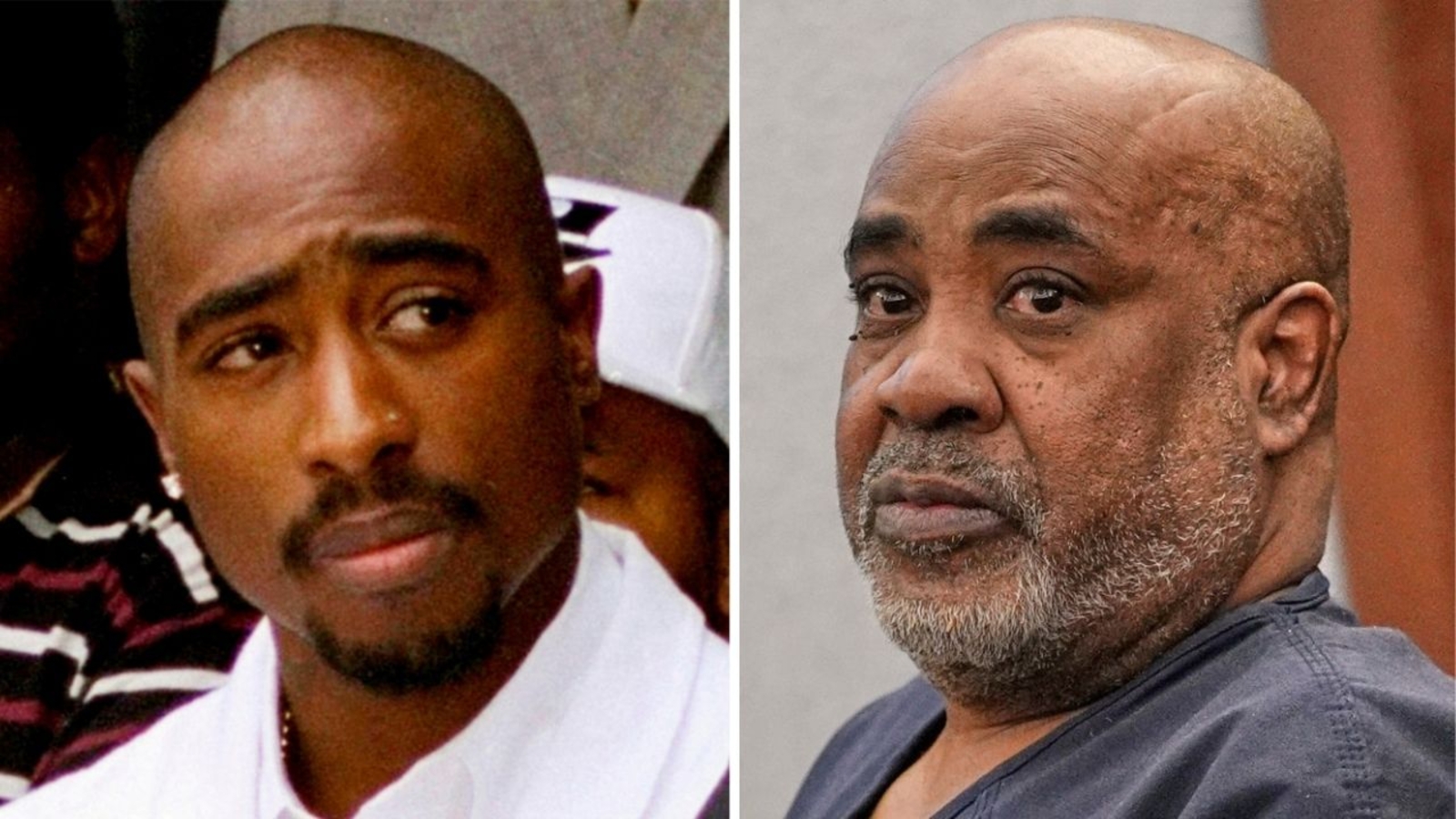
The duane davis tupac verdict brings a decisive legal conclusion to one of hip-hop’s most enduring murder mysteries. A Las Vegas jury found Duane “Keffe D” Davis guilty of first-degree murder in the 1996 killing of rap icon Tupac Shakur. The decision marks the first conviction connected to a case that has remained unresolved for nearly three decades.
After less than three hours of deliberation, the panel convicted the 63-year-old Davis on one count of murder with a deadly weapon. He could be sentenced to life in prison. The verdict did not identify the person who fired the shots, but prosecutors argued that Davis was equally responsible because he supplied the weapon, helped plan the attack and ordered others to carry it out.
What Happened in the Duane Davis Tupac Verdict
The jury reached its decision on Monday after a nine-day trial in Las Vegas. The panel consisted of 12 jurors and four alternates. Prosecutors presented testimony from 24 witnesses, while the defense called three witnesses.
As the verdict was read, emotion filled the courtroom. Tupac’s sister, Sekyiwa “Set” Shakur, cried and embraced members of the prosecution team. Davis’s son was also present and covered part of his face with his hand.
The conviction resolves the criminal charge against Davis, but the formal sentencing phase remains. Prosecutors also said the state would dismiss the gang-enhancement portion of the case because of logistical problems involving witnesses. That decision did not change the murder conviction.
Prosecutors Built Their Case Around Davis’s Own Statements
Much of the prosecution’s presentation focused on statements Davis made publicly over many years. He repeatedly placed himself inside a white Cadillac from which shots were fired at Tupac’s BMW. Davis also said he passed a handgun to people seated in the back of the vehicle.
Deputy Clark County District Attorney Binu Palal acknowledged that Davis’s accounts had changed. However, the prosecutor argued that the differences involved his stated motives and efforts to protect himself, while one central fact remained consistent: Davis said he was in the Cadillac when the attack occurred.
Palal further maintained that Davis did not need to have been the person who physically pulled the trigger. Under Nevada law, someone who assists or helps direct a murder can be held criminally responsible for the resulting death.
“Who shot him is not the question,” Palal told jurors during closing arguments, according to the case presentation. Instead, prosecutors portrayed Davis as the organizer of the operation,the person who obtained the gun, helped direct the attack and remained involved in its aftermath.
The Alleged Motive Behind the Tupac Shakur Shooting
According to the prosecution, the shooting followed a violent confrontation hours earlier involving Orlando “Baby Lane” Anderson, the nephew of Duane Davis. Tupac and members of his entourage were accused of attacking Anderson. Prosecutors said Davis then armed himself and went looking for Tupac and Death Row Records co-founder Marion “Suge” Knight.
The case also included testimony about the intense rivalry between the South Side Compton Crips and the Mob Piru. Those groups were associated with competing music circles involving Death Row Records and Bad Boy Records. A gang expert called by the prosecution described Davis as a commanding figure whom younger gang members were expected to obey.
Knight was riding with Shakur when the shooting occurred. He survived his injuries, while Shakur died six days later.
Prosecutors sought to demonstrate premeditation by arguing that the group searched for Shakur before encountering him on the road and turning back. Palal characterized the sequence as a plan rather than a spontaneous act of violence.
The Role of Compton Street Legend
Davis’s 2019 memoir, Compton Street Legend, became a central exhibit. The book includes a disclaimer saying that some details had been changed, but prosecutors argued that names, hotels and minor circumstances could be altered without undermining the core account.
Palal also displayed an interview in which Davis encouraged viewers to buy the book to learn the “true truth.” The prosecution used those statements to challenge the defense’s suggestion that Davis created or expanded his story for commercial gain.
Prosecutor Marc DiGiacomo also highlighted a scrapbook Davis kept containing material about Shakur’s death. DiGiacomo argued that preserving such material showed Davis’s continuing connection to the case, although the defense questioned the inference jurors should draw from it.
How the Defense Responded
Davis’s attorney, Michael Sanft, relied heavily on the same memoir while challenging the reliability of his client’s statements. The defense also suggested that Davis was motivated by financial opportunities connected to telling his version of events.
Sanft questioned whether prosecutors had proved that Davis gave direct instructions before or after the shooting. He emphasized that the trial had not produced a surviving eyewitness who personally identified the shooter or definitive forensic evidence placing Davis’s fingerprints on the murder weapon.
Investigators did find a Las Vegas hotel receipt during a search of Davis’s residence, but the document’s date and current location were not clearly established. The uncertainty surrounding that receipt reflected a broader problem: evidence collected during the original 1996 investigation was limited compared with what modern investigators might be able to obtain.
Prosecutors acknowledged that the evidentiary record had deteriorated over time. They also noted the differences between investigations conducted in the 1990s and modern law-enforcement methods, including the use of extensive hotel surveillance footage and other digital evidence.
Why the 1996 Evidence Was Central to the Case
The killing took place on September 7, 1996, when Shakur was in Las Vegas. After leaving a major boxing event at the MGM Grand, the rapper was stopped at a red light. A white Cadillac pulled alongside him, and gunfire erupted.
Tupac was struck multiple times and died six days later at a Las Vegas hospital. Knight was also wounded but survived. The vehicle carrying the shooters left the scene, and no one was charged in connection with Shakur’s death during the initial investigation.
Decades passed without an arrest. Attention returned to the case after Davis began discussing the shooting publicly. His accounts ultimately provided prosecutors with the foundation for charging him, even though the physical evidence available from 1996 was limited.
Davis is the only surviving member of the four men prosecutors said were inside the Cadillac. Another man identified as the person who originally gave Davis the weapon has since died.
What the Conviction Does,and Does Not,Establish
The duane davis tupac verdict establishes that jurors accepted the prosecution’s theory that Davis played a central role in Shakur’s murder. It does not necessarily answer every question surrounding the killing.
The jury was not asked to determine who fired the fatal shots. Rather, it had to decide whether Davis was legally responsible for a murder carried out by others. By finding him guilty, the jury accepted the prosecution’s argument that obtaining the firearm, participating in the planned confrontation and directing the attack made him culpable under Nevada law.
The conviction also distinguishes between unresolved historical questions and legal proof. Questions about the precise sequence inside the Cadillac may remain, but the jury concluded that Davis’s involvement rose beyond mere presence after the fact.
Closure for Tupac’s Family and a Milestone for the Case
For Shakur’s family and supporters, the guilty verdict represents a significant measure of accountability in a case that shaped public perceptions of the East Coast-West Coast hip-hop rivalry. Tupac remains one of the most influential rappers in history, and his death has continued to inspire books, documentaries, music and competing theories about who was responsible.
The outcome does not erase Shakur’s legacy, nor does it fully restore the events of September 1996 to a single uncontested narrative. It does, however, provide a judicial finding that the attack involved more than an unidentified gunman acting alone.
What Comes Next
Davis now faces sentencing for the first-degree murder conviction. Because the jury found him guilty of murder with a deadly weapon, he could receive life in prison. The dismissed gang allegation is separate from the central conviction and is not expected to alter the basic finding of guilt.
The case will formally conclude when the court imposes a sentence, but its cultural impact will last much longer. Nearly 30 years after Tupac Shakur was shot on a Las Vegas street, the duane davis tupac verdict has transformed a decades-old investigation into a landmark conviction,one that may finally provide legal accountability, even as questions and debates about that fateful night continue.