
As anticipation builds around President Donald Trump’s prime-time address, the Democrats prebuttal to Trump address has taken center stage, with party leaders sharpening their messaging ahead of what they characterize as a politically motivated speech. Senate Minority Leader Chuck Schumer delivered one of the sharpest criticisms, declaring that the president is “scared to death” about the upcoming midterm elections and using the speech to deflect attention from issues Americans care about most.
The prebuttal reflects a broader Democratic strategy: framing Trump’s expected focus on the 2020 election as a sign of weakness heading into 2026, rather than a demonstration of strength. With critical Senate seats on the line and economic concerns dominating kitchen-table conversations, Democrats are working to ensure the public narrative remains anchored on affordability, foreign policy, and governance , not on challenges to elections that failed repeatedly in court.
Ossoff Takes the Lead in Prebuttal Messaging
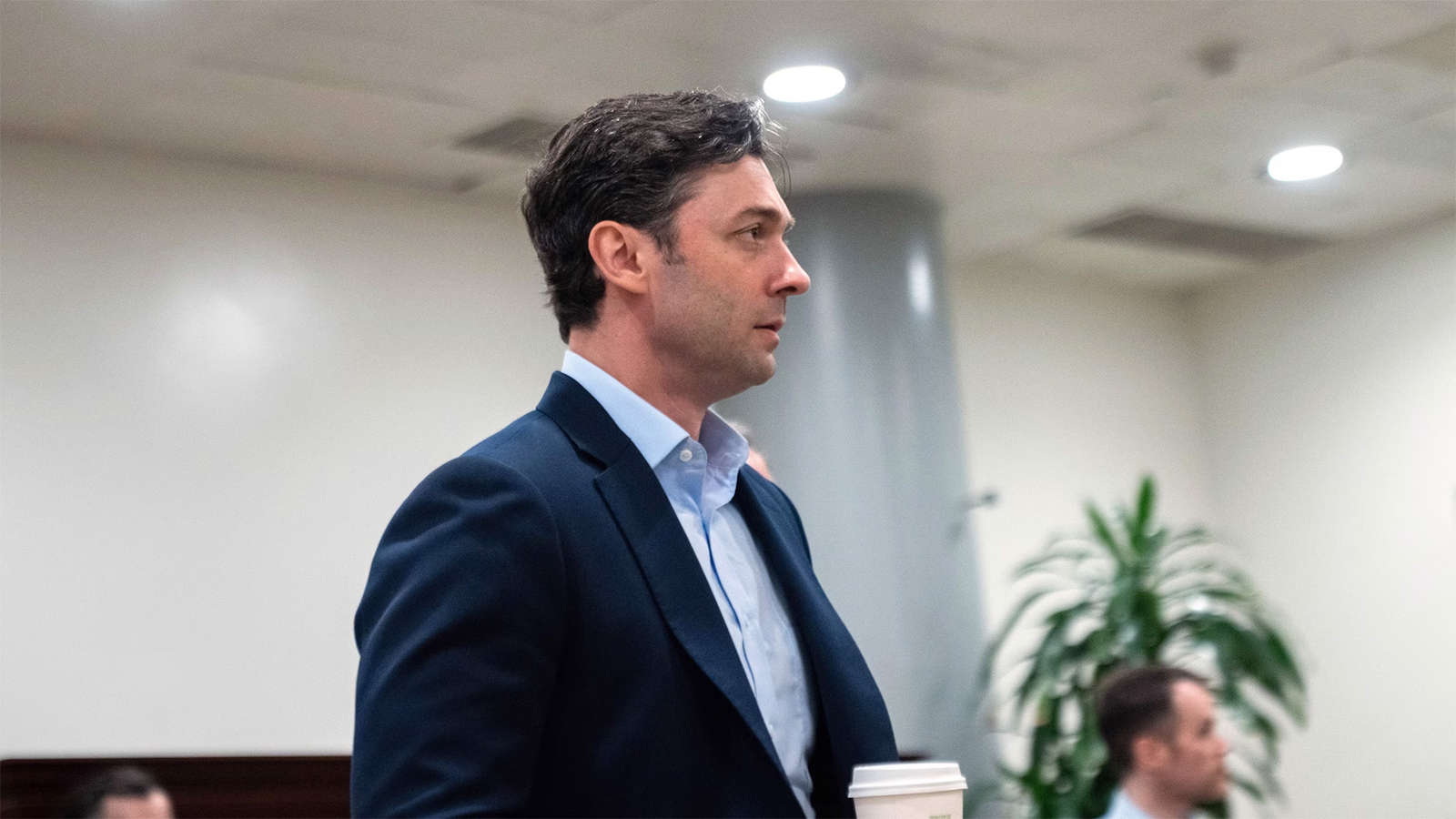
Georgia Democratic Sen. Jon Ossoff emerged as a leading voice in the Democrats prebuttal to Trump address, using his platform to connect the president’s expected remarks directly to voters in his home state. Georgia has been ground zero for many of the administration’s post-2020 election challenges, and Ossoff made clear he views any effort to delegitimize the state’s electoral outcomes as an attack on Georgians themselves.
“If the president declares Georgia’s elections illegitimate, or if the president declares Georgia’s sitting United States senators illegitimate, he is declaring Georgia voters illegitimate,” Ossoff told reporters on Thursday. “It’s Donald Trump who tried to defraud Georgia voters in that election.”
Ossoff, who faces re-election in November, predicted the address would essentially serve as a rerun of grievances the courts have already rejected. His characterization was blunt: “the world’s most famous sore loser will deliver a prime-time presidential sour grapes address to pursue his six-year-old grievances about the 2020 election, while his war in the Middle East spirals out of control and the cost of living continues to rise for Americans across the country.”
A Targeted Strategy for Battleground States
Ossoff’s remarks underscore how the prebuttal effort is designed to reach voters in competitive races, particularly in states where Trump-backed election denialism has already shaped the political landscape. His seat is being eyed by Republicans as a potential pickup opportunity, making the messaging battle especially urgent for Democrats hoping to hold the line.
Schumer Frames the Stakes Around 2026
Senate Minority Leader Chuck Schumer took the prebuttal a step further, accusing Trump of using election integrity rhetoric as a smokescreen for political anxiety. According to Schumer, the president’s decision to focus on the 2020 election rather than present-day policy concerns reveals his fear of losing congressional power in the midterm elections 2026.
“The bottom line is, if Trump wants to win the American people over, instead of the bulls— that he’s peddling about 2020, he ought to focus on lowering people’s costs, getting rid of the chaos in administration, getting rid of the corruption,” Schumer told reporters.
Schumer’s framing aligns with broader Democratic efforts to redirect public attention toward kitchen-table economic issues , inflation, healthcare costs, and wages , rather than debates over election procedures that took place years ago.
Republican Voices Echo Concerns About the 2020 Focus
Perhaps most damaging to the White House’s messaging strategy is the fact that prominent Republicans have also expressed discomfort with the president’s fixation on the 2020 election. Several GOP lawmakers publicly questioned whether revisiting past grievances serves any constructive purpose heading into a challenging midterm cycle.
Sen. Thom Tillis: Looking Back Is Not a Strategy
Outgoing North Carolina Sen. Thom Tillis was unequivocal in his assessment. When asked whether Trump focusing on the 2020 election was a productive message for Republicans heading into the midterms, Tillis responded: “No, not at all.”
“Look, we can’t re-prosecute that campaign. Anytime you’re looking back, you’re not looking ahead and I’m looking ahead to these elections, and the president should as well,” Tillis added.
Rep. Thomas Massie: A “Ruse” to Distract Voters
Kentucky Rep. Thomas Massie went even further, accusing the White House of using election narratives to mask unfulfilled policy promises. Massie argued that the administration’s emphasis on voting integrity is designed to deflect blame from governance failures.
“The problem is not that we didn’t win the elections. The problem is that we broke our promises when we got here,” Massie said. “So, it’s a ruse because they’re trying to convince the American people the problem is the elections. The problem is the people that they’ve elected.”
Sen. John Cornyn: Tired of the 2020 Debate
Texas Sen. John Cornyn expressed frustration with the persistence of 2020 election debates, particularly during a recent Senate Intelligence Committee confirmation hearing for Jay Clayton, Trump’s nominee to serve as director of national intelligence. Clayton declined to answer who won the 2020 presidential election, drawing sharp criticism from Cornyn.
“I thought a lot of it was pretty silly,” Cornyn said of Clayton’s performance. “I don’t know why we’re still talking about the 2020 election on either side of the aisle. We got important work to do and I think the most important is coming up here in the midterms. In the meantime, to continue to do the people’s work, and when we’re talking about what happened six years ago, I don’t think we’re doing them any favors.”
The White House Pushes Back on Prebuttal Coverage
White House press secretary Karoline Leavitt declined to preview the president’s speech in detail, telling reporters during a Thursday briefing that Trump would focus on “protecting the integrity of our elections.” She pushed back on media speculation about the speech’s content, suggesting that public reaction would be more favorable than critics expect.
“I’ve seen a lot of reporting and, frankly, misreporting about what the president will say. I think the American people will be relieved to hear what they are hearing from the president of the United States and his commitment to transparency and the focus on the integrity of our elections tonight,” Leavitt said.
When pressed by ABC News’ Rachel Scott about concerns raised by members of her own party, Leavitt urged patience, asking Americans to reserve judgment until after the address aired.
Implications for Upcoming Confirmation Votes
The prebuttal is also having ripple effects beyond messaging battles. Sen. Mark Warner, the top Democrat on the Senate Intelligence Committee, indicated that Trump’s speech could directly influence how he votes on Clayton’s nomination to lead the intelligence community.
“If Donald Trump does what I expect and makes outrageous claims and uses those claims as an attempt to interfere in the elections, boy oh boy, more than ever do you need somebody in that role that’ll take truth to power,” Warner said.
This dynamic highlights how a single prime-time address can have downstream consequences for executive branch nominations and the broader legislative agenda , issues that may be overshadowed if the speech is dominated by Trump 2020 election speech content.
Why the Prebuttal Strategy Matters
The Democrats prebuttal to Trump address reflects a calculated effort to control the narrative before the president even takes the stage. Key elements of this strategy include:
- Reframing the conversation from past elections to current economic and foreign policy challenges
- Highlighting Republican dissent to demonstrate that concerns about the messaging are bipartisan
- Targeting battleground states like Georgia, where election denialism has direct political consequences
- Linking the speech to policy implications, such as upcoming confirmation votes
By launching their response before the address even airs, Democrats hope to set the terms of the debate and ensure that media coverage frames the speech within the context of midterm political strategy rather than as a standalone policy moment.
Conclusion
The Democrats prebuttal to Trump address underscores how high the political stakes have become heading into the 2026 midterms. With Sen. Ossoff leading the charge on election legitimacy, Schumer casting the president as politically vulnerable, and even prominent Republicans expressing reservations, the address arrives at a moment of unusually broad skepticism , including from within the president’s own party. Whether the speech shifts public opinion or further entrenches existing views, the prebuttal has already succeeded in one goal: ensuring that whatever Trump says tonight will be evaluated through the lens of the upcoming elections, where control of Congress hangs in the balance.