
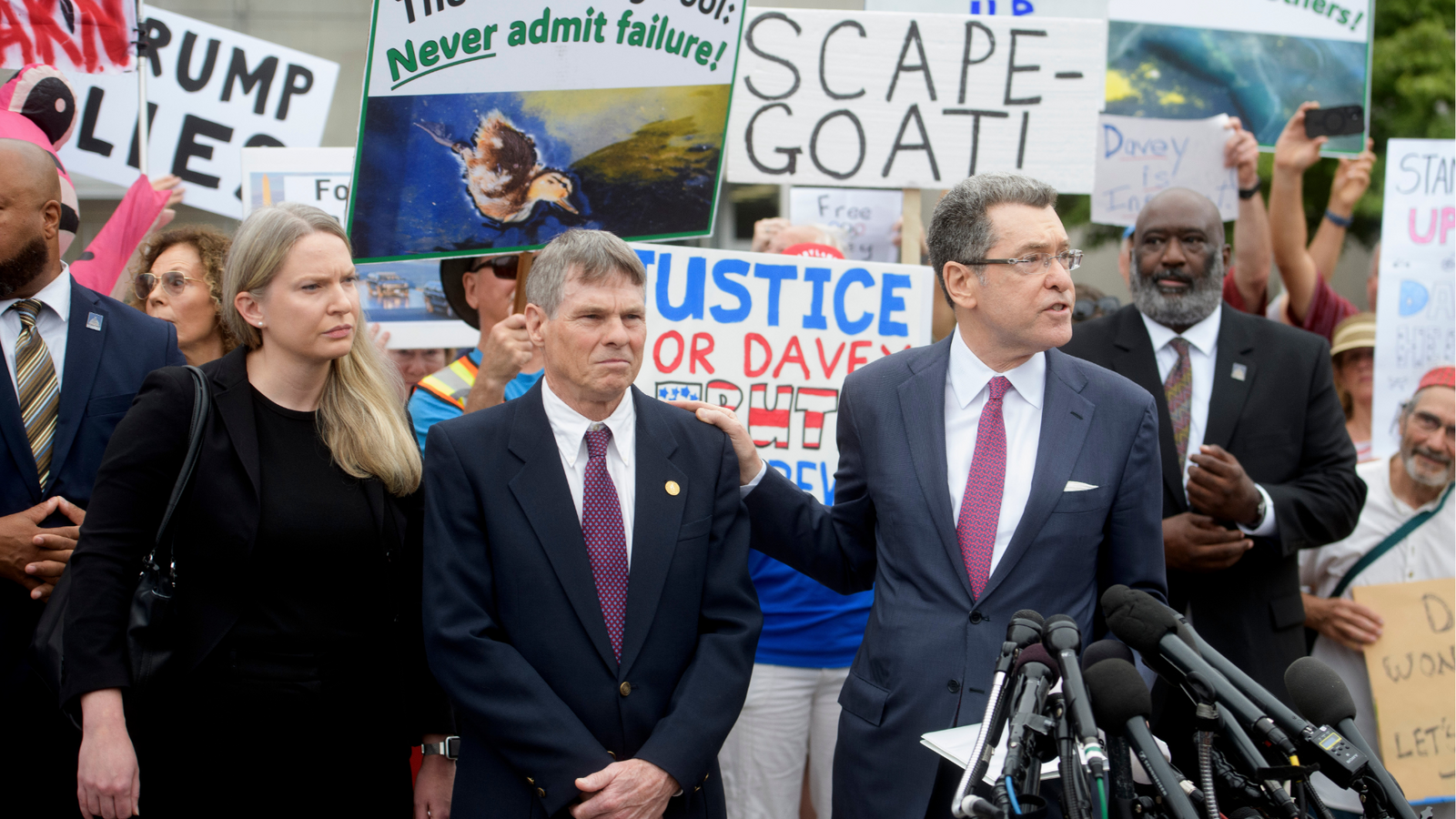
A federal judge has dismissed the high-profile reflecting pool vandalism case against former U.S. Olympic canoeist David Hearn, bringing a dramatic chapter in a story that intertwined athletic fame, political controversy, and questions about prosecutorial judgment to a temporary close. In an order filed on Thursday in Washington, Associate Judge Todd Edelman granted the Department of Justice’s request to dismiss the indictment in part, while reserving a critical decision on whether the dismissal should carry prejudice,a ruling that will determine whether Hearn can ever be charged again for the same alleged conduct.
The case, which captured national headlines for weeks, centered on damage to the iconic Lincoln Memorial Reflecting Pool. What initially appeared to be a straightforward vandalism prosecution has since unraveled into a complex legal drama with implications that extend far beyond one man’s defense.
Background of the Reflecting Pool Vandalism Case
David Hearn, a former member of the U.S. Olympic canoeing team, found himself at the center of a federal criminal investigation earlier this year. U.S. Attorney Jeanine Pirro’s office accused Hearn of “forcefully and violently” ripping up parts of the pool floor, leading to a felony destruction of property charge. Hearn pleaded not guilty to the charge last month after a grand jury returned an indictment against him.
The damage to the Reflecting Pool was visible and widely photographed, with torn sections of lining and disrupted flooring drawing public attention. For weeks, authorities treated the incident as an act of deliberate vandalism, and the case against Hearn moved forward through standard federal criminal procedures.
How the Case Unraveled
The turning point came when the Department of Justice moved last week to dismiss the criminal case against Hearn. In a striking admission, the government acknowledged that the damage to the pool “was the result of flawed installation by the contractor.” This revelation fundamentally changed the nature of the prosecution and raised serious questions about why Hearn had been indicted in the first place.
U.S. Attorney Pirro’s motion sought to dismiss the case without prejudice, a legal designation that would leave Hearn exposed to potential future indictment for the same alleged crime. This aspect of the request became a flashpoint in subsequent legal filings.
Judge Edelman’s Ruling and Pending Decision
Associate Judge Todd Edelman, presiding over the matter, granted the dismissal in part but withheld judgment on the most consequential question: whether the dismissal should be with prejudice. A dismissal with prejudice would effectively shield Hearn from any future prosecution related to the Reflecting Pool vandalism allegations, permanently closing the chapter on his legal exposure.
In his order, Judge Edelman established a filing schedule for both the government and Hearn’s defense team, indicating that he would schedule a hearing for oral argument once all written submissions had been submitted. This procedural step suggests that the court is taking the matter seriously and intends to thoroughly evaluate the competing arguments before issuing a final determination.
Hearn’s Defense Pushes for Permanent Closure
Attorneys for Hearn filed a separate motion this week seeking dismissal with prejudice, arguing that the case presents “exceptional facts and circumstances” warranting permanent protection from renewed prosecution. Their filings contained pointed criticism of the government’s handling of the case.
“Defying both decency and common sense, the government proceeded to indict Mr. Hearn before it had obtained or evaluated the information necessary to establish a good-faith basis for the charge,” Hearn’s defense team argued in court documents.
The defense further contended that “The Court should not leave the defendant subject to the possibility of renewed prosecution,” emphasizing the reputational and personal toll that the indictment has already taken on the former Olympic athlete, regardless of how the case ultimately resolves.
The Political Firestorm Surrounding the Dismissal
The decision to drop the case ignited a political controversy that continues to generate headlines. President Donald Trump publicly criticized U.S. Attorney Pirro’s handling of the matter, using sharp language to characterize her decision to withdraw the charges.
Trump blasted Pirro’s move, saying she “choked” and “folded like an umbrella.” The President has continued to push allegations that vandals were responsible for cutting and tearing the pool lining, maintaining a position that appears at odds with the Justice Department’s own acknowledgment that contractor installation errors caused the damage.
This public clash between the executive branch and a top federal prosecutor has added a layer of political intrigue to an already complex legal proceeding. The tension between Trump’s persistent claims and the DOJ’s official position creates an unusual dynamic in which the executive branch appears divided against itself regarding the proper resolution of the matter.
Prosecutorial Accountability Under Scrutiny
The reflecting pool vandalism case has raised broader concerns about prosecutorial standards and the threshold for seeking indictments in federal cases. Critics have pointed to the sequence of events as evidence of a rushed or inadequately investigated prosecution that resulted in serious charges against an individual based on incomplete information.
The DOJ’s own filings acknowledged that evidence pointing to “a rushed and flawed installation process” only came to light after Hearn had already been indicted by a grand jury. This timeline has prompted questions about whether sufficient diligence was applied before the case advanced to the indictment stage.
What Comes Next in the Legal Process
Several important steps remain before the reflecting pool vandalism case is fully resolved. Judge Edelman has laid out a structured path forward, beginning with written submissions from both parties and culminating in an oral argument hearing at a date yet to be determined.
Key pending questions include:
- Whether the court will grant dismissal with prejudice, permanently barring future prosecution
- Whether the government will present additional arguments for why the case should remain open
- How the court will weigh the “exceptional facts and circumstances” cited by Hearn’s attorneys
- Whether any further investigation into the contractor’s installation work will produce additional evidence
- What implications, if any, the case will have for future federal vandalism prosecutions
The defense has framed the issue as fundamentally about fairness and finality. Their argument suggests that allowing the government to dismiss without prejudice while reserving the option to recharge would impose an indefinite cloud over Hearn’s life and reputation,a punishment that persists regardless of whether charges are ultimately pursued.
The Lincoln Memorial Reflecting Pool Restoration
Separate from the criminal proceedings, attention remains focused on the physical restoration of the Reflecting Pool itself. National Park Service officials have indicated that repairs will need to address the underlying installation issues that the Department of Justice now acknowledges were responsible for the damage. The pool, a centerpiece of the National Mall and a site of profound historical significance, requires comprehensive remediation to ensure its long-term integrity.
The contractor responsible for the installation work has not been publicly identified in connection with the criminal proceedings, though the DOJ’s acknowledgment shifts attention toward the construction process itself rather than the actions of any individual defendant.
Broader Implications of the Reflecting Pool Vandalism Case
This case is likely to be studied in legal circles as an example of how prosecutorial decisions can be complicated by late-emerging evidence. The decision to indict before fully evaluating all available information can have devastating consequences for defendants, even when charges are ultimately dropped.
For Hearn specifically, the experience of being publicly accused of a felony, facing potential prison time, and having his name associated with damage to a national landmark represents a form of harm that extends beyond any legal resolution. Even a complete dismissal may not fully restore the reputation he held before the indictment.
The political dimension of the case,particularly the unusual public disagreement between the President and a U.S. Attorney,adds another layer of complexity. Federal prosecutors are expected to operate independently from political pressure, and the visible tension between Trump and Pirro has drawn scrutiny from legal commentators and observers across the political spectrum.
A Case Still Without Final Resolution
While the reflecting pool vandalism case has taken a significant step toward conclusion, the most important question remains unanswered. Judge Edelman’s decision on whether to grant dismissal with or without prejudice will determine whether this chapter truly ends for David Hearn or merely pauses.
For now, the former Olympic canoeist awaits the court’s final word, while the legal community watches closely to see how the proceedings unfold. The case serves as a powerful reminder of how quickly prosecutorial decisions can be upended by emerging evidence,and how the consequences of those decisions can reverberate far beyond the courtroom.
Conclusion
The dismissal of the reflecting pool vandalism case against David Hearn marks a pivotal moment in a legal saga that has captivated public attention for weeks. With Judge Edelman reserving judgment on whether the dismissal will carry prejudice, the final chapter of this story has yet to be written. What remains clear is that the case has exposed serious questions about prosecutorial judgment, the integrity of federal charging decisions, and the political dynamics that can surround high-profile criminal matters. As both parties prepare for further proceedings, the nation watches to see whether justice will be served not only for Hearn but for the broader principles that govern how federal prosecutors wield their considerable power.