
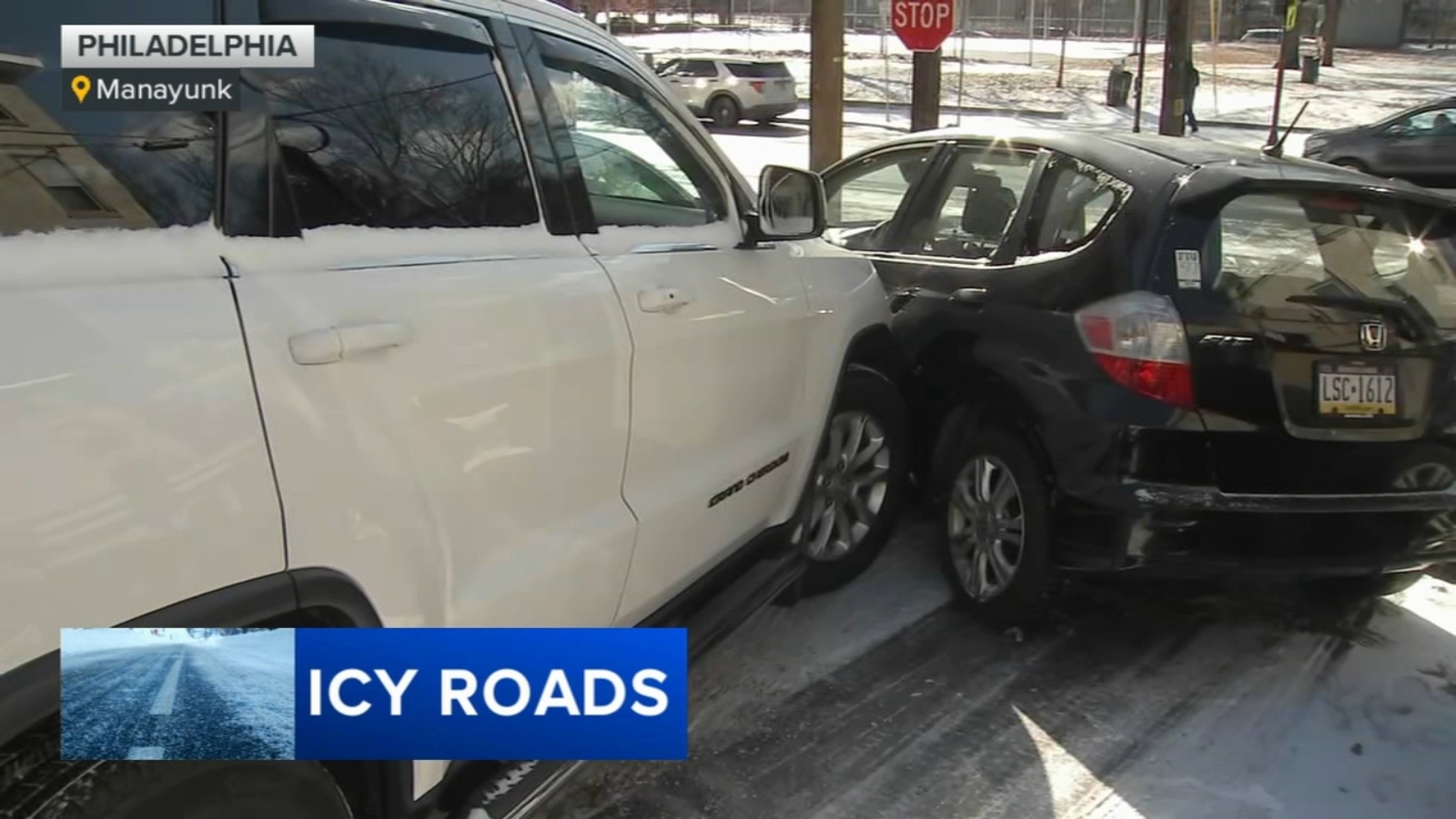
When sudden snow squalls swept through Philadelphia on Thursday, they left behind a hidden danger that turned city streets into danger zones. Within hours, multiple icy road crashes in Philly were reported across several neighborhoods, sending residents scrambling for safety and prompting emergency crews to mobilize across the city. From Manayunk to East Falls to Feltonville, the pattern was the same: drivers caught off guard by slick, untreated pavement, and crashes that could have been far worse. Here’s a detailed look at what unfolded and what drivers need to know.
Snow Squalls Create a Treacherous Window of Danger
Snow squalls are notorious among meteorologists and seasoned drivers alike. Unlike a steady snowfall that gives crews time to pretreat roads, squalls arrive fast and furious, dumping a thin layer of snow that quickly turns to ice as temperatures fluctuate. Philadelphia saw exactly that scenario play out, and the result was a cascade of accidents on streets that looked deceptively safe.
What makes squalls particularly dangerous is the speed at which conditions change. One moment the pavement looks wet but manageable, and the next, drivers are skidding on a glaze of black ice that has no visible warning sign. By the time most people realize what is happening, it is already too late to brake or correct.
Manayunk: Back-to-Back Crashes on Leverington Avenue
Perhaps nowhere was the impact felt more visibly than in Manayunk, where icy streets triggered a series of crashes on the 200 block of Leverington Avenue within minutes of each other. The hilly terrain of the neighborhood, while charming under normal circumstances, becomes a serious liability during a winter weather event.
Residents Describe the Harrowing Moments
Raven Brown, a Roxborough resident, was a passenger in her cousin’s car when the vehicle suddenly lost traction on the icy road and slammed into a parked car. Brown recalled the panic of the moment, noting that there was nothing her cousin could have done once the tires broke free.
What struck Brown was how invisible the danger was. She explained that the ice was almost impossible to detect from a distance, with the road appearing merely damp until you were already sliding. Emma Field, who was visiting from Pittsburgh and walking through the area at the time, admitted she was nervous simply navigating the sidewalks, knowing that one misstep would send her tumbling down the steep incline.
Residents like Brown made clear what they felt the city should have done differently. They believe the roads, particularly in hilly neighborhoods like Manayunk, should have been salted aggressively before conditions deteriorated. Without that proactive treatment, predictable crashes became inevitable.
A Second Crash Within Minutes
Just a few hundred feet up the same road, a second crash unfolded moments later. Tanya Breslow of East Falls narrowly avoided being involved, but she had her own scare moments earlier when she lost control of her vehicle on the ice. Breslow initially thought her brakes had failed before realizing the road itself was the problem.
After pulling over to regroup, Breslow watched as another driver slid down the hill and crashed directly into a parked truck. The chaos of the scene left her visibly shaken, and she described the experience as awful. The pattern on Leverington Avenue was a textbook example of how quickly one patch of untreated road can produce a string of incidents in a short window of time.
East Falls Pileup Draws Neighbors Into Action
A few miles away in East Falls, similar conditions led to a two-car pileup on Stanton Street that brought neighbors out of their homes to help. Allen Carson, a longtime East Falls resident, said the street has a well-known tendency to ice over, and drivers who are unfamiliar with the area often underestimate just how slick it gets.
Carson described the sequence of events in vivid terms. He heard the unmistakable sounds of cars sliding out of control and the crunching of metal on metal, which prompted him to come outside and assist. He brought ice melt from his own supply and spread it across the pavement, hoping to free stranded drivers and prevent the next crash.
Carson offered a thoughtful theory about why the roads had not been pretreated, suggesting that the holiday timing may have caught crews off guard. With fewer people on the streets and many focused on holiday plans, the squall may have arrived without triggering the usual response protocols. It is a reminder that weather emergencies do not respect the calendar.
Feltonville Crash Sends Three People to the Hospital
The most serious incident of the day took place earlier in Feltonville, where a driver lost control on a snow-covered stretch of road and slammed into a utility pole at the corner of G Street and East Wyoming Avenue. The crash injured three people, two of them critically, underscoring just how unforgiving winter roads can be.
While no serious injuries were reported in the Manayunk or East Falls incidents, the Feltonville crash served as a sobering reminder that the margin between a fender bender and a life-threatening emergency can be remarkably small when ice is involved.
City Response and Road Treatment Efforts
By Thursday afternoon, the Philadelphia Streets Department confirmed that trucks were actively treating roads across the city and that additional crews had been dispatched as conditions continued to evolve. The city’s response is part of a broader effort to manage the aftermath of fast-moving weather events that often outpace pretreatment schedules.
Still, residents in neighborhoods like Manayunk and East Falls expressed frustration with what they viewed as a delayed response. In hilly areas especially, the absence of salt and brine before the squall hit left drivers with very little margin for error. The city has pledged to continue treatment throughout the storm’s aftermath, but for many, the damage had already been done.
Winter Driving Safety Tips for Icy Conditions
Whether you are navigating the hills of Manayunk or commuting through any untreated city street, a few precautions can make the difference between a close call and a trip to the emergency room.
- Slow down well before you reach a hill or curve. Ice often forms first in shaded or elevated areas, and braking at speed makes skidding nearly inevitable.
- Increase your following distance significantly. On icy roads, stopping distances can double or triple, leaving little room to react to sudden hazards.
- Avoid sudden movements. Gentle steering, gentle braking, and gentle acceleration help tires maintain whatever traction is available.
- Watch for black ice. Glossy patches on the road, especially in early morning or late evening hours, often signal hidden ice that is not visible from a distance.
- If you start to slide, look where you want to go. Steer gently in the direction of the skid and avoid the instinct to slam on the brakes.
- Stay home when possible. If conditions are deteriorating, postpone nonessential trips until crews have had a chance to treat the roads.
Conclusion
The wave of icy road crashes in Philly on Thursday highlighted just how vulnerable a city can be to fast-moving winter weather. Snow squalls may be brief, but the ice they leave behind can linger for hours, especially on untreated hills and side streets. From the back-to-back collisions on Leverington Avenue to the neighbor-assisted rescue in East Falls and the critical injuries in Feltonville, the day offered a sobering reminder that winter driving requires preparation, caution, and patience. As Philadelphia continues to refine its response to sudden weather events, drivers can do their part by staying alert, slowing down, and recognizing that what looks like wet pavement may actually be a thin, invisible sheet of ice waiting to catch them off guard.