
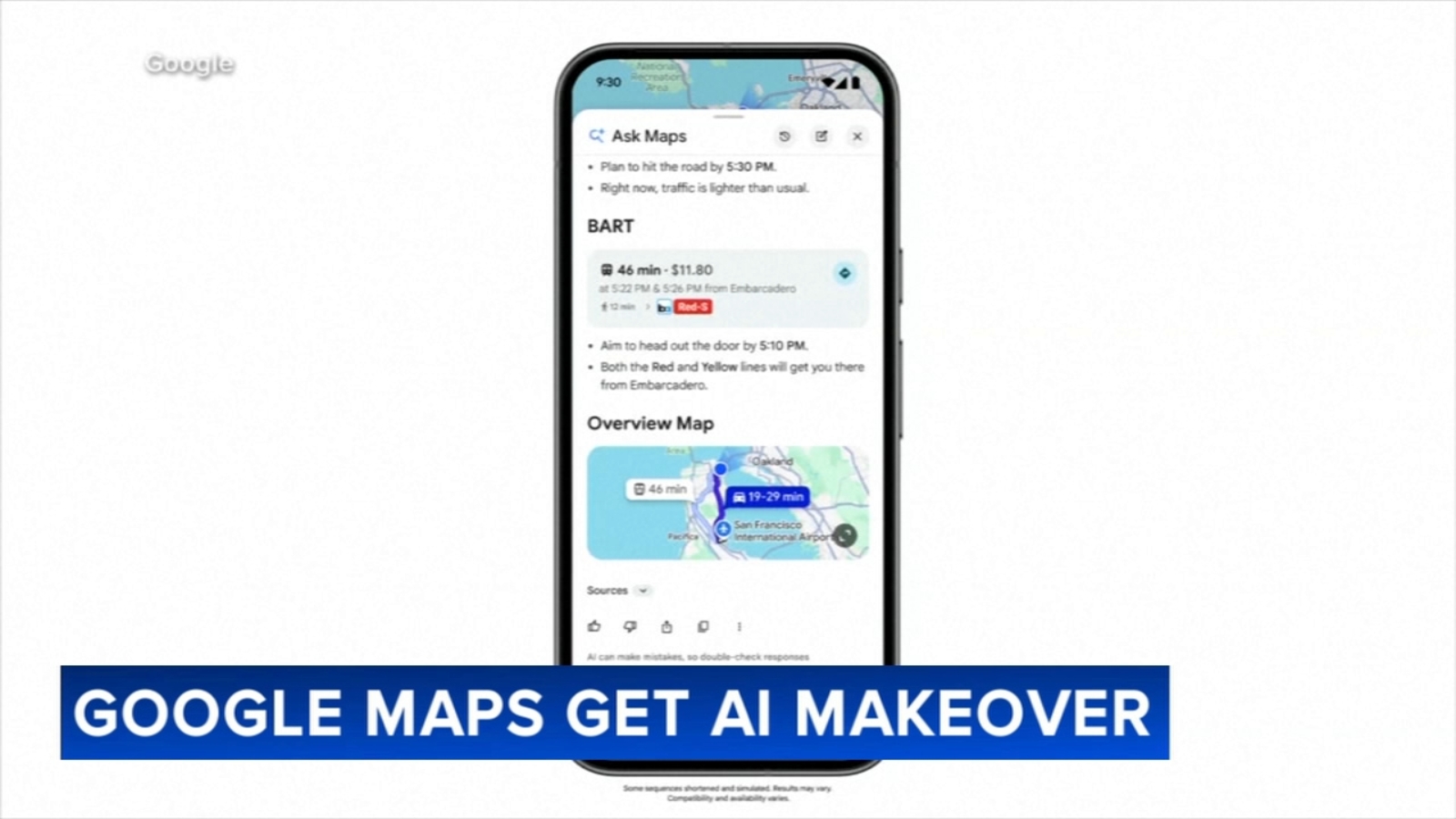
The google maps ai update marks the most significant overhaul the popular navigation platform has received in a decade. On Thursday, Google rolled out a sweeping artificial intelligence integration that transforms how millions of users search, plan, and navigate the world around them. From understanding complex conversational queries to delivering richer visual results, the new capabilities promise to turn Google Maps into something closer to a knowledgeable local guide than a simple turn-by-turn app.
At the heart of this transformation is a shift from keyword-based searching to natural, human-like conversation. Instead of typing “tennis courts near me,” users can now ask nuanced questions like “find a public tennis court with lights for playing at night” and receive relevant, curated answers. This leap forward represents a new era for AI-powered search within mapping technology, and it is poised to reshape how we explore both familiar neighborhoods and unfamiliar cities.
A New Way to Search: Conversational Queries Take Center Stage
For years, Google Maps has been a go-to resource for finding businesses, checking directions, and exploring neighborhoods. But its search function often required users to think like a database , inputting short, specific phrases and hoping the algorithm would interpret intent correctly. The latest google maps ai update eliminates much of that guesswork.
The platform’s new conversational AI search engine can parse layered requests that combine multiple criteria. Whether a user wants a dog-friendly brunch spot with outdoor seating, a late-night pharmacy that accepts walk-ins, or a quiet hiking trail within a 30-minute drive, the system now processes the entire request as a unified thought rather than a string of keywords.
Miriam Daniel, Vice President and General Manager of Google Maps, explained the philosophy behind the redesign. “It is personalized to you , so based on your activity in Maps, the prior searches you may have done,” she said in a recent interview. “Maps is what you use when you want to go out in the physical world so you can turn those plans into actions instantly.”
This emphasis on personalization means that the same query could yield different results for different users, depending on their browsing history, saved locations, and review contributions.
Rich Visual Results and Smarter Recommendations
Beyond understanding complex questions, the update also transforms how answers are presented. Instead of plain lists, users now see visual search results that include photos, star ratings, and contextual snippets pulled directly from reviews and websites.
For instance, asking about a family-friendly Italian restaurant might surface a curated summary highlighting mentions of “high chairs available,” “great kids’ menu,” and “spacious booths” , all derived from authentic user reviews. This kind of AI travel assistant behavior draws on information from millions of reviews and websites, synthesizing data points that previously would have required manually scrolling through dozens of listings.
How the AI Processes Information
- Natural language understanding , parses layered, multi-criteria queries into actionable filters.
- Review synthesis , pulls relevant snippets from millions of user reviews to answer specific questions.
- Web data integration , incorporates information from websites, business profiles, and editorial sources.
- Personalized ranking , reorders results based on individual user behavior and preferences.
Google describes the combination of maps data and artificial intelligence as a significant shift in how people can plan and navigate in the real world, and the early demonstrations suggest the company is delivering on that promise.
Smarter Navigation That Sounds More Human
Search isn’t the only area benefiting from the upgrade. The google maps ai update also enhances the actual driving, walking, and transit experience with what Google calls more natural-sounding directions.
Practical navigation improvements include:
- Natural-sounding voice guidance , instructions feel less robotic and more conversational.
- Fluid on-map detail highlighting , key landmarks, turns, and lane guidance appear more seamlessly during navigation.
- Improved alternate route discovery , finding detours around traffic issues is faster and more intuitive.
- Enhanced lane guidance , clearer visual cues for complex interchanges and freeway exits.
For commuters, this means fewer second-guessing moments and a smoother ride. For travelers, it means an easier time navigating unfamiliar cities. For everyone, it represents a meaningful step forward in smart navigation technology.
Why This Update Matters for the Future of Mapping
This isn’t just a feature refresh , it’s a philosophical reimagining of what a map can do. Traditional mapping tools have always been reactive: they show where things are and how to get there. The new approach is proactive and assistive, anticipating what users need before they explicitly ask for it.
The Competitive Landscape
Google Maps isn’t the only player exploring AI integration in mapping, but its scale gives it a notable advantage. With billions of users and an unmatched database of reviews, photos, and business information, the platform is uniquely positioned to train and refine AI models that actually understand the texture of a place , not just its coordinates.
Competitors like Apple Maps have made steady progress in visual design and accuracy, but the conversational depth introduced in this update sets a new benchmark. Expects that other platforms will soon follow suit, accelerating the broader trend of personalized recommendations across all digital tools.
Privacy and Personalization Considerations
With greater personalization comes greater responsibility. Because the new features rely on a user’s prior search activity, saved locations, and review contributions, questions about data handling naturally arise. Google has emphasized that personalization operates within existing privacy controls, and users can review and adjust their data settings at any time. However, anyone concerned about their digital footprint should familiarize themselves with these options before diving into the new features.
Real-World Use Cases for the New Features
To appreciate how transformative this google maps ai update truly is, it helps to imagine the everyday scenarios where it shines.
Planning a Weekend Outing
A family planning a Saturday afternoon outing could ask: “Find a kid-friendly museum within 20 minutes with a good café and parking.” Instead of toggling between filters and reading individual reviews, the family receives a curated shortlist with photos and reasoning pulled directly from visitor feedback.
Discovering Hidden Gems While Traveling
A traveler visiting a new city could ask: “Show me quiet bookstores within walking distance that stay open after 8 PM.” The AI synthesizes hours of operation, location data, and reviewer mentions of “cozy atmosphere” to deliver a tailored list , essentially functioning as a local expert on demand.
Optimizing Daily Commutes
Daily commuters benefit from route optimization that dynamically adjusts to traffic patterns. When congestion appears, the updated interface makes it easier to compare alternate routes, weighing travel time against distance and complexity , all within a cleaner, more intuitive visual layout.
What Users Should Expect Next
The rollout began this week and will continue expanding globally over the coming months. Google has hinted that future iterations will deepen the integration between Maps, Search, and its broader AI ecosystem, potentially connecting conversational planning across services.
For now, users can start exploring the new capabilities by simply typing or speaking more naturally when searching within the app. The AI is designed to interpret intent generously, so even loosely worded queries should yield meaningful results.
Conclusion: A Map That Thinks Alongside You
The google maps ai update represents more than a technological refresh , it signals a new chapter in how humans interact with geographic information. By blending conversational understanding with rich visual data and personalized context, Google has transformed Maps from a utility into something resembling a knowledgeable companion.
Whether you’re planning a quick errand, mapping out a cross-country road trip, or simply looking for a great cup of coffee in an unfamiliar neighborhood, the new features make the experience feel less like querying a database and more like asking a friend. As AI continues to mature and integrate into the tools we use every day, expect the line between “searching for” and “asking about” to blur even further , and Google Maps has just drawn the clearest roadmap yet for where that journey leads next.