
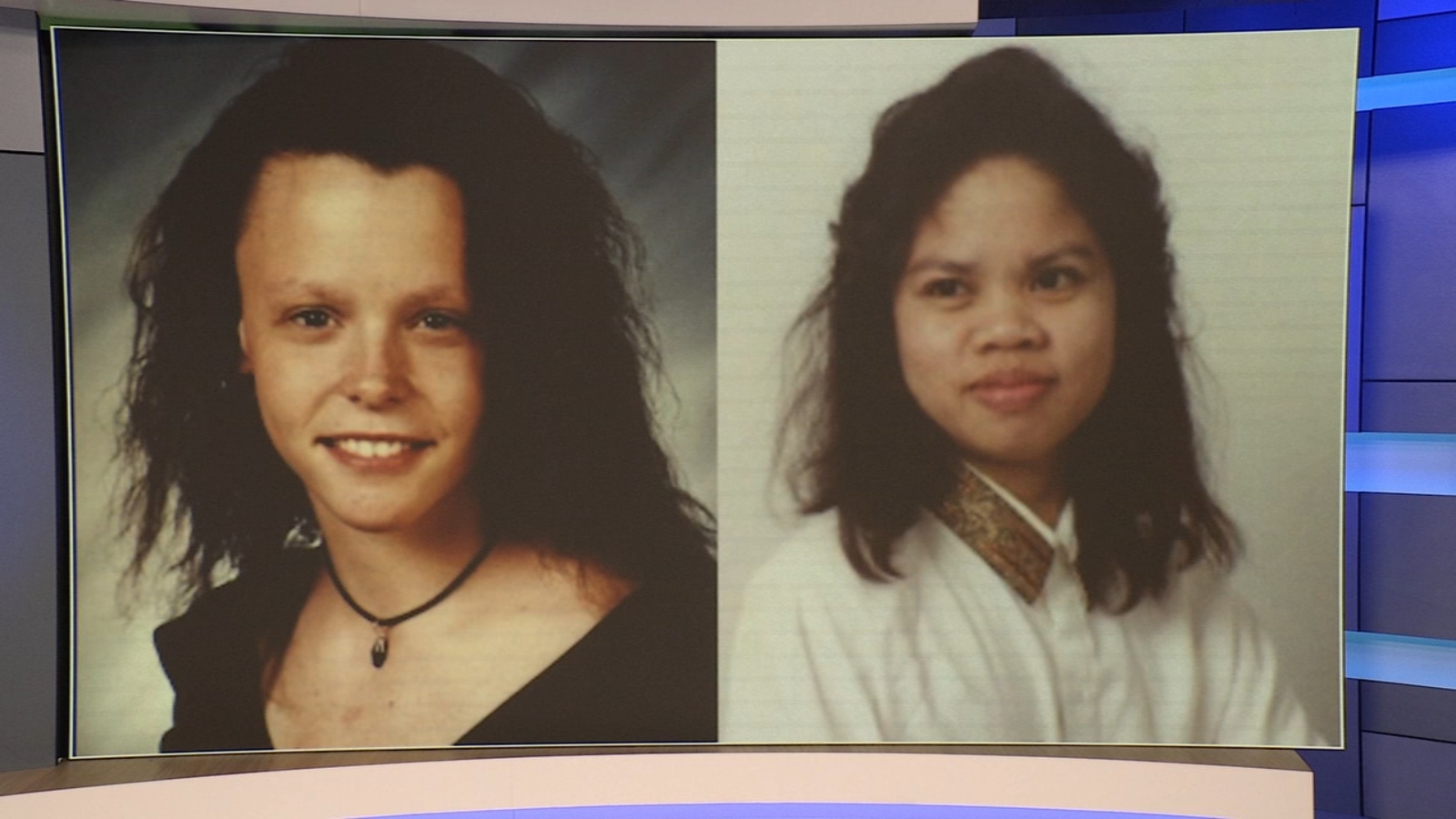
For more than three decades, two brutal murders in South Jersey remained unsolved, leaving families in a painful limbo of unanswered questions. That changed recently when cutting-edge DNA genealogy cold case techniques finally cracked both cases wide open, linking the crimes to a single suspect and bringing a hard-won sense of closure to grieving relatives. The breakthrough, announced by Camden County authorities, stands as a powerful testament to how forensic science continues to evolve and deliver justice long after traditional investigative methods have stalled.
Two Tragic Cases That Defined a Community’s Worst Fears
The story begins in the early 1990s, a period when forensic DNA technology was still in its infancy. In 1993, 24-year-old Marebeth Welsh of Woodlynne was found strangled and sexually assaulted in Camden. Her murder shocked the local community, and investigators dutifully collected DNA evidence from her body. Despite their efforts, the samples failed to produce any matches in available databases, and the case gradually went cold.
Just a year later, in 1994, another horrifying crime struck South Jersey. Sixteen-year-old Jennifer Persia was discovered stabbed and strangled inside her Magnolia home. The brutality of the killing left the small, tight-knit community reeling. At the time, Persia’s mother, Georgia MacNeir, expressed the anguish shared by many parents whose children become victims of violent crime: she could not imagine what kind of “animal” could have done such a thing to her daughter.
DNA evidence was also collected in the Persia case and later uploaded to the FBI’s Combined DNA Index System, known as CODIS. Yet again, the profile yielded no matches. For nearly thirty years, the two murders remained isolated tragedies,until the advent of investigative genetic genealogy offered investigators a brand-new path forward.
How Investigative Genetic Genealogy Solved These Cold Cases
The turning point in this decades-old mystery came when clothing recovered from the Welsh crime scene was submitted for renewed DNA testing. Improved laboratory techniques allowed analysts to develop a much stronger genetic profile than had been possible in the 1990s. Once that refined profile was uploaded into CODIS, it connected with an unknown male DNA profile already on file from the Persia investigation. For the first time, forensic evidence indicated that the same individual was likely responsible for both murders.
But identifying the suspect required going beyond traditional forensic databases. Detectives turned to investigative genetic genealogy, a method that combines public DNA databases with traditional genealogical research to build family trees and identify potential suspects. This technique has rapidly become one of the most powerful tools available for solving DNA genealogy cold case investigations across the country.
According to Detective Daniel Crawford of the Camden County Prosecutor’s Office, the work of investigators and the technology worked in tandem. “As a result of investigative genetic genealogy testing and additional interviews, a suspect was developed and tentatively identified as Francis T. Schooley,” Crawford explained. DNA swabs collected from relatives of Schooley ultimately confirmed the connection, placing him at the scene of both crimes.
The Suspect: Francis T. Schooley
Francis T. Schooley, a resident of Mantua, New Jersey, emerged as the central figure in both killings. Investigators learned that Schooley had ties to Jennifer Persia’s stepfather, a connection that may have placed him in proximity to the teenage victim. He had also reportedly been seen with Marebeth Welsh in the period leading up to her death, suggesting he had direct contact with both women before they were murdered.
Schooley died by suicide in 2000 at the age of 39, meaning he will never face criminal prosecution for the brutal crimes attributed to him. While this reality tempers the satisfaction of identification, prosecutors emphasized that naming a suspect still represents meaningful progress. Had he been alive, authorities confirmed, Schooley would have been formally charged in connection with both homicides.
A Breakthrough Years in the Making
Although the original DNA evidence sat untouched for years, recent advances in forensic science and genetic analysis breathed new life into the investigation. The retesting of physical evidence stored from the 1993 Welsh case proved especially pivotal. Modern DNA extraction and amplification methods can now generate usable profiles from degraded or limited samples, opening doors that were firmly closed in the 1990s.
Investigators also credited the additional interviews conducted during the genealogy phase of the inquiry. By combining genetic data with old-fashioned detective work,locating witnesses, verifying relationships, and piecing together timelines,detectives assembled a compelling case that pointed unmistakably toward Schooley. This blended approach exemplifies how modern cold case investigations succeed: pairing sophisticated technology with relentless human persistence.
The Emotional Toll and the Long-Awaited Resolution
For the families of Marebeth Welsh and Jennifer Persia, the announcement carried an emotional weight that is difficult to overstate. Decades of uncertainty had given way to sudden, hard-won clarity. Melody Beth Welsh, Marebeth’s daughter, was a child when her mother was killed. Now an adult, she reacted to the news with a mixture of surprise and profound gratitude. “It was very unexpected,” she said, “but grateful for all their hard work.”
Sgt. Dennis Convery of the Camden County Prosecutor’s Office acknowledged the deeply personal nature of the breakthrough. “Comforting to be able to go to Mark (Persia’s father) with some good news and go to the Welsh family as well,” Convery said. “It touches me.” His words underscore how cold case investigators often form long-lasting bonds with victims’ families, sharing in their hope for answers even as years turn into decades.
While no courtroom proceeding can now take place, the identification itself offers something the families had been denied for far too long: acknowledgment. The state officially recognizes that someone was responsible, that someone was found, and that the victims’ lives mattered enough to pursue justice no matter how much time had passed.
What This Means for the Future of Cold Case Investigations
The Camden County breakthrough is part of a broader wave of success stories in which investigative genetic genealogy has helped law enforcement solve previously intractable cases. From infamous serial killers to long-forgotten local homicides, the technique has reshaped what is possible in forensic investigation. By leveraging voluntarily shared genetic data from millions of people who have submitted samples to consumer genealogy services, detectives can triangulate relatives and build family trees that ultimately lead them to a suspect.
For South Jersey, the case closes one chapter while opening others. Other unsolved cases in the region may benefit from similar scrutiny, especially as evidence preservation improves and laboratory techniques continue to advance. Each successful identification strengthens the case for revisiting dormant files and reinvesting the resources needed to bring closure to more families.
Conclusion
The linked murders of Marebeth Welsh and Jennifer Persia represent both a tragedy and a triumph. Two young women lost their lives to a violent predator who evaded justice in his lifetime, but modern forensic science ensured that his identity would not remain hidden forever. Thanks to the determination of Camden County investigators and the power of DNA genealogy cold case technology, families who once feared they would never know the truth finally have answers. While the absence of a criminal trial leaves wounds that cannot fully heal, the official identification of Francis T. Schooley affirms a truth that every victim’s family deserves to hear: their loved ones were not forgotten, and the search for justice never truly ends.