
If you’ve ever glanced at a weather app or news broadcast and seen a colorful number labeled “AQI,” you’ve encountered the air quality index,a vital tool that translates complex air pollution data into something we can all understand. The AQI serves as a daily report card for the air we breathe, telling us whether it’s safe to enjoy outdoor activities or whether we should take precautions to protect our health.
In this guide, we’ll break down everything you need to know about the air quality index, from what the numbers actually measure to how you can use them to make smarter decisions for you and your family.
What Exactly Is the Air Quality Index?
The air quality index is a standardized scale developed for daily reporting of outdoor air quality. Think of it as a universal translator that converts concentrations of multiple pollutants into a single, easy-to-understand value. The higher the number, the worse the air quality,and the greater the potential health concern.
Unlike a weather forecast that predicts what’s coming, the AQI tells you what’s happening right now in your local area. It focuses on short-term health effects you might experience within a few hours or days of breathing polluted air, making it an actionable tool for everyday decisions like whether to go for a morning jog or let the kids play outside.
Who Calculates the Air Quality Index?
The Environmental Protection Agency (EPA) is the primary authority behind the AQI in the United States. Using data collected from air quality monitoring stations across the country, the EPA calculates daily values that help millions of Americans understand their local air conditions.
The Five Pollutants Behind the AQI Numbers
The EPA’s air quality index doesn’t measure every single contaminant in the atmosphere. Instead, it focuses on five major air pollutants that are regulated under the Clean Air Act because of their documented health and environmental impacts:
- Ground-level ozone , Unlike the protective ozone layer in the upper atmosphere, ground-level ozone is a harmful pollutant formed when emissions from vehicles, power plants, and industrial facilities react with sunlight.
- Particle pollution (PM2.5 and PM10) , These are tiny solid and liquid particles suspended in the air, ranging from dust and soot to smoke and pollen. Fine particles (PM2.5) are particularly dangerous because they can penetrate deep into the lungs.
- Carbon monoxide , A colorless, odorless gas produced primarily by vehicle engines and combustion processes, carbon monoxide can reduce oxygen delivery throughout the body.
- Sulfur dioxide , Released mainly from burning fossil fuels at power plants and industrial facilities, sulfur dioxide can irritate the respiratory system and contribute to acid rain.
- Nitrogen dioxide , A byproduct of high-temperature combustion in vehicles and power plants, nitrogen dioxide contributes to smog formation and respiratory problems.
Understanding AQI Levels and What They Mean
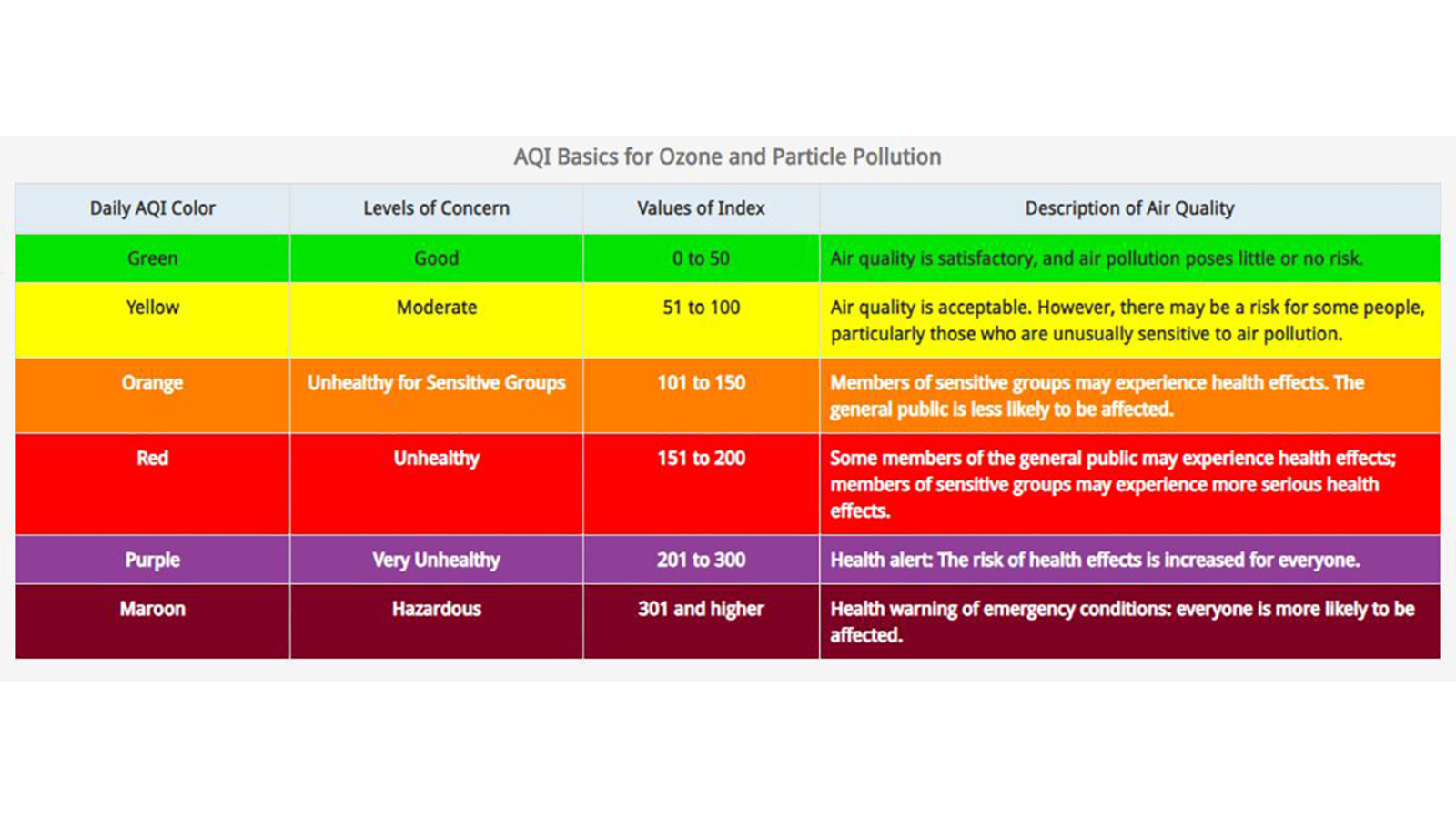
The AQI scale runs from 0 to 500, with higher values indicating more polluted air and greater health risks. The scale is divided into six distinct categories, each represented by a color and a corresponding level of health concern. Understanding these categories can help you quickly assess the air quality in your area.
Green , Good (0 to 50)
An AQI in this range means air quality is satisfactory and poses little to no risk for the general population. This is the ideal time to enjoy outdoor activities, open your windows, and breathe easy. Even people with respiratory conditions typically experience no issues when the air quality index falls in the green zone.
Yellow , Moderate (51 to 100)
Air quality is generally acceptable, but certain individuals,particularly those who are unusually sensitive to air pollution,may begin to experience mild symptoms. If you have asthma or another respiratory condition, this is the level at which you might want to start paying attention to how you feel during outdoor activities.
Orange , Unhealthy for Sensitive Groups (101 to 150)
When the air quality enters the orange range, members of sensitive groups may begin experiencing health effects. This includes children, older adults, people with heart or lung disease, and pregnant women. The general public is unlikely to be affected, but vulnerable individuals should consider limiting prolonged outdoor exertion.
Red , Unhealthy (151 to 200)
At this level, some members of the general public may start experiencing health effects, while sensitive groups face more serious concerns. If you’re in a red zone, it’s wise to reduce outdoor activities, especially strenuous exercise, and keep quick-relief medicines on hand if you have asthma.
Purple , Very Unhealthy (201 to 300)
The purple category triggers a health alert for everyone, not just sensitive groups. The risk of health effects increases significantly at this level. Schools may cancel outdoor events, and people across all demographics should minimize outdoor exposure when the AQI reaches this range.
Maroon , Hazardous (301 to 500)
An AQI of 301 or higher signals a health emergency. At this level, everyone is more likely to be affected by serious health impacts, and emergency conditions may be declared. People should remain indoors as much as possible, use air purifiers, and follow guidance from local health authorities.
Who Counts as a “Sensitive Group”?
You might wonder whether you fall into a sensitive category that requires extra caution when air quality deteriorates. The EPA identifies several groups who are more vulnerable to the effects of air pollution:
- Children and teenagers , Their lungs are still developing, and they breathe more air relative to their body weight than adults do.
- Older adults (65+) , Aging lungs and immune systems are less equipped to handle pollution stress, and they’re more likely to have underlying heart or lung conditions.
- People with asthma or other respiratory diseases , Pollutants like ozone and particulate matter can trigger asthma attacks and worsen symptoms.
- People with cardiovascular disease , Air pollution increases the risk of heart attacks, strokes, and arrhythmias.
- Pregnant women , Some research links air pollution exposure to developmental issues in babies.
- Outdoor workers , Construction workers, landscapers, mail carriers, and others who spend extended periods outside face prolonged exposure.
Practical Tips for Protecting Yourself
Knowing the air quality index is only useful if you act on the information. Here are practical steps you can take based on AQI levels:
- Check the AQI daily , Make it part of your morning routine, especially during summer months when ozone levels typically peak.
- Plan outdoor activities strategically , When air quality is poor, schedule exercise for early morning or evening when pollutants are generally lower.
- Create a clean air sanctuary at home , Use HEPA filters in your HVAC system and consider portable air purifiers for bedrooms.
- Wear appropriate masks , If you must be outdoors during high-pollution events, an N95 or KN95 mask can filter out fine particles.
- Stay hydrated , Drinking plenty of water helps your body process and eliminate pollutants more efficiently.
- Keep windows closed , During poor air quality days, sealing your home prevents outdoor pollutants from infiltrating your indoor environment.
Where to Find Reliable AQI Information
Staying informed about your local air quality is easier than ever. The EPA’s AirNow.gov website and mobile app provide real-time data from thousands of monitoring stations across the United States. Many weather apps also integrate AQI information directly into their forecasts, and local news stations frequently include air quality reports in their daily broadcasts.
For the most accurate readings, always rely on official government sources rather than third-party websites that may use outdated data or different calculation methods.
The Bottom Line
The air quality index is more than just a number,it’s a powerful tool for protecting your health and the health of those you love. By understanding what AQI values mean and who is most vulnerable to poor air quality, you can make informed decisions about outdoor activities, home air management, and when to take extra precautions. Whether you’re a parent deciding whether your child should have soccer practice, an asthmatic planning your day, or simply someone who wants to breathe easier, the AQI puts essential health information right at your fingertips. Make it a habit to check it regularly, especially during seasons when pollution tends to spike, and you’ll be taking a meaningful step toward a healthier life.