
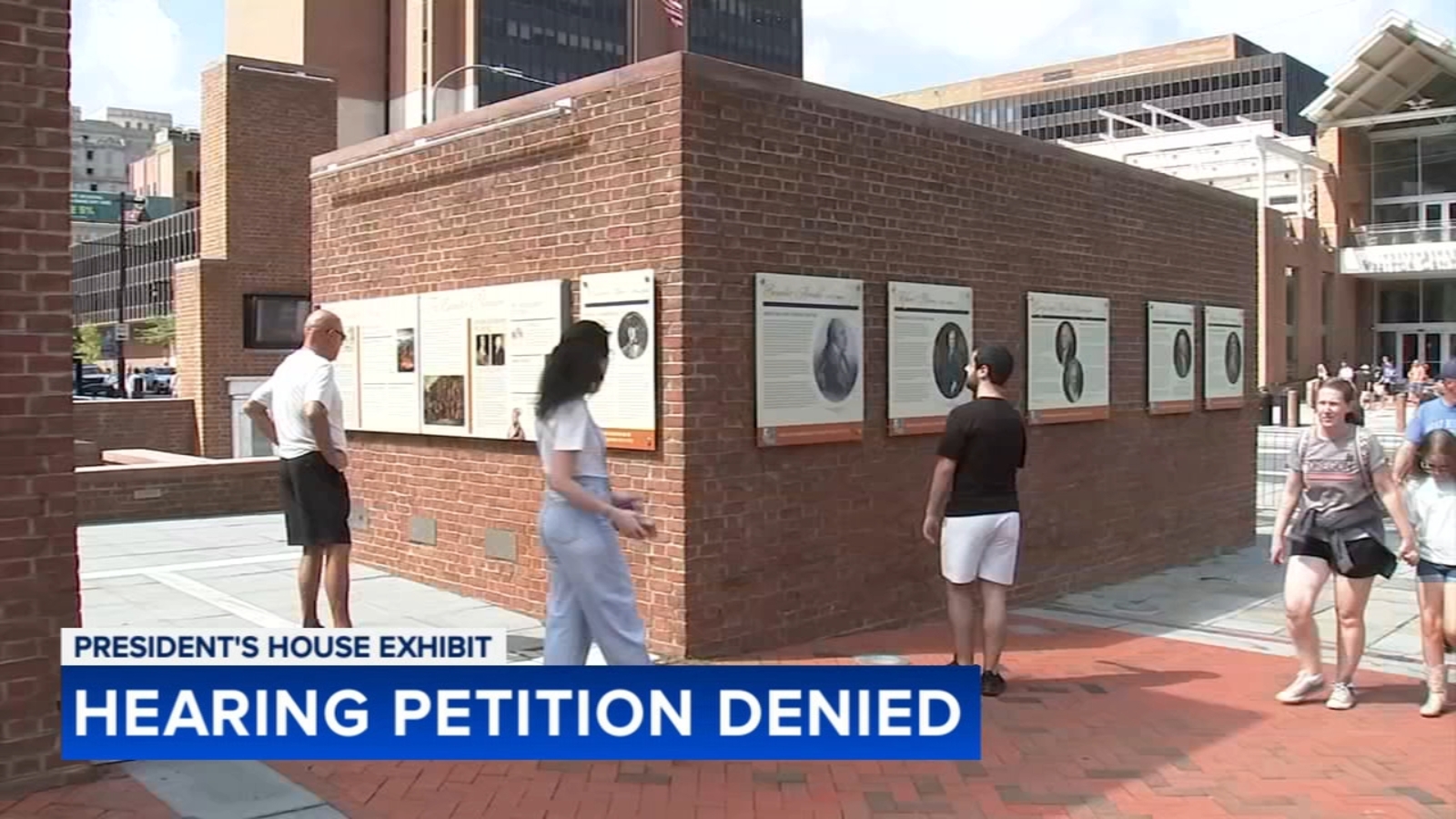
The president’s house slavery controversy has taken another significant turn as the U.S. Court of Appeals for the Third Circuit denied Philadelphia’s request for a rehearing in its ongoing legal dispute with the federal government. This latest decision represents yet another chapter in a complex fight over how America tells the story of its earliest executive residence and the human beings who were enslaved there.
At the center of this dispute lies a fundamental question: Who controls the narrative of American history at one of the nation’s most symbolically important historical sites? The case has pitted the city of Philadelphia against the federal government, particularly the National Park Service, in a struggle that carries profound implications for public memory, historical interpretation, and the ongoing national conversation about slavery’s legacy.
Understanding the President’s House Site
The President’s House site in Philadelphia marks the location where George Washington lived during his presidency from 1790 to 1797. While the original structure no longer stands, the site has been developed as a historical landmark that attracts visitors seeking to understand the founding era of the United States.
What makes this location particularly significant,and controversial,is the fact that Washington enslaved nine people at this Philadelphia residence. Their stories, lives, and labor formed an inseparable part of the household’s operations and, by extension, the early functioning of the American presidency itself.
In 2010, the site was opened with exhibits that explicitly acknowledged this painful history, including panels that told the stories of the enslaved individuals who lived and worked there. For many visitors and historians, this represented an important step forward in presenting a more complete and honest picture of America’s origins.
The Removal of the Slavery Exhibits
The current president’s house slavery controversy erupted on January 22, when the Trump administration directed the National Park Service to remove the panels that detailed the experiences of the nine enslaved people. This action set off immediate backlash from historians, educators, civil rights advocates, and ordinary citizens who viewed the removal as an act of historical erasure.
The removed panels had served as one of the only public acknowledgments at a federal site of the enslaved persons who had lived and labored in the home of the first American president. Their disappearance created a vacuum at the very location meant to educate the public about this complex chapter in American history.
Following the removal, reworked panels were installed that present information about the President’s House but do not reference slavery in the same explicit, detailed manner as the original exhibits. Critics argue that this revised presentation sanitizes history and presents an incomplete interpretation of what occurred at the site.
Philadelphia Fights Back Through the Courts
Philadelphia’s response to the panel removal was swift and determined. The city filed a lawsuit seeking to have the original exhibits restored, arguing that the federal government’s actions violated agreements between Philadelphia and the National Park Service regarding how the site should be managed and interpreted.
Initial Court Victory
Philadelphia initially secured a favorable ruling when a federal judge ordered the panels to be put back in their original form. This decision was seen as a significant victory for those advocating for a complete and honest presentation of history at the site. However, this initial success proved short-lived.
Appeals Court Reversal
The legal situation grew more complicated when the Third Circuit Court of Appeals ruled that it lacked jurisdiction to review most of the actions taken by the National Park Service. This ruling led to the dismissal of counts two through five of Philadelphia’s lawsuit, dramatically narrowing the scope of the case.
The court’s jurisdictional finding created a significant obstacle for the city, as it essentially placed many of the disputed federal actions beyond the reach of judicial review,at least through this particular legal pathway.
The Denial of Rehearing
The most recent development in the president’s house slavery controversy came when the Third Circuit denied Philadelphia’s request for a rehearing. This denial means the appeals court’s previous ruling stands, and the dismissed counts remain dismissed.
For Philadelphia and its supporters, this decision represents a substantial setback. The denial eliminates a key avenue for challenging the appeals court’s jurisdictional determination and leaves the city with limited options for continuing the legal fight.
Remaining Legal Options
If Philadelphia chooses to pursue the matter further, the city would need to petition the U.S. Supreme Court to hear the case. This would require convincing the high court that the Third Circuit’s jurisdictional ruling warrants review,a challenging task given the Supreme Court’s selective certiorari process.
One count of Philadelphia’s lawsuit remains active, alleging that the National Park Service breached its agreements with the city. This breach of contract claim provides a narrower but still viable legal pathway for the city to continue its challenge.
Voices from the Community
The court’s decision has been met with disappointment from those who have worked tirelessly to preserve and share the complete history of the President’s House site. Among the most vocal advocates is Peggy Compton, a volunteer with the organization Old City Remembers.
Compton has been particularly active in keeping the stories of the enslaved people alive, even in the absence of the original exhibits. She has taken to reading the contents of the removed panels aloud for visitors to the site, ensuring that the historical record is not entirely silenced despite the federal government’s actions.
“There is nothing historically inaccurate of what is up here. There is nothing wrong with what they’ve done. It’s just muting that internal tension so fundamental to the opening of the United States,” Compton observed, reflecting on the current exhibit’s presentation.
Her perspective captures what many historians and advocates have argued: that the revised exhibit, while perhaps not technically inaccurate, fails to grapple with the difficult truths about slavery that are central to understanding the founding era.
When asked about the path forward, Compton expressed a preference for resolution over continued legal confrontation: “I’d prefer not to see a showdown if we didn’t have to; I’d prefer to see a change in the administration, where we are more willing to look at both sides of the issue.”
The Broader Significance of the Controversy
The president’s house slavery controversy extends far beyond Philadelphia and the specific panels at this one historical site. The case touches on fundamental questions about how Americans confront and present the most troubling aspects of their national past.
For decades, historical interpretation in the United States has trended toward greater inclusion of previously marginalized voices and experiences. Sites that once presented sanitized or one-dimensional narratives have increasingly incorporated more complex, honest accounts that acknowledge both the achievements and the injustices of American history.
The removal of the slavery panels represents, for many critics, a step backward in this evolution,a return to an older tradition of historical presentation that sought to minimize or avoid the most painful truths. The legal fight over these panels is therefore not merely about a few display boards but about the broader direction of American historical memory.
What Comes Next
As the legal proceedings continue, several paths forward remain possible. Philadelphia may decide to petition the Supreme Court, though the odds of the high court agreeing to hear the case are uncertain. The remaining breach of contract claim will proceed through the lower courts, potentially offering a narrower avenue for some form of resolution.
Meanwhile, other lawsuits related to the dispute have been filed by different groups, suggesting that the controversy will continue to generate legal activity even if Philadelphia’s specific case reaches its conclusion. The multifaceted legal landscape ensures that various aspects of the dispute will remain active in courts for the foreseeable future.
Beyond the courtroom, advocates like Compton and the organization Old City Remembers continue their work of public education, finding ways to share the full history of the site regardless of what the official exhibits display. Their efforts demonstrate that historical memory cannot be entirely controlled by official narratives, no matter how determined the authorities may be.
Conclusion
The Third Circuit’s denial of rehearing in the president’s house slavery controversy marks a difficult moment for those who have fought to preserve a complete account of this historically significant site. While the legal options have narrowed, the broader debate over how America presents its most painful histories remains very much alive.
Whether through continued litigation, alternative legal claims, public advocacy, or the simple act of reading removed panels aloud to visitors, those committed to honest historical interpretation continue their work. The controversy at the President’s House site serves as a powerful reminder that history is not simply a record of past events but an ongoing negotiation about what those events mean and how they should be remembered. As this case continues to unfold, its ultimate legacy may well be measured not in legal precedents but in the way future generations understand the complex, often contradictory foundations of the American republic.