
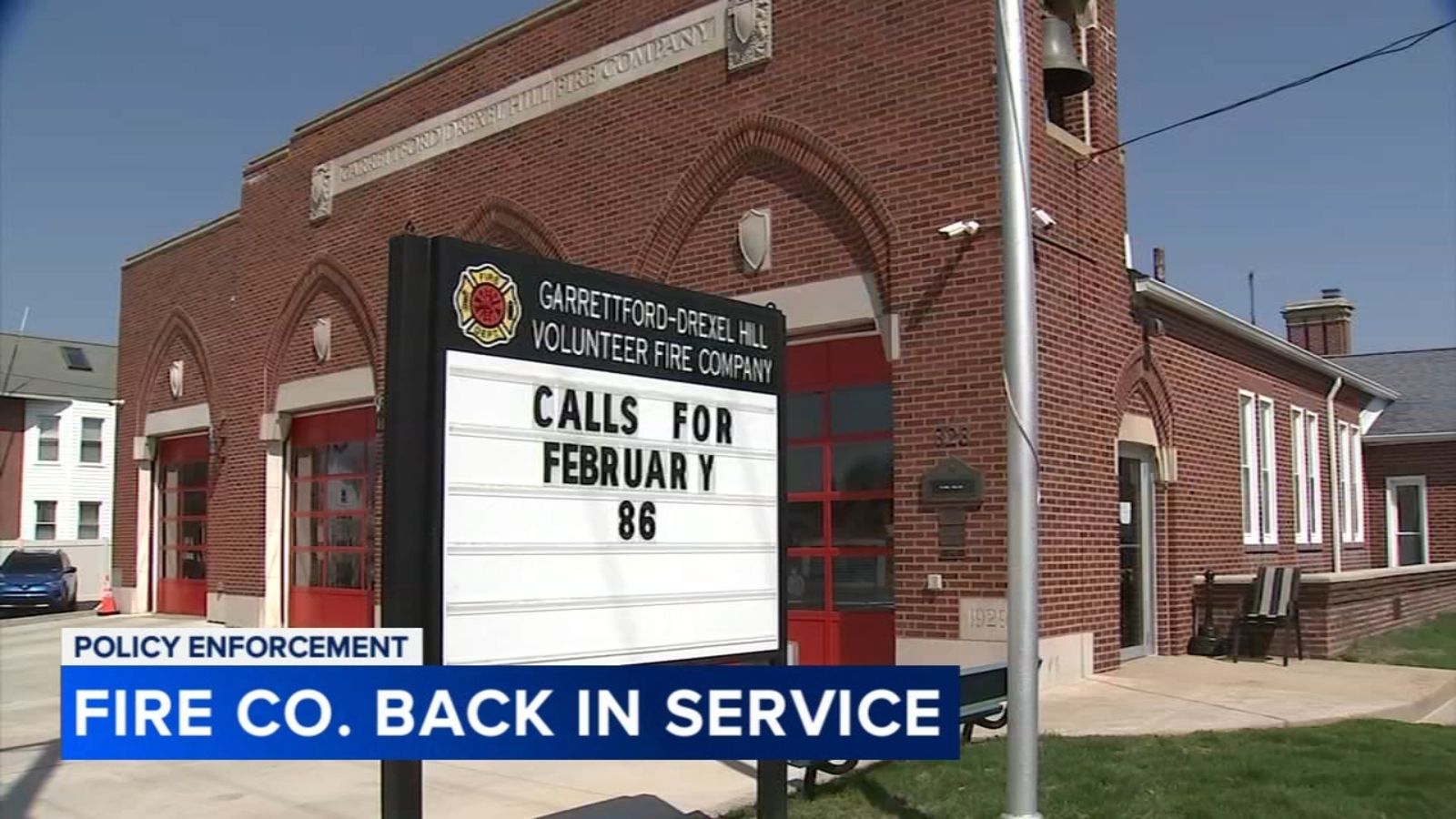
A volunteer fire company policy dispute in Delaware County, Pennsylvania, briefly pulled a century-old station out of emergency service this week, spotlighting the growing tensions between local government oversight and the traditional autonomy of volunteer fire departments. The Garrettford-Drexel Volunteer Fire Company in Drexel Hill went offline for approximately 14 hours on Wednesday night after a meeting with Upper Darby Township officials centered on a long-standing staffing certification requirement.
The incident, though resolved by Thursday morning, has raised important questions about fire safety standards, volunteer firefighter certification requirements, and the relationship between municipal authorities and the community-based organizations that have long provided emergency services across Pennsylvania.
What Happened at Garrettford-Drexel Volunteer Fire Company
The Garrettford-Drexel Volunteer Fire Company, which has served the Drexel Hill community for more than 100 years, voluntarily took itself out of service on Wednesday evening. According to Upper Darby Township officials, the station remained offline until 7 a.m. on Thursday, creating a 14-hour gap in coverage for the area normally served by the all-volunteer company.
The decision to go offline followed a meeting between fire company representatives and township leadership. Township Commissioner and public safety officials confirmed that the discussions revolved around a policy that has technically been on the books since 2020, requiring any firefighter operating fire apparatus to hold at minimum a Fire Officer I certification.
Fire Chief Nicholas Martin stated publicly that the meeting was intended to be a straightforward reinforcement of existing rules, not a confrontation. Yet the outcome was anything but routine , the station chose to suspend operations rather than immediately comply with the staffing standard during a transitional period.
The Policy Behind the Volunteer Fire Company Policy Dispute
At the heart of this volunteer fire company policy dispute is a requirement dating back six years. Upper Darby Township has maintained since 2020 that any fire apparatus responding to emergencies must have at least one certified Fire Officer I on board. This certification represents a baseline of training that includes fireground command, incident management, and safety protocols.
Upper Darby Fire Chief Nicholas Martin explained the rationale clearly when addressing the media. He noted that his department had repeatedly encountered situations where officials could not confirm that a qualified officer was in charge of the apparatus responding to a call.
“It was happening too frequently that we could not verify that there was a qualified officer in charge of the apparatus,” Martin said.
The chief emphasized that the township possesses documentation showing approximately 15 active volunteers at the station already hold the requisite certification. The dispute, therefore, is not about whether certified personnel exist within the company , it is about whether those certified individuals are consistently present on responding vehicles.
Why Fire Officer I Certification Matters
The Fire Officer I certification is a critical credential in emergency services. It signifies that the holder has completed training in:
- Incident command structure and chain of command at emergency scenes
- Fireground safety protocols designed to protect both firefighters and civilians
- Risk assessment and decision-making under pressure
- Coordination with mutual aid partners and other responding agencies
For a township fire chief responsible for the safety of residents and responders alike, ensuring that every truck rolls out with a certified officer is not bureaucratic box-checking , it is a fundamental safety measure. Township officials have stated that compliance concerns with the policy go back six years, suggesting this issue has been brewing for some time before the recent flare-up.
Upper Darby Township’s Position
Upper Darby Township officials have been consistent in their messaging: the certification requirements exist to protect lives. Mayor Ed Brown addressed the situation directly, expressing confidence that both the township and the fire company share the same core objective.
“We have the same interest at heart and that’s to keep people safe and have quality people report to fires so they can do the job that they’re trained to do,” Brown said.
The township’s emphasis on firefighter certification requirements reflects a broader trend in emergency services management. Across the country, municipalities have been tightening standards for volunteer and combination fire departments as firefighting has become more technical, more hazardous, and more integrated with modern building codes and hazardous materials protocols.
Officials have also noted that the matter remains under active investigation. While the fire company returned to service Thursday morning, the underlying questions about compliance and enforcement have not been fully resolved.
The Fire Chief’s Clarification
In his public statements, Chief Martin took care to correct what he characterized as misunderstandings about the township’s actions. He stressed that volunteers were never explicitly ordered to stop responding to calls and were never instructed to take the station out of service.
Instead, Martin framed the meeting as an attempt to clarify existing expectations. The decision to go offline was reportedly made by the fire company itself, following internal discussions about how to proceed in light of the township’s renewed emphasis on policy enforcement.
This distinction matters. It suggests that the volunteer fire company policy dispute may be less about outright conflict with the township and more about internal disagreements within the volunteer ranks regarding how to implement the longstanding certification requirement.
Community Response in Drexel Hill
Local residents have largely rallied behind the volunteer firefighters, even as the situation unfolded. Drexel Hill is a tight-knit community in Upper Darby Township, and the Garrettford-Drexel Volunteer Fire Company is woven into the fabric of neighborhood life.
Maria Mendez, a Drexel Hill resident, expressed her appreciation for the volunteers in no uncertain terms: “I love the fire company. I love the volunteers. They’re amazing.”
Another resident, Nicholas Hoyt, pointed to the company’s long track record of service as evidence that the community remains in good hands. “They’ve been doing this for over 100 years. They’ve been doing what they have to do. We’ve never not felt safe,” Hoyt said.
These sentiments reflect the deep emotional bonds that often exist between volunteer fire companies and the communities they serve. Unlike paid municipal departments, volunteer companies frequently operate as social institutions as much as emergency service providers , hosting fundraisers, attending community events, and maintaining facilities that serve as neighborhood gathering places.
Broader Implications for Volunteer Fire Departments
This incident in Upper Darby is part of a wider national conversation about the future of volunteer firefighting. Across America, volunteer fire companies have struggled with declining membership, increased training demands, and the challenge of meeting modern safety standards with limited personnel pools.
The Certification Tension
One of the recurring tensions in volunteer fire service is the balance between accessibility and professionalism. Volunteer companies have traditionally welcomed members with varying levels of training and experience, allowing individuals to contribute in whatever capacity they are able. As fire service standards have evolved, however, the gap between traditional volunteer culture and contemporary certification expectations has widened in many communities.
The Fire Officer I requirement at the center of this volunteer fire company policy dispute is not unusually stringent by national standards. Many municipalities impose similar or more demanding requirements. The challenge lies in implementation , ensuring that enough certified personnel are available to staff apparatus at all hours, particularly for companies that rely on volunteers who may have full-time jobs and family obligations.
The Accountability Question
Another layer of complexity involves the relationship between volunteer fire companies and the municipalities they serve. In Upper Darby, as in many Pennsylvania communities, volunteer companies operate semi-independently while receiving some level of public funding and oversight. This arrangement can create ambiguity when disputes arise about compliance with municipal policies.
The township’s decision to investigate the matter signals that Upper Darby is taking the certification requirement seriously. However, the fire company’s temporary withdrawal from service demonstrates the leverage that volunteer organizations retain in these relationships , and the potential consequences when communication breaks down.
What Comes Next
As of the latest reports, the Garrettford-Drexel Volunteer Fire Company has returned to active service, and the township’s investigation is ongoing. Several key questions remain unanswered:
- Will the fire company adopt new internal procedures to ensure Fire Officer I-certified personnel are present on all apparatus?
- How will the township enforce its certification requirements going forward?
- What role, if any, will additional training resources or support be provided to help volunteers meet the standards?
- How will similar disputes be prevented at other volunteer stations in the township?
The fire company itself has not publicly responded to requests for comment on the township’s policy, leaving some aspects of the internal deliberations unclear.
A Delicate Balance
The volunteer fire company policy dispute in Upper Darby underscores the delicate balance that municipal leaders must strike between enforcing safety standards and respecting the traditions, autonomy, and community relationships of volunteer fire organizations. The Garrettford-Drexel Volunteer Fire Company has served Drexel Hill for more than a century, and its volunteers continue to enjoy strong community support.
At the same time, fire chiefs and elected officials bear ultimate responsibility for ensuring that emergency response meets contemporary safety expectations. The Fire Officer I certification exists because modern firefighting demands trained leadership at the scene of every emergency.
Moving forward, both the township and the fire company will need to find common ground. The community deserves an emergency response system that is both safe and sustainable , one that honors the volunteer tradition while embracing the standards that protect residents and firefighters alike. Until that balance is achieved, the dispute serves as a cautionary tale for volunteer fire departments across Pennsylvania and beyond.