
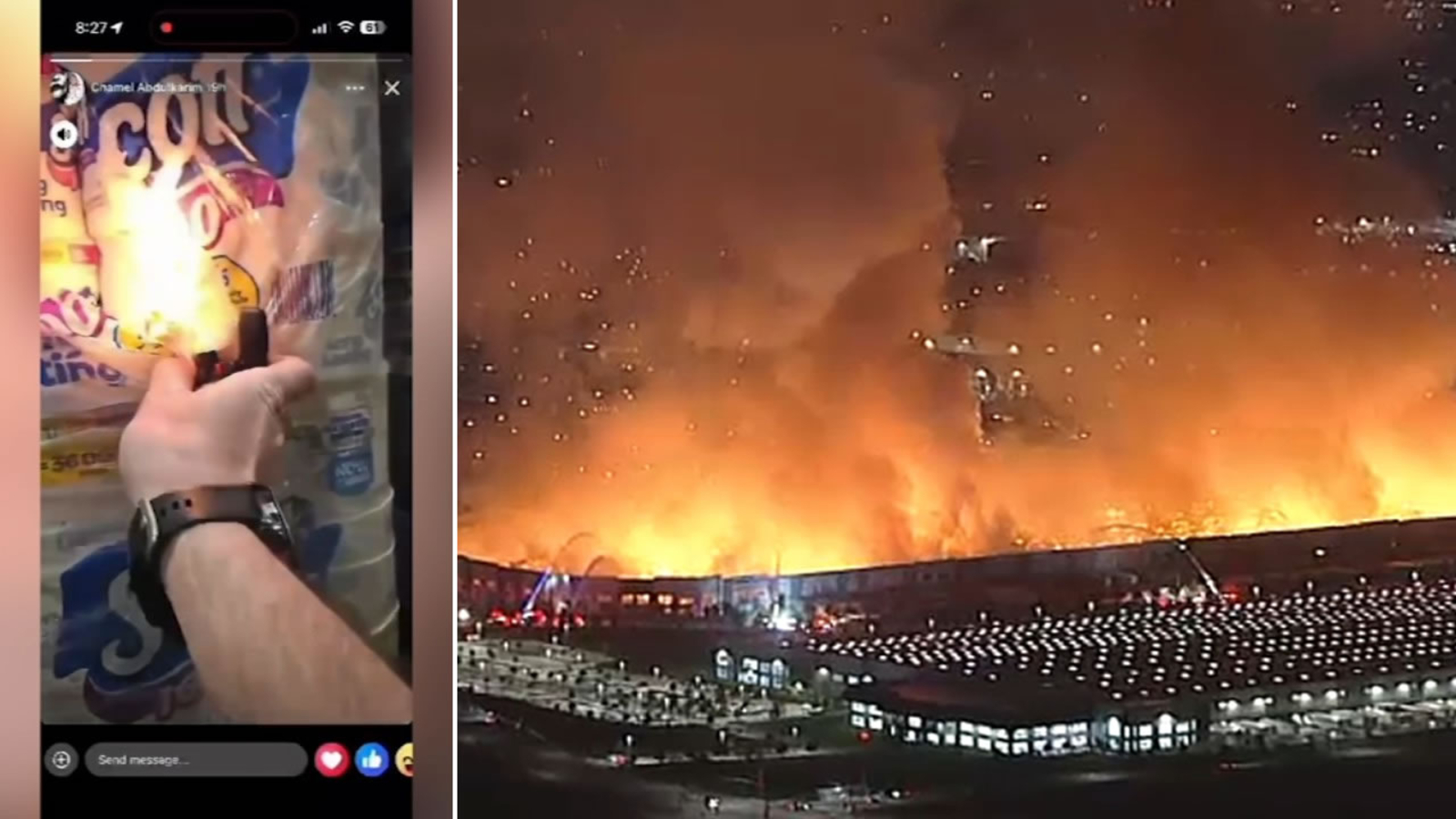
A newly surfaced social media video is shedding light on the Ontario warehouse arson that devastated a massive Southern California distribution center, revealing what investigators believe may be the suspect’s motive for igniting the building. The footage, which appears to show cases of toilet paper being set ablaze while a man voices frustration about his wages, has become central to the arson investigation into one of the most destructive warehouse fires in recent memory.
The Fire That Ripped Through a Million-Square-Foot Facility
Shortly after 12:30 a.m. on Tuesday morning, emergency crews were dispatched to the Kimberly-Clark Distribution Center in Ontario, California, where flames had erupted inside the sprawling facility. The warehouse, which housed well-known consumer paper products including Kleenex tissues and Huggies diapers, measured more than one million square feet. By the time firefighters arrived, the fire had already spread at an alarming pace.
Ontario Fire Department Chief Mike Gerken described the massive warehouse fire destruction as “uncharacteristic,” noting that the rapid spread was unusual for a building of that size. The intensity of the blaze forced crews into a defensive operation, focusing on containment rather than interior suppression.
Arson Suspected Almost Immediately
Investigators say arson was suspected within the early hours of the response, largely due to the unusual fire behavior. The speed at which the flames traveled through the facility was inconsistent with accidental causes, prompting fire officials to call in specialized arson investigators. The building was ultimately consumed by the fire, though firefighters successfully prevented the blaze from spreading to surrounding structures. Miraculously, no injuries were reported.
The Video Evidence: A Disturbing Confession
Perhaps the most critical piece in the Ontario warehouse arson investigation emerged after investigators began examining a video circulated on social media. The footage reportedly shows someone inside the warehouse setting fire to cases of toilet paper, while repeatedly expressing grievances about his compensation.
“If you’re not going to pay us enough to [expletive] live or afford to live, at least pay us enough not to do this,” the individual in the video states. In the final clip, a corridor of the warehouse appears to be fully engulfed in flames as the person recording declares, “There goes your inventory.”
Investigators have stated they are reviewing the video carefully but have not yet officially confirmed whether the person depicted is the suspect. Regardless, the footage provides a chilling, first-person account of the moments leading up to one of the most devastating commercial arson incidents the region has seen.
Suspect Identified and Arrested
Following the release and circulation of the video, authorities arrested 29-year-old Chamel Abdul-Karim on suspicion of felony arson. According to investigators, Abdul-Karim was employed at the Kimberly-Clark facility through a third-party staffing company at the time the fire occurred.
The Role of a Third-Party Worker
The fact that the suspected arsonist was a contract worker , rather than a direct employee of Kimberly-Clark , has raised broader questions about labor practices, wage structures, and workplace conditions inside the warehouse. The warehouse arson suspect motive, as expressed in the video, points to financial frustration over compensation that the worker felt was insufficient to meet basic living expenses. The case has ignited conversations about whether grievances over wages can escalate into dangerous, destructive acts, and what companies and staffing agencies can do to address employee concerns before situations reach such tragic extremes.
Co-Worker Accounts and Initial Confusion
In the immediate aftermath of the fire, coworkers scrambled to figure out what had happened. One colleague, Alex Montero of San Bernardino, spoke with reporters about the chaotic early hours of the investigation. He explained that he had just met Abdul-Karim moments before the fire ignited, and that there had been no suspicion directed at any specific individual at first.
Montero shared a striking detail: in those early moments, those inside the facility were almost 100% sure the fire had been started by the warehouse robots. Modern automated warehouses rely heavily on robotics to move inventory, and when something went terribly wrong, many workers initially assumed the systems themselves had malfunctioned or malfunctioned catastrophically.
“There was no suspicion that it was him, actually he was missing. So everyone was trying to find him. Everyone was blaming the robots at first. We were almost 100% sure it was the robots until the action in the video, of course,” Montero explained. His account underscores how unexpected the incident was, even to those working alongside the suspect just minutes before the blaze erupted.
Why the Fire Spread So Rapidly
Fire investigators are continuing to analyze how the flames spread so quickly throughout such a massive facility. Several factors likely contributed to the rapid destruction:
- Highly flammable inventory: The warehouse stored enormous quantities of paper-based products , toilet paper, tissues, and diapers , all of which ignite easily and burn rapidly.
- Massive floor plan: With more than one million square feet of space, the building allowed fire to spread quickly across wide distances, outpacing firefighting response times.
- Stacked storage: Industrial warehouses typically stack pallets and cases high, increasing airflow and feeding oxygen to flames, which accelerates combustion.
- Limited access points: Warehouses of this scale often have restricted interior access, making it difficult for firefighters to reach the source of the fire quickly.
Together, these conditions created what Chief Gerken called an “uncharacteristic fire,” prompting immediate suspicions of foul play.
The Broader Implications of the Ontario Warehouse Arson
The case has raised pressing questions about workplace safety, mental health support, and wage fairness in distribution centers across the country. The motive expressed in the video highlights a reality that many workers face: the struggle to earn enough to live in expensive regions like Southern California.
A Warning Sign for Employers
Workplace violence and destruction rarely occur without warning signs. The fact that the suspect expressed his frustrations openly on video suggests that underlying tensions had been building for some time. Employers who rely on third-party staffing agencies to fill warehouse roles should be especially vigilant, as contract workers sometimes have fewer protections, less access to internal grievance channels, and less connection to company culture than direct hires.
Financial and Environmental Fallout
The destruction of a million-plus-square-foot facility filled with consumer goods represents a staggering financial loss. Beyond the building itself, the loss of inventory , potentially millions of dollars’ worth of branded products , impacts supply chains, retail availability, and consumer prices. Environmental concerns also arise from the amount of smoke, water runoff, and debris produced by such a large-scale fire.
Investigation Continues
As of the latest reports, the Ontario California fire investigation remains active. Authorities are still analyzing the social media video, confirming the identity of the person depicted, and piecing together the full timeline of events leading up to the blaze. Abdul-Karim is being held on suspicion of felony arson, though formal charges will depend on the conclusion of the investigative process.
The full extent of damages is still being assessed, and Kimberly-Clark has not yet publicly commented on the long-term impact of the fire on its distribution capabilities.
Conclusion
The Ontario warehouse arson is a sobering reminder of how workplace frustrations, when left unaddressed, can escalate into catastrophic events. The extraordinary video evidence captured during the incident offers investigators a rare, real-time look at the mindset of someone allegedly committing a major crime , and provides the public with a stark look at the human cost of inadequate wages and unresolved grievances. As the case unfolds, it will likely prompt renewed discussions about how companies treat contract workers, how warehouses manage safety protocols, and how society responds to individuals who feel they have been pushed beyond their breaking point. While no lives were lost in the fire, the destruction of an entire distribution facility stands as a powerful warning that ignoring worker concerns can come at an enormous cost.