
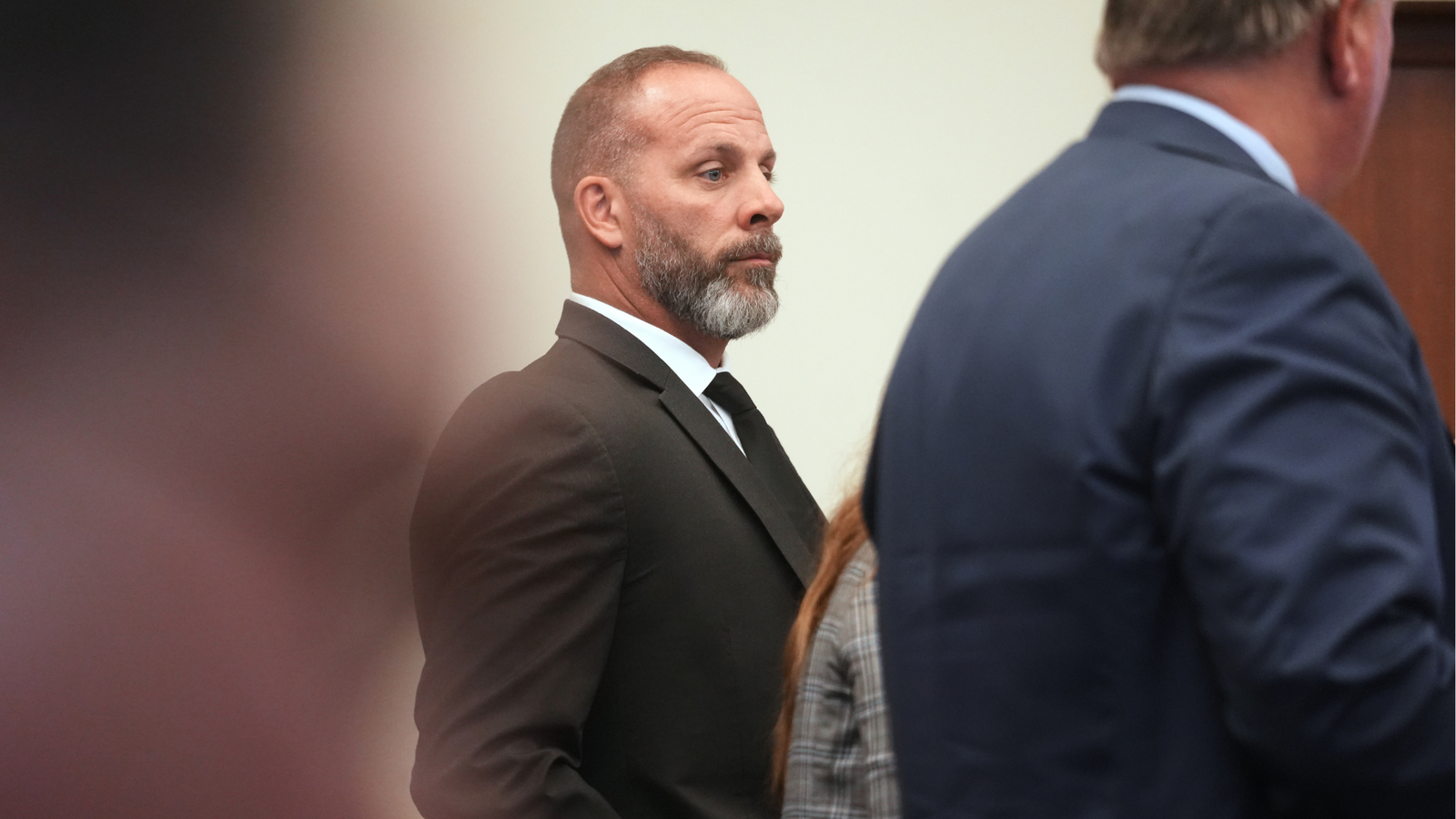
The Casey Goodson Jr. verdict has delivered a measure of accountability to a community that has long awaited justice. A former Franklin County sheriff’s deputy, Jason Meade, was found guilty of reckless homicide on Thursday for fatally shooting Casey Goodson Jr., a 23-year-old Black man, in December 2020. The case drew widespread attention across Ohio, fueling protests, banner campaigns, and a renewed push for police reform in the wake of George Floyd’s death.
While the conviction marked a significant moment for advocates of justice, the jury’s inability to reach a unanimous decision on the more serious murder charge left many family members and community leaders with mixed emotions. The judge declared a mistrial on that count, leaving open the possibility of future legal proceedings on the murder charge.
Background of the Tragic Shooting
Casey Goodson Jr. was killed on December 4, 2020, in Columbus, Ohio. According to his family and prosecutors, the young man was doing something remarkably ordinary when he died , bringing a bag of Subway sandwiches to his grandmother’s house. He was reportedly holding the food in one hand and his keys in the other, with earbuds in his ears, listening to music as he entered the residence.
Meade, who is white, claimed that he fired on Goodson because he believed Goodson was turning toward him while holding a firearm. The former deputy stated that he saw Goodson with a gun in the doorway and acted in self-defense. However, no other witnesses corroborated the claim that Goodson was holding a weapon at the time of the shooting, and no surveillance or body camera footage captured the incident.
The Six Gunshot Wounds
The medical and forensic evidence presented during the trials painted a devastating picture. Goodson was struck five times in the back and once in the side. Prosecutors emphasized that this wound pattern was inconsistent with a person turning to face an officer in a threatening manner. They argued that the trajectory of the bullets strongly suggested that Goodson was moving away from Meade or at least not facing him directly when the shots were fired.
The Trials and the Long Road to the Casey Goodson Jr. Verdict
This was Meade’s second murder trial. The first trial ended in a mistrial approximately two years prior, leaving Goodson’s family in extended legal limbo. The retrial was closely watched, with renewed attention on the evidence and witness testimony.
Key Witness Testimony
Several witnesses played pivotal roles in the proceedings. Christopher Corne, who was driving near the scene on the day of the shooting, testified for the prosecution at both trials. He described seeing Goodson appearing to dance and sing in his truck shortly before the fatal encounter. Crucially, Corne also stated that he did not observe a gun in Goodson’s hand. The defense attempted to challenge Corne’s credibility, pointing out inconsistencies in his descriptions , including his recollection that Goodson had either an Afro or a ponytail, when Goodson had actually been wearing a skullcap that day.
Columbus police Officer Samuel Rippey provided testimony during the second trial that introduced a new layer to the case. Rippey stated that while he was administering emergency medical aid to Goodson, he observed a firearm with an extended magazine lying on the grandmother’s kitchen floor. This testimony was significant because it confirmed the presence of the gun but did not necessarily establish that Goodson had been holding it at the moment he was shot.
The Defense’s Position
Meade’s legal team relied heavily on his own oral and written accounts of what transpired. They argued that the shooting was justified, asserting that Meade perceived an imminent threat when he saw Goodson with a gun. The defense maintained that the former deputy’s actions fell within the bounds of lawful self-defense, despite the absence of corroborating eyewitness testimony or video evidence.
About Jason Meade
Jason Meade, now 47, retired from the Franklin County Sheriff’s Department in 2021, following the indictment and initial proceedings. Beyond his law enforcement career, Meade also served as a Baptist pastor, a detail that added a complex dimension to his public profile. The combination of his religious leadership role and his role as a sworn officer drew commentary throughout the case, particularly from community advocates who questioned how someone in such a position of community trust could be involved in such a fatal encounter.
Prosecution’s Argument About the Firearm
Prosecutors presented forensic and circumstantial evidence suggesting that the gun was not in Goodson’s hands at the time of the shooting. They indicated that the firearm was found under Goodson’s body after he had collapsed on the kitchen floor. Critically, they noted that the weapon’s safety mechanism was still engaged when it was recovered. The gun was reportedly kept in a flimsy holster or holder positioned under Goodson’s belt, not in his hands.
This evidence was central to the prosecution’s theory that Goodson was not actively threatening Meade when the deputy opened fire. The prosecution sought to dismantle the self-defense narrative by demonstrating that the physical evidence did not align with Meade’s account of events.
Public Outcry and Community Response
Goodson’s death ignited widespread public outrage in Ohio, particularly in Columbus and the broader Franklin County area. The killing occurred in the same year as several high-profile deaths of Black individuals at the hands of law enforcement, most notably George Floyd in Minneapolis. These incidents collectively galvanized a national movement demanding police accountability and reform.
In Columbus, community members hung banners from highway overpasses carrying powerful messages such as “Justice for Casey Goodson Jr.” and “Convict Murderer Meade.” The visibility of these banners underscored the depth of public engagement with the case. During the trial, the judge ordered law enforcement to remove the banners, a decision that itself sparked additional discussion about free speech and the rights of protest.
The Casey Goodson Jr. Verdict in Broader Context
The reckless homicide conviction places Meade in a relatively small group of law enforcement officers in Ohio who have been held criminally responsible for the deaths of Black civilians. He becomes only the second white officer in the state to be convicted in such a killing since 2020, following the conviction of Columbus police officer Adam Coy. Coy was indicted on charges including murder for the 2020 killing of Andre Hill.
The case also fits into a longer, painful pattern of violence involving Ohio law enforcement and Black residents. The list of Black individuals killed by white officers in the state includes several names that have become symbols in the broader movement for justice:
- Tamir Rice, age 12, killed in Cleveland in 2014
- John Crawford III, killed in Beavercreek in 2014
- Samuel DuBose, killed in Cincinnati in 2015
- Tyre King, age 13, killed in Columbus in 2016
- Miles Jackson, killed in Westerville in 2021
- Ma’Khia Bryant, age 16, killed in Columbus in 2021
- Donovan Lewis, killed in Columbus in 2022
- Jayland Walker, killed in Akron in 2022
- Ta’Kiya Young, who was pregnant, killed in Columbus in 2023
At least three Black children have been fatally shot by Ohio law enforcement officers, a sobering statistic that has intensified calls for systematic change in how police interact with Black communities.
The Mistrial on the Murder Charge
Although the casey goodson jr. verdict resulted in a conviction for reckless homicide, the jury could not reach a unanimous agreement on the murder charge. As a result, the judge declared a mistrial on that specific count. This procedural outcome means that prosecutors may have the option to retry Meade on the murder charge in the future, though such decisions typically involve careful consideration of legal strategy, available resources, and the wishes of the victim’s family.
The inability of the jury to agree on murder may reflect the complex evidentiary landscape of the case. Without video evidence and with conflicting witness accounts, reasonable jurors may have arrived at different conclusions about Meade’s state of mind at the moment he pulled the trigger.
Looking Ahead
The Casey Goodson Jr. verdict represents both an ending and a beginning. For Goodson’s family, it provides partial closure after more than four years of legal proceedings and personal grief. For the broader community, it stands as evidence that accountability is possible, even when the process is long and imperfect.
As Ohio and the nation continue to grapple with questions of police conduct, racial justice, and the proper role of law enforcement in society, cases like this one serve as important reference points. They remind us that the pursuit of justice is rarely swift or simple, but it remains essential. The legacy of Casey Goodson Jr., a young man who simply wanted to deliver sandwiches to his grandmother, will continue to resonate in the ongoing conversation about how law enforcement treats Black Americans.